
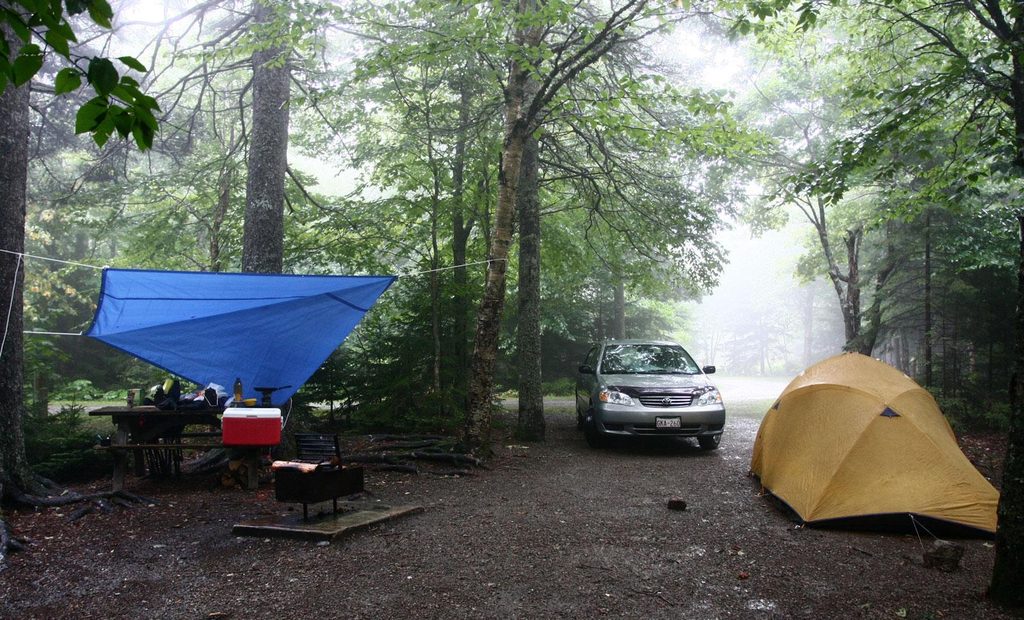
Rain doesn’t have to ruin a camping trip.
In fact, camping in the rain can be a surprisingly enjoyable experience when you’re prepared for it.
The sound of rain hitting a tent can be relaxing, the campground may become quieter, and the landscape can look completely different after a storm.
The problem starts when you’re not prepared.
Wet clothes, a leaking tent, muddy shoes, damp sleeping gear, and poor campsite drainage can quickly turn a comfortable camping trip into an uncomfortable one.
The good news is that you don’t need complicated equipment to handle rainy weather.
A few simple habits can make a big difference.
In this guide, you’ll learn what to do when it rains while camping, how to keep your gear dry, how to stay comfortable, and when it’s better to change your plans.
Quick Answer
What should you do when it rains while camping?
Keep your rainfly properly secured, stay away from low areas where water can collect, keep wet clothing and gear organized, ventilate your tent to reduce condensation, and protect important items from moisture.
If you’re still planning your trip, check the weather forecast and choose a campsite with good drainage and some natural protection from wind and rain.
If severe weather makes the area unsafe, don’t try to continue your original plan. Leave the area or seek appropriate shelter when necessary.
Should You Cancel a Camping Trip Because of Rain?
Not necessarily.
Light or moderate rain doesn’t automatically mean that you need to cancel a camping trip.
Many tents are designed to provide protection from rain, and the right clothing and campsite setup can make wet weather manageable.
However, rain can become a serious concern when it comes with conditions such as:
- Severe thunderstorms
- Strong winds
- Flash flooding
- Lightning
- Extreme cold
- Dangerous road conditions
- Rising rivers or streams
The National Park Service recommends checking weather and environmental conditions before and during a trip and changing plans when conditions become unsafe.
The goal isn’t to avoid every drop of rain.
It’s to understand the conditions and make good decisions.
1. Check the Weather Forecast
If rain is expected, keep checking the forecast.
Don’t only check the weather before leaving home.
Weather conditions can change during the day, so check again when you arrive at the campground.
Pay attention to:
- Rain intensity
- Storms
- Lightning
- Wind
- Temperature
- Flood warnings
- Severe weather alerts
If you’re camping in a national park or other managed area, check for local alerts and talk with park staff or campground hosts when available. The National Park Service recommends asking about current weather, environmental hazards, and regulations when you arrive.
2. Choose a Good Campsite
If you know rain is coming, campsite selection becomes especially important.
Look for ground that is:
- Relatively high
- Well drained
- Firm
- Away from obvious water channels
- Away from steep slopes
- Away from damaged trees and branches
Avoid low areas where rainwater can collect.
You also don’t want to set up directly beside a stream or other water source where conditions could change quickly.
Look for a campsite on higher ground with good drainage. Avoid low-lying areas where rainwater can collect during a storm.
A few extra minutes choosing your campsite can save you a lot of trouble later.
3. Don’t Set Up Under Dangerous Trees
Trees can provide some protection from weather, but you should be careful about where you place your tent.
Avoid trees with:
- Dead branches
- Large broken limbs
- Visible damage
- Unstable trunks
Strong wind can bring damaged branches down.
When choosing a campsite, avoid trees with dead branches or visible damage. Strong winds can cause damaged limbs to fall.
Don’t choose a campsite simply because it looks sheltered.
Look overhead before setting up.
4. Set Up Your Tent Before the Rain Gets Heavy
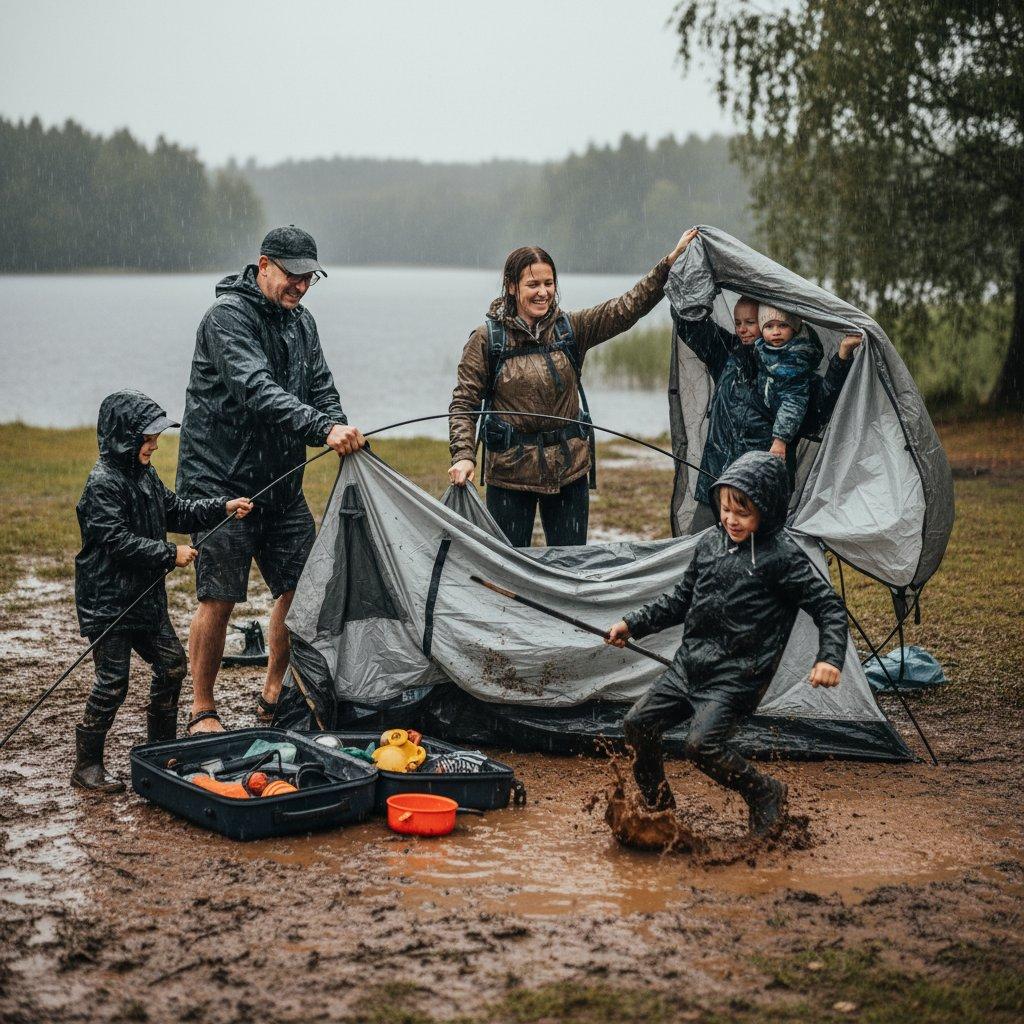
If rain is in the forecast, don’t wait until the last minute to set up your tent.
Arrive early when possible.
A dry tent setup is much easier than trying to assemble your shelter while heavy rain is falling.
Before your trip, practice setting up your tent at home.
Set up your tent at home before your trip so you can learn how the poles, clips, rainfly, and stakes work before dealing with wind, rain, or darkness.
You don’t want your first attempt to happen in the middle of a storm.
5. Set Up the Rainfly Properly
Your rainfly is one of the most important parts of your tent’s weather protection.
Make sure it is:
- Properly attached
- Correctly positioned
- Tensioned evenly
- Properly secured
- Not touching the inner tent where it shouldn’t
A loose rainfly can allow water to collect or blow underneath.
Keep the rainfly properly tensioned, and check it again after it gets wet. Some rainfly materials can stretch when damp, which may loosen the fit.
Take a few minutes to check the setup before going to sleep.
6. Use Your Tent Footprint Correctly
A footprint can provide an additional layer of protection under your tent.
But there’s an important detail.
The footprint should not extend beyond the edges of the tent floor.
If it sticks out, rainwater can collect on the footprint and flow underneath your tent.
Make sure the tent footprint is slightly smaller than the tent floor. This prevents the edges of the footprint from sticking out and collecting rainwater underneath the tent.
This is a small detail that can make a big difference.
7. Keep Your Tent Ventilated
It may seem logical to close everything tightly when it’s raining.
But completely closing your tent can increase condensation.
People breathe out moisture throughout the night, and moisture can accumulate inside the shelter.
If your tent has vents, use them appropriately.
Many tents are designed with ventilation features that allow airflow while keeping rain out.
Keep your tent vents open when possible to improve airflow and reduce condensation, especially during rainy weather.
If the weather allows, create some airflow without exposing the interior directly to rain.
8. Don’t Confuse Condensation With a Leaking Tent
Sometimes you wake up and see water inside your tent.
That doesn’t always mean the tent is leaking.
It could be condensation.
Condensation can form when warm, moist air inside the tent meets cooler surfaces.
Common sources include:
- Breathing
- Wet clothing
- Wet gear
- Humid weather
- Poor ventilation
Good campsite selection and proper ventilation can both help reduce condensation inside your tent.
If the water appears evenly across the inside of the rainfly, condensation may be the cause.
If water consistently enters through a specific seam or damaged area, you may have a leak.
9. Keep Wet Clothing Separate
One of the easiest ways to make a rainy camping trip miserable is to spread wet clothing throughout your tent.
Instead, create a designated place for wet gear.
You can use:
- A waterproof bag
- A dry bag
- A separate gear bag
- A vestibule
- A dedicated wet-clothing area
Keep your sleeping clothes dry.
If you have dry clothes for sleeping, change into them before bed.
This can make a rainy night much more comfortable.
10. Protect Your Sleeping Bag
Your sleeping bag is one of the most important pieces of equipment in your campsite.
Try to keep it completely dry.
Don’t place it directly on wet ground.
Don’t leave it exposed to rain while setting up camp.
Don’t use your sleeping bag as a towel for wet clothing.
If your sleeping bag becomes wet, deal with the problem as soon as possible.
A wet sleeping bag can lose insulation performance and become uncomfortable or potentially unsafe in cold conditions.
11. Keep Your Backpack and Important Gear Dry
Rain can damage more than your clothes.
Protect items such as:
- Phone
- Wallet
- Car keys
- Maps
- Electronics
- Extra clothing
- Sleeping gear
- Food
- First aid supplies
Waterproof bags or dry bags can help organize important items.
You don’t necessarily need to make every item completely waterproof.
Prioritize the things that would be difficult or expensive to replace.
12. Keep Your Shoes Outside the Sleeping Area
Wet and muddy shoes can quickly make a tent dirty.
If your tent has a vestibule, use it to store shoes.
Otherwise, place them somewhere protected from rain while keeping them outside the sleeping area when practical.
Put your shoes somewhere you can find them easily in the morning.
A wet campground can become muddy quickly, so don’t be surprised if your shoes get dirty.
13. Bring a Tarp or Shelter for the Living Area
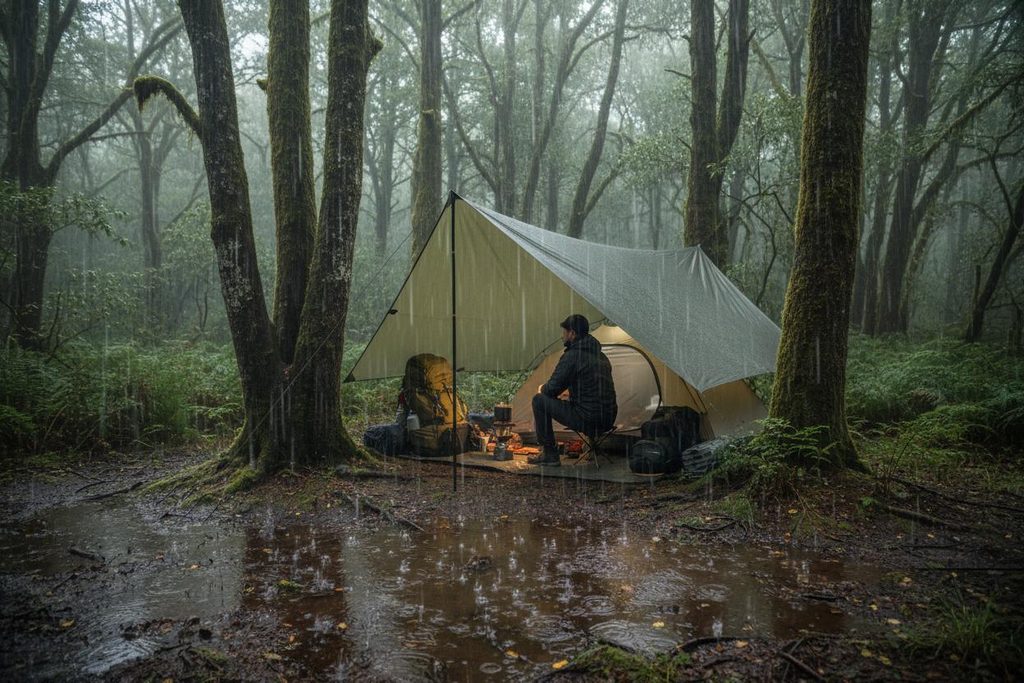
A tent protects your sleeping area, but you may still want a dry place to sit, cook, or organize your gear.
A properly positioned tarp or other shelter can create a useful covered area.
A tarp can provide space for:
- Cooking
- Eating
- Sitting
- Organizing gear
- Taking off wet clothing
- Staying outside during light rain
Make sure the tarp is securely anchored and positioned so water drains away from your living area.
Never create a setup that introduces unnecessary fire or other safety hazards.
14. Be Careful With Cooking in the Rain
Rain can make cooking more difficult.
If you use a camping stove, follow the manufacturer’s instructions and use it only in an appropriate location.
Don’t move your stove into an enclosed tent simply because it’s raining.
Instead, use a suitable outdoor cooking area with adequate ventilation and protection from precipitation.
Keep your cooking area organized and protect food from rain.
15. Think About Campfire Conditions
Rain doesn’t necessarily mean you can’t have a campfire.
But whether you can have one depends on local rules and current fire restrictions.
Wet wood can also make starting and maintaining a fire difficult.
Before lighting a fire:
- Check local rules
- Check fire restrictions
- Use the designated fire ring when provided
- Keep the fire controlled
- Keep water or appropriate extinguishing supplies available
- Never leave it unattended
If conditions are too wet, windy, or otherwise unsuitable, skip the fire.
16. Keep Your Food Dry
Rain can make food preparation messy.
Keep food containers closed when you’re not using them.
Try to create a dry cooking and food-storage area.
Keep:
- Bread
- Snacks
- Cooking ingredients
- Paper products
- Seasonings
- Cooking equipment
protected from moisture.
Continue following local food-storage rules, especially in areas with wildlife.
17. Keep Yourself Dry
Staying dry isn’t just about comfort.
In cool weather, wet clothing can make you cold much faster.
Consider using:
- Rain jacket
- Waterproof or water-resistant outer layer
- Rain pants when appropriate
- Waterproof footwear
- Synthetic or wool layers
- Extra socks
For wet conditions, choose wool or synthetic layers because they can retain more warmth than cotton when damp.
Keep at least one complete set of dry clothing reserved for sleeping.
18. Bring Extra Socks
Few things are more annoying than spending a rainy camping trip in wet socks.
Bring extra pairs.
If your socks become wet:
- Remove them.
- Dry your feet.
- Put on a dry pair.
- Keep the wet pair somewhere where it can dry.
Dry socks can make a surprisingly large difference to comfort.
19. Protect Your Feet
Wet feet can become uncomfortable quickly.
If you’re walking around a wet campground, try to avoid unnecessary puddles and mud.
At the same time, don’t expect your footwear to stay perfectly clean.
Bring footwear appropriate for the conditions.
If your shoes become soaked, remove them when you return to camp and let them dry as conditions allow.
20. Keep Mud Under Control
Rain can turn a campsite into a muddy area very quickly.
Create a simple transition area near your tent.
For example:
- Remove muddy shoes before entering
- Keep a small towel near the entrance
- Use a mat when appropriate
- Keep wet gear in one area
- Avoid walking through the tent with muddy footwear
A little organization can prevent your entire sleeping area from becoming dirty.
21. Don’t Try to Dry Everything Inside Your Tent
Your tent isn’t a drying room.
Hanging lots of wet clothing inside can increase humidity and condensation.
Instead, dry items outside when the weather improves.
If you need to dry clothing temporarily, use a sheltered and well-ventilated area.
Keep wet gear away from your sleeping bag.
22. Plan Something to Do During the Rain
Rain doesn’t mean you have to sit inside your tent all day.
Depending on the weather and campground rules, you can:
- Read
- Play cards
- Play board games
- Talk with your camping partners
- Cook
- Listen to music
- Write in a journal
- Organize photos
- Plan the next day’s activities
- Watch the rain from under a shelter
Camping doesn’t always have to be about constant activity.
Sometimes a rainy afternoon is a good opportunity to slow down.
23. Take Advantage of a Rainy Day
Rain can actually change the camping experience in a positive way.
You may notice:
- Different sounds
- Fewer people around
- Cooler temperatures
- Mist over mountains
- Reflections on lakes
- Fresh smells from the forest
- Different wildlife activity
Instead of treating rain as automatically bad, think of it as a different version of camping.
The important thing is staying comfortable and safe.
24. Watch for Changing Ground Conditions
Rain can change the campsite itself.
An area that looked perfectly dry when you arrived can become muddy or wet several hours later.
Watch for:
- Standing water
- Mud
- Runoff
- Erosion
- Rising streams
- Slippery surfaces
If water starts moving toward your tent, don’t wait until the floor becomes wet.
Move to a safer location if necessary.
25. Be Careful Around Rivers and Streams
Rain can change water conditions quickly.
A stream that looked calm earlier may become deeper or faster after heavy rain.
Don’t assume that familiar water is safe simply because it looked harmless earlier.
Stay away from rising or fast-moving water.
If officials or park staff issue warnings, follow them.
26. Be Careful on Wet Trails
If you decide to hike in the rain, expect different trail conditions.
Rain can make:
- Rocks slippery
- Roots slippery
- Mud deeper
- Streams higher
- Trails harder to follow
- Visibility lower
Slow down and adjust your route if necessary.
Don’t continue simply because you planned to complete a particular hike.
The National Park Service recommends matching activities to your group’s abilities and being prepared to change plans when conditions change.
27. Watch for Lightning
Rain combined with thunderstorms requires extra caution.
If lightning is present, don’t treat it as an ordinary rainy day.
Check local weather alerts and follow official safety guidance.
If severe weather is approaching, seek appropriate shelter and avoid exposed locations.
Do not stay outside simply because the rain itself doesn’t bother you.
28. Know When to Leave
Sometimes the correct answer to rain is to leave.
Consider changing your plans if you have:
- Severe weather
- Flooding
- Dangerous winds
- Lightning
- Unsafe roads
- Rising water
- Extremely cold conditions
- Damaged camping equipment
The National Park Service emphasizes planning for unexpected conditions and using good judgment rather than continuing with an unsafe plan.
A canceled camping night is better than turning a manageable problem into an emergency.
29. Don’t Pack a Wet Tent
This is one of the most important things to remember after a rainy camping trip.
If possible, dry your tent before storing it.
If you have to pack it while wet because you’re leaving in the rain, unpack it and dry it as soon as you get home.
Never store a tent wet for an extended period.
Moisture left inside a packed tent can lead to mildew, odors, and material problems.
Always dry your tent completely before storing it. Packing it away while wet can lead to mildew, odors, and fabric damage.
30. Dry Your Gear After the Trip
Rainy camping doesn’t end when you get home.
Check and dry:
- Tent
- Rainfly
- Footprint
- Sleeping bag
- Sleeping pad
- Clothing
- Shoes
- Tarp
- Camping chairs
- Cooking equipment
Give everything enough time to dry before long-term storage.
This simple habit can extend the life of your camping equipment.
What Should You Pack for Rainy Camping?
A basic rainy-weather camping setup might include:
- Waterproof tent or tent with a reliable rainfly
- Tent footprint
- Rain jacket
- Extra socks
- Extra clothing
- Waterproof bags
- Tarp or shelter
- Appropriate footwear
- Headlamp
- Towels or small cloths
- Dry storage bags
- Weather-appropriate sleeping gear
You don’t need to buy every possible rain accessory.
Focus on keeping your shelter, sleeping system, clothing, and important items dry.
Rainy Camping Checklist
Before leaving home:
- Check the weather forecast
- Check severe weather alerts
- Check campground rules
- Check fire restrictions
- Inspect your tent
- Check your rainfly
- Pack extra socks
- Pack extra clothing
- Pack waterproof bags
- Pack rain protection
- Check your sleeping gear
- Bring a headlamp
- Have a backup plan
At the campsite:
- Choose high, well-drained ground
- Check for damaged trees and branches
- Set up before heavy rain if possible
- Secure the rainfly
- Check tent ventilation
- Keep sleeping gear dry
- Store wet clothing separately
- Protect food and electronics
- Monitor changing weather
- Watch water levels and ground conditions
After the trip:
- Dry the tent
- Dry the rainfly
- Dry sleeping gear
- Dry clothing
- Clean muddy equipment
- Store gear only after it is dry
Common Rainy Camping Mistakes
Setting Up in a Low Area
Water can collect around your tent during heavy rain.
Ignoring the Forecast
A light shower and a severe thunderstorm require very different preparation.
Forgetting Extra Socks
Wet feet can quickly make camping uncomfortable.
Closing Every Tent Vent
This can increase condensation.
Leaving Wet Gear Everywhere
Wet clothing and gear can make the entire campsite damp.
Forgetting to Dry the Tent
Storing a wet tent can lead to mildew and damage.
Cooking Inside the Tent
Never use camping equipment in ways that the manufacturer doesn’t permit, and don’t move a stove into an enclosed tent simply to escape the rain.
Staying Too Close to Rising Water
Rain can change rivers, streams, and drainage areas quickly.
Refusing to Change Plans
Weather can turn a normal camping trip into an unsafe situation.
Is Camping in the Rain Worth It?
It can be.
Camping in light or moderate rain can be peaceful and enjoyable when you’re prepared.
You may even discover that rainy camping has its own atmosphere.
The key is preparation.
A dry sleeping area, appropriate clothing, good food storage, and a sheltered place to spend time can make a rainy weekend much more comfortable.
But there is no reason to take unnecessary risks.
If severe weather makes the area unsafe, leave or seek appropriate shelter.
Final Thoughts
Rain doesn’t automatically mean a camping trip is ruined.
With the right preparation, you can stay relatively dry, comfortable, and organized even when the weather doesn’t cooperate.
Start with the basics.
Choose a campsite with good drainage, set up your tent properly, keep your rainfly secure, maintain ventilation, protect your sleeping gear, and keep wet clothing separate from dry gear.
Keep checking the weather and pay attention to changing conditions.
And remember that camping is supposed to be enjoyable.
If the weather becomes dangerous, it’s completely fine to change your plans.
Sometimes the best camping skill isn’t knowing how to stay outside in bad weather.
It’s knowing when it’s time to head home.
Want to learn more? Check out these related camping guides:
→ How to Keep Your Tent Dry in the Rain
→ How to Prevent Condensation Inside a Tent
→ How to Stay Warm While Camping at Night
→ How to Choose a Camping Tarp