
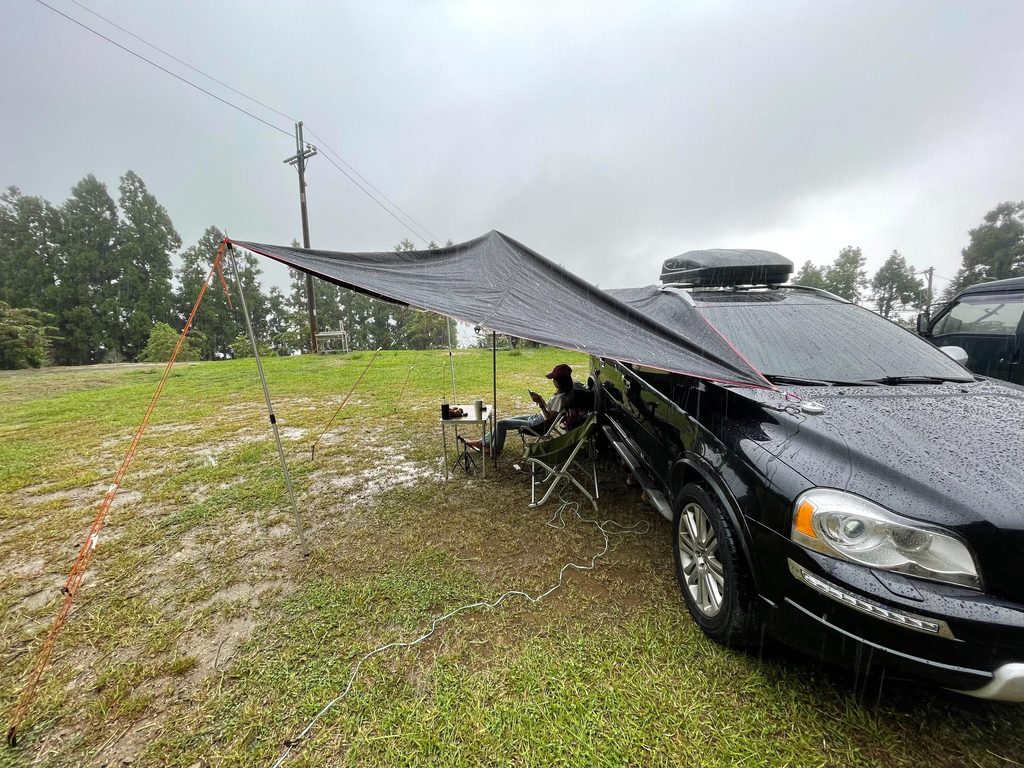
Rain doesn’t have to ruin a camping trip.
With the right campsite, tent setup, and a few simple habits, you can stay relatively dry and comfortable even when the weather turns wet.
The key is to prevent water from getting inside in the first place.
In this guide, we’ll cover practical ways to keep your tent dry while camping in the rain, including choosing the right campsite, setting up your rainfly, managing wet gear, and dealing with condensation.
Choose Your Campsite Carefully
Where you place your tent can make a huge difference during rainy weather.
Avoid areas where water naturally collects.
Stay away from:
- Depressions in the ground
- Muddy areas
- Dry creek beds
- Areas directly underneath damaged trees
- Places where water appears to flow downhill
Look for a relatively level area with good drainage.
A campsite that looks comfortable in dry weather can become very different after several hours of rain.
Use Your Tent Rainfly Correctly
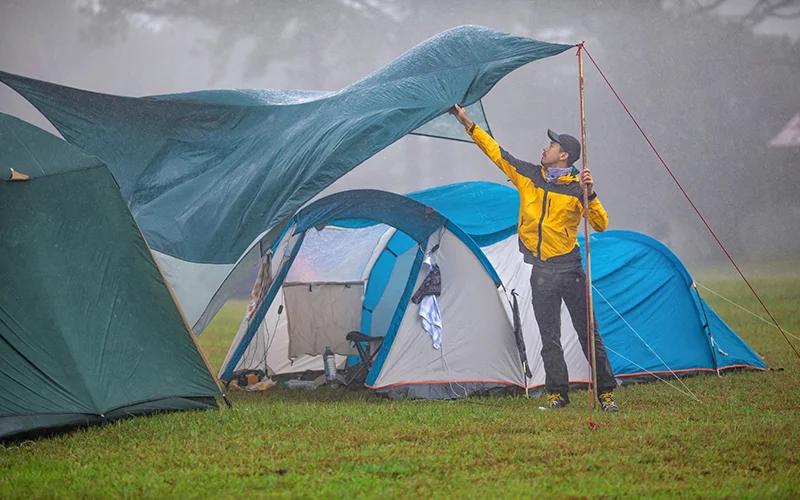
Your rainfly is one of your most important defenses against rain.
Make sure it is properly installed and positioned according to the tent manufacturer’s instructions.
The rainfly should generally extend over the tent body and provide adequate coverage.
Check that:
- The rainfly is properly attached
- The seams and connections are secure
- Water isn’t pooling on top
- The fly isn’t touching the inner tent unnecessarily
- Doors and windows are properly closed when needed
Use a Ground Tarp Carefully
A ground tarp or footprint can help protect the bottom of your tent.
However, it should not extend far beyond the edges of the tent floor.
If the tarp sticks out around the tent, rainwater can collect on it and potentially run underneath your tent.
For many setups, the footprint should be slightly smaller than the tent floor.
Keep Wet Gear Away From Your Sleeping Area

Wet jackets, shoes, towels, and other gear can quickly make the inside of your tent damp.
If your tent has a vestibule, use it to store wet gear when appropriate.
You can also use waterproof bags or separate storage containers for items that need to stay dry.
Try to keep the sleeping area reserved for dry clothing, bedding, and other essentials.
Take Off Wet Shoes Before Entering
One of the easiest ways to make your tent wet is to walk inside wearing muddy or soaked shoes.
Leave wet footwear in the vestibule or another protected area when possible.
If you need to enter the tent with wet shoes, use a designated mat or waterproof area to reduce moisture and mud.
Keep the Tent Ventilated
It might seem strange to open vents when it’s raining, but ventilation is extremely important.
A tent can become humid inside because of:
- Breathing
- Wet clothing
- Wet gear
- Cooking nearby
- Temperature differences
Use your tent’s built-in vents whenever possible.
Many tents are designed to provide airflow even when the rainfly is attached.
Good ventilation can help reduce condensation.
Don’t Cook Inside Your Tent
Never use a fuel-burning camping stove or lantern inside a tent or other enclosed shelter.
Fuel-burning equipment can produce carbon monoxide, an odorless and potentially deadly gas.
It also creates a serious fire risk.
If you need to cook during rainy weather, use a properly ventilated outdoor cooking area that follows the equipment manufacturer’s instructions and campground rules.
For more information about choosing a camping stove, see our guide:
[How to Choose a Camping Stove: A Beginner’s Guide]
Use a Tarp or Shelter Over Your Cooking Area
A separate tarp or canopy can make rainy camping much easier.
It can provide a dry area for:
- Cooking
- Eating
- Organizing gear
- Changing wet clothes
- Sitting outside the tent
If you use a tarp, make sure it is properly secured and positioned so that rainwater drains away from your tent and living area.
Protect Your Sleeping Bag
Your sleeping bag should stay as dry as possible.
Keep it inside the tent and avoid placing wet clothing or gear on top of it.
If you’re expecting heavy rain, consider using a waterproof stuff sack or dry bag for storage when the sleeping bag isn’t being used.
A wet sleeping bag can take a long time to dry in humid conditions.
Don’t Touch the Inside of the Rainfly
This is an easy mistake to make.
If the rainfly becomes wet, pressing it against the inner tent can allow moisture to transfer to the tent interior.
Try to keep adequate space between the rainfly and the inner tent body where your tent design allows it.
Proper tensioning can also help prevent the fly from sagging onto the tent.
Keep Your Tent Door Closed
When entering or leaving your tent during rain, open the door only as much as necessary.
A few seconds of an open door may not seem like much, but repeated exposure can allow rain to enter.
Take your shoes off and organize your gear near the entrance so you can get inside quickly without bringing water everywhere.
What If Your Tent Floor Gets Wet?
If water gets inside your tent, don’t panic.
First, determine where the water is coming from.
Possible causes include:
- Rain entering through the door
- Water running underneath the tent
- A poorly positioned footprint
- A leak in the rainfly
- Condensation
- Wet gear brought inside
Move wet gear away from the affected area and dry the floor with a towel or absorbent cloth.
If the problem continues, check the tent setup and surrounding ground conditions.
How to Dry Your Tent After Rain
When the weather improves, dry your tent as soon as possible.
Open the doors and vents and allow air to circulate.
If sunlight is available, place the tent in a safe location where it can dry.
Before storing your tent at home, make sure it is completely dry.
Storing a wet tent for an extended period can lead to mildew and unpleasant odors.
Rainy Camping Checklist
Before a rainy camping trip, check that you have:
- Tent rainfly
- Tent footprint
- Waterproof bags
- Dry bags
- Extra towels
- Rain jacket
- Waterproof footwear
- Tarp or shelter
- Extra dry clothing
- Tent repair kit
Final Thoughts
The best way to keep your tent dry in the rain is to prepare before the first drops arrive.
Choose a campsite with good drainage, set up your rainfly correctly, keep wet gear organized, and maintain ventilation.
Most importantly, don’t wait until your tent is already getting soaked to start thinking about rain protection.
A little preparation can make a rainy camping trip much more comfortable.
Want to learn more? Check out these related camping guides:
→ How to Prevent Condensation Inside a Tent
→ How to Choose a Camping Tarp: A Beginner’s Guide