
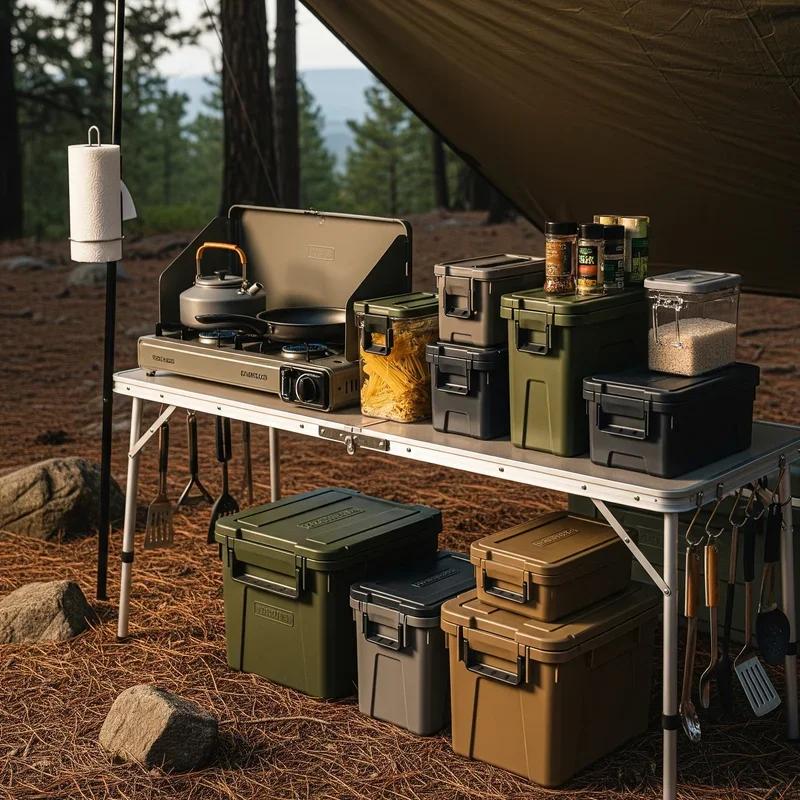
Food storage is one of the most important parts of a safe and comfortable camping trip.
Leaving food, drinks, trash, or scented items around your campsite can attract insects and wildlife. Poor food storage can also make your food spoil faster and create unnecessary messes around camp.
The good news is that proper camping food storage is fairly simple once you know what to do.
In this guide, you’ll learn how to store food safely while camping, how to organize your cooler and food containers, where to keep food at night, and how to keep your campsite clean.
Why Is Food Storage Important While Camping?
Food storage matters for two main reasons: food safety and wildlife safety.
First, perishable foods can spoil when they become too warm. Meat, dairy products, cooked foods, and other temperature-sensitive foods need to be kept cold.
Second, food smells can attract wildlife.
Animals may be attracted not only to food itself but also to food scraps, garbage, dirty dishes, drinks, cooking equipment, toiletries, and other scented items.
A clean and organized campsite reduces these problems and makes your camping experience much easier.
1. Keep Perishable Food Cold
If you’re bringing meat, dairy products, eggs, cooked meals, or other perishable foods, use a properly insulated cooler.
Keep the cooler closed as much as possible. Opening it repeatedly allows cold air to escape and warm air to enter.
A simple system is to use separate coolers when practical:
- One cooler for food
- One cooler for drinks
- A smaller cooler for items you use frequently
You don’t have to use multiple coolers, but separating frequently accessed drinks from food can help you avoid opening the main food cooler constantly.
2. Use a Good Camping Cooler
Your cooler is one of the most important pieces of equipment for camping food storage.
When choosing a cooler, consider:
- Size
- Insulation
- Ice retention
- Durability
- Portability
- Drainage
- Ease of cleaning
Don’t automatically buy the biggest cooler you can find.
A larger cooler takes up more space and can be heavier when filled with food and ice. Choose a size that matches the length of your trip and the amount of food you’re bringing.
For more help, see our guide on [How to Choose a Camping Cooler].
3. Organize Your Cooler Before Leaving Home
A little preparation can make your cooler much easier to manage.
Before your trip, organize food into sealed containers or bags.
For example:
Breakfast
- Eggs
- Bacon
- Fruit
- Yogurt
Lunch
- Sandwich ingredients
- Cheese
- Deli meat
- Vegetables
Dinner
- Meat
- Vegetables
- Sauces
- Prepared ingredients
You can also organize food by meal so you don’t have to dig through the entire cooler every time you cook.
4. Use Sealed Containers
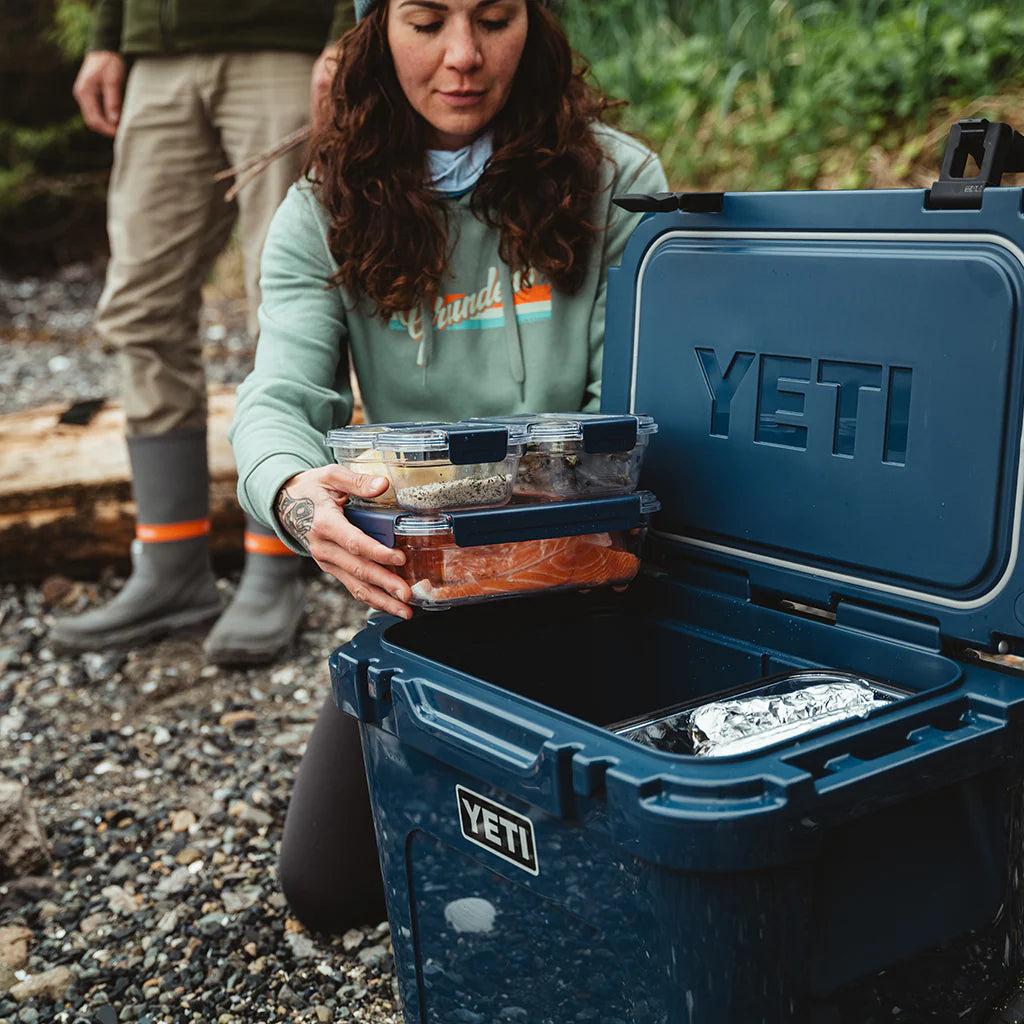
Whenever possible, keep food in sealed containers or resealable bags.
This helps prevent:
- Spills
- Leaks
- Cross-contamination
- Strong food odors
- Messes inside your cooler
Containers are especially useful for foods such as leftovers, sauces, cut vegetables, and prepared meals.
They also make packing and cleaning much easier.
5. Don’t Leave Food Sitting on the Picnic Table
A picnic table is a convenient place to prepare and eat food, but it shouldn’t become permanent food storage.
When you’re finished eating, clean up the area and put food away.
Never assume that food is safe simply because you’re sitting nearby.
Wildlife can enter campsites unexpectedly, and some animals are very good at finding food.
6. Keep Food Out of Your Tent
Never use your tent as a food storage area.
Food smells can attract animals, and a tent provides very little protection if an animal is interested in what is inside.
Don’t store food, snacks, drinks, or food waste next to your sleeping area.
This includes things that may seem harmless, such as:
- Candy
- Granola bars
- Fruit
- Pet food
- Drinks
- Food wrappers
- Leftovers
Keep food storage separate from your sleeping area.
7. Store Food in Your Vehicle When Appropriate
For many car campers and developed campgrounds, a vehicle can provide convenient food storage.
However, always follow the rules for the campground or park you’re visiting.
Some areas allow food to be stored inside a closed vehicle. Other areas require food and scented items to be placed in designated food lockers or approved wildlife-resistant containers.
If vehicle storage is allowed, keep food out of sight and make sure the vehicle is fully closed.
Never assume that the same storage rules apply everywhere.
8. Use Food Lockers When They Are Provided
Some campgrounds provide food storage lockers specifically designed to keep food away from wildlife.
If your campsite has a food locker, use it according to the campground’s instructions.
Depending on the location, you may need to store more than just food.
Items that can have strong odors may also need to be secured, including:
- Drinks
- Trash
- Cooking equipment
- Toiletries
- Pet food
- Coolers
- Food containers
Always check the local rules because food-storage requirements can vary by park and campground.
9. Keep Scented Items Away From Your Tent
Food isn’t the only thing that can attract animals.
Other scented items may also need to be secured depending on where you’re camping.
Examples include:
- Toothpaste
- Soap
- Shampoo
- Deodorant
- Sunscreen
- Pet food
- Cooking oil
- Trash
If you’re camping in an area with bears or other wildlife concerns, check the specific food-storage rules before your trip.
10. Clean Up Immediately After Cooking
Don’t wait until the next morning to clean your cooking area.
After every meal:
- Put leftover food away.
- Clean cooking equipment.
- Wash dishes.
- Collect food scraps.
- Put trash in the proper container.
- Wipe down tables and cooking surfaces.
- Check the ground for dropped food.
A few minutes of cleanup can prevent a much bigger problem later.
11. Don’t Leave Dirty Dishes Around Camp
Dirty cookware can still contain food smells and residue.
After cooking, clean your pots, pans, plates, utensils, and other cooking equipment as soon as practical.
Pay particular attention to:
- Grease
- Meat residue
- Sauces
- Food scraps
- Cooking oil
Don’t assume that an empty-looking pan is clean enough to leave outside.
For more information, see our guide on [How to Clean Camping Cookware Properly].
12. Don’t Burn Food or Trash in the Campfire
It may seem convenient to throw leftover food, food wrappers, or trash into a campfire.
Avoid doing this.
Food and trash may not burn completely and can leave behind odors, grease, or residue that attract animals.
Use the campground’s designated trash and waste-disposal system instead.
For more information about safe campfires, see our guide on [How to Build a Safe Campfire].
13. Keep Raw Meat Separate From Ready-to-Eat Food
If you’re bringing raw meat camping, keep it separated from foods that are ready to eat.
Use sealed packaging or containers and place raw meat where leaking juices cannot contaminate other foods.
A useful system is:
Raw meat → sealed container → bottom of cooler
Then keep ready-to-eat foods in separate containers above it.
Always wash your hands, utensils, and preparation surfaces after handling raw meat.
14. Don’t Overpack Perishable Food
One of the easiest ways to simplify camping food storage is to bring less perishable food.
Before your trip, think about:
- How many people are camping?
- How many meals are you cooking?
- How long is the trip?
- How much cooler space do you have?
- Will you have access to ice?
- Can you buy fresh food during the trip?
For a short camping trip, planning meals before leaving home can significantly reduce the amount of food you need to carry.
15. Choose Foods That Are Easy to Store
Some foods are naturally easier to manage at a campsite.
Examples include:
- Pasta
- Rice
- Tortillas
- Oatmeal
- Nuts
- Dried fruit
- Granola
- Peanut butter
- Canned foods
- Shelf-stable packaged foods
These foods can be useful when you don’t want to depend heavily on cooler space.
For longer trips, combine shelf-stable foods with a smaller amount of refrigerated food.
16. Keep Your Food Storage Area Organized
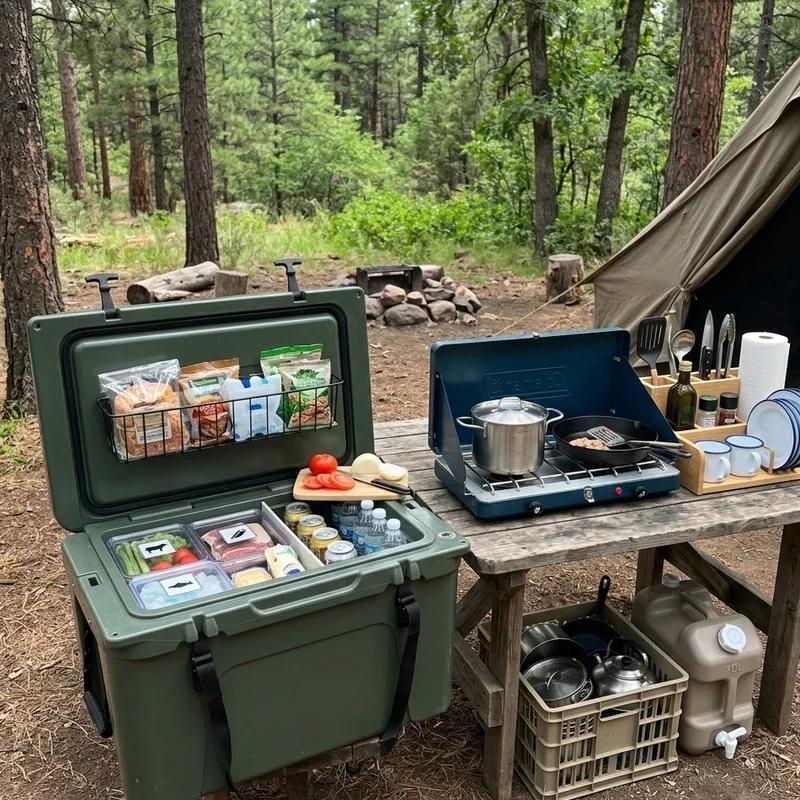
Don’t let your campsite become a pile of coolers, bags, food packages, and cooking equipment.
Create a simple food-storage system.
For example:
Food Zone
- Cooler
- Dry food container
- Water
- Cooking ingredients
Cooking Zone
- Stove
- Cookware
- Utensils
- Cutting board
Cleaning Zone
- Dishwashing supplies
- Trash bag
- Towels
Keeping these areas organized makes cooking faster and cleanup easier.
17. Store Food Before Leaving the Campsite
One of the most important habits is securing food before you leave your campsite.
Don’t leave food sitting on the picnic table while you go hiking.
Before leaving:
- Put food away.
- Secure the cooler.
- Store trash properly.
- Clean cooking equipment.
- Remove food scraps.
- Check the campsite for anything that could attract wildlife.
This is especially important in areas where bears or other large wildlife are present.
18. Food Storage at Night
Before going to sleep, do a final campsite check.
Ask yourself:
Is there any food outside?
Is there any trash outside?
Are dirty dishes outside?
Are scented items unsecured?
Is the cooler stored according to local rules?
Is anything inside or near the tent that smells like food?
If the answer to any of these questions is yes, fix it before going to bed.
A few extra minutes at night can make your campsite much safer and cleaner.
19. Follow Local Wildlife Rules
Camping food-storage rules can vary significantly between locations.
Some campgrounds may allow food inside a vehicle.
Others may require food to be stored in:
- Bear lockers
- Wildlife-resistant containers
- Designated food-storage areas
- Approved hanging systems
Some areas may also have specific rules for coolers, trash, cooking equipment, or toiletries.
Always check the official rules for the campground, national park, forest, or public land where you’re camping.
Never rely on rules from a different campground.
20. What Should You Do With Leftover Food?
Try to plan meals so you don’t have a large amount of leftover food.
If you do have leftovers:
- Seal them properly.
- Keep perishable foods cold.
- Store them according to local wildlife rules.
- Eat them while they are still safe.
- Pack out anything you cannot safely consume.
Never leave leftover food behind at a campsite.
Common Camping Food Storage Mistakes
Here are some common mistakes beginners make.
Mistake 1: Leaving food on the picnic table
Food should not be left unattended.
Mistake 2: Keeping snacks inside the tent
Your tent is not a food-storage container.
Mistake 3: Leaving dirty dishes overnight
Food residue and odors can attract animals.
Mistake 4: Storing trash next to the tent
Trash can contain food odors even when the bag looks closed.
Mistake 5: Opening the cooler constantly
Frequent opening makes it harder to maintain a cold temperature.
Mistake 6: Bringing too much food
Overpacking creates unnecessary cooler space, weight, and waste.
Mistake 7: Ignoring local food-storage rules
Rules can change from one campground to another.
Mistake 8: Assuming a cooler is automatically wildlife-proof
A regular cooler is designed primarily for keeping food cold, not necessarily for keeping wildlife out.
Simple Camping Food Storage Checklist
Before your camping trip:
- Plan your meals
- Choose the right cooler
- Prepare food at home when possible
- Pack food in sealed containers
- Separate raw and ready-to-eat foods
- Bring enough ice or another appropriate cooling method
- Check local food-storage rules
- Bring trash bags
- Bring dish-cleaning supplies
At the campsite:
- Keep food organized
- Keep food out of the tent
- Keep the cooler closed
- Clean dishes after meals
- Pick up food scraps
- Secure trash
- Store scented items properly
- Secure food before leaving camp
- Secure food before going to sleep
Final Thoughts
Learning how to store food safely while camping doesn’t have to be complicated.
The basic idea is simple:
Keep food cold when necessary, keep food contained, keep your campsite clean, and follow local wildlife-storage rules.
Don’t leave food unattended, don’t store food in your tent, and don’t assume that the same storage rules apply everywhere.
A clean and organized food-storage system makes camping safer, easier, and more enjoyable.
Once you develop the habit of cleaning up after every meal and securing food before leaving camp or going to sleep, food storage becomes just another normal part of your camping routine.
Want to learn more? Check out these related camping guides:
→ How to Choose a Camping Cooler: A Beginner’s Guide
→ How to Clean Camping Cookware Properly
→ What Food Should You Bring Camping? Easy Meal Ideas for Beginners
→ How to Keep Food Cold While Camping Without a Fridge