

Cleaning camping cookware can be a little different from washing dishes at home.
At a campsite, you may have limited water, no kitchen sink, and nowhere convenient to wash greasy pots and pans. If you leave food residue or grease on your cookware, it can also create unpleasant odors and attract insects or animals.
The good news is that cleaning camping cookware doesn’t have to be difficult.
With a simple routine and a few basic supplies, you can keep your pots, pans, plates, and utensils clean and ready for your next trip.
This guide explains how to clean camping cookware properly, what supplies you need, how to deal with grease and burnt food, and how to clean your cookware when water is limited.
What Do You Need to Clean Camping Cookware?
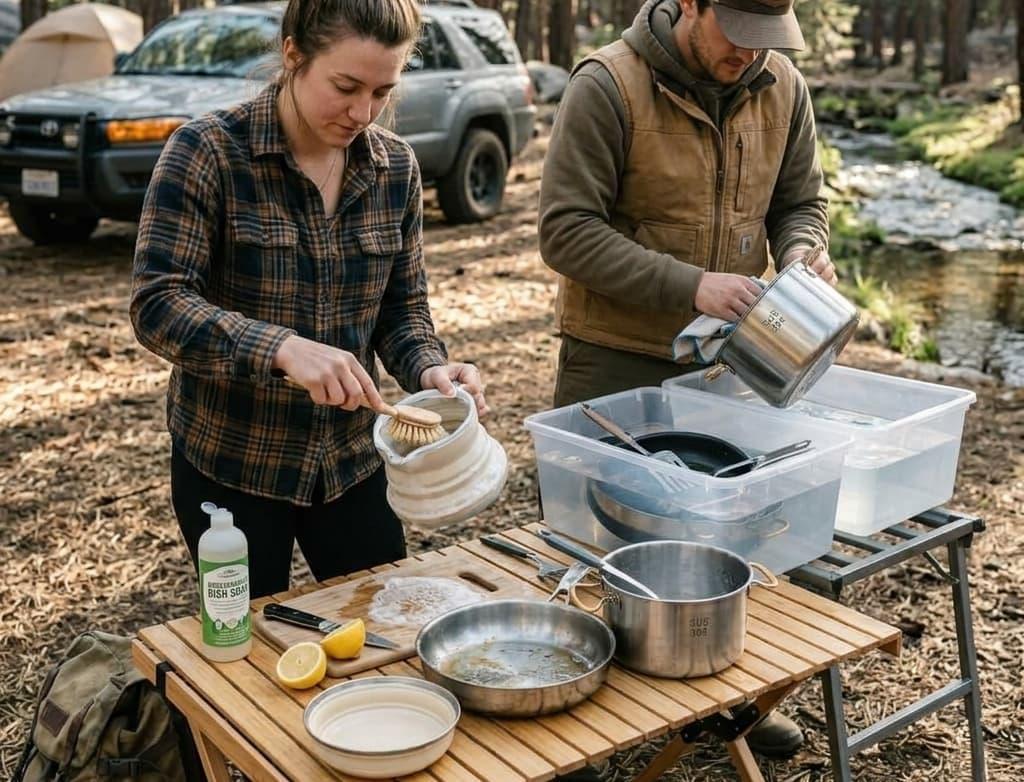
You don’t need a large collection of cleaning products.
A basic camping cookware cleaning kit can include:
- Biodegradable or campsite-appropriate dish soap
- Sponge or soft scrubber
- Small dish brush
- Microfiber or clean drying towel
- Scraper or spatula
- Small trash bags
- Water container
- Paper towels or reusable cleaning cloths
A small plastic tub or collapsible wash basin can also make cleaning much easier when you’re camping.
Before using soap or dumping wastewater, always check the campground’s rules.
Some campgrounds have designated dishwashing areas, while others may require you to wash dishes away from water sources.
Step 1: Remove Food Scraps First
The easiest way to clean camping cookware is to prevent large amounts of food from going into your wash water.
After eating, scrape leftover food into your trash container.
Use a spatula, spoon, or scraper to remove as much food as possible from:
- Pots
- Pans
- Plates
- Bowls
- Cooking utensils
Don’t dump food scraps onto the ground.
Even small amounts of food can attract insects and wildlife, depending on where you’re camping.
Removing food before washing also makes the rest of the cleaning process much easier.
Step 2: Wipe Out Excess Grease
Grease is one of the biggest problems when cleaning camping cookware.
If you put a greasy frying pan directly into your wash water, the water can quickly become dirty and difficult to manage.
Instead, wipe out as much grease as possible first.
You can use:
- Paper towels
- A reusable cloth
- A spatula
- A dedicated camping scraper
Place used paper towels or grease-soaked materials in your trash according to local campground rules.
Never pour cooking oil or grease onto the ground.
Step 3: Use Warm Water When Possible
Warm water makes it easier to remove grease and stuck-on food.
If you have access to hot water, you can use it to loosen residue before scrubbing.
For example, fill a pot with a small amount of warm water and let it sit for a few minutes.
This can soften dried food and make cleaning much easier.
You don’t need to use large amounts of water.
Using a small amount efficiently is especially helpful when you’re camping without a convenient water source.
Step 4: Scrub With a Sponge or Brush
Once the cookware has been pre-cleaned, use a sponge or brush to remove the remaining residue.
Pay particular attention to:
- Bottoms of pots
- Pan surfaces
- Handles
- Corners
- Around rivets
- Areas where food gets stuck
For most cookware, a soft sponge or dish brush is enough.
Avoid using an aggressive scrubber on nonstick cookware because it can damage the coating.
Step 5: Deal With Burnt Food
Burnt food can be much harder to remove than normal food residue.
Don’t immediately start aggressively scraping the cookware.
Instead, add some warm water to the pot or pan and let it soak.
After several minutes, try loosening the burnt food with a wooden or plastic utensil.
For stubborn residue, you can repeat the soaking process.
Patience is often better than aggressive scrubbing.
What About Cast Iron?
Cast iron requires slightly different care.
Avoid leaving cast iron soaking in water for long periods because prolonged moisture can encourage rust.
After cleaning, dry cast iron thoroughly.
Some cast iron cookware also benefits from a light layer of cooking oil after cleaning to help maintain the seasoning.
Always follow the manufacturer’s care instructions for your specific cookware.
Step 6: Rinse Thoroughly
After scrubbing, rinse the cookware with clean water.
Make sure there is no remaining:
- Soap
- Food residue
- Grease
- Cleaning solution
If you’re using a wash basin, you can use one container for washing and another for rinsing.
This can make campsite dishwashing much more efficient.
Step 7: Dry Your Cookware Completely
Don’t put wet cookware directly into a storage container.
Moisture trapped inside a closed container can lead to:
- Bad odors
- Mold
- Mildew
- Rust
- Unpleasant storage conditions
Use a clean towel to remove excess water, then allow the cookware to air dry if possible.
Before packing everything away, make sure it is completely dry.
How to Clean Camping Cookware With Limited Water
Water can be one of the biggest challenges when camping.
You don’t always have access to a sink or unlimited running water.
A simple low-water cleaning method works well.
1. Scrape First
Remove as much food as possible before adding water.
2. Wipe the Cookware
Use a paper towel or reusable cloth to remove grease and residue.
3. Wash With a Small Amount of Water
Use a small basin or container rather than running water continuously.
4. Rinse Efficiently
Use a separate small amount of clean water for rinsing.
5. Dry Completely
Towel-dry and air-dry before packing.
This method can significantly reduce the amount of water you need.
Should You Use Soap When Camping?
In most situations, soap can be useful for cleaning cookware.
However, don’t assume that a product labeled “biodegradable” can be dumped directly into a lake, river, or stream.
Biodegradable soap still needs to be used responsibly.
Follow the campground’s wastewater rules and local regulations.
When required, collect your dishwater and dispose of it in the designated location.
Never dump dirty dishwater directly into natural water sources.
Food particles and soap can affect wildlife and water quality.
What Should You Do With Dirty Dishwater?
This depends on where you’re camping.
Campgrounds may have different rules for handling wastewater.
Some provide designated sinks or dishwashing stations.
Others may require you to carry wastewater away or dispose of it in a specific area.
Before washing dishes, check the campground’s rules.
If you’re camping in a backcountry or dispersed camping area, follow the applicable Leave No Trace practices and local regulations.
The basic principle is simple:
Don’t leave food, grease, or soapy water behind at your campsite.
How to Clean a Greasy Frying Pan
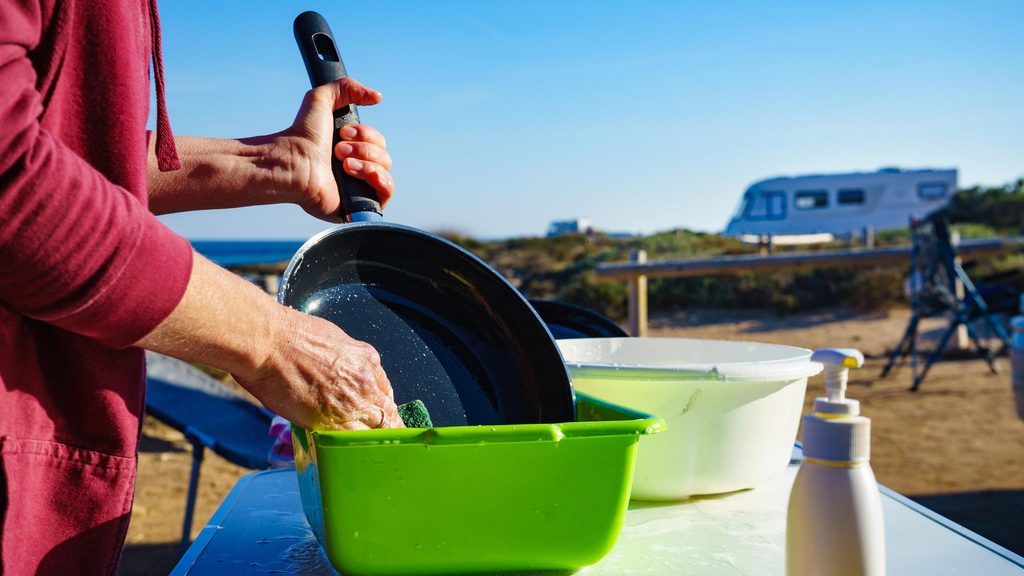
Frying pans can be especially difficult because of cooking oil.
Here’s a simple method:
- Let the pan cool.
- Scrape out leftover food.
- Wipe out excess oil.
- Add a small amount of warm water.
- Scrub with a sponge or brush.
- Rinse thoroughly.
- Dry completely.
Never pour cooking oil into a campsite drain, sink, stream, or onto the ground.
Allow grease to cool and dispose of it properly according to local rules.
How to Clean a Camping Pot
Camping pots are usually easier to clean than frying pans.
For normal food residue:
- Remove leftover food.
- Add warm water.
- Let the pot soak briefly.
- Scrub the inside.
- Clean the outside if necessary.
- Rinse.
- Dry completely.
If food is badly stuck, soaking the pot longer is usually safer than using excessive force.
How to Clean Nonstick Camping Cookware
Nonstick cookware requires extra care.
Avoid:
- Metal utensils
- Steel wool
- Aggressive scrubbing
- Sharp scraping tools
Instead, use:
- Soft sponges
- Soft brushes
- Wooden utensils
- Plastic or silicone scrapers
Once the nonstick coating becomes badly scratched or damaged, the cookware may no longer perform properly.
Follow the manufacturer’s cleaning instructions whenever possible.
How to Clean Stainless Steel Camping Cookware
Stainless steel cookware is generally durable and can handle more aggressive cleaning than nonstick cookware.
For normal food residue, warm water and dish soap are usually enough.
For stubborn food:
- Soak the cookware.
- Use a sponge or suitable scrubber.
- Gently work on the stuck area.
- Rinse thoroughly.
- Dry completely.
Avoid unnecessary aggressive scrubbing that could scratch the surface.
How to Prevent Camping Cookware From Getting Too Dirty
The easiest way to clean cookware is to keep it from becoming excessively dirty in the first place.
A few simple habits can help.
Cook With a Lid
Using a lid can reduce splattering and make cooking more efficient.
Don’t Burn Food
Use appropriate heat and keep an eye on your food.
Burnt food is much harder to clean.
Use the Right Amount of Oil
Excess oil creates more cleanup.
Clean Soon After Eating
Don’t leave dirty cookware sitting for hours.
Food residue becomes harder to remove as it dries.
Pack a Simple Cleaning Kit
Keep your sponge, brush, soap, scraper, and towels together so they’re easy to find.
Can You Put Camping Cookware in a Dishwasher?
Some camping cookware is dishwasher-safe, but not all of it.
Always check the manufacturer’s instructions.
In particular, be careful with:
- Nonstick cookware
- Anodized aluminum
- Cast iron
- Specialized coatings
- Wooden handles or accessories
If you’re unsure, hand washing is usually the safer option.
How to Store Clean Camping Cookware
Once your cookware is clean and dry, organize it before putting it away.
A simple system is to keep:
- Pots together
- Pans together
- Utensils together
- Plates and bowls together
- Cleaning supplies together
If your cookware nests inside itself, place smaller items inside larger pots to save space.
Make sure everything is completely dry before closing the storage container.
A breathable storage bag can also be useful for certain items.
Don’t Store Cookware With Wet Cleaning Supplies
One common mistake is packing everything together while it’s still damp.
For example, don’t place:
- Wet sponges
- Damp towels
- Wet cookware
inside a sealed storage box.
This can create a perfect environment for unpleasant odors and mold.
Allow cleaning supplies to dry before storing them.
A Simple Camping Cookware Cleaning Routine
If you want to keep the process simple, use this routine after every meal:
1. Scrape
Remove food scraps.
2. Wipe
Remove grease and excess residue.
3. Wash
Use warm water and a small amount of appropriate soap.
4. Scrub
Remove remaining food.
5. Rinse
Remove soap and residue.
6. Dry
Towel-dry and air-dry when possible.
7. Store
Pack everything only after it is completely dry.
This simple routine prevents most camping cookware problems.
Camping Cookware Cleaning Checklist
Before leaving your campsite, check:
- Food scraps removed
- Grease removed
- Pots and pans washed
- Plates and bowls washed
- Utensils cleaned
- Cookware rinsed
- Cookware completely dry
- Dishwater disposed of properly
- Food and grease waste packed out
- Cleaning supplies packed
- Campsite left clean
Final Thoughts
Cleaning camping cookware doesn’t have to be complicated.
The key is to scrape food, wipe away grease, use water efficiently, clean the cookware properly, and dispose of wastewater responsibly.
A simple cleaning routine also makes your next camping trip easier because your cookware will be ready to use instead of covered in old food and grease.
You don’t need a huge camping kitchen to keep things clean.
A small cleaning kit, a little preparation, and good campsite habits are usually enough.
Clean cookware makes camping easier, more comfortable, and much more enjoyable.
Want to learn more? Check out these related camping guides:
→ Camping Cookware: What Do You Actually Need?