
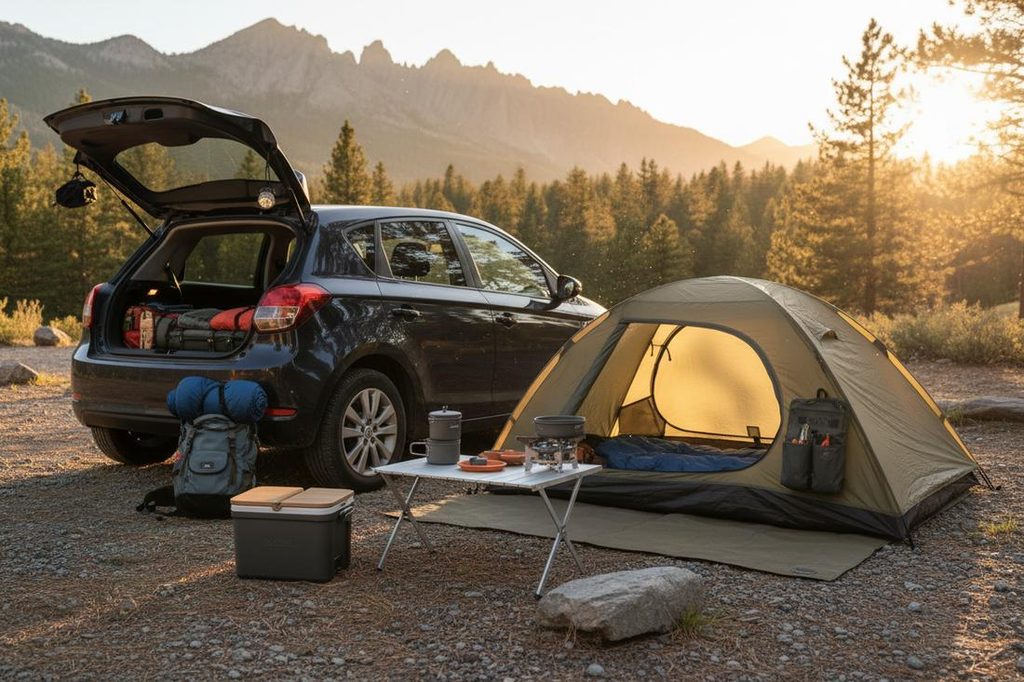
Starting camping can feel overwhelming.
There are tents, sleeping bags, sleeping pads, camping stoves, coolers, lanterns, chairs, tables, power stations, and countless gadgets designed to make outdoor life more comfortable.
The good news? You don’t need all of them to start camping.
If you’re a beginner, the best approach is to build a simple camping setup around the things that actually matter: shelter, sleep, food, water, lighting, and basic safety.
This guide will help you understand what camping gear you really need, what you can skip, and how to build your setup without spending more than necessary.
What Camping Gear Do You Actually Need?
For a basic car camping trip, you can start with a surprisingly small amount of gear.
Your essential setup should include:
- Tent
- Sleeping bag or other sleeping system
- Sleeping pad
- Camping stove or simple cooking method
- Cookware
- Water
- Cooler or food storage
- Headlamp or flashlight
- Lantern
- Camping chair
- Basic first-aid and emergency supplies
Everything else is optional.
Your camping style, trip length, weather, and personal comfort level will determine what you add later.
1. Tent
Your tent is your primary shelter.
For beginners, you don’t necessarily need an expensive or highly technical tent. A simple tent that is easy to set up and provides enough room for everyone is usually a better starting point.
When choosing a tent, consider:
- Number of people
- Weather conditions
- Tent size
- Setup time
- Packed size
- Ventilation
- Rain protection
For car camping, weight and packed size are usually less important than they are for backpacking.
That means you can choose a larger and more comfortable tent without worrying too much about carrying it long distances.
Tip: Practice setting up your tent at home before your first camping trip.
2. Sleeping Bag
A sleeping bag keeps you warm while you sleep.
The most important thing to look at is the temperature rating.
Don’t choose a sleeping bag simply because it has the lowest temperature rating. Instead, think about the actual temperatures you expect during your trip.
Other factors include:
- Insulation type
- Shape
- Size
- Weight
- Packed size
- Moisture resistance
For most beginners, a comfortable and practical sleeping bag is more important than buying an expensive ultralight model.
3. Sleeping Pad
A sleeping pad is one of the most important pieces of camping gear.
It provides cushioning between your body and the ground, but it also helps insulate you from the cold ground.
You can choose from:
- Closed-cell foam pads
- Inflatable sleeping pads
- Self-inflating pads
- Air mattresses
For car camping, comfort is often more important than minimizing weight.
A thicker sleeping pad can make a major difference if you are a side sleeper or simply want a more comfortable night’s sleep.
4. Camping Stove
If you plan to cook at your campsite, you’ll need a way to prepare food.
Common camping stove options include:
- Canister stoves
- Propane stoves
- Wood-burning stoves
A simple canister or propane stove is usually enough for beginners.
You don’t need a large outdoor kitchen for your first few trips.
A basic stove, one pot or pan, and a few utensils can prepare most simple camping meals.
Never use a camping stove inside a tent or other enclosed space.
5. Camping Cookware
You don’t need a huge camping cookware set.
For a basic setup, you may only need:
- One pot
- One frying pan
- Cooking spoon or spatula
- Knife
- Cutting board
- Plates or bowls
- Cups
- Eating utensils
If you’re car camping, you can even start with some of the cookware you already have at home.
Specialized camping cookware becomes more useful when you want to reduce weight, save space, or make your setup more convenient.
6. Cooler and Food Storage
A cooler is extremely useful for car camping.
It allows you to keep food and drinks cold without needing electricity.
When choosing a cooler, consider:
- Capacity
- Insulation
- Ice retention
- Size
- Weight
- Ease of cleaning
You don’t necessarily need the biggest cooler available.
A cooler that’s appropriately sized for your trip can be easier to carry and organize.
Also remember to store food properly and follow the rules of the campground or public land you’re visiting.
7. Water
Water is more important than most camping gadgets.
You need water for:
- Drinking
- Cooking
- Cleaning
- Washing dishes
- Basic hygiene
Before your trip, check whether your campground provides potable water.
If it doesn’t, you’ll need to bring enough water with you.
As a general planning guideline, many campers start by estimating around 1 gallon of drinking water per person per day, then add additional water for cooking and cleaning depending on the trip.
Hot weather and physical activity can increase your needs.
8. Headlamp or Flashlight
Never underestimate how dark a campsite can become at night.
A headlamp is especially useful because it keeps both hands free while you’re:
- Setting up camp
- Cooking
- Walking around the campsite
- Looking for something in your car
- Using the restroom at night
A small flashlight can also be useful as a backup.
9. Camping Lantern
A headlamp is great for personal use, but a lantern can illuminate your entire campsite.
You can place one on a camping table, inside a designated shelter area, or near your cooking setup.
You don’t need several expensive lanterns.
For most beginners, one reliable lantern plus a headlamp is enough.
10. Camping Chair
A camping chair isn’t essential for survival, but it can make a campsite much more comfortable.
After hiking, cooking, or setting up your tent, having somewhere comfortable to sit is a big part of enjoying camp.
Look for:
- Comfortable seat height
- Stable legs
- Reasonable packed size
- Durable fabric
- Weight capacity appropriate for the user
You don’t need the most expensive camping chair on the market.
11. Basic Safety Gear
Camping doesn’t require a huge emergency kit, but you should always be prepared for basic problems.
Consider bringing:
- First-aid kit
- Extra flashlight or headlamp
- Extra batteries
- Emergency blanket
- Basic repair tape
- Multi-purpose tool
- Fire starter where permitted
- Extra food
- Extra water
- Portable power bank
- Weather-appropriate clothing
If you’re driving to your campsite, your vehicle should also have basic emergency supplies.
12. Clothing Is Camping Gear Too
Good clothing can make a bigger difference than many camping gadgets.
Think in layers rather than relying on one heavy piece of clothing.
A basic camping clothing system might include:
- Moisture-wicking base layer
- Insulating mid layer
- Weather-resistant outer layer
- Comfortable pants
- Warm socks
- Appropriate footwear
- Hat or beanie depending on conditions
- Rain jacket when needed
Always check the weather forecast before leaving.
A warm afternoon doesn’t necessarily mean a warm night.
What Camping Gear Can You Skip?
One of the biggest mistakes beginners make is buying too much gear before their first trip.
You probably don’t need:
- A large camping kitchen
- Multiple tables
- Several camping chairs
- An expensive power station
- A generator
- A portable camping shower
- Specialized coffee equipment
- Dozens of cooking utensils
- Multiple lanterns
- Expensive storage systems
- Every camping gadget you see online
Start with the basics.
After each trip, ask yourself:
What did I actually use?
Then ask:
What did I wish I had?
That gives you much better information than buying gear based on what looks useful online.
A Simple Beginner Camping Gear Setup
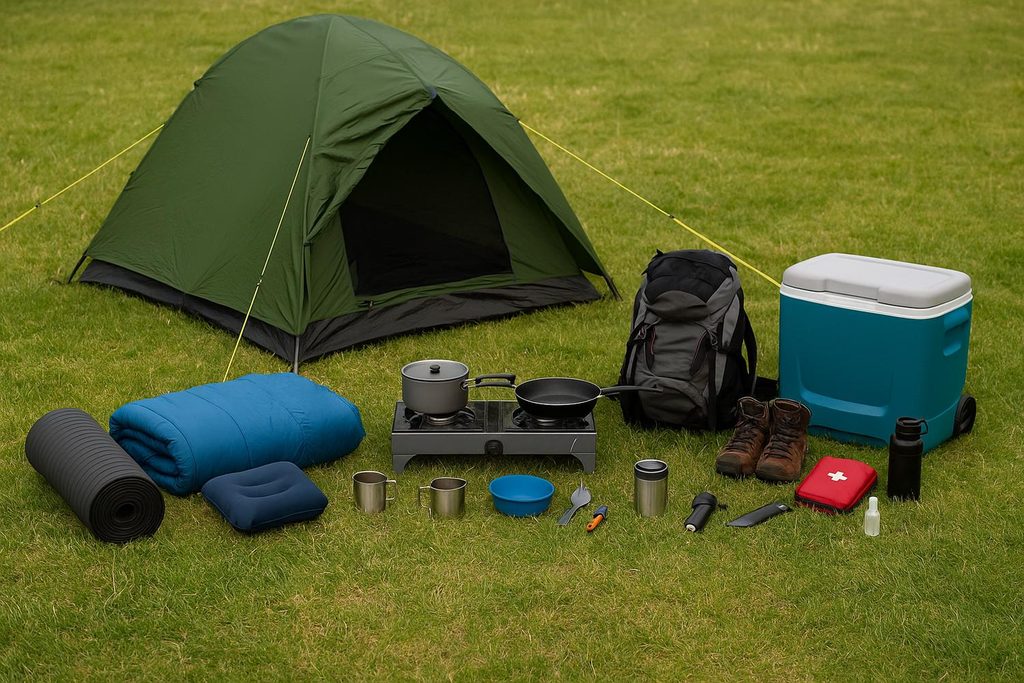
If you want to keep things simple, your first setup could look like this:
Shelter
- Tent
- Tent footprint if appropriate
- Rainfly
Sleeping
- Sleeping bag
- Sleeping pad
- Pillow
Cooking
- Camping stove
- Fuel
- Pot or pan
- Basic utensils
- Plates and cups
Food and Water
- Cooler
- Drinking water
- Food
- Trash bags
Lighting
- Headlamp
- Lantern
- Spare batteries
Comfort
- Camping chair
- Small table if needed
Safety
- First-aid kit
- Emergency supplies
- Weather-appropriate clothing
That’s enough to enjoy a basic car camping trip without turning your campsite into a small outdoor apartment.
How Much Should You Spend on Camping Gear?
You don’t need to buy everything at once.
A smart way to build your setup is in stages.
Stage 1: Essentials
Start with:
- Tent
- Sleeping system
- Stove
- Basic cookware
- Cooler
- Water containers
- Lighting
- Basic safety supplies
Stage 2: Comfort
Once you’ve completed a few trips, consider:
- Better sleeping pad
- More comfortable chair
- Larger cooler
- Camping table
- Better lighting
- Improved storage
Stage 3: Convenience
Only after you know what you actually need should you consider:
- Power stations
- Portable refrigerators
- Advanced cooking equipment
- Large shelters
- Specialty camping furniture
- Extra electronics
This approach can save you a lot of money.
Buy Used or Borrow Before Buying New
Camping gear can be expensive, especially when you’re building a complete setup from scratch.
Before buying everything new, consider:
- Borrowing from friends or family
- Renting equipment
- Buying used gear
- Checking local outdoor gear sales
- Buying during seasonal promotions
Tents, chairs, tables, and some other equipment can often be found used in good condition.
However, inspect used gear carefully for damage, mold, broken parts, worn seams, or missing components.
For safety-critical equipment, be more cautious about buying used.
Match Your Gear to Your Camping Style
There is no single perfect camping setup.
A backpacker needs very different equipment from someone who drives an SUV directly to a campground.
For example:
Backpacking:
Lightweight, compact, minimal gear.
Car Camping:
More space, more comfort, larger equipment.
Cold-Weather Camping:
More insulation, warmer sleeping systems, weather-resistant clothing.
Summer Camping:
Ventilation, shade, hydration, and heat management become more important.
Car Camping With Family:
More sleeping space, food storage, seating, and organization.
The best gear is the gear that fits the way you actually camp.
A Beginner Camping Gear Checklist
Before leaving home, check:
Shelter
- Tent
- Rainfly
- Tent stakes
- Tent poles
Sleeping
- Sleeping bag
- Sleeping pad
- Pillow
Cooking
- Stove
- Fuel
- Pot or pan
- Utensils
- Knife
- Plates and cups
Food and Water
- Food
- Drinking water
- Cooler
- Ice
- Trash bags
Lighting
- Headlamp
- Lantern
- Spare batteries
Clothing
- Warm layers
- Rain gear
- Extra socks
- Appropriate footwear
Safety
- First-aid kit
- Emergency supplies
- Phone
- Portable power bank
Comfort
- Camping chair
- Small table if needed
Final Thoughts
You don’t need a garage full of camping equipment to start enjoying the outdoors.
A good beginner setup is simple:
Shelter + sleeping system + food + water + lighting + safety.
Once you’ve completed a few camping trips, you’ll learn what actually improves your experience.
That’s when you can start upgrading your gear based on your own needs rather than buying everything at once.
The goal isn’t to own the most camping gear.
The goal is to have the right gear for the way you camp.