
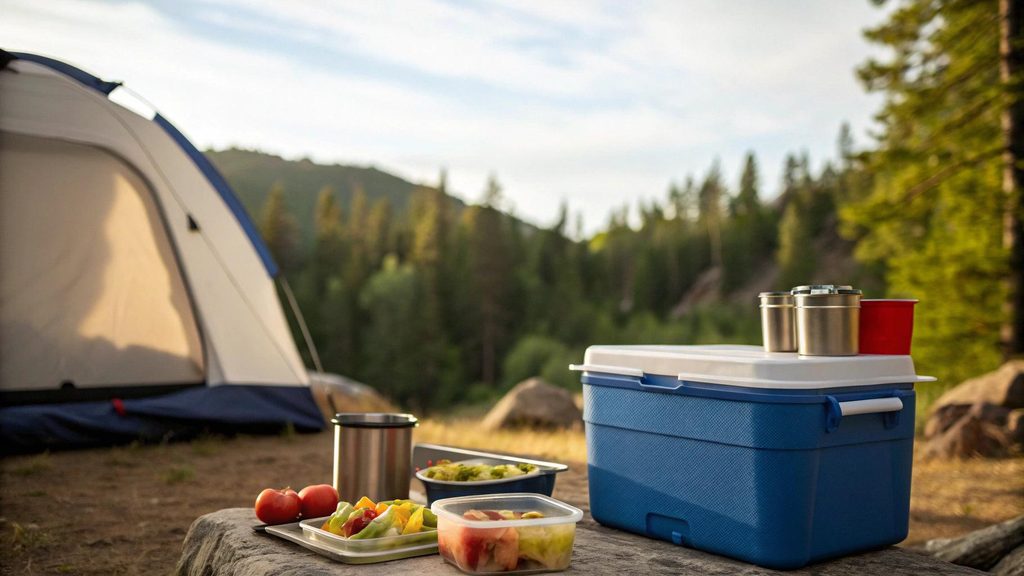
Choosing a camping cooler sounds simple until you start comparing sizes, insulation, ice retention, and different cooler styles.
A small cooler may be easy to carry but run out of space quickly. A large cooler can keep more food and drinks cold, but it can also be heavy and difficult to transport.
So, how do you choose the right camping cooler?
The best cooler for camping depends on how many people you’re camping with, how long your trip will be, what food you plan to bring, and how far you need to carry the cooler.
This guide explains what to look for when choosing a camping cooler so you can find the right size and style without spending more than you need to.
What Makes a Good Camping Cooler?
A good camping cooler should do more than simply hold ice.
For most campers, the most important features are:
- Good insulation
- Enough storage space
- Reliable ice retention
- Durable construction
- Comfortable handles
- Easy cleaning
- A size that fits your camping setup
- A reasonable weight when fully loaded
You don’t necessarily need the most expensive cooler available.
For a weekend camping trip, a basic well-insulated cooler may be more than enough.
How Big of a Cooler Do You Need for Camping?
Cooler size is one of the most important things to consider.
A cooler that’s too small can become frustrating because food and drinks quickly take up all the available space. On the other hand, a cooler that’s too large can be unnecessarily heavy.
As a general starting point:
| Camping Situation | Suggested Cooler Size |
|---|---|
| Solo or short day trip | 15–25 quarts |
| 1–2 people for a weekend | 25–45 quarts |
| 2–4 people for a weekend | 45–65 quarts |
| 4+ people or longer trips | 65+ quarts |
These are general guidelines rather than strict rules.
The amount of food, drinks, ice, and personal preference can make a big difference.
If you’re driving directly to your campsite, you can usually choose a larger cooler without worrying too much about weight.
If you have to carry your cooler a long distance from the parking area, a smaller and lighter model may be a better choice.
What Does Cooler Capacity Mean?
Cooler capacity is usually measured in quarts.
A larger number means more internal storage space, but the actual usable space can vary between cooler designs.
For example, two coolers with the same listed capacity may have different internal dimensions because of differences in insulation thickness and construction.
When comparing coolers, don’t look only at the number of quarts.
Think about what you actually need to fit inside.
A cooler may need space for:
- Water bottles
- Canned drinks
- Meat
- Vegetables
- Fruit
- Eggs
- Cheese
- Condiments
- Ice or ice packs
If you’re camping with a family, food can take up much more space than you expect.
How Long Do Camping Coolers Keep Ice?
Ice retention is another important factor.
Some coolers are designed to keep ice for several days under suitable conditions, while basic coolers may warm up much faster.
However, advertised ice-retention times should not be treated as a guarantee.
Actual performance depends on factors such as:
- Outside temperature
- How often you open the cooler
- How much ice you use
- How full the cooler is
- Whether the cooler is pre-chilled
- How much food is already cold
- Whether the cooler is sitting in direct sunlight
A cooler sitting in the hot sun and being opened frequently will generally perform differently from one kept in the shade and opened only a few times per day.
Hard Coolers vs Soft Coolers
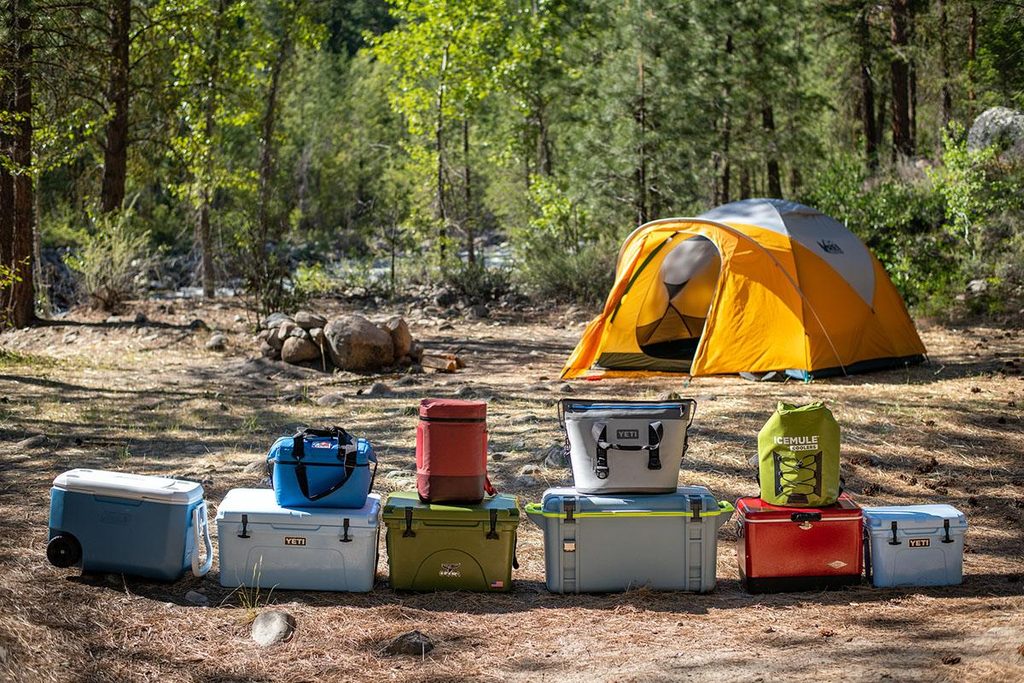
Camping coolers generally fall into two major categories: hard coolers and soft coolers.
Hard Coolers
Hard coolers have rigid walls and are usually made from molded plastic or similar materials.
Advantages include:
- Better durability
- Good insulation
- More protection for food
- Useful as a seat in some cases
- Good for longer camping trips
- Easy to stack and organize
Hard coolers are usually the better choice for traditional car camping.
They’re especially useful when you need to store a significant amount of food and drinks.
Soft Coolers
Soft coolers are lighter and easier to carry.
They often look more like insulated bags and may have shoulder straps or backpack-style designs.
Advantages include:
- Lightweight
- Easy to carry
- Convenient for short trips
- Easier to store
- Good for hiking, picnics, and day trips
A soft cooler can be a great option if portability is more important than maximum ice retention.
Do You Need a High-End Camping Cooler?
Not necessarily.
Premium coolers can offer excellent insulation, durability, and ice retention, but that doesn’t mean every camper needs one.
For example, a beginner who camps a few times each summer may not need an expensive cooler designed for extended trips.
A more affordable cooler may be perfectly adequate for:
- Weekend camping
- Short road trips
- Day trips
- Backyard camping
- Occasional family camping
Before spending a lot of money, think about how often you’ll actually use the cooler.
If you camp frequently and depend heavily on your cooler for several-day trips, investing in a higher-quality model can make more sense.
How Much Ice Do You Need?
Ice takes up valuable cooler space, but it’s an important part of keeping food cold.
As a general rule, you want enough ice or frozen packs to maintain a consistently cold environment around your food.
Instead of filling the cooler almost entirely with loose ice, consider using a combination of:
- Bagged ice
- Reusable ice packs
- Frozen water bottles
- Pre-chilled food and drinks
Pre-chilling your food and drinks can also reduce the amount of work your cooler has to do.
Avoid putting warm food into the cooler whenever possible.
Should You Use Ice or Ice Packs?
Both can work well.
Loose Ice
Loose ice is inexpensive and easy to find at most convenience stores, gas stations, and grocery stores.
It’s especially useful when you need a large amount of cooling power.
The downside is that melting ice creates water that can make food wet and messy.
Reusable Ice Packs
Ice packs are convenient because they can be frozen again and reused.
They’re especially useful for:
- Short camping trips
- Lunches
- Drinks
- Keeping food organized
- Soft coolers
Many campers use both ice and reusable ice packs depending on the trip.
Keep Food and Drinks Separate When Possible
One cooler can work, but using separate coolers can sometimes make your camping setup much easier.
For example, you could use:
Cooler 1: Food
Cooler 2: Drinks
Why?
Because drinks are often accessed much more frequently.
Every time you open the cooler, warm air enters and cold air escapes.
If you have a separate drink cooler, you can keep your food cooler closed more often.
For longer camping trips, this can be a practical setup.
What Should You Put in a Camping Cooler?
A camping cooler can hold much more than drinks.
Common camping foods include:
- Meat
- Chicken
- Sausages
- Cheese
- Eggs
- Yogurt
- Fresh vegetables
- Fruit
- Butter
- Drinks
- Condiments
Try to organize the cooler so frequently used items are easy to access.
You can also place food in sealed containers or waterproof bags to reduce mess.
How to Pack a Camping Cooler
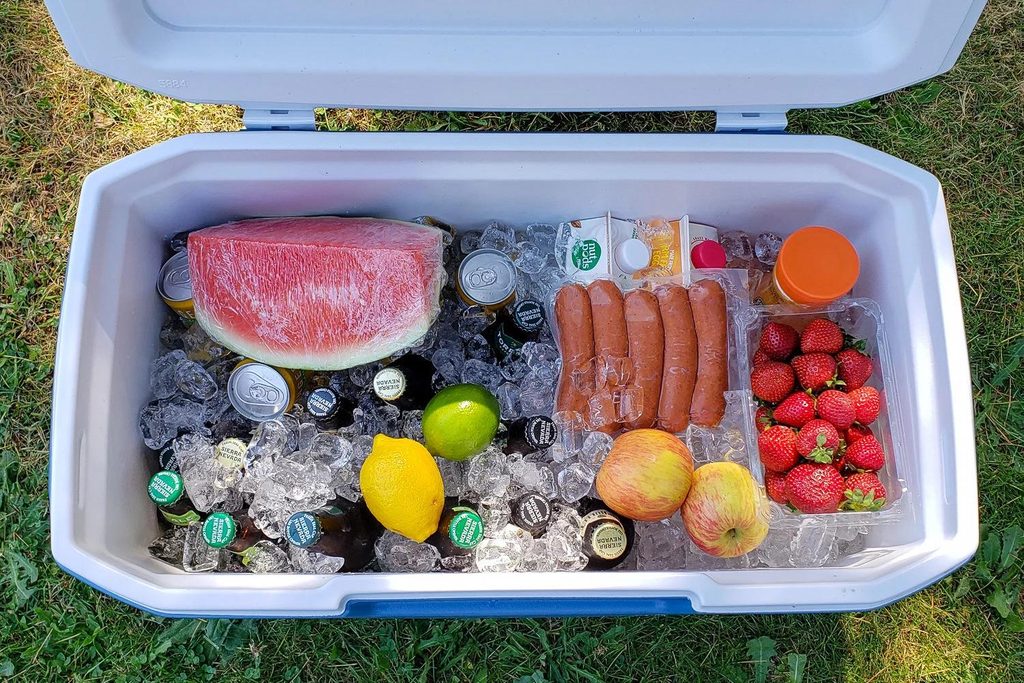
The way you pack a cooler can affect how efficiently you use the available space.
A simple approach is:
1. Pre-Chill the Cooler
If possible, cool the inside of the cooler before loading it.
2. Pre-Chill Food and Drinks
Don’t use your cooler to cool warm drinks if you can avoid it.
Start with everything already cold.
3. Add Ice or Ice Packs
Place enough cooling material around the food.
4. Pack Efficiently
Put larger items at the bottom and organize smaller items around them.
5. Keep the Cooler Closed
Open the cooler only when necessary.
6. Keep It in the Shade
Avoid leaving your cooler in direct sunlight whenever possible.
These simple steps can improve your cooler’s performance without buying more expensive equipment.
Where Should You Put Your Cooler While Camping?
Try to keep your cooler in a cool, shaded location.
Good options may include:
- Under a picnic table
- Inside a shaded area
- Under a canopy
- Inside your vehicle when temperatures are appropriate
- In another protected area away from direct sunlight
Don’t place your cooler directly next to a campfire.
High temperatures can make it much harder for the cooler to maintain a low internal temperature.
Camping Cooler vs Regular Household Cooler
You may wonder whether you actually need a cooler marketed specifically for camping.
Not always.
A regular insulated cooler can work perfectly well for short camping trips.
Camping-specific coolers may offer features such as:
- Thicker insulation
- More durable construction
- Better seals
- Stronger handles
- Larger capacity
- Better resistance to outdoor use
The important thing is performance, not the label on the product.
If your existing cooler keeps food cold and fits your needs, there’s no reason to replace it simply because you’re going camping.
What Features Should You Look For?
When comparing camping coolers, consider these features.
Insulation
Better insulation generally helps maintain a cold internal temperature for longer.
Lid Seal
A good seal can help reduce the exchange of warm and cold air.
Handles
Strong, comfortable handles are especially important for larger coolers.
Drain Plug
A drain plug makes it easier to remove melted ice and clean the cooler.
Durability
If you’re camping frequently, a durable cooler can be worth the investment.
Weight
Remember that the cooler will become much heavier once you add food, drinks, and ice.
Size
Make sure the cooler fits inside your vehicle and doesn’t take up more space than you’re willing to sacrifice.
What Size Cooler Is Best for Car Camping?
Car camping gives you more flexibility because you don’t have to carry everything very far.
For one or two people, a medium-sized cooler around 25–45 quarts can be a practical starting point.
For a family or a longer trip, a 45–65 quart cooler may provide more useful storage.
If you’re going on extended trips, you may even prefer multiple coolers instead of one huge cooler.
The best choice depends on your food and drink needs.
What Size Cooler Is Best for Backpacking?
A large hard cooler usually isn’t practical for backpacking.
Weight and portability become much more important.
For hiking or backpacking, campers generally look for lightweight soft coolers or insulated bags rather than large hard coolers.
If you’re carrying your gear on your back, every extra pound matters.
Common Camping Cooler Mistakes
Beginners often make a few simple mistakes when using a cooler.
Choosing a Cooler That’s Too Small
A cooler may look large enough in the store but become cramped once you add ice and food.
Buying a Cooler That’s Too Large
A huge cooler can be difficult to carry and may waste valuable vehicle space.
Putting Warm Food Inside
Warm food makes the cooler work harder.
Opening the Cooler Too Often
Frequent opening allows warm air to enter.
Leaving It in Direct Sunlight
Heat from the sun can significantly increase the cooling load.
Forgetting About Weight
A large cooler filled with ice, water, and food can become extremely heavy.
Ignoring Food Safety
Cold food should be kept at a safe temperature. Don’t rely on a cooler alone if food has been sitting warm for an extended period.
How Much Should You Spend on a Camping Cooler?
Camping coolers can range from inexpensive basic models to premium products costing several hundred dollars.
For beginners, there’s usually no reason to start with the most expensive option.
Consider spending more when you:
- Camp frequently
- Take longer trips
- Need better durability
- Want longer ice retention
- Use the cooler for road trips and outdoor activities
- Need a large capacity
If you only camp occasionally, a basic cooler may provide everything you need.
A Simple Beginner Camping Cooler Setup
If you’re new to camping, keep things simple.
A practical setup might include:
- One medium-sized hard cooler
- Reusable ice packs
- Bagged ice when needed
- Sealed food containers
- Reusable water bottles
- A separate small soft cooler for drinks or day trips
You can always upgrade later after you learn how you actually use your cooler.
There’s no need to buy a huge premium cooler before you know what you need.
Camping Cooler Buying Checklist
Before buying a cooler, ask yourself:
- How many people will use it?
- How many days will the trip last?
- How much food will I bring?
- How many drinks will I bring?
- Will I use loose ice or ice packs?
- Do I need a hard or soft cooler?
- How far will I carry it?
- Will it fit in my vehicle?
- How heavy can it be when fully loaded?
- How often will I use it?
- Do I really need a premium model?
Answering these questions will make it much easier to choose the right cooler.
Final Thoughts
The best camping cooler isn’t necessarily the biggest or most expensive one.
The right choice depends on your camping style, trip length, group size, food, drinks, transportation, and budget.
For most beginners, a medium-sized, well-insulated cooler is a great place to start.
Focus on size, insulation, durability, portability, and how you’ll actually use it.
Once you have a few camping trips under your belt, you’ll have a much better idea of whether you need something larger, lighter, or more durable.
Start with what you need—not what you think you might need someday.
Want to learn more? Check out these related camping guides:
→ How to Keep Food Cold While Camping Without a Fridge
→ Camping Checklist for Beginners