
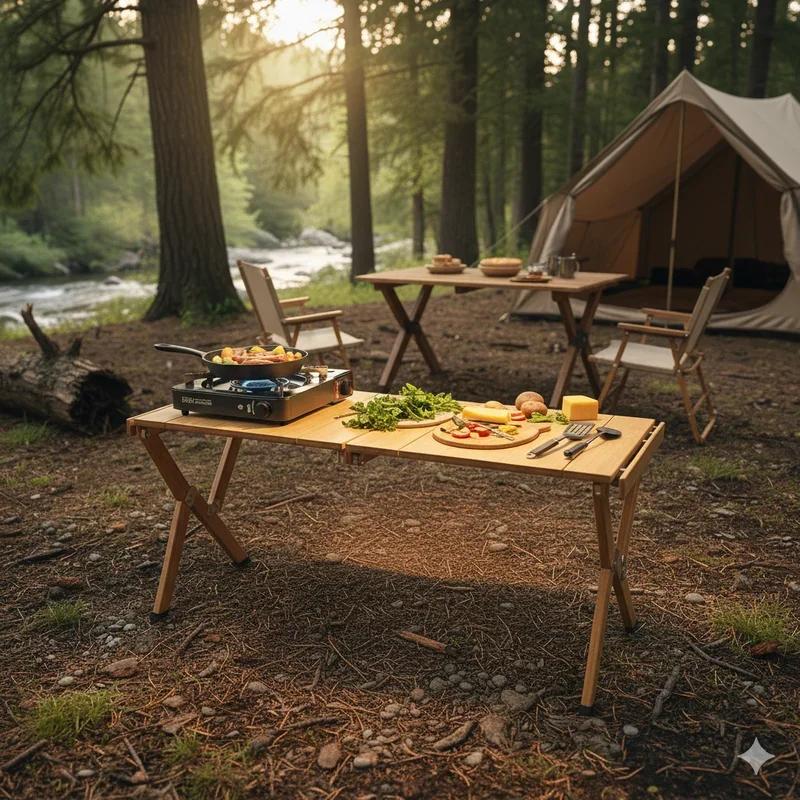
A camping table can make outdoor cooking, eating, and organizing your gear much easier.
But if you’re new to camping, choosing one can be surprisingly confusing. Camping tables come in different sizes, heights, materials, folding designs, and weights.
Some are designed for cooking, while others are better for eating or keeping camping gear organized.
So, how do you choose the right camping table?
The best camping table depends on how you camp, how many people you usually camp with, how much space you have in your vehicle, and how much weight you’re willing to carry.
This guide explains what to look for when choosing a camping table so you can find a practical option without buying more table than you actually need.
Do You Really Need a Camping Table?
Not every camper needs a camping table.
If you’re camping at a site with a picnic table, you may already have enough space for cooking and eating.
However, having your own camping table can be useful when:
- Your campsite doesn’t have a picnic table
- You want a dedicated cooking surface
- You need extra space for food preparation
- You want to keep camping gear off the ground
- You’re car camping
- You want a comfortable place to eat
- You need additional storage space
A camping table can also make a small campsite feel much more organized.
Instead of placing cookware, food, and other items on the ground, you can keep frequently used items within easy reach.
What Makes a Good Camping Table?
A good camping table doesn’t necessarily have to be large or expensive.
For most beginners, the most important features are:
- Stable legs
- A durable tabletop
- Easy setup
- Easy folding
- Reasonable weight
- A useful height
- Enough surface area for your needs
- A size that fits your vehicle
The key is finding the right balance between size, stability, portability, and price.
A huge table may provide plenty of workspace, but it can take up valuable space in your vehicle.
A tiny table may be easy to carry but provide very little usable workspace.
What Size Camping Table Do You Need?
The right size depends mostly on how many people you’re camping with and what you plan to use the table for.
As a general starting point:
| Camping Situation | Suggested Table Size |
|---|---|
| Solo camping or small gear setup | Small table |
| 1–2 people | Small to medium table |
| 2–4 people | Medium table |
| Family camping | Medium to large table |
| Large group or outdoor cooking | Large table or multiple tables |
These are general guidelines rather than strict rules.
A table used only for a camping stove needs much less space than a table used for cooking, serving food, and eating.
Think about what you’ll actually put on the table before choosing a size.
How Tall Should a Camping Table Be?
Camping tables come in different heights.
Some are low to the ground, while others are close to the height of a regular dining table.
Low Camping Tables
Low tables can be useful for:
- Sitting on the ground
- Low camping chairs
- Relaxing around a campfire
- Small meals
- Keeping drinks nearby
They’re compact and often lightweight.
Standard-Height Camping Tables
Standard-height tables are generally more versatile.
They’re useful for:
- Cooking
- Food preparation
- Eating
- Using a camping stove
- Organizing gear
For many beginners, a standard-height folding table is the easiest option to start with.
Camping Table for Cooking vs Eating
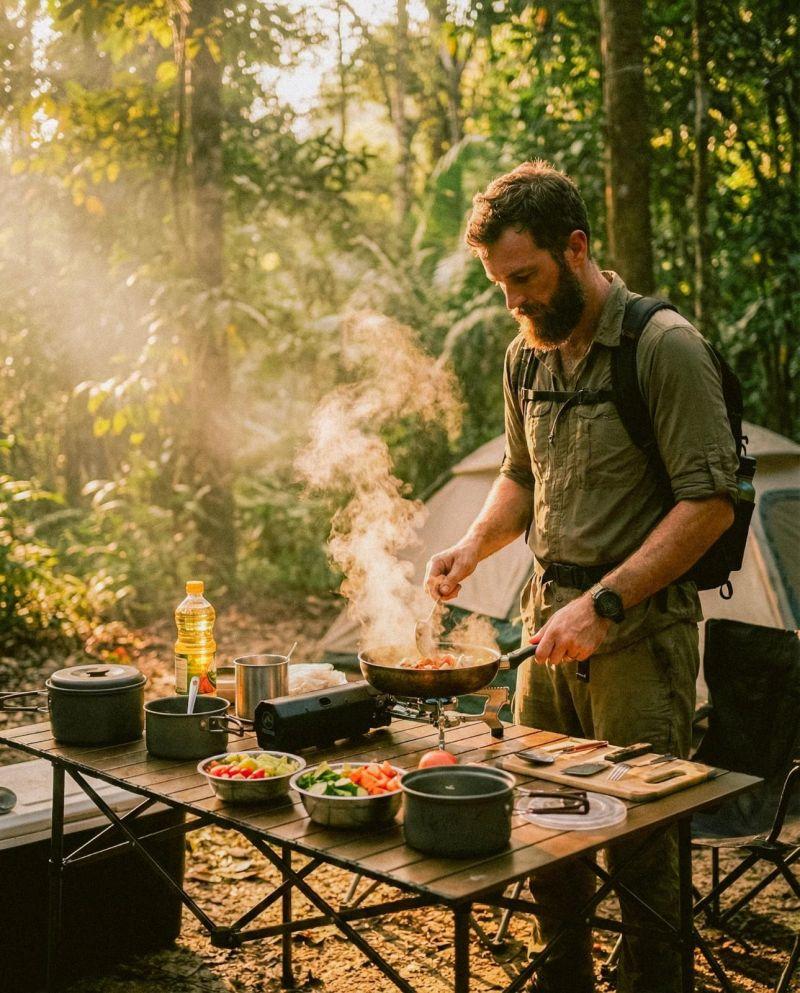
One important question is how you plan to use your table.
A table for eating doesn’t necessarily need to handle the same tasks as a cooking table.
Cooking Table
If you’re planning to use the table for cooking, look for:
- Enough workspace
- Stable legs
- A heat-resistant surface when appropriate
- Easy-to-clean materials
- Space for a stove and cookware
- Good stability
You should always follow the manufacturer’s instructions regarding heat and stove use.
Eating Table
If you’re mainly using the table for meals, focus more on:
- Tabletop size
- Comfortable height
- Seating arrangement
- Stability
- Easy cleanup
You don’t necessarily need a specialized cooking table if your main goal is simply having somewhere to eat.
Folding Camping Tables
Folding tables are one of the most popular choices for car campers.
They are convenient because they can be folded down when you’re traveling.
Advantages include:
- Easy transportation
- Simple storage
- Quick setup
- Good for car camping
- Available in many sizes
Before buying one, check how compact it becomes when folded.
A table that looks reasonably small when fully open can still take up a surprising amount of space in a vehicle.
Roll-Top Camping Tables
Roll-top tables use a tabletop that rolls or folds into a compact shape.
They’re often designed with portability in mind.
Advantages may include:
- Compact storage
- Lightweight construction
- Easy transportation
- Convenient setup
They’re particularly popular with campers who want to reduce the amount of space their gear takes up.
However, some roll-top designs may feel less solid than heavier folding tables.
Aluminum vs Wood Camping Tables
Camping tables are commonly made from materials such as aluminum, steel, wood, or combinations of different materials.
Aluminum Camping Tables
Aluminum is popular because it is lightweight and resistant to rust.
Advantages include:
- Lightweight
- Easy to carry
- Rust resistant
- Easy to clean
- Good for car camping
For beginners, aluminum is often a practical choice.
Steel Camping Tables
Steel tables can provide excellent strength and stability.
However, they can be heavier than aluminum models.
A steel table may make sense if:
- You prioritize stability
- You use heavy cookware
- You don’t need to carry it far
- You have plenty of vehicle space
Wood Camping Tables
Wood tables can provide a more traditional outdoor look.
They may feel sturdy and comfortable, but they can also be heavier and require more care depending on the finish and construction.
Choose the material based on how you actually plan to use the table.
How Much Weight Can a Camping Table Hold?
Weight capacity is important, especially if you’re planning to cook on the table.
A table may need to support:
- A camping stove
- Pots and pans
- Food
- Water
- Cookware
- Drinks
- Small camping equipment
Always check the manufacturer’s stated weight capacity.
Don’t assume that a larger tabletop automatically means a higher weight capacity.
If you regularly use heavy cookware or large water containers, choose a table with enough capacity for your setup.
Stability Matters More Than You Think
A camping table that wobbles every time you touch it can quickly become annoying.
Stability is especially important when using:
- Camping stoves
- Hot cookware
- Heavy food containers
- Water containers
Look for sturdy legs and a reliable locking mechanism.
If possible, set the table on relatively level ground.
Avoid placing a table on unstable rocks, steep slopes, or other uneven surfaces.
Should a Camping Table Have Adjustable Legs?
Adjustable legs can be useful if you camp on different types of terrain.
They allow you to change the height of individual legs and can help keep the tabletop more level.
This can be especially helpful on uneven campsites.
However, adjustable legs can add complexity and sometimes weight.
If you mostly camp at established campgrounds with relatively flat sites, you may not need this feature.
Do You Need a Camping Table With Storage?
Some camping tables include shelves, mesh storage areas, or additional compartments.
These can be useful for organizing:
- Plates
- Cooking utensils
- Food
- Seasonings
- Small camping gear
- Towels
However, additional storage isn’t essential.
A simple table can work perfectly well if you already use storage bins or containers to organize your camping equipment.
Don’t pay extra for storage features unless you’ll actually use them.
How Much Should a Camping Table Weigh?
Weight matters more if you have to carry your table any significant distance.
For car camping, weight is usually less important because you can transport the table directly from your vehicle to the campsite.
For hiking or backpacking, however, a full-size camping table usually isn’t practical.
Consider how far you’ll carry it before choosing a heavy model.
Remember that the weight listed by the manufacturer is only the table itself.
Once you add your other camping gear, your total load becomes much larger.
How to Choose a Camping Table for Car Camping

Car camping gives you more flexibility.
Since your vehicle carries most of the equipment, you can choose a larger and heavier table if the additional workspace is useful.
A practical car camping table should:
- Fit comfortably in your vehicle
- Provide enough workspace
- Be easy to set up
- Be stable
- Be easy to clean
- Match your cooking setup
For many car campers, a medium-sized folding aluminum table is a practical starting point.
You can always add a second small table later if you need more workspace.
How to Choose a Camping Table for Family Camping
Family camping usually requires more surface area.
You’ll have more:
- Food
- Plates
- Drinks
- Cooking equipment
- Utensils
- Personal items
A larger table can make family camping much easier.
However, don’t automatically choose the biggest table available.
Consider how much space your campsite provides and whether your vehicle has enough storage room.
Sometimes two medium tables are more practical than one extremely large table.
How to Clean a Camping Table
Cleaning your table after every trip helps keep it in good condition.
A simple cleaning routine is usually enough:
- Remove food and dirt.
- Wipe the surface with a damp cloth.
- Use mild soap if necessary.
- Remove any remaining food residue.
- Dry the table completely.
- Fold and store it only when it’s dry.
Avoid storing a wet table for long periods.
Moisture can contribute to mold, unpleasant odors, corrosion, or material damage depending on the table’s construction.
Always follow the manufacturer’s cleaning recommendations.
Where Should You Put Your Camping Table?
The location of your table can make a big difference.
A good location should be:
- Relatively level
- Away from the campfire
- Protected from unnecessary rain
- Convenient to your cooking area
- Easy to access
If you’re cooking, keep the table positioned where you can safely prepare food without creating unnecessary traffic around the cooking area.
Avoid placing the table where people constantly walk through.
Common Camping Table Mistakes
Beginners often make a few simple mistakes when choosing a camping table.
Buying a Table That’s Too Large
A huge table can be difficult to transport and store.
Buying a Table That’s Too Small
A tiny table may look convenient but quickly become crowded.
Ignoring Weight
A large metal table can be surprisingly heavy.
Forgetting About Folded Size
Always check the packed dimensions before buying.
Choosing Looks Over Stability
A stylish table isn’t very useful if it constantly wobbles.
Buying Features You Don’t Need
Extra shelves, adjustable legs, and complicated designs can increase cost and weight.
Using a Table for Something It’s Not Designed For
Don’t exceed the manufacturer’s weight capacity or use a tabletop with heat sources in ways the manufacturer doesn’t allow.
How Much Should You Spend on a Camping Table?
Camping tables are available at many different price points.
Beginners don’t necessarily need a premium model.
A basic folding table can be enough for occasional camping.
Spending more may make sense if you:
- Camp frequently
- Need better durability
- Want a lighter design
- Need more workspace
- Prefer premium materials
- Use the table for cooking regularly
Think about how often you’ll use the table before deciding how much to spend.
A Simple Beginner Camping Table Setup
If you’re just getting started, keep your setup simple.
A practical beginner setup might include:
- One medium-sized folding camping table
- A stable tabletop
- Lightweight construction
- Easy setup
- Enough room for basic cooking
- A design that fits easily in your vehicle
You don’t need a specialized outdoor kitchen right away.
Start with a simple table and upgrade your setup after you’ve learned what you actually need.
Camping Table Buying Checklist
Before buying a camping table, ask yourself:
- How many people will use it?
- Will I use it for cooking or eating?
- How much tabletop space do I need?
- How tall should it be?
- How much weight can it support?
- How heavy can it be?
- How small does it fold?
- Will it fit in my vehicle?
- Do I need adjustable legs?
- Do I need built-in storage?
- Is it stable on uneven ground?
- Is it easy to clean?
- How often will I use it?
- Do I really need a premium model?
Answering these questions can make choosing the right camping table much easier.
Final Thoughts
The best camping table isn’t necessarily the biggest, lightest, or most expensive one.
The right choice depends on how you camp and what you actually need the table to do.
For many beginners, a medium-sized folding table is a great place to start.
Focus on size, stability, height, weight, portability, and durability rather than buying a table with every available feature.
If you mostly car camp, you can prioritize workspace and stability. If you need to carry your gear farther, weight and packed size become much more important.
Start simple, use your table a few times, and let your camping style determine what you need next.
Want to learn more? Check out these related camping guides:
→ How to Choose a Camping Chair: A Beginner’s Guide