
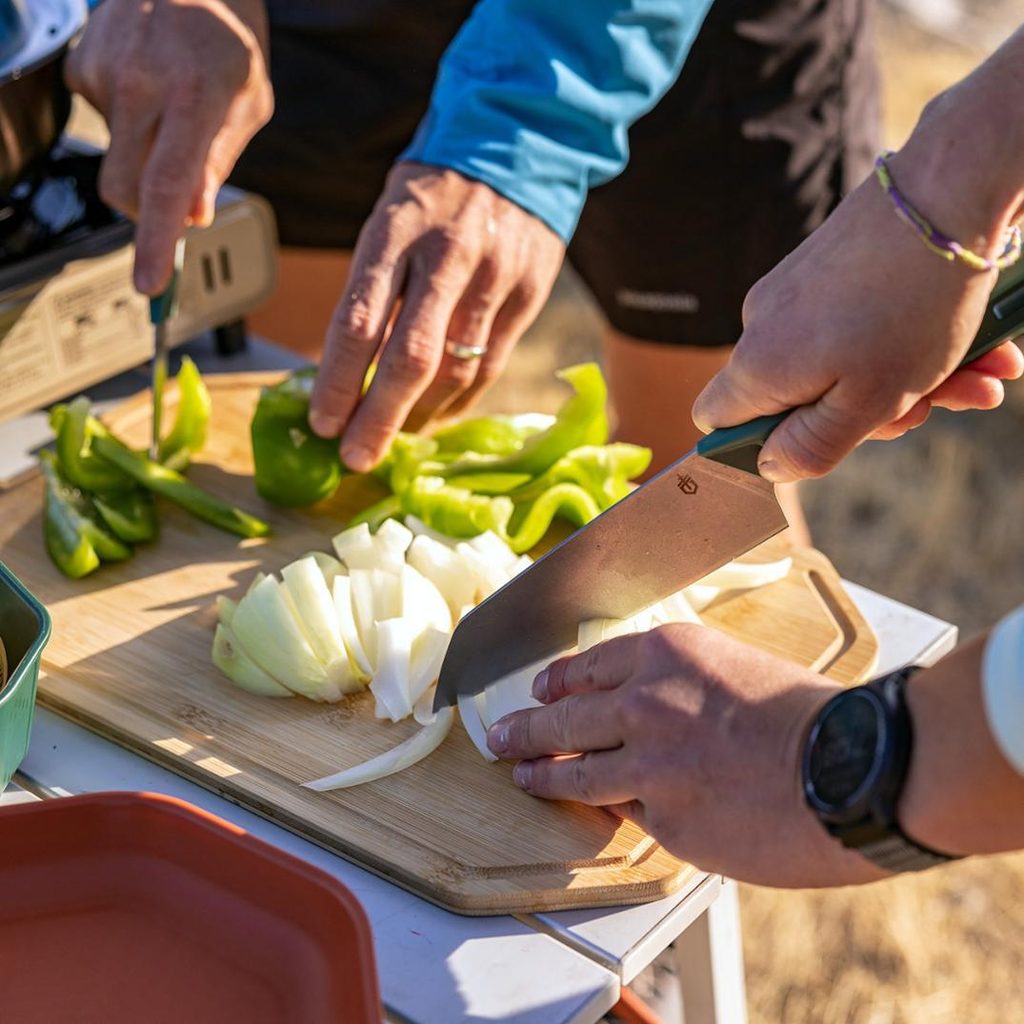
A camping knife can be one of the most useful tools you bring outdoors.
You can use it for simple food preparation, opening packages, cutting cord, trimming small pieces of wood, or handling everyday campsite tasks. But with so many different styles and sizes available, choosing your first camping knife can feel confusing.
The good news is that you usually don’t need a large or expensive knife.
For most beginner campers, a simple, durable, easy-to-maintain knife is more useful than an oversized outdoor blade.
In this guide, we’ll explain how to choose a camping knife based on your camping style, blade size, materials, handle, maintenance, safety, and budget.
Do You Really Need a Camping Knife?
Not every camper needs a dedicated outdoor knife.
If you mainly stay at developed campgrounds and cook simple meals, a regular kitchen knife or small utility knife may handle most of your needs.
However, a dedicated camping knife can be useful because it is designed to handle outdoor conditions and can be stored with your camping gear.
A camping knife can help with tasks such as:
- Preparing food
- Cutting rope or cord
- Opening packages
- Cutting tape or plastic
- Trimming small branches
- Handling general campsite tasks
- Performing simple gear repairs
The important thing is to choose a knife for practical campsite tasks rather than buying one simply because it looks rugged.
What Should You Look for in a Camping Knife?
When choosing a camping knife, focus on a few basic characteristics:
- Blade size
- Blade shape
- Blade material
- Handle design
- Fixed blade vs. folding blade
- Ease of cleaning
- Corrosion resistance
- Durability
- Storage and safety
- Price
You don’t need the most advanced knife available.
A good beginner camping knife should be comfortable, reliable, and easy to maintain.
1. Choose the Right Blade Size
Blade size is one of the first things to consider.
For general campsite use, a medium-sized blade is usually easier to control than a very large knife.
A smaller blade can be useful for:
- Food preparation
- Opening packages
- Cutting cord
- Small campsite tasks
A larger blade may be more useful for heavier outdoor work, but it can also be heavier and less convenient to carry.
For most casual campers, there is little reason to start with an oversized blade.
Think about the tasks you actually expect to perform rather than choosing the biggest blade you can find.
2. Fixed Blade vs. Folding Knife
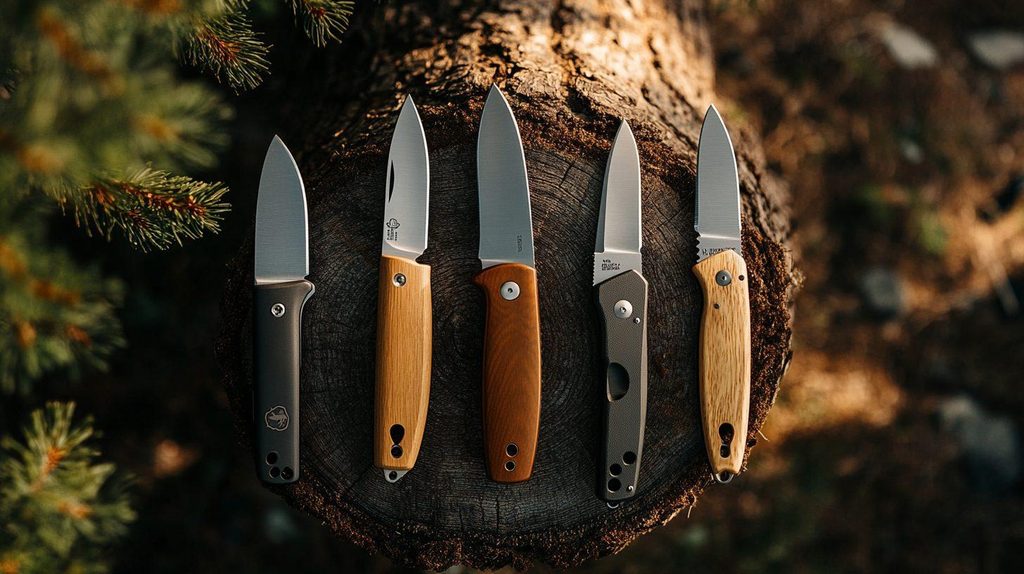
Camping knives generally fall into two basic categories: fixed blade and folding.
Fixed-Blade Knives
A fixed-blade knife has a blade that does not fold into the handle.
Advantages include:
- Simple construction
- Easy to clean
- Generally durable
- Good for repeated outdoor use
- Easy to inspect and maintain
The downside is that fixed-blade knives are usually larger and require a sheath for safe storage.
Folding Knives
A folding knife has a blade that folds into the handle.
Advantages include:
- Compact size
- Easy storage
- Convenient for small tasks
- Often lighter to carry
However, folding knives have moving parts that can collect dirt and require more attention when cleaning.
For a beginner who mainly needs a knife for small campsite tasks, a folding knife can be convenient.
For more regular outdoor use, a simple fixed-blade knife may be easier to maintain.
3. Consider the Blade Material
The blade material affects durability, maintenance, and resistance to corrosion.
Two common categories are stainless steel and carbon steel.
Stainless Steel
Stainless steel is popular for camping because it generally offers good corrosion resistance.
This can be especially useful when you’re camping in:
- Wet conditions
- Rainy weather
- Humid environments
- Areas near saltwater
Stainless steel is also relatively easy for beginners to maintain.
Carbon Steel
Carbon steel can offer excellent toughness and edge performance, depending on the specific steel.
However, it generally requires more maintenance to prevent rust.
If you’re new to camping knives and don’t want to think much about maintenance, stainless steel is often the simpler choice.
4. Think About the Handle
A knife can have a great blade and still be uncomfortable if the handle doesn’t fit your hand.
Look for a handle that provides:
- A comfortable grip
- Good control
- Enough space for your hand
- A secure feel when your hands are wet
- Durable construction
Avoid choosing a knife based only on appearance.
If possible, hold the knife before buying it.
A comfortable handle can make a bigger difference than many small differences in blade specifications.
5. Consider Your Camping Environment
Your camping environment can affect what type of knife makes sense.
Developed Campgrounds
If you mostly camp at established campgrounds, you probably don’t need a heavy-duty outdoor knife.
A compact folding knife or small fixed-blade knife may be more than enough.
Car Camping
Car campers can carry a little more equipment, so weight and size are usually less important.
A medium-sized fixed-blade knife can work well for general campsite tasks.
Backpacking
Weight becomes much more important when you’re carrying everything on your back.
A lightweight folding knife or compact fixed-blade knife may be a better choice.
Wet or Coastal Environments
If you’re frequently camping in wet conditions or near the ocean, corrosion resistance becomes more important.
A stainless-steel blade can make maintenance easier.
6. Don’t Buy a Knife Just Because It Looks Tough
Outdoor gear marketing can make large knives look extremely useful.
But bigger isn’t always better.
A large knife can be:
- Heavier
- More difficult to control
- Harder to store
- Less convenient for food preparation
- More than you actually need
For everyday camping, a practical knife that you can control comfortably is usually more useful than a huge blade.
Choose based on function rather than appearance.
7. Camping Knife for Cooking
If your main reason for bringing a knife is cooking, you may not need a traditional outdoor knife at all.
A compact kitchen-style knife designed for food preparation can be more convenient.
For example, you might use a dedicated cooking knife for:
- Vegetables
- Meat
- Fruit
- Bread
- General food preparation
Keeping a separate cooking knife can also make cleanup easier.
If you prepare most of your meals at the campsite, think about your camping knife and camping cookware as two separate needs.
8. How Much Should You Spend on a Camping Knife?
You don’t need to spend a lot of money on your first camping knife.
A beginner should focus on:
- Comfortable handling
- Reliable construction
- Corrosion resistance
- Easy maintenance
- Appropriate size
A reasonably priced knife can handle normal campsite tasks very well.
Premium knives can offer better materials, manufacturing, ergonomics, or edge retention, but those advantages may not matter much to someone who only camps a few times a year.
Spend more when you understand what you actually need.
9. How to Maintain a Camping Knife
Proper maintenance can significantly extend the life of your knife.
After using your knife:
- Remove food and dirt.
- Wash it according to the manufacturer’s instructions.
- Dry it completely.
- Check the blade for damage or corrosion.
- Store it safely.
Never put a wet knife into a closed sheath or storage container for a long period.
Moisture trapped around the blade can contribute to corrosion.
If your knife manufacturer recommends a specific oil or maintenance procedure, follow those instructions.
10. Camping Knife Safety
A knife is a sharp tool, so basic safety matters.
Always:
- Cut away from your body.
- Keep your fingers away from the cutting path.
- Use a stable surface when possible.
- Keep the blade clean and in good condition.
- Close or sheath the knife when you’re finished.
- Store it where children cannot access it.
- Don’t leave an open knife lying around the campsite.
A dull or damaged blade can also be dangerous because it may require excessive force.
Keep the knife maintained and use it only for appropriate tasks.
11. Check Local Rules Before Carrying a Knife
Knife laws and campground rules can vary depending on where you are.
Before taking a knife on a trip, check the applicable laws and the rules of the campground, park, or recreation area you’re visiting.
This is particularly important when traveling across state, provincial, or national borders.
Don’t assume that a knife that is legal to carry in one location is automatically legal somewhere else.
12. What Is the Best Camping Knife for Beginners?
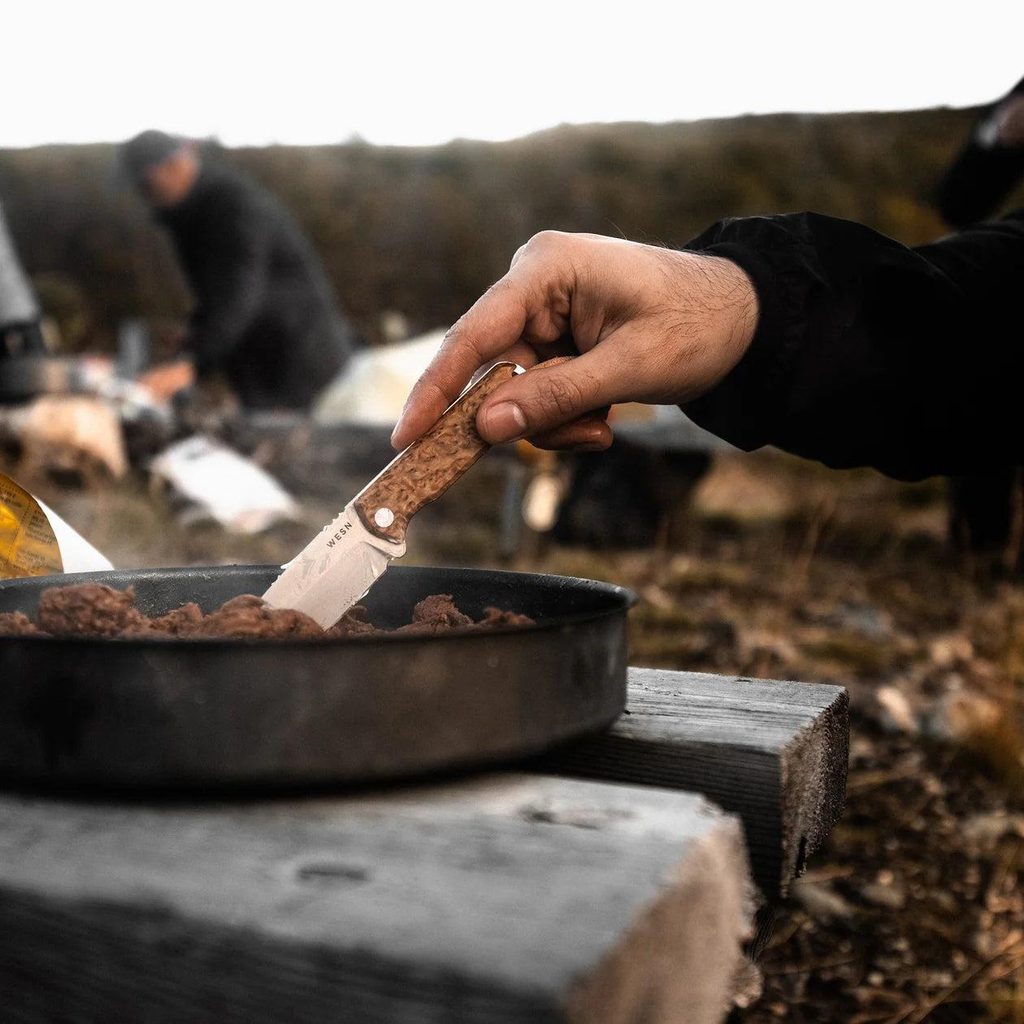
For most beginner campers, the best camping knife is not necessarily the biggest or most expensive one.
A good starting point is usually:
- Compact or medium size
- Comfortable handle
- Corrosion-resistant blade
- Easy to clean
- Simple design
- Secure storage
- Reasonable price
If you mainly cook at camp, prioritize food preparation.
If you mainly need a general-purpose tool, consider a compact utility knife.
If you spend more time outdoors and regularly perform campsite tasks, a durable fixed-blade knife may make more sense.
Simple Camping Knife Buying Checklist
Before buying a camping knife, ask yourself:
- What will I actually use it for?
- Do I want a folding or fixed blade?
- How much weight am I willing to carry?
- Will I use it for cooking?
- Will I camp in wet conditions?
- Is the handle comfortable?
- Is it easy to clean?
- Does it come with safe storage?
- Does it fit my budget?
- Is it legal to carry where I’m going?
If you can answer these questions, choosing a knife becomes much easier.
Final Thoughts
Choosing a camping knife doesn’t have to be complicated.
For most beginners, a simple, comfortable, durable knife is enough for everyday campsite tasks. You don’t need an oversized blade or an expensive premium model to get started.
Focus on the size, blade material, handle, maintenance requirements, and the type of camping you actually do.
The best camping knife is the one that fits your needs, is easy to use safely, and doesn’t add unnecessary weight or complexity to your camping setup.
Want to learn more? Check out these related camping guides:
→ Camping Cookware: What Do You Actually Need?