
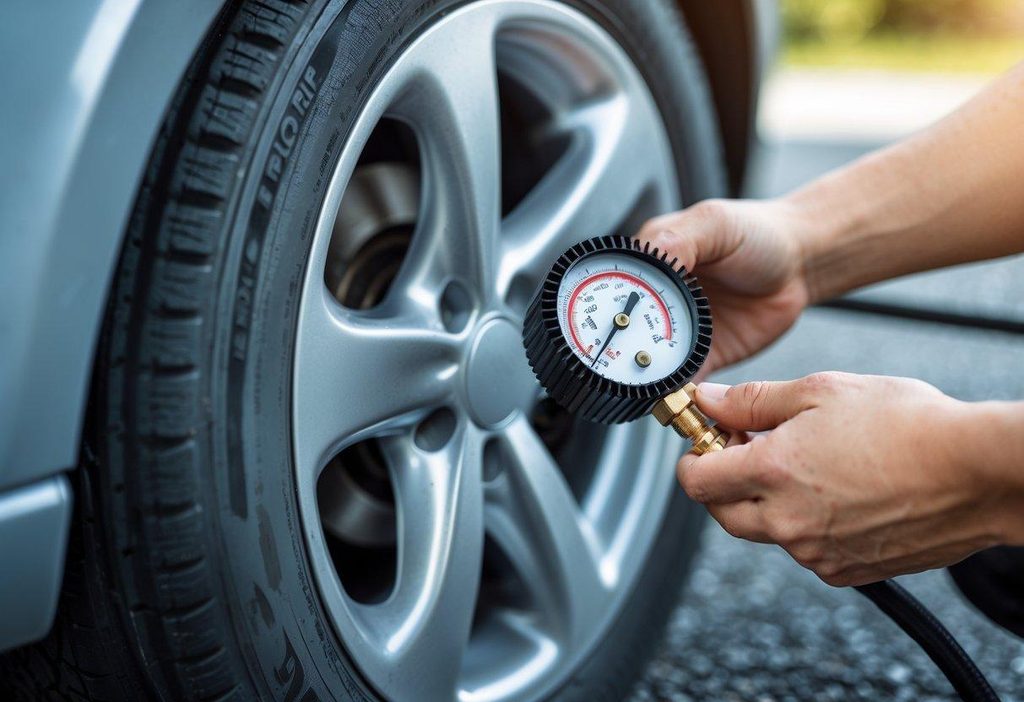
Tire pressure is one of the easiest things to check on your car, but it’s also something many drivers forget about.
Proper tire pressure can help your tires wear more evenly, maintain good handling, and operate as intended. Incorrect pressure can affect the way your car feels on the road and may also contribute to faster tire wear.
So, how often should you check your tire pressure?
For most drivers, checking it at least once a month is a good habit. You should also check your tires before long road trips and whenever you suspect a problem.
In this guide, we’ll explain how often to check tire pressure, what pressure you should use, when to check it, and what can cause tire pressure to change.
Why Is Tire Pressure Important?
Your tires are the only part of your car that directly contacts the road.
That makes proper tire pressure important for several reasons.
Correct tire pressure can help with:
- Handling
- Braking performance
- Tire wear
- Ride comfort
- Fuel efficiency
- Overall tire performance
Driving with significantly underinflated or overinflated tires can change how your vehicle behaves.
That’s why checking your tire pressure regularly is a simple part of basic vehicle maintenance.
How Often Should You Check Your Tire Pressure?
A good general habit is to check your tire pressure once a month.
You should also check it:
- Before a long road trip
- Before carrying a heavy load
- After significant temperature changes
- When a tire looks low
- When your vehicle’s tire-pressure warning light comes on
- After repairing or replacing a tire
You don’t need to check your tire pressure every time you drive.
A quick monthly check, combined with checks before longer trips, is a practical routine for most drivers.
Check Your Tire Pressure When the Tires Are Cold
One of the most important things to understand is when you should measure tire pressure.
For the most consistent reading, check your tires when they are cold.
Driving heats the tires and can temporarily increase the pressure inside them.
Ideally, check your tire pressure before driving or after the vehicle has been parked long enough for the tires to cool.
If you check the pressure after a long drive, don’t immediately adjust it based on that reading unless your vehicle or tire manufacturer specifically instructs you to do so.
What Tire Pressure Should You Use?
Don’t guess the correct tire pressure based on the number printed on the tire’s sidewall.
The recommended pressure for your vehicle is usually found on a sticker inside the driver’s door area or in the owner’s manual.
The sticker may look similar to this:
Recommended Cold Tire Pressure:
- Front: 35 PSI
- Rear: 35 PSI
However, the correct number varies by vehicle.
Always use the pressure specified by your vehicle manufacturer.
What Does PSI Mean?
PSI stands for pounds per square inch.
It’s a common unit used to describe tire pressure in the United States.
For example, if your vehicle recommends 35 PSI, that means the tire should be inflated to the manufacturer’s recommended pressure when measured under the specified conditions.
You may also see tire pressure listed in kPa or bar depending on the vehicle and country.
Why Does Tire Pressure Change?
Tire pressure isn’t completely constant.
Several factors can cause it to change over time.
Temperature
Temperature can have a noticeable effect on tire pressure.
As the air inside the tire warms up, its pressure increases. As it cools down, pressure decreases.
This is one reason you may notice different readings during summer and winter.
Small Air Loss Over Time
Tires can gradually lose air naturally.
Even when there isn’t an obvious puncture, tire pressure can decrease over time.
That’s why regular checks are important.
Punctures or Leaks
A nail, screw, damaged valve, or other problem can cause a tire to lose air more quickly.
If one tire repeatedly loses pressure while the others remain relatively stable, have the tire inspected.
What Happens If Tire Pressure Is Too Low?
Underinflated tires can affect your vehicle in several ways.
You may notice:
- Increased rolling resistance
- Reduced fuel efficiency
- Uneven tire wear
- Changes in steering feel
- Increased heat buildup in the tire
A significantly underinflated tire can become a serious safety concern.
If you notice that a tire is losing pressure quickly, don’t simply keep adding air without finding the cause.
Have the tire inspected by a qualified tire professional.
What Happens If Tire Pressure Is Too High?
Overinflation can also affect how your vehicle behaves.
An overinflated tire may have:
- Reduced contact with the road
- A harsher ride
- Uneven tread wear
- Changes in handling
More pressure isn’t automatically better.
The goal is to follow the vehicle manufacturer’s recommended pressure.
What About the Tire Pressure Monitoring System?
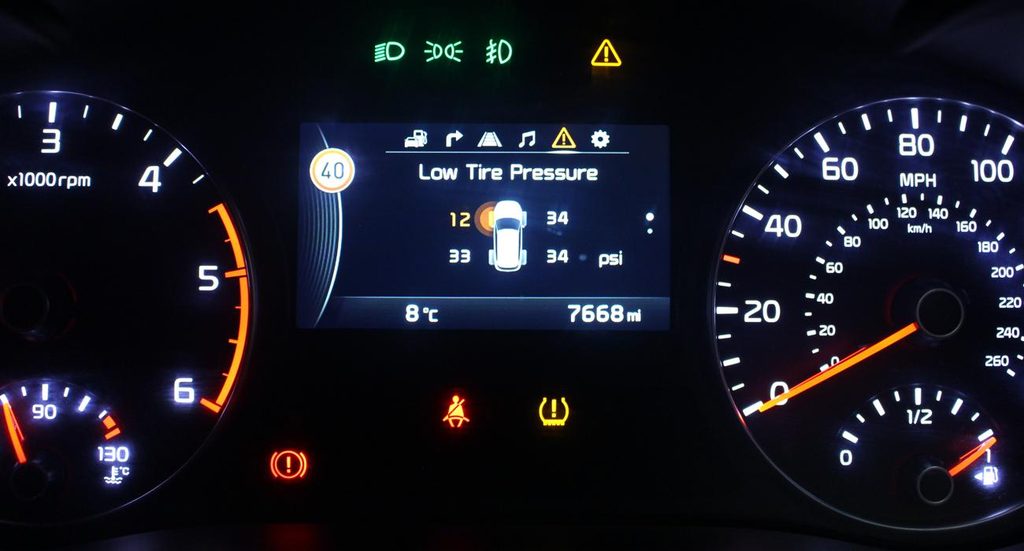
Many modern vehicles have a Tire Pressure Monitoring System (TPMS).
TPMS monitors tire pressure and can warn you when one or more tires are significantly underinflated.
It’s a useful safety feature, but you shouldn’t rely on it as your only tire-pressure check.
The warning may appear after pressure has already dropped significantly.
Checking your tire pressure manually on a regular schedule can help you catch changes earlier.
How to Check Tire Pressure
Checking tire pressure is relatively simple.
You’ll need:
- A tire pressure gauge
- An air compressor or access to an air pump
Then:
- Find the recommended tire pressure for your vehicle.
- Remove the valve cap.
- Press the tire pressure gauge firmly onto the valve stem.
- Read the pressure.
- Compare it with the recommended pressure.
- Add or release air as needed.
- Replace the valve cap.
Check all four tires.
If your vehicle has a spare tire, it’s also worth checking it periodically.
Some spare tires require a different pressure than the regular tires, so check the owner’s manual or vehicle information label.
Should You Check Your Tires Before a Road Trip?
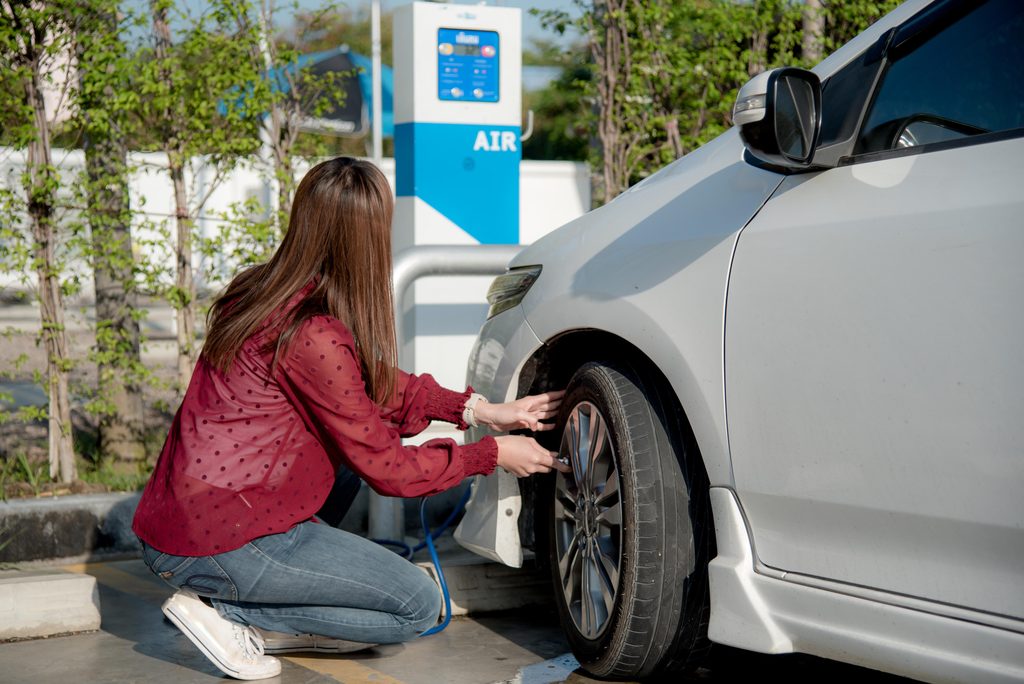
Absolutely.
A road trip is one of the best times to make tire pressure part of your pre-trip inspection.
Before a long drive, check:
- Tire pressure
- Tread condition
- Visible damage
- Tire age and condition
- Spare tire pressure
- TPMS status
Also take a quick look for nails, cuts, bulges, or other visible problems.
A few minutes of preparation can help you avoid an inconvenient tire problem during a long drive.
How Temperature Affects Tire Pressure
Seasonal temperature changes can make tire pressure particularly noticeable.
For example, colder weather can cause tire pressure readings to drop.
When the weather becomes significantly colder, don’t simply assume your tires have a leak.
Check the pressure and adjust it according to the vehicle manufacturer’s recommended specification.
Likewise, don’t intentionally overinflate your tires during colder weather.
Maintain the recommended pressure rather than trying to compensate for temperature changes yourself.
How Often Should You Check Tire Pressure in Winter?
During winter, checking tire pressure at least once a month is still a good baseline.
However, large temperature changes can make more frequent checks useful.
Pay particular attention when:
- Temperatures suddenly drop
- You’re preparing for a long winter road trip
- Your TPMS warning light comes on
- A tire looks lower than normal
Cold weather doesn’t mean you should use a different target pressure unless your vehicle manufacturer specifies otherwise.
Use the recommended cold tire pressure for your vehicle.
Common Tire Pressure Mistakes
Here are some common mistakes drivers make.
Checking Only When Something Looks Wrong
A tire can lose pressure without looking obviously flat.
Regular checks are better than waiting for a visible problem.
Using the Sidewall Number as the Target
The maximum pressure printed on a tire is not necessarily the recommended pressure for your vehicle.
Use the vehicle manufacturer’s recommended specification.
Checking After a Long Drive
Hot tires can produce higher pressure readings.
Whenever possible, check pressure when the tires are cold.
Checking Only One Tire
Check all four tires.
Pressure differences between tires can be important.
Ignoring the Spare Tire
A spare tire is easy to forget until you need it.
Check its pressure periodically as well.
How Long Does It Take to Check Tire Pressure?
A basic tire-pressure check can take only a few minutes.
Once you have a tire gauge and know your vehicle’s recommended pressure, the process is quick.
That makes tire pressure one of the easiest maintenance tasks to add to your regular routine.
You can check it while you’re:
- Filling up with gas
- Washing your car
- Preparing for a road trip
- Checking other basic vehicle maintenance items
Simple Tire Pressure Routine for Drivers
If you want a simple routine, use this:
Once a month
→ Check all four tires.
Before a long road trip
→ Check pressure and inspect the tires.
After major temperature changes
→ Check pressure again.
If the TPMS warning appears
→ Check the tires as soon as it is safe to do so.
If one tire repeatedly loses pressure
→ Have it inspected.
This simple routine is enough to keep tire pressure from becoming something you only think about when there’s a problem.
Final Thoughts
You don’t need to check your tire pressure every day.
For most drivers, once a month is a practical starting point, along with checking before long road trips and whenever you notice something unusual.
The most important part is using the correct pressure for your specific vehicle and checking it when the tires are cold whenever possible.
A few minutes of regular maintenance can help you catch pressure problems before they become bigger issues.
If you’re planning a road trip, checking your tires should be one of the first items on your pre-trip checklist.