

A good camping lantern can make your campsite much more comfortable after the sun goes down.
You may need light while cooking dinner, organizing your gear, eating at the campsite, or simply relaxing around the tent. But with so many camping lanterns available, choosing the right one can be surprisingly confusing.
How bright should it be?
Should you use batteries or rechargeable power?
Do you need a lantern if you already have a headlamp?
For most beginner campers, the answer is simpler than it seems.
You don’t need the biggest or brightest lantern available. You need one that provides enough light for your campsite, lasts long enough for your trip, and is easy to use.
In this guide, we’ll explain how to choose a camping lantern based on brightness, battery life, size, power source, durability, and camping style.
Do You Really Need a Camping Lantern?
A lantern isn’t absolutely necessary for every camping trip, but it can be extremely useful.
A headlamp is excellent when you need hands-free light, but a lantern is better for lighting an entire area.
A lantern can help with:
- Cooking after dark
- Eating dinner
- Organizing camping gear
- Finding items inside a tent
- Lighting a picnic table
- Hanging around the campsite
- Providing general campsite lighting
For many campers, the best setup is actually a combination of a lantern and a headlamp.
The lantern provides area lighting while the headlamp helps you see where you’re walking or working.
What Should You Look for in a Camping Lantern?
Before buying a camping lantern, consider these features:
- Brightness
- Battery life
- Power source
- Size and weight
- Light modes
- Weather resistance
- Durability
- Ease of use
- Hanging options
- Price
You don’t necessarily need every feature.
The right lantern depends on how and where you camp.
1. Check the Brightness
Brightness is one of the most important things to consider.
Camping lantern brightness is commonly measured in lumens.
More lumens generally means more light, but brighter isn’t always better.
A very bright lantern can be useful for a large campsite, but it may be unnecessarily bright inside a tent.
For general camping, think about how much area you actually need to illuminate.
A smaller lantern can work well for:
- Inside a tent
- A small picnic table
- Personal use
A brighter lantern can be more useful for:
- Family camping
- Large campsites
- Outdoor cooking
- Group activities
If the lantern has adjustable brightness, that’s even better.
You can use a lower setting when you need soft light and increase the brightness when you need to see more clearly.
2. Consider Battery Life
A bright lantern isn’t very useful if the battery runs out halfway through your trip.
Check the manufacturer’s battery-life information and consider how you plan to use the lantern.
Battery life can vary significantly depending on:
- Brightness setting
- Light mode
- Battery type
- Temperature
- How often you use the lantern
A lantern may last much longer on a low setting than on maximum brightness.
If you’re going camping for several nights, battery life becomes especially important.
3. Battery-Powered vs. Rechargeable Lanterns
Camping lanterns commonly use either replaceable batteries or rechargeable batteries.
Battery-Powered Lanterns
Traditional battery-powered lanterns use replaceable batteries.
Advantages include:
- Easy battery replacement
- No charging required
- Convenient for longer trips
- Spare batteries can be carried separately
This can be useful when you’re camping somewhere without access to electricity.
Rechargeable Lanterns
Rechargeable lanterns have built-in batteries that can be charged before your trip.
Advantages include:
- Convenient charging
- No need to carry disposable batteries
- Often rechargeable through USB
- Useful for regular campers
However, you need to remember to charge the lantern before leaving.
For longer trips, bringing a backup power source can be helpful if your lantern needs recharging.
4. Think About the Size and Weight
A camping lantern doesn’t need to be huge.
If you’re car camping, size and weight may not matter very much.
You can choose a larger lantern if you want more powerful area lighting.
For backpacking, however, every ounce matters.
A compact and lightweight lantern may be a better choice.
Think about where the lantern will travel before deciding how large it should be.
5. Look for Adjustable Brightness
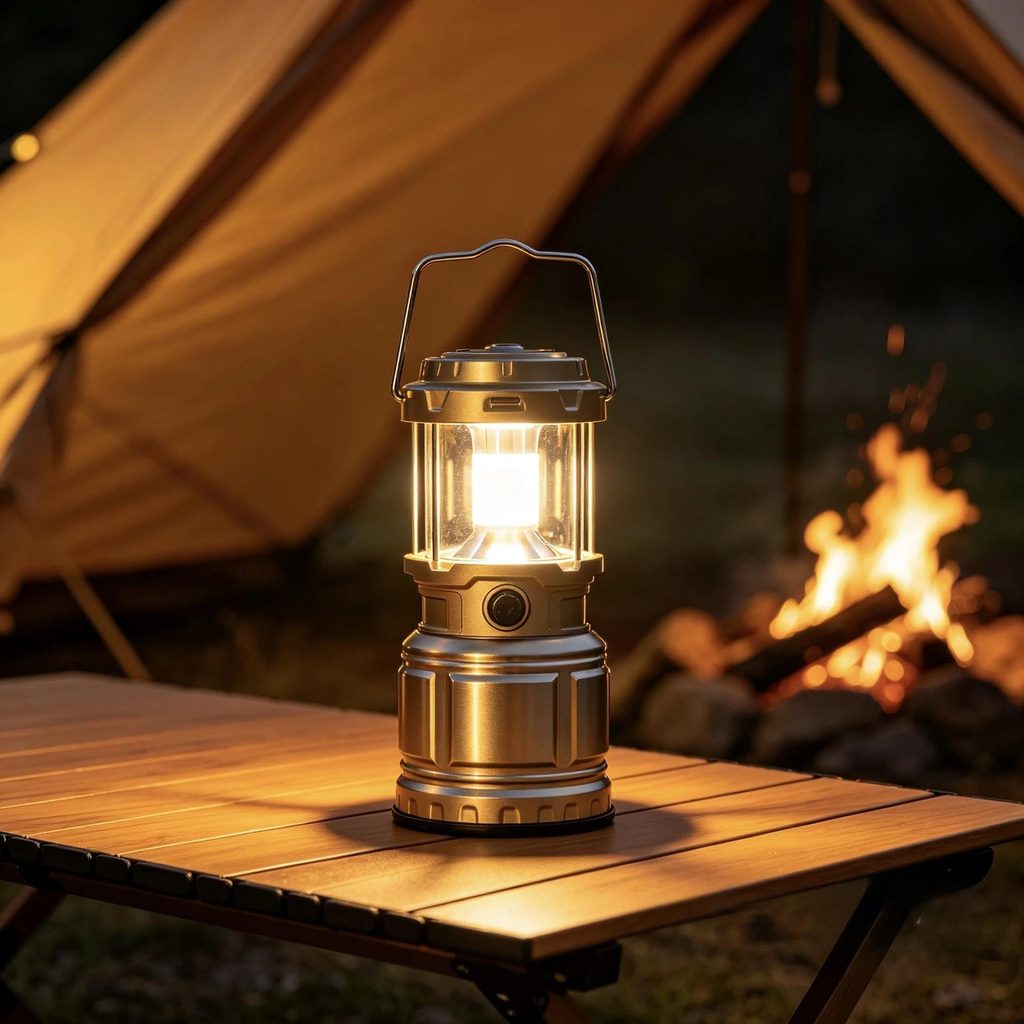
Adjustable brightness is one of the most useful features on a camping lantern.
You may want:
Low brightness
For relaxing inside a tent or creating a softer atmosphere.
Medium brightness
For eating, talking, or general campsite use.
High brightness
For cooking, organizing gear, or lighting a larger area.
Instead of buying a lantern that is extremely bright all the time, adjustable brightness lets you use only as much light as you need.
That can also help conserve battery power.
6. Consider the Light Color
Some camping lanterns offer different light colors or color temperatures.
A warm light can feel more comfortable around the campsite and may be useful when you’re relaxing at night.
A cooler or brighter light can make it easier to see details while cooking or organizing equipment.
If you spend a lot of time relaxing around your campsite after dark, adjustable light color can be a nice feature.
However, it’s not essential for beginners.
Prioritize brightness, battery life, and reliability first.
7. Check Weather Resistance
Camping gear is often exposed to outdoor conditions.
Rain, humidity, splashes, and condensation can all affect electronic equipment.
If you camp regularly, look for a lantern with an appropriate level of water resistance.
Remember that water resistance does not necessarily mean the lantern is waterproof.
Check the manufacturer’s specifications before exposing it to heavy rain or submersion.
8. Look at the Construction
A camping lantern will probably get knocked around more than a lamp sitting on a desk.
A durable design can be useful if you frequently camp outdoors.
Look for:
- Strong housing
- Secure controls
- A stable base
- A useful hanging handle or hook
- Protection around the light source
You don’t need a heavy-duty lantern for occasional campground camping.
But if you regularly travel, hike, or camp in rough conditions, durability becomes more important.
9. Does It Have a Hanging Hook?
A hanging hook may seem like a small feature, but it can be surprisingly useful.
You may want to hang a lantern:
- Inside a tent
- From a campsite shelter
- From a tree branch where permitted
- Above a cooking area
- From a gear organizer
A stable hook or handle gives you more options for positioning the light.
Just make sure the lantern is securely attached and cannot easily fall onto people or gear.
10. Lantern vs. Headlamp
Many campers wonder whether they should buy a lantern or a headlamp.
The answer is often both.
A headlamp is designed to illuminate where you’re looking.
A lantern is designed to illuminate an area.
Headlamp
Best for:
- Walking
- Hiking
- Setting up camp
- Using both hands
- Finding your way around at night
Lantern
Best for:
- Cooking
- Eating
- Sitting around camp
- Lighting a tent
- General area lighting
They serve different purposes.
If you’re building your first camping lighting setup, having one headlamp and one lantern is a practical combination.
11. How Many Lanterns Do You Need?
Most beginners don’t need several lanterns.
For a simple car camping setup, one good lantern may be enough.
For a larger group or family campsite, having more than one light source can be useful.
For example:
- One lantern for the main campsite
- One headlamp for each person
- A small backup light
This gives you enough flexibility without filling your gear bins with lights.
12. Where Should You Put Your Camping Lantern?
Placement makes a big difference.
Putting a lantern directly on the ground may light the area around it, but raising it higher can spread the light more effectively.
Good locations may include:
- A stable camping table
- A designated lantern hook
- A tent hanging point
- A campsite shelter
Avoid placing a hot or bright light where it could be knocked over.
Always follow the manufacturer’s instructions for safe placement and use.
13. Can You Use a Camping Lantern Inside a Tent?
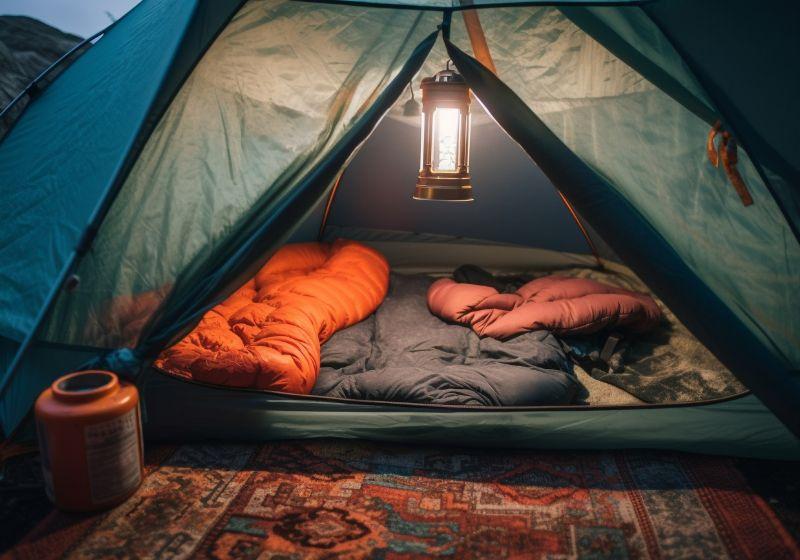
Many modern LED camping lanterns are designed for indoor and outdoor use, but always check the manufacturer’s instructions.
LED lanterns are generally more suitable for enclosed spaces than traditional fuel-burning lanterns because they don’t produce an open flame or combustion gases.
If you’re using any light inside a tent, make sure it is designed for that purpose.
Never use fuel-burning equipment inside a tent or other enclosed sleeping area.
14. How Much Should You Spend on a Camping Lantern?
You don’t need to spend a fortune on your first lantern.
A basic lantern can provide everything a beginner needs.
More expensive models may offer:
- Better battery capacity
- More brightness
- More light modes
- Better construction
- Additional charging features
- Improved weather resistance
But extra features aren’t automatically useful.
If you only camp a few times a year, a simple reliable lantern may be the better value.
If you camp frequently, investing in a more durable lantern may make sense.
15. Common Camping Lantern Mistakes
Here are some mistakes beginners often make.
Buying the Brightest Lantern Available
More light isn’t always better.
A very bright lantern can be uncomfortable in a small tent and may waste battery power.
Ignoring Battery Life
Always consider how long the lantern can operate at the brightness level you actually use.
Forgetting a Backup Light
A lantern can fail or run out of power.
A headlamp or small flashlight provides useful backup.
Choosing a Lantern That Is Too Large
A giant lantern may look impressive, but you may not need it.
Choose a size that matches your camping style.
Forgetting to Charge It
Rechargeable lanterns are convenient, but only if they’re charged before the trip.
Using Light in the Wrong Location
Don’t place a lantern where it can easily fall, become damaged, or create a hazard.
A Simple Beginner Camping Lighting Setup
You don’t need a complicated lighting system.
For basic car camping, a simple setup could include:
1 camping lantern
For general campsite lighting.
1 headlamp per person
For walking and hands-free tasks.
1 small backup flashlight
For emergencies or unexpected problems.
This setup provides plenty of flexibility without taking up much space.
Camping Lantern Buying Checklist
Before buying a camping lantern, ask yourself:
- How bright does it need to be?
- How many nights will I use it?
- Do I prefer replaceable batteries or rechargeable power?
- Will I use it inside a tent?
- Do I need adjustable brightness?
- Will I camp in wet weather?
- How much weight am I willing to carry?
- Does it have a stable base?
- Does it have a hook or handle?
- Do I need a backup light?
- Does it fit my budget?
If you can answer these questions, finding the right lantern becomes much easier.
Final Thoughts
Choosing a camping lantern doesn’t have to be complicated.
For most beginner campers, the most important features are appropriate brightness, good battery life, easy operation, and a size that matches your camping style.
You don’t need the brightest or most expensive lantern on the market.
Start with what you actually need.
If you mostly camp at established campgrounds, a simple rechargeable or battery-powered LED lantern may be more than enough. If you regularly go backpacking, focus more on weight and size.
And don’t forget your headlamp.
A lantern lights the campsite. A headlamp helps you find your way around it.
Together, they’re one of the simplest and most useful lighting setups for camping.