
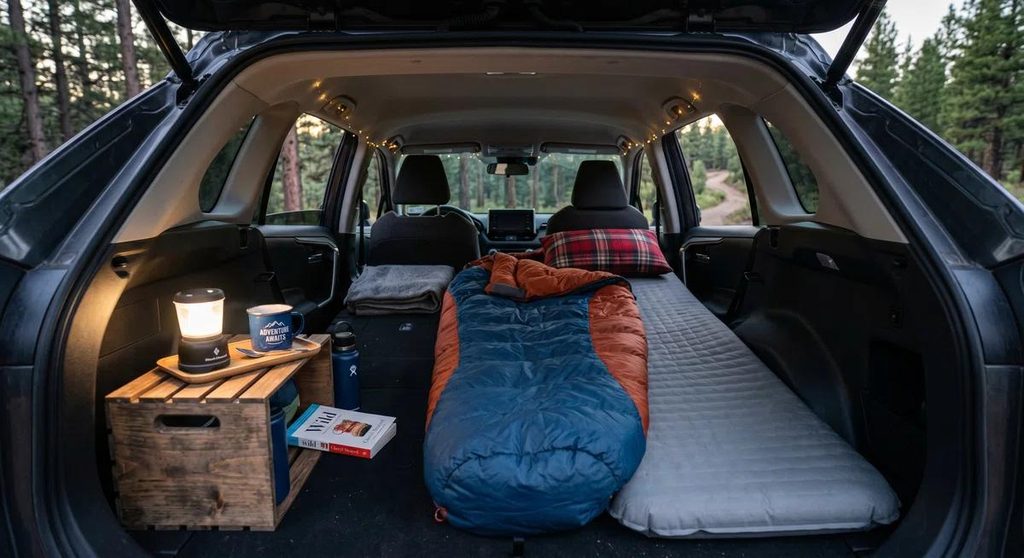
A good night’s sleep can make or break a camping trip.
Your sleeping bag gets a lot of attention, but the sleeping pad underneath you is just as important. A sleeping pad provides cushioning between your body and the ground while also helping protect you from cold ground temperatures.
For beginners, choosing one can be confusing. There are air pads, self-inflating pads, foam pads, different thicknesses, different R-values, and many different sizes.
The good news is that you don’t need the most expensive sleeping pad.
You need one that matches your camping style, sleeping position, weather conditions, comfort needs, and budget.
This guide explains how to choose a camping sleeping pad without making the decision unnecessarily complicated.
What Does a Camping Sleeping Pad Do?
A sleeping pad has two main jobs:
- Provide cushioning and comfort
- Insulate your body from the ground
The ground can pull heat away from your body surprisingly quickly, especially in cooler weather.
A sleeping bag helps keep you warm from above, while a sleeping pad provides insulation underneath you.
That’s why your sleeping pad is an important part of your overall sleep system.
What Should You Look for in a Camping Sleeping Pad?
Before buying a sleeping pad, consider these factors:
- Type
- Thickness
- R-value
- Length and width
- Sleeping position
- Weight
- Packed size
- Durability
- Inflation method
- Camping style
- Weather conditions
- Budget
You don’t have to choose the best option in every category.
Instead, decide which features matter most to you.
1. Choose the Right Type of Sleeping Pad
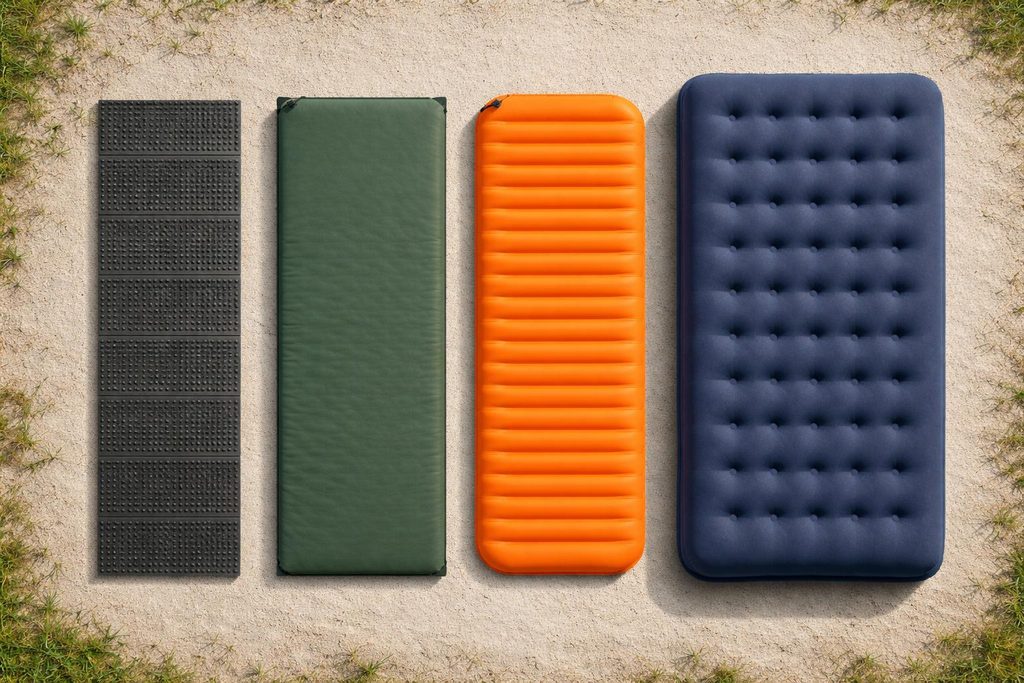
There are three common types of camping sleeping pads.
Air Sleeping Pads
Air pads are filled with air and usually provide a good balance of comfort and packability.
They are popular with campers who want a relatively small packed size.
Advantages include:
- Comfortable
- Lightweight options available
- Small packed size
- Easy to transport
Potential disadvantages include:
- Can be punctured
- Usually require inflation
- Some models can be noisy when you move
- Quality models can be expensive
Air pads are a good choice if comfort and packability are important to you.
Self-Inflating Sleeping Pads
Self-inflating pads combine foam and air.
They typically offer a comfortable sleeping surface while providing some of the convenience of an air pad.
Advantages include:
- Comfortable
- Good insulation options
- Easy to adjust firmness
- Generally stable
Potential disadvantages include:
- Usually bulkier than air pads
- Heavier than some air pads
- Can take up more storage space
Self-inflating pads are especially popular with car campers because packed size and weight are usually less important than they are for backpackers.
Closed-Cell Foam Pads
Foam pads are simple, durable, and don’t require inflation.
Advantages include:
- Lightweight
- Durable
- No puncture concerns
- No pump required
- Usually affordable
Potential disadvantages include:
- Less cushioning
- Bulky when packed
- Not as plush as air or self-inflating pads
Foam pads can be a great choice if you value simplicity and durability.
2. Consider How Thick the Sleeping Pad Is
Thickness affects comfort, especially if you sleep on your side.
A very thin pad may be perfectly fine for some campers, while others may find it uncomfortable.
As a general starting point:
- Around 1 inch: basic cushioning
- 2 inches: comfortable for many campers
- 3 inches: more cushioning and comfort
- 4 inches or more: extra comfort and a more mattress-like feel
However, thickness isn’t everything.
A thicker sleeping pad isn’t automatically warmer.
For warmth, you should look at the R-value.
If comfort is your priority, especially for car camping, a thicker pad can be worth considering.
3. Understand R-Value
R-value measures how well a sleeping pad resists heat loss through the ground.
A higher R-value generally means more insulation.
As a rough starting point:
- Lower R-values: warmer weather
- Moderate R-values: three-season camping
- Higher R-values: colder conditions
Your choice should depend on when and where you camp.
If you mostly camp during warm summer nights, you may not need the same level of insulation as someone who camps during cold spring or fall nights.
Remember that R-value and thickness are different.
A thick pad isn’t necessarily highly insulated, and a thinner pad can sometimes provide excellent insulation.
4. Choose the Right Size

Sleeping pads come in different lengths and widths.
Common options include:
- Regular
- Long
- Wide
- Regular Wide
- Short or torso-length
Your sleeping pad should be long enough to support your body comfortably.
If you’re taller or move around a lot while sleeping, a longer or wider pad may be worth the extra space.
A wider pad can also be helpful for side sleepers or anyone who tends to move around during the night.
For car camping, there’s usually less reason to choose an extremely small or narrow pad unless storage space is limited.
5. Think About Your Sleeping Position
Your sleeping position matters more than many beginners realize.
Side Sleepers
Side sleepers often benefit from more cushioning.
A thicker sleeping pad can help reduce pressure around the hips and shoulders.
Back Sleepers
Back sleepers may be comfortable with a moderate thickness.
The ideal firmness is personal, so experiment with the inflation level if you’re using an air pad.
Stomach Sleepers
Stomach sleepers may prefer a relatively stable surface that doesn’t feel excessively soft.
The most important thing is finding a setup that allows you to sleep naturally.
6. Choose Based on Your Camping Style
The best sleeping pad for a backpacker isn’t necessarily the best sleeping pad for a car camper.
Car Camping
You can usually prioritize:
- Comfort
- Thickness
- Width
- Durability
- Easy setup
Weight and packed size are usually less important because you’re transporting the gear in a vehicle.
Backpacking
Backpackers typically care more about:
- Weight
- Packed size
- Durability
- Insulation
- Comfort-to-weight ratio
A lightweight air pad may make more sense when every ounce goes into your backpack.
Festival or Casual Camping
For occasional camping, simplicity and comfort may be more important than saving every ounce.
A thicker self-inflating pad or comfortable air mattress can be a practical choice.
7. Think About Your Sleeping Environment
Consider where you’ll actually use the pad.
Camping on soft forest soil is very different from sleeping on hard, rocky ground.
Before choosing a sleeping pad, think about:
- Ground conditions
- Expected temperatures
- Tent size
- Available storage
- Camping frequency
If you mostly camp at established campgrounds, comfort may be your highest priority.
If you regularly hike into remote campsites, weight and packed size become much more important.
8. Don’t Forget the Tent Floor
Your tent protects you from weather, but the ground underneath still affects your comfort.
Before using your sleeping pad, clear away sharp rocks, sticks, and other objects that could damage it.
A tent footprint can also provide an additional layer of protection underneath your tent, depending on the tent and campsite.
Taking a few minutes to choose a good tent location can help protect both your tent and sleeping pad.
9. Consider Inflation and Setup
Air sleeping pads need to be inflated.
Depending on the model, you may inflate one using:
- Your breath
- A small pump
- A built-in inflation system
A pump can make setup easier and can reduce the amount of moisture introduced into some air pads.
Self-inflating pads usually require some additional adjustment.
Foam pads are the simplest because you can simply unfold or unroll them.
If you don’t enjoy complicated setup, simplicity may be more valuable than saving a small amount of space.
10. Think About Durability
A sleeping pad is something you don’t want to discover is damaged at bedtime.
Air pads can be vulnerable to punctures if they are used on sharp surfaces without proper care.
To improve durability:
- Clear sharp objects from the sleeping area
- Avoid dragging the pad across rough ground
- Store it properly
- Carry a repair kit when appropriate
- Follow the manufacturer’s care instructions
A slightly more durable pad can be worth the additional cost if you camp frequently.
11. Don’t Choose Based Only on Price
The cheapest sleeping pad isn’t necessarily the best value.
A very inexpensive pad may be perfectly suitable for occasional warm-weather camping.
However, if you camp regularly, spending more on comfort, insulation, durability, or construction may make sense.
Think about how often you’ll use the pad.
For example:
Occasional summer camper
A simple, affordable pad may be enough.
Frequent car camper
Comfort and durability may be worth spending more on.
Backpacker
Weight and packed size may justify paying more.
The right value depends on how you use your gear.
12. Do You Need a Camping Pillow?
A camping pillow isn’t absolutely necessary.
You can use a folded piece of clothing or another suitable soft item in some situations.
However, a dedicated camping pillow can make a noticeable difference in comfort.
If you camp frequently, a compact camping pillow can be a worthwhile upgrade.
If you’re trying to keep your first camping setup inexpensive, it’s one item you can add later.
13. Air Mattress vs Sleeping Pad
Some beginners use a household-style air mattress for camping.
It can feel extremely comfortable, especially for car camping.
However, a regular air mattress isn’t necessarily designed to provide the same insulation, durability, or packed size as a camping sleeping pad.
If you are camping in colder conditions, pay particular attention to insulation.
For occasional warm-weather car camping, an air mattress can still be a practical choice if it fits your needs.
14. What Sleeping Pad Should a Beginner Buy?
If you’re new to camping and mostly car camp, a good starting point is a sleeping pad that offers:
- Comfortable thickness
- Moderate to high insulation
- Enough width for your sleeping position
- Durable construction
- Reasonable packed size
- Easy inflation
- A price that fits your budget
You don’t need an ultralight backpacking pad if you’re driving directly to your campsite.
Likewise, you don’t need a huge luxury mattress if you’re trying to keep your gear simple.
Match the pad to the way you actually camp.
15. A Simple Sleeping Pad Buying Guide
Use this quick decision process.
If You Mostly Car Camp
Prioritize:
Comfort → Thickness → Insulation → Durability → Price
If You Backpack
Prioritize:
Weight → Packed Size → Insulation → Comfort → Durability
If You Camp in Warm Weather
You can focus more on:
Comfort → Size → Weight → Price
If You Camp in Cold Weather
Focus more on:
R-value → Comfort → Thickness → Size → Durability
This simple approach can make your buying decision much easier.
16. Common Sleeping Pad Mistakes
Beginners often make a few common mistakes.
Choosing Only by Price
The cheapest option may not provide the comfort or insulation you need.
Ignoring R-Value
A comfortable pad can still leave you cold if it doesn’t provide enough insulation for the conditions.
Choosing the Wrong Size
A pad that is too narrow or short can make sleeping uncomfortable.
Buying a Backpacking Pad for Car Camping
If you’re driving to your campsite, you don’t necessarily need to sacrifice comfort to save a few ounces.
Overinflating an Air Pad
An extremely firm pad isn’t always more comfortable.
Experiment with the inflation level to find what works for you.
Ignoring Your Sleeping Position
Side sleepers often need more cushioning than people who sleep on their back or stomach.
17. How Much Should You Spend?
There is no single price that every camper should pay.
Instead, think about your camping frequency.
Budget Option
Good for occasional camping and beginners who want to keep costs low.
Mid-Range Option
A good balance of comfort, durability, insulation, and price.
Premium Option
Better materials, lower weight, improved comfort, or specialized features may justify the higher price.
Don’t buy a premium sleeping pad simply because it has the highest specifications.
Buy features that actually matter to you.
18. A Simple Beginner Sleeping System
For a basic car camping setup, your sleep system could include:
- Tent
- Sleeping pad
- Sleeping bag
- Camping pillow
- Comfortable sleep clothes
That’s enough to create a solid starting point.
You can add blankets, liners, cots, upgraded pillows, or other comfort items later.
You don’t need to build a luxury campsite on your first trip.
Sleeping Pad Buying Checklist
Before buying a camping sleeping pad, ask yourself:
- Where will I camp?
- What temperatures will I encounter?
- Do I sleep on my side, back, or stomach?
- How much thickness do I want?
- What R-value do I need?
- What size fits me?
- Am I car camping or backpacking?
- How important is packed size?
- How much weight am I willing to carry?
- How durable does the pad need to be?
- How much am I comfortable spending?
- Do I need a pump or repair kit?
Final Thoughts
Choosing a camping sleeping pad doesn’t have to be complicated.
Start with your camping style, sleeping position, expected temperatures, and comfort preferences.
For car camping, comfort and durability can usually take priority over weight.
For backpacking, weight and packed size become much more important.
Most importantly, don’t assume that the most expensive or thickest sleeping pad is automatically the best.
The best sleeping pad is the one that keeps you comfortable, warm enough for your conditions, and happy to spend another night outdoors.
Want to learn more? Check out these related camping guides:
→ How Thick Should a Camping Sleeping Pad Be?
→ What R-Value Do You Need for a Camping Sleeping Pad?
→ Sleeping Pad vs Air Mattress
→ How to Set Up a Comfortable Camping Sleep System