
Keeping food cold is one of the biggest challenges when you’re camping without access to a refrigerator.
The good news is that you don’t need a complicated system.
A good cooler, enough ice, smart packing, and a little preparation can keep your food cold throughout a typical camping trip.
The key is to start cold and keep it cold.
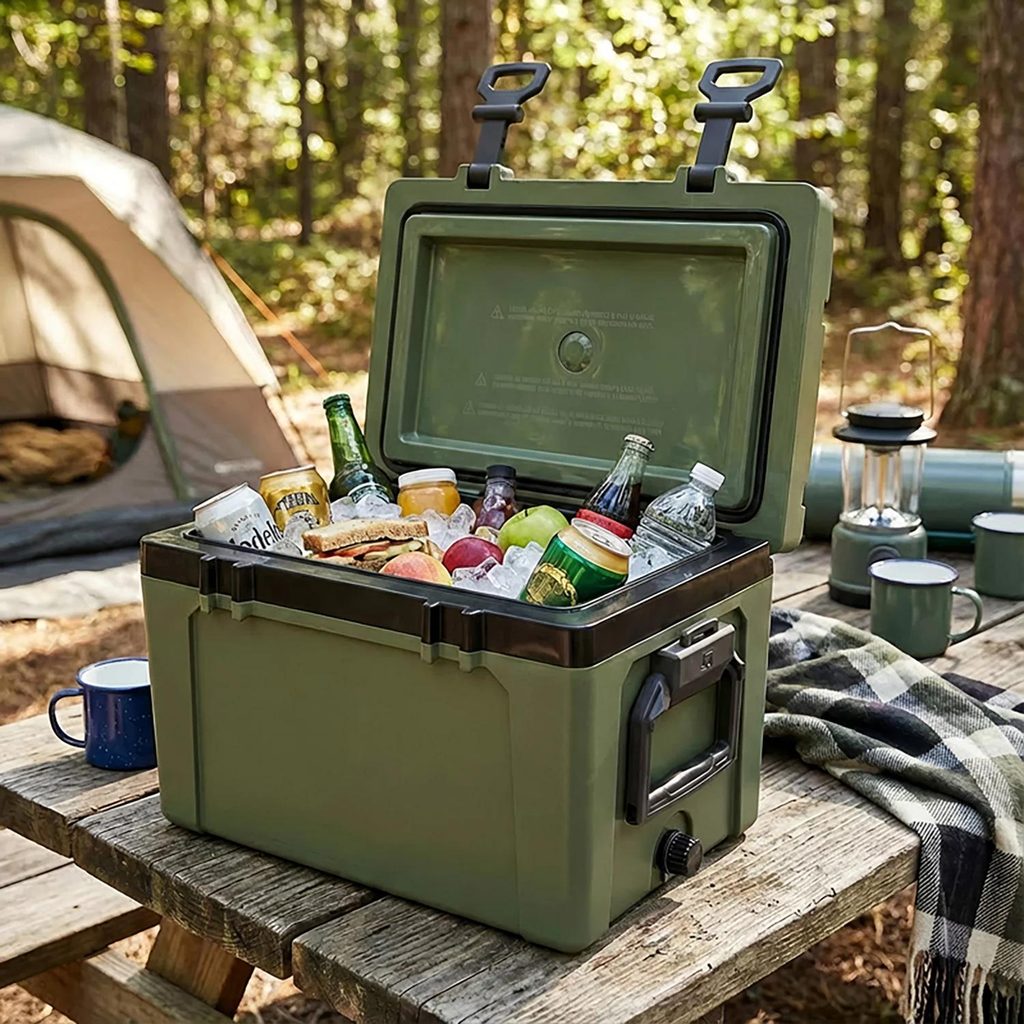
Choose the Right Cooler
The first step is choosing a cooler that fits your trip.
For car camping, you don’t need to prioritize ultra-light weight as much as you would for backpacking.
Instead, focus on:
- Insulation
- Capacity
- Durability
- Ease of cleaning
- Drainage
- Portability
A larger cooler isn’t always better.
If you fill a huge cooler with lots of empty space, you may end up wasting cold air and ice.
Choose a size that matches the amount of food you’re actually bringing.
Pre-Chill Your Cooler
One of the easiest mistakes to avoid is putting warm food into a warm cooler.
If possible, chill the cooler before the trip.
You can add ice or frozen containers ahead of time and let the interior cool down before packing your actual food.
This means the ice you bring on the trip can focus on keeping food cold rather than cooling the cooler itself.
Freeze What You Can
One of the best ways to reduce the amount of ice you need is to freeze some of your food beforehand.
For example:
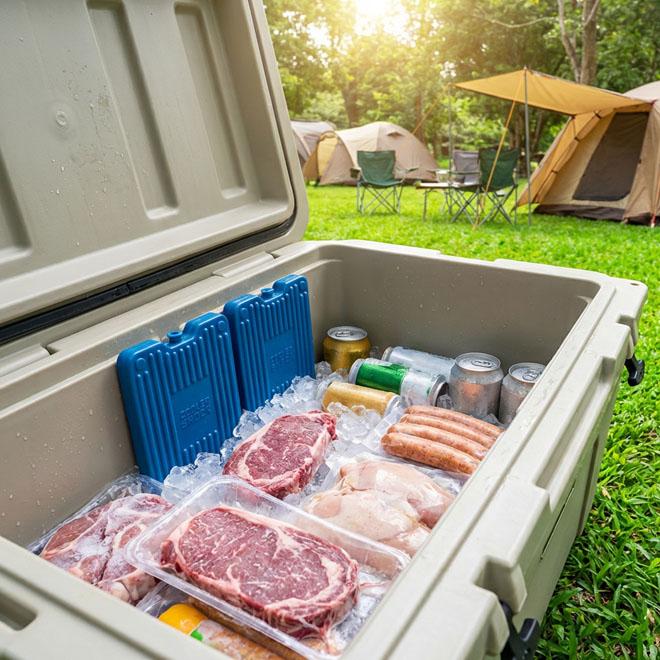
- Frozen meat
- Frozen water bottles
- Frozen prepared meals
- Frozen breakfast items
Frozen food acts as an additional cold source while gradually thawing.
Just make sure food remains safely chilled throughout the trip.
Use Frozen Water Bottles
Frozen water bottles are especially useful for camping.
They can act as ice packs while they’re frozen.
Once they melt, you have drinking water.
This gives you two uses from the same item.
Make sure the bottles are appropriate for freezing and leave enough room for expansion if required by the container.
Pack Your Cooler Strategically
Don’t simply throw everything into the cooler.
Pack it in a way that makes sense.
Put foods you’ll need later toward the bottom and frequently accessed items toward the top.
You can organize the cooler into sections:
Bottom:
Frozen food
Middle:
Meat and other perishables
Top:
Foods you’ll use first
Separate area:
Drinks
If possible, keeping drinks in a separate cooler can be helpful because drinks are often accessed much more frequently.
Keep Your Cooler in the Shade
Where you put your cooler matters.
Don’t leave it sitting in direct sunlight all day if you can avoid it.
A shaded location can help reduce unnecessary heat exposure.
You can keep it:
- Under a picnic table
- Under a shade canopy
- Inside a shaded vehicle when appropriate and safe
- In a naturally shaded area
Remember that a vehicle can become extremely hot in the sun, so don’t assume the inside of a parked car is a safe cold-storage environment.
Don’t Open the Cooler Constantly
Every time you open your cooler, warm air gets inside.
If you open it every few minutes, the contents will warm up much faster.
This is another reason why keeping drinks separate can help.
Open the food cooler when you actually need something.
Close it immediately after taking out what you need.
Use Enough Ice
Don’t underestimate how much ice you’ll need.
A cooler full of food isn’t necessarily enough.
You want enough cold source to maintain a safe temperature throughout the trip.
The exact amount depends on the cooler, weather, trip length, food quantity, and how often you open it.
For a longer trip or very hot weather, plan for more ice and consider where you’ll get additional ice if necessary.
Keep Raw Meat Separate
Raw meat should be carefully packaged to prevent leaks and cross-contamination.
Place it in sealed containers or leak-proof bags.
You don’t want raw meat juices leaking onto fruit, bread, or other ready-to-eat foods.
Organizing your cooler properly can make both food safety and meal preparation easier.
Use a Separate Food Cooler and Drink Cooler
This is particularly useful for car camping.
You may open your drink cooler dozens of times during a weekend.
Your food cooler can remain closed for much longer.
This helps reduce unnecessary temperature changes in the cooler containing perishable food.
You don’t necessarily need two expensive coolers.
Even a smaller basic cooler can work as a dedicated drink cooler.
Know When Food Is No Longer Safe
Keeping food cold isn’t simply about making it feel cool.
Perishable foods need to stay at safe temperatures.
If you’re unsure whether food has remained safely chilled, don’t take unnecessary risks.
When in doubt, throw it out.
Food poisoning can ruin an entire camping trip.
What Foods Work Best for Camping?
Foods that are easy to keep cold and prepare include:
- Pre-cooked meat
- Cheese
- Eggs
- Fresh vegetables
- Sandwich ingredients
- Yogurt
- Prepared pasta
- Marinated meat
- Fruit
You can also reduce cooler space by bringing shelf-stable foods that don’t require refrigeration.
Examples include:
- Peanut butter
- Crackers
- Bread
- Canned foods
- Dried fruit
- Nuts
- Granola bars
A Simple Cooler Packing Checklist
Before leaving home:
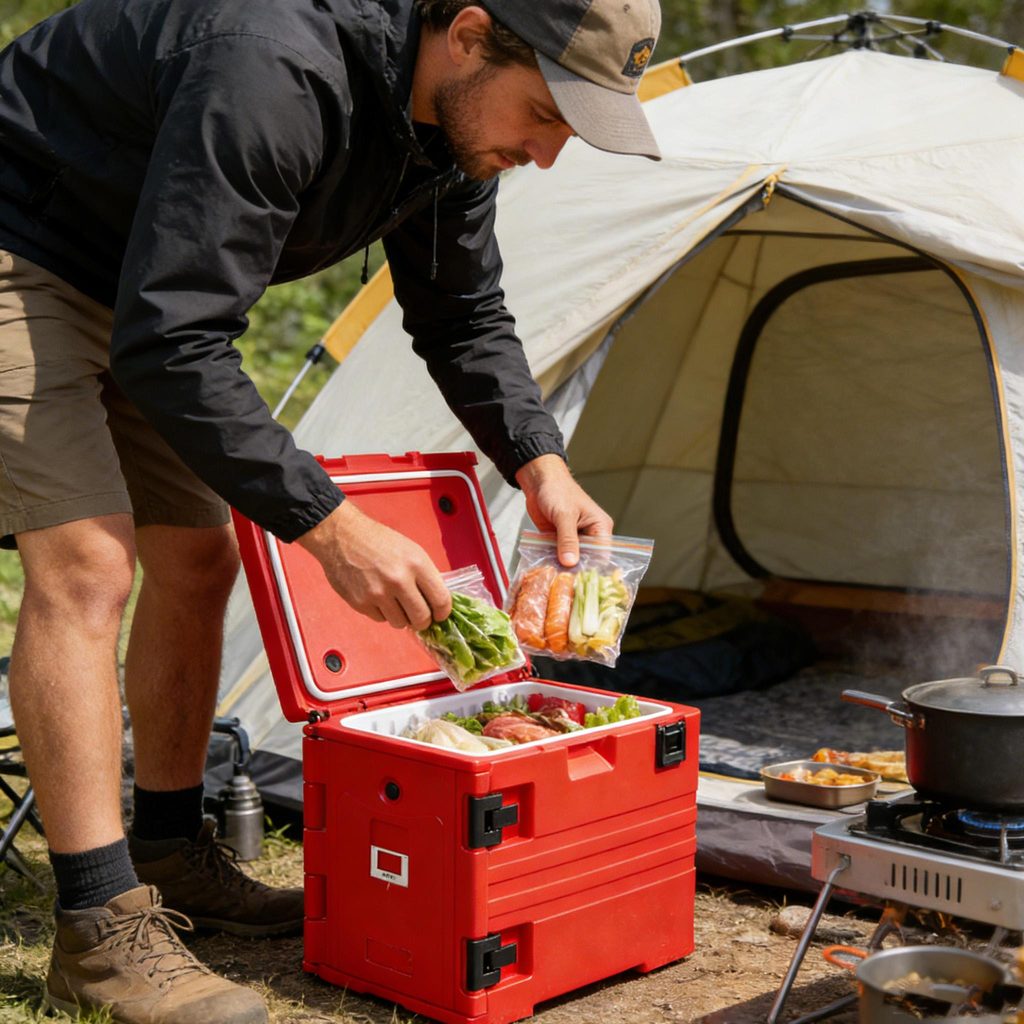
- Pre-chill the cooler
- Freeze food where appropriate
- Freeze water bottles
- Prepare food in sealed containers
- Separate raw meat
- Pack ice efficiently
- Put frequently used items near the top
- Consider a separate drink cooler
- Keep the cooler shaded
- Minimize unnecessary opening
Final Thoughts
Keeping food cold while camping doesn’t require a refrigerator.
The basic formula is simple:
Start cold → pack efficiently → use enough ice → keep the cooler closed → keep it shaded.
For a typical weekend car camping trip, this approach can make food storage much easier.
And once you combine it with a simple meal plan, camping becomes much less complicated.