

A road trip can be one of the simplest ways to enjoy a weekend, explore a new destination, or spend more time outdoors. But before focusing on the route, luggage, and places to visit, it is worth making sure your car is ready for the distance.
A vehicle that feels perfectly fine during short daily drives may reveal small problems during a long journey. Low tire pressure, worn wipers, weak brakes, low fluid levels, or a battery that is nearing the end of its service life can become much more noticeable when you spend several hours on the road.
The good news is that preparing a car for a road trip does not have to be complicated.
You do not need to inspect every mechanical component yourself. A simple pre-trip routine can help you identify obvious problems, organize important items, and decide whether your car needs professional attention before departure.
Here is a beginner-friendly checklist for preparing your car for a longer drive.
1. Start Preparing a Few Days Before the Trip
One of the easiest mistakes is checking everything just a few hours before leaving.
If you discover a problem on departure morning, you may not have enough time to fix it.
Instead, begin your vehicle check several days before the trip.
This gives you time to:
- Check the tires
- Inspect fluid levels
- Look for leaks
- Test the lights
- Check the brakes
- Inspect the wipers
- Test the air conditioning or heating
- Check the battery
- Complete scheduled maintenance if necessary
- Prepare an emergency kit
A little extra preparation can make the departure day much less stressful.
2. Check Your Tires Carefully
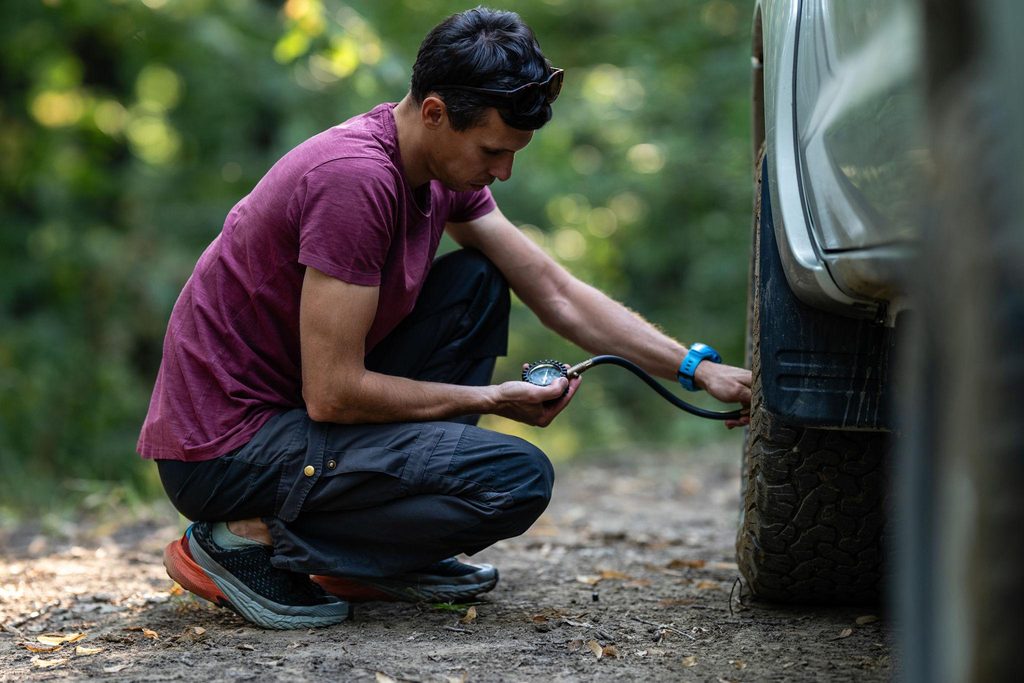
Your tires are one of the most important parts of the car to inspect before a long journey.
Start by checking the recommended tire pressure for your vehicle. The correct pressure is usually listed in the vehicle information provided by the manufacturer rather than being determined by the maximum pressure printed on the tire itself.
Check the pressure when the tires are relatively cool for a more useful reading.
Also inspect the tires visually.
Look for:
- Uneven tread wear
- Cuts
- Cracks
- Bulges
- Objects stuck in the tread
- Unusual wear on the inner or outer edges
Do not forget to check the spare tire if your vehicle has one.
A spare that has been sitting unused for a long time may not be ready when you need it.
If the tire condition looks questionable or you notice unusual vibration, pulling, or repeated pressure loss, have the vehicle inspected before starting a long trip.
3. Inspect the Brakes
Brakes deserve extra attention before extended highway or mountain driving.
Pay attention to changes in braking behavior during your normal drives before the trip.
Warning signs can include:
- Grinding sounds
- Unusual squealing
- Steering wheel vibration during braking
- A brake pedal that feels different
- The vehicle pulling to one side while braking
- A noticeable change in stopping performance
These symptoms should not be ignored simply because the car still moves normally.
Brake components can require professional inspection, especially when you are unsure about their condition.
If your vehicle has recently shown a brake warning light or developed unusual braking behavior, consider having it checked before your trip rather than waiting until after you return.
4. Check Engine Oil and Other Fluids
Fluid levels are another simple part of a pre-trip inspection.
Depending on the vehicle, you may need to check:
- Engine oil
- Coolant
- Brake fluid
- Windshield washer fluid
- Transmission or other vehicle-specific fluids
Always follow the vehicle’s owner’s manual for the correct checking procedure and fluid requirements.
For example, some fluids should only be checked under specific conditions.
Look around the engine compartment and underneath the vehicle for signs of leaks as well.
A small puddle or repeated loss of fluid can indicate a problem that should be investigated before a long drive.
Do not simply refill a fluid repeatedly without finding out why the level is dropping.
5. Look at the Battery
A weak battery can become a major inconvenience during a road trip.
Before leaving, check for obvious signs of battery problems such as:
- Slow engine starting
- Unusual electrical behavior
- Corrosion around battery terminals
- Warning messages
- A battery that has already required a jump start
If the battery is older or its condition is uncertain, consider having it tested before the trip.
This is especially useful if you are traveling during very hot or very cold weather.
You should also make sure that any battery connections that you inspect appear secure and free from obvious corrosion.
If you are not comfortable working around the battery, have the inspection performed by a qualified professional.
6. Test Every Exterior Light
Good visibility is important for both day and night driving.
Walk around the vehicle and check that the major exterior lights are working properly.
Check:
- Headlights
- Brake lights
- Turn signals
- Hazard lights
- Parking lights
- Reverse lights
- Rear lights
If possible, have another person operate the controls while you inspect the vehicle.
A failed light can be easy to overlook during normal driving, particularly during daylight.
Replacing a faulty bulb or addressing an electrical problem before the trip is much easier than discovering it after you are already on the road.
7. Inspect the Windshield and Wipers
Your windshield provides the view you need to read the road, signs, traffic, and changing conditions.
Before a road trip, clean the windshield and look for cracks, chips, or other damage.
Then test the wipers.
Replace worn blades if they:
- Leave large streaks
- Skip across the glass
- Make unusual noises
- Leave sections of the windshield uncleared
- Have cracked or damaged rubber
Also make sure you have enough windshield washer fluid.
Good visibility becomes particularly important during rain, road spray, dust, or nighttime driving.
8. Test the Air Conditioning and Heating
Cabin comfort can become important when you are driving for several hours.
Test the climate system before leaving.
Make sure the system produces the expected level of heating or cooling and that airflow is reaching the appropriate vents.
Pay attention to:
- Weak airflow
- Unusual smells
- Strange noises
- Poor cooling
- Poor heating
- Sudden changes in temperature
A climate system that barely works during a short test drive may become much more frustrating during a long trip.
If something seems abnormal, have it checked before departure.
9. Check for Warning Lights
Before a road trip, take a moment to look at the dashboard.
Pay attention to any warning lights or messages that remain illuminated after the vehicle starts.
Do not assume that a warning can simply be ignored because the car still drives normally.
Some warnings may indicate issues that require immediate attention, while others may require service soon.
If you are unsure what a warning means, consult the owner’s manual or have the vehicle inspected.
A long-distance trip is not the ideal time to discover what an unfamiliar warning light means.
10. Take a Short Test Drive
If the vehicle has recently received maintenance or you have noticed something unusual, take a short drive before the main trip.
Pay attention to how the vehicle feels.
Look and listen for:
- New vibrations
- Unusual engine sounds
- Steering problems
- Brake noises
- Pulling to one side
- Strange smells
- Transmission behavior that feels different
- Dashboard warnings
A short local drive gives you an opportunity to notice problems while you are still close to home.
If something does not feel right, investigate it before committing to a long journey.
11. Check the Suspension and Steering Feel
You do not need to dismantle anything to perform a basic suspension and steering check.
Instead, pay attention to how the car behaves while driving.
Notice whether:
- The steering feels unusually loose
- The vehicle pulls to one side
- The car bounces excessively
- There are unusual noises over bumps
- The vehicle feels unstable during normal turns
- The steering wheel vibrates at certain speeds
These symptoms can have several possible causes, so avoid trying to diagnose a serious mechanical problem without the proper knowledge.
If the behavior is new or significant, professional inspection is the safer choice.
12. Do Not Ignore Scheduled Maintenance
A road trip is not a reason to postpone maintenance that is already due.
Check your vehicle’s maintenance schedule before the trip.
Depending on the vehicle and its age, scheduled maintenance may involve items such as:
- Engine oil and filter
- Air filters
- Cabin filters
- Brake inspection
- Tire rotation
- Fluid service
- Battery inspection
- Other vehicle-specific maintenance
If a scheduled service is due very soon, completing it before a long journey may be more convenient than waiting until after the trip.
Always follow the maintenance requirements specified for your particular vehicle.
13. Pack the Car Carefully
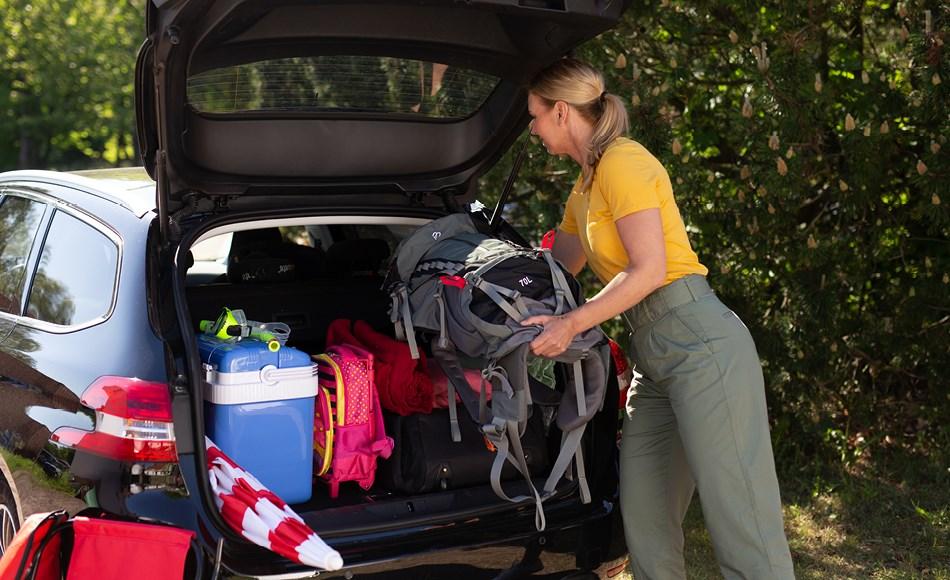
Preparing the vehicle is not only about mechanical condition.
How you load the car also matters.
Heavy luggage should be positioned securely and should not interfere with the driver’s view.
Avoid placing loose objects where they can move around the cabin.
Before leaving, make sure:
- Luggage is secured
- Heavy items are positioned appropriately
- Nothing blocks the driver’s view
- Doors and the trunk are properly closed
- Roof-mounted equipment is securely attached if used
- The vehicle is not overloaded
Check the vehicle’s recommended load limits before carrying a large amount of equipment.
A heavily loaded vehicle can behave differently from an empty one, particularly during braking, cornering, and emergency maneuvers.
14. Prepare a Simple Emergency Kit
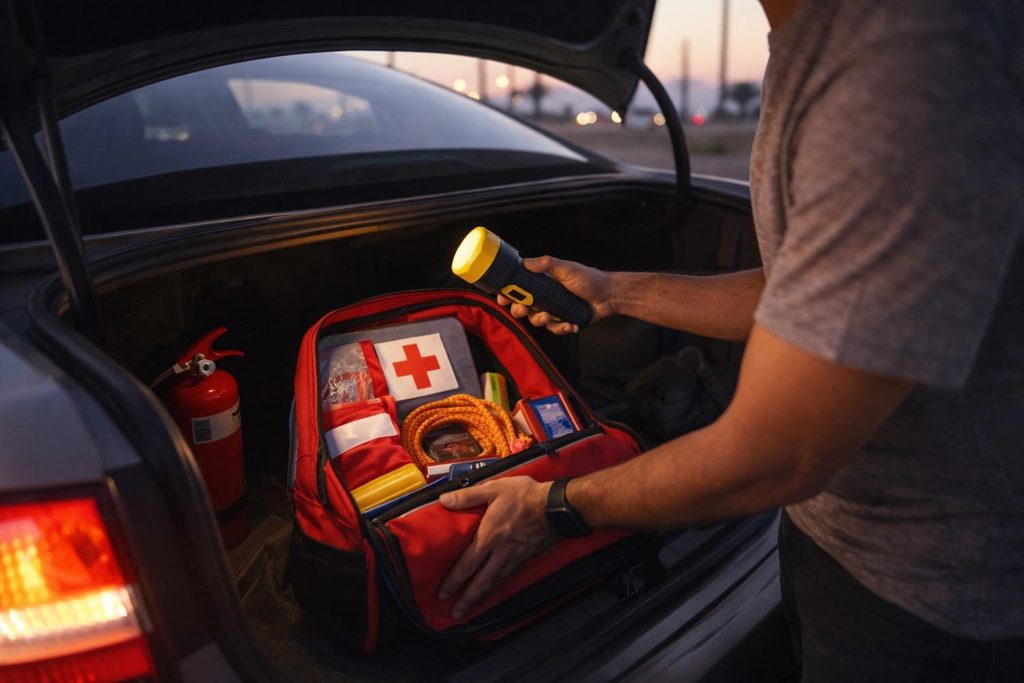
Even a well-maintained car can experience unexpected problems.
A small emergency kit can help you deal with minor situations more easily.
Consider carrying:
- Flashlight
- Basic first-aid supplies
- Phone charging cable
- Portable power source
- Drinking water
- Reflective or high-visibility item
- Basic tools appropriate for your vehicle
- Tire-related equipment
- Emergency contact information
- Extra windshield washer fluid if appropriate
- A small blanket or additional layer in colder conditions
Your emergency equipment should match your destination, weather, season, and driving environment.
If you are traveling into a remote area, additional preparation may be necessary.
15. Make Sure You Know How to Handle a Flat Tire
Before a long journey, know what tire equipment your vehicle actually carries.
Some vehicles have a full-size spare. Others may have a temporary spare or a tire repair system.
Find out what you have before you need it.
Make sure you know where the equipment is stored and how it is intended to be used.
If you have never changed a tire before, learning the basic procedure at home can be useful.
However, never attempt roadside repairs in an unsafe location or situation. If stopping beside the road would expose you to traffic or other hazards, seek appropriate roadside assistance instead.
16. Clean the Windows and Mirrors
A clean vehicle is not just about appearance.
Clean windows, mirrors, headlights, and exterior lights can make it easier to see what is happening around the vehicle.
Before a trip, clean:
- Windshield
- Side windows
- Rear window
- Side mirrors
- Exterior lights
- Backup camera area if equipped
Also clean the inside of the windshield if it has a noticeable film.
A clean windshield can be particularly helpful when sunlight, headlights, or rain make visibility more difficult.
17. Check Your Fuel and Charging Plan
For gasoline or diesel vehicles, know approximately how far you can travel before needing fuel.
Do not plan to arrive at the destination with almost no fuel simply because the estimated range appears sufficient.
For electric vehicles, plan charging stops according to the route, weather, traffic, vehicle load, and expected energy consumption.
In either case, leave some flexibility in the plan.
Unexpected traffic, detours, weather, or changes in driving conditions can increase the amount of energy required.
The goal is not to maximize the distance between stops. The goal is to make the journey predictable and comfortable.
18. Check the Weather and Road Conditions
Your car preparation should match the trip.
A short summer drive and a winter mountain journey require very different preparation.
Before leaving, check:
- Expected temperature
- Rain or snow
- Strong winds
- Road conditions
- Mountain routes
- Flood-prone areas
- Potential delays
- Local driving restrictions
Bad weather can change both the driving conditions and the vehicle’s demands.
If conditions become significantly worse than expected, changing your departure time or route may be safer than continuing with the original plan.
19. Plan Your Stops
A long road trip should not be treated as a race to the destination.
Plan reasonable opportunities to stop.
Breaks allow you to:
- Stretch your legs
- Drink water
- Eat
- Check the vehicle
- Refuel or recharge
- Review the route
- Reset before continuing
You can also use longer stops to take another quick look at the tires, lights, or any unusual issue that appeared during the drive.
Regular breaks can make a long journey feel much more manageable.
20. Keep Important Items Accessible
Do not bury everything under luggage.
Items that may be needed during the journey should remain easy to reach.
Keep useful items such as:
- Phone charger
- Water
- Documents
- Emergency supplies
- Sunglasses
- Tissues
- Basic medications
- Small snacks
- Navigation information
within reasonable reach without creating a distraction while driving.
The best packing system is one that lets you find what you need without unpacking the entire vehicle.
21. Review the Route Before Leaving
Navigation apps are useful, but it is still worth understanding your route before starting.
Know:
- The general direction
- Major highways or roads
- Planned stops
- Fuel or charging locations
- Possible alternate routes
- Areas where service may be limited
You do not need to memorize the entire journey.
A basic understanding of the route simply makes unexpected changes easier to handle.
22. Take Extra Care on Mountain Roads
If your trip includes steep roads, additional preparation is worthwhile.
Check your brakes before departure and avoid carrying unnecessary weight.
While driving, control your speed rather than relying entirely on braking late in a descent.
Follow posted road conditions and adjust your driving to weather and visibility.
Mountain roads can place different demands on the vehicle than flat highway driving, so a vehicle that feels normal around town should still be prepared carefully.
23. Know When Not to Start the Trip
One of the most important parts of road-trip preparation is knowing when the car is not ready.
Consider postponing the trip or arranging professional inspection if you notice:
- Serious tire damage
- Significant brake problems
- Major fluid leaks
- Persistent warning lights
- Severe steering problems
- Overheating
- Serious engine problems
- Major battery or electrical issues
- Any problem that makes the vehicle feel unsafe
Saving a few hours by leaving immediately is not worth turning a manageable repair into a roadside emergency.
24. Common Road Trip Preparation Mistakes
Even experienced drivers can overlook simple things.
Mistake 1: Checking the car on departure morning
Start earlier so you have time to deal with problems.
Mistake 2: Checking only the engine
The tires, brakes, lights, wipers, battery, and visibility are also important.
Mistake 3: Ignoring small warning signs
A new vibration or unusual noise deserves attention before a long journey.
Mistake 4: Overloading the vehicle
More luggage can affect vehicle behavior and comfort.
Mistake 5: Forgetting the spare tire
A spare is only useful if it is actually ready to use.
Mistake 6: Planning the trip around maximum driving distance
Leaving no margin for fuel, charging, traffic, or unexpected delays can create unnecessary stress.
Mistake 7: Assuming a recently serviced car needs no inspection
A quick visual and functional check before departure is still useful.
25. Simple Pre-Trip Car Checklist
Use this list a few days before your next road trip.
Tires
- Check tire pressure
- Inspect tread
- Look for visible damage
- Check the spare tire or repair equipment
Fluids
- Check engine oil
- Check coolant
- Check brake fluid if appropriate
- Fill windshield washer fluid
- Look for leaks
Brakes and Steering
- Listen for unusual brake sounds
- Check for vibration
- Notice any pulling
- Pay attention to steering behavior
Battery and Electrical
- Check for starting problems
- Inspect visible battery connections
- Test exterior lights
- Check dashboard warning lights
Visibility
- Clean windshield
- Check wiper blades
- Check washer fluid
- Clean mirrors
- Clean exterior lights
Comfort
- Test air conditioning
- Test heating
- Check cabin airflow
Trip Preparation
- Check weather
- Review the route
- Plan fuel or charging stops
- Prepare emergency supplies
- Secure luggage
- Check vehicle load limits
- Plan rest stops
26. A Simple Formula for Road Trip Car Preparation
You do not need a complicated system to remember everything.
Use this simple formula:
Inspect → Maintain → Pack → Plan → Check
Inspect the tires, brakes, fluids, lights, battery, visibility, and overall vehicle condition.
Maintain anything that is due or needs attention before the trip.
Pack luggage securely and keep important items accessible.
Plan the route, stops, fuel or charging, weather, and emergency options.
Check everything one final time before leaving.
This simple routine can become part of every longer journey.
Final Thoughts
Preparing your car for a road trip does not mean performing a complete mechanical inspection in your driveway.
The goal is much simpler: identify obvious problems, stay on top of scheduled maintenance, prepare for the conditions you expect to encounter, and give yourself enough time to deal with anything unusual.
Start a few days before departure. Check the tires, brakes, fluids, lights, battery, wipers, and warning indicators. Make sure the car is loaded safely, your emergency supplies are ready, and your route allows enough time for breaks.
Most importantly, do not ignore a problem simply because the trip is already planned.
A few minutes of preparation at home can make a long drive more comfortable and help you focus on the road and the experience ahead.
A good road trip starts before the car leaves the driveway.