
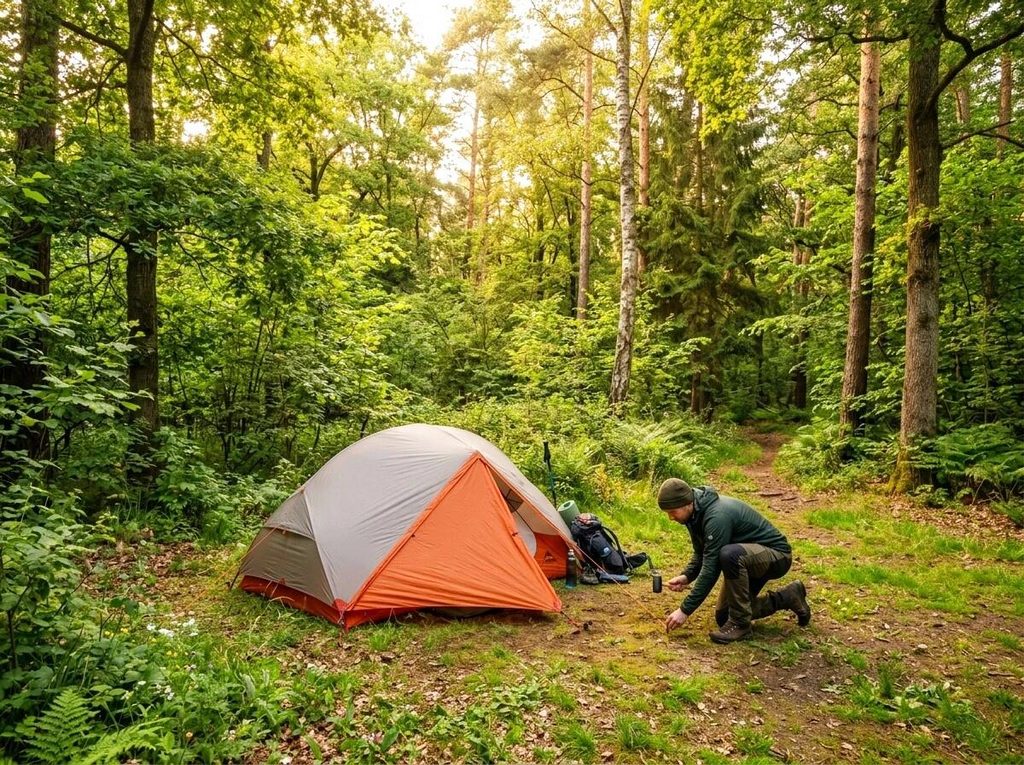
Choosing a campsite can have a bigger impact on your camping experience than many beginners expect.
A beautiful location may look perfect when you first arrive, but the wrong spot can create problems with wind, rain, uneven ground, noise, privacy, cooking, or sleeping comfort.
The good news is that choosing a campsite does not require years of outdoor experience.
By slowing down when you arrive and looking at the ground, weather, surroundings, and campsite layout, you can make a much better decision before setting up your tent.
A good campsite should not simply look beautiful.
It should also be practical, comfortable, and appropriate for the conditions you may encounter.
Here is a simple beginner-friendly guide to choosing a better campsite.
1. Do Not Set Up Your Tent Immediately
One of the most common beginner mistakes is arriving at a campsite and immediately putting the tent in the first convenient-looking area.
Instead, take a few minutes to walk around.
Look at the entire campsite before deciding where everything should go.
Check:
- The ground
- Nearby trees
- Drainage
- Wind direction
- Sun exposure
- Nearby water
- Cooking areas
- Fire areas
- Walking paths
- Nearby campsites
- Potential hazards
A few minutes of observation can save you from moving your entire campsite later.
If possible, make your decision while there is still plenty of daylight.
2. Look for Level Ground
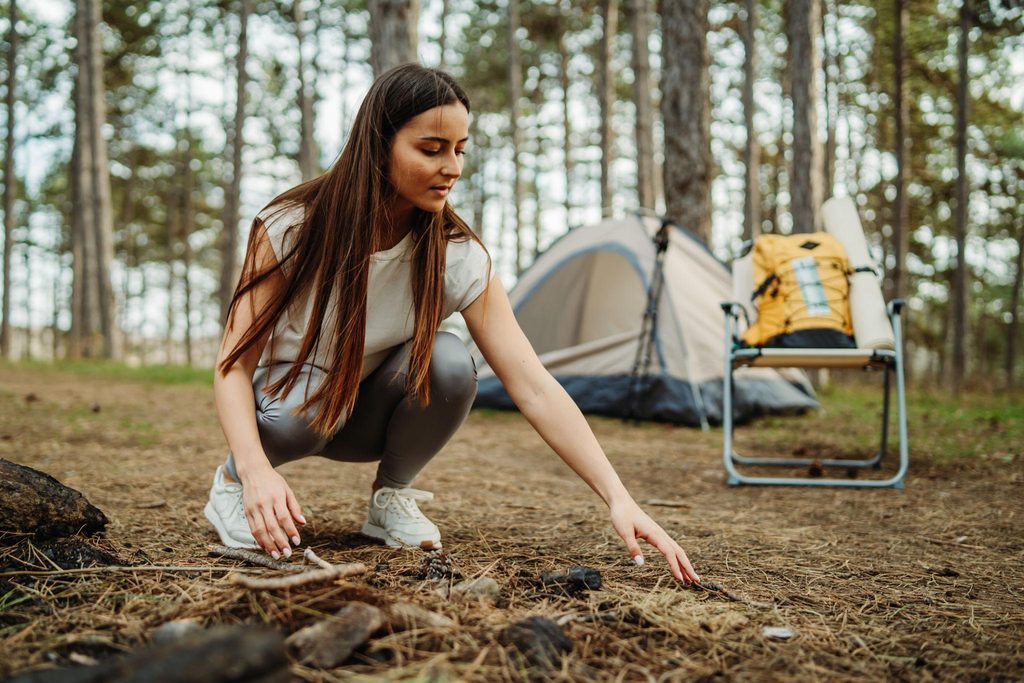
Your sleeping area should be as level as reasonably possible.
A slope that looks small while standing can become much more noticeable after several hours of sleeping.
Look for a relatively flat area where you can comfortably place your sleeping pad and sleeping bag.
Avoid ground that is:
- Steeply sloped
- Full of large rocks
- Covered with exposed roots
- Filled with deep holes
- Extremely uneven
- Soft and muddy
You do not need perfectly flat ground.
The goal is to find an area that provides a stable and comfortable place for your tent.
3. Avoid Low Spots
A flat-looking area is not always a good campsite.
Low areas can collect water when rain arrives.
Before pitching your tent, look at the surrounding terrain.
Ask yourself:
If heavy rain falls tonight, where would the water naturally move?
Avoid places where water appears likely to collect.
Look for signs such as:
- Muddy ground
- Water marks
- Channels in the soil
- Very soft ground
- Depressions surrounded by higher ground
A campsite that feels dry when you arrive may behave very differently during heavy rain.
4. Look Up Before Looking Down
Beginners often spend most of their time examining the ground.
But what is above you can be just as important.
Look at nearby trees and branches.
Avoid camping directly beneath trees with obvious dead or unstable branches.
Also consider whether strong winds could cause branches or other objects to fall.
You do not need to identify every tree species.
Simply look for obvious hazards before choosing your sleeping area.
If the weather forecast includes strong winds or storms, be even more careful about your campsite location.
5. Think About Wind Direction
Wind can dramatically change how comfortable a campsite feels.
A location that is pleasant in calm weather may become uncomfortable when the wind increases.
Before setting up, notice:
- Which direction the wind is coming from
- Whether the campsite has natural shelter
- Whether the tent entrance will face strong wind
- Whether loose objects could blow away
- Whether cooking smoke may move toward your sleeping area
Natural features such as terrain, vegetation, or other appropriate windbreaks can sometimes make a campsite more comfortable.
However, do not place your tent in an unsafe location simply because it is sheltered.
Safety should come first.
6. Consider Sun Exposure
Sunlight can be pleasant in the morning and uncomfortable in the afternoon.
Think about when you expect to use the campsite.
If you want a cooler tent in the morning, morning sun exposure may not be a problem.
If you expect strong afternoon sunlight, shade can become more valuable.
However, do not choose a location beneath potentially dangerous trees simply to gain shade.
A comfortable campsite is a balance between sunlight, shelter, safety, and the expected weather.
7. Stay Away From Cliff Edges
Scenic views can make locations near cliffs or steep drop-offs look attractive.
They can also introduce unnecessary risks.
Keep your tent and main campsite activities away from exposed edges.
Be particularly careful when:
- The ground is wet
- Visibility is poor
- Children are present
- Strong winds are expected
- You are moving around after dark
A beautiful view is not worth sacrificing a safe campsite location.
8. Be Careful Near Rivers, Lakes, and Streams
Camping near water can be beautiful and convenient.
However, being close to water also requires additional thought.
Do not assume that a dry-looking shoreline will remain dry throughout the night.
Water levels can change because of rain, upstream conditions, or other environmental factors.
When choosing a campsite near water, consider:
- Distance from the shoreline
- Height above the water
- Signs of previous water movement
- Weather conditions
- Local camping rules
- Possible flooding
A location slightly farther from the water may provide a better balance of scenery and safety.
9. Check the Ground Before Pitching
Once you have identified a potential tent location, inspect the ground more carefully.
Walk slowly across the area.
Look for:
- Sharp rocks
- Large roots
- Sticks
- Holes
- Ant or insect activity
- Wet patches
- Objects that could damage the tent floor
Remove small loose objects when appropriate and permitted.
Do not completely reshape the natural environment just to make the site comfortable.
The goal is to make a minimal adjustment while choosing a naturally suitable location.
10. Think About Your Tent Entrance
The direction of the tent entrance can make a surprising difference.
Before setting up, think about where you want the entrance to face.
You may prefer the entrance to face:
- Away from strong wind
- Toward your main campsite area
- Away from busy walking paths
- Toward a pleasant view
- Away from the cooking area
Avoid placing the entrance where people will constantly walk through the space.
Tent guylines and stakes can also create tripping hazards, especially in crowded campsites.
Keep the area around the entrance clear and easy to navigate.
11. Keep Your Cooking Area Separate
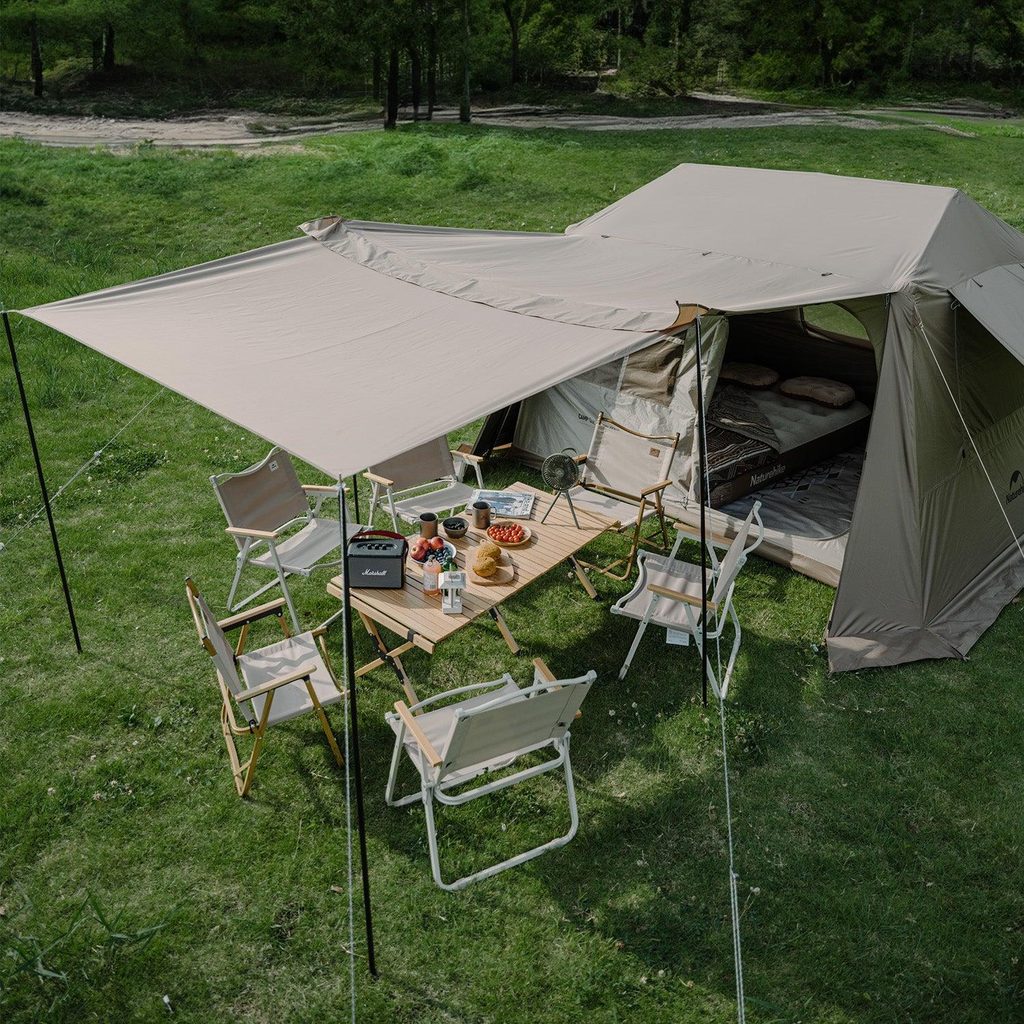
Your sleeping area and cooking area should not become one crowded space.
If the campsite provides a designated cooking or fire area, use it according to the local rules.
Try to keep cooking activities organized and separate from where you sleep.
This makes the campsite easier to manage and can also help reduce food odors around the sleeping area.
Food and scented items should be stored according to the rules of the campground or area you are visiting.
In areas with wildlife concerns, additional food-storage requirements may apply.
12. Keep Food Away From the Tent When Required
Never assume that food is safe simply because it is inside a closed container.
Wildlife can be attracted to food, trash, drinks, toiletries, and other scented items.
Before your trip, check the rules for the specific campground.
Depending on the location, you may be required to use:
- A designated food locker
- A secure vehicle
- An approved storage container
- Another designated food-storage system
Do not store food in your tent where local regulations advise against it.
Proper food storage protects both campers and wildlife.
13. Think About Noise
A campsite can look perfect but still be uncomfortable if it is constantly noisy.
Before choosing your position, consider nearby:
- Roads
- Restrooms
- Showers
- Parking areas
- Group campsites
- Play areas
- Common walking paths
- Cooking areas
If you prefer quiet camping, a location farther away from high-traffic areas may be more comfortable.
However, do not sacrifice safety or accessibility simply to find the quietest possible location.
14. Consider Your Distance From Facilities
Convenience matters, especially for beginners.
If you are camping with children or expect to use the restroom frequently, being extremely far from the facilities may become inconvenient.
On the other hand, setting up directly beside a busy facility can mean more noise and foot traffic.
Think about what matters most for your particular trip.
A good campsite is not necessarily the closest or farthest location.
It is the location that gives you a reasonable balance of comfort, convenience, privacy, and safety.
15. Check the Space Between Campsites
If you are staying at a developed campground, look at the surrounding campsites.
Consider how close neighboring tents, vehicles, cooking areas, and walking paths are.
If possible, position your tent so that:
- The entrance is not directly facing another tent
- Your guylines do not cross walking areas
- Your activities stay within your designated space
- You are not blocking another camper’s area
Respecting the boundaries of neighboring campsites makes the experience better for everyone.
16. Look for Natural Drainage
Drainage is especially important when rain is possible.
You do not need to understand advanced terrain analysis.
Simply observe how the land is shaped.
A slight slope can sometimes allow water to move away more naturally than a low depression.
Avoid areas where water appears to have previously collected.
If you see a natural drainage path, do not place your tent directly in it.
A campsite that looks convenient during dry weather can become uncomfortable very quickly when rain starts.
17. Think About Morning Conditions
Choosing a campsite is not only about the moment you arrive.
Think about what the area will be like the next morning.
Ask yourself:
- Will the tent receive strong sunlight?
- Will morning dew make the area wet?
- Will the ground become muddy?
- Will people walk past the tent early?
- Will the campsite be difficult to pack from?
- Will the car be easy to access?
Thinking one step ahead can make the next morning much easier.
18. Consider Your Camping Style
Different campers need different campsite layouts.
For example, a couple spending most of the day hiking may want a simple sleeping area and easy access to their vehicle.
A family may need more space for cooking, eating, changing clothes, and organizing equipment.
Someone focused on quiet relaxation may care more about privacy and scenery.
Before choosing a campsite, think about how you actually plan to use it.
Your ideal campsite should match your activities rather than simply looking impressive.
19. Keep Your Campsite Simple
More space does not automatically mean a better campsite.
Beginners sometimes spread equipment across the entire area.
A simpler layout is usually easier to organize.
Try dividing the campsite into basic zones:
Sleeping → Cooking → Eating → Gear → Vehicle
Keeping these areas reasonably organized can make it easier to move around and find things.
It also reduces the chance of leaving important equipment in inconvenient places.
20. Prepare for Changing Weather
Weather conditions can change after you arrive.
A campsite that feels comfortable under clear skies may become less comfortable during rain, wind, or colder temperatures.
Before setting up, consider the expected weather.
For example:
Rain
Look for good drainage and avoid low ground.
Wind
Pay attention to exposed areas and secure the tent properly.
Heat
Consider shade and airflow.
Cold
Think about wind exposure and how easily you can access warm clothing.
Storms
Pay extra attention to exposed areas, trees, water, and local warnings.
Your campsite should work for the conditions you are actually expecting, not just the weather you see when you arrive.
21. Arrive Before Dark When Possible
Setting up a campsite in daylight is much easier than doing it in complete darkness.
You can see:
- The ground
- Nearby trees
- Walking paths
- Drainage
- Tent lines
- Cooking areas
- Potential hazards
Arriving earlier also gives you time to change your campsite location if your first choice turns out to be unsuitable.
Planning to arrive before dark is especially useful for beginners.
22. Use a Quick Five-Minute Campsite Scan
If you do not know where to begin, use a simple five-minute scan.
Look down
Is the ground level, dry, and comfortable?
Look up
Are there dangerous branches or other overhead hazards?
Look around
Are there roads, water, cliffs, busy paths, or other concerns nearby?
Check the weather
What could change during the night?
Check the layout
Where should the tent, cooking area, eating area, and gear go?
This simple routine can make campsite selection much easier.
23. Common Campsite Selection Mistakes
Mistake 1: Choosing the prettiest spot
A beautiful view does not automatically mean a good campsite.
Mistake 2: Setting up immediately
Take a few minutes to inspect the entire area first.
Mistake 3: Ignoring low ground
Water may collect in areas that appear comfortable when dry.
Mistake 4: Camping under questionable trees
Always look overhead before setting up.
Mistake 5: Setting up too close to water
Scenery and convenience should be balanced with changing water conditions.
Mistake 6: Ignoring neighboring campers
Noise and privacy can affect your entire camping experience.
Mistake 7: Mixing cooking and sleeping areas
Keep your campsite organized and follow local food-storage requirements.
Mistake 8: Forgetting nighttime conditions
A campsite that looks safe during daylight may be harder to navigate after dark.
24. Beginner Campsite Selection Checklist
Before pitching your tent, ask:
Ground
- Is the area reasonably level?
- Is the ground dry?
- Are there large rocks or roots?
- Are there holes or unstable surfaces?
Surroundings
- Are there dangerous branches overhead?
- Is the area away from cliff edges?
- Is it safely positioned away from water?
- Is there a possible drainage problem?
Weather
- Which direction is the wind coming from?
- Is rain expected?
- Will the area become too hot or cold?
- Could conditions change overnight?
Campsite Layout
- Where will the tent go?
- Where will cooking happen?
- Where will food be stored?
- Where will gear be organized?
- Are walking paths clear?
Comfort
- Is the area reasonably quiet?
- Is there enough privacy?
- Is the restroom reasonably accessible?
- Will the campsite be comfortable in the morning?
25. A Simple Formula for Choosing a Campsite
If you want an easy system to remember, use this formula:
Ground → Surroundings → Weather → Layout → Comfort
Ground — Check the surface, slope, rocks, roots, and drainage.
Surroundings — Look at trees, water, cliffs, roads, and nearby campsites.
Weather — Think about wind, rain, temperature, and overnight conditions.
Layout — Decide where the tent, cooking area, food storage, and gear should go.
Comfort — Consider noise, privacy, convenience, and how the campsite will feel throughout the day.
This simple process can help beginners make better decisions without overcomplicating campsite selection.
Final Thoughts
Choosing a campsite is one of the first decisions that shapes your entire camping experience.
You do not need to find the most beautiful location.
You need to find a place that works well for the conditions, your equipment, your camping style, and the environment around you.
Take a few minutes to inspect the ground. Look above you. Think about rain and wind. Stay away from obvious hazards. Keep cooking and sleeping areas organized, and follow local rules for food storage and campsite use.
Most importantly, do not rush.
A few extra minutes spent choosing the right spot can make it easier to sleep, cook, organize your gear, and enjoy the outdoors.
Choose the campsite first. Then build the campsite around it.