

Choosing the right sleeping bag can make a huge difference in how well you sleep while camping.
A sleeping bag isn’t just about staying warm. The right one should match your camping conditions, expected temperatures, sleeping style, body size, and the amount of space you have in your vehicle or backpack.
For beginners, the number of options can be confusing. You’ll see different temperature ratings, insulation types, shapes, sizes, and materials.
The good news is that you don’t need to understand every technical detail to choose a good sleeping bag.
You mainly need to answer a few simple questions:
Where will you camp? How cold will it get? How do you sleep? And how much space do you have?
This guide will help you choose the right sleeping bag without overcomplicating the process.
Start With Your Camping Conditions
Before looking at sleeping bags, think about where and when you’ll actually use yours.
A sleeping bag that works well for a warm summer campground may not be comfortable during a cool fall trip.
Consider:
- The seasons you plan to camp
- The lowest nighttime temperature
- Your typical camping locations
- Whether you car camp or backpack
- How often you expect to use the sleeping bag
If you mostly go camping during warm weather, you probably don’t need a heavy winter sleeping bag.
If you regularly camp during spring and fall, a more versatile sleeping bag may make more sense.
Your camping style should determine your sleeping bag—not the other way around.
Pay Attention to the Temperature Rating
The temperature rating is one of the most important things to understand.
Sleeping bags are designed for different temperature ranges, and choosing the wrong rating can make a comfortable trip very uncomfortable.
A sleeping bag with a lower temperature rating is generally designed for colder conditions.
However, the rating shouldn’t be treated as a guarantee that you’ll personally feel warm at that temperature.
People sleep differently.
Some campers naturally sleep warm, while others get cold easily.
For a deeper explanation, see our guide to Sleeping Bag Temperature Ratings Explained for Beginners.
Choose Based on the Conditions You Expect
Don’t choose a sleeping bag simply because it has the lowest temperature rating you can afford.
Instead, think about your normal camping conditions.
For example:
Summer camping:
A lightweight warm-weather sleeping bag may be enough.
Spring and fall camping:
A moderately insulated sleeping bag with a lower temperature rating can provide more flexibility.
Cold-weather camping:
You’ll need a sleeping bag specifically designed for low temperatures, along with an appropriate sleeping pad and clothing system.
If you’re a beginner, it’s often better to choose a sleeping bag that matches your most common trips rather than buying an extreme cold-weather model you’ll rarely use.
Consider the Difference Between Comfort and Survival Ratings
Temperature ratings can sometimes be confusing because manufacturers may provide different types of temperature information.
A sleeping bag may have a rating associated with a comfort temperature and another associated with a lower limit.
These numbers don’t necessarily mean that everyone will sleep comfortably at the lowest advertised temperature.
If you’re someone who tends to get cold at night, pay more attention to the comfort rating rather than choosing a bag based only on the lowest number.
For beginners, comfort should be the priority.
A few extra degrees of warmth can be worth more than saving a small amount of weight or money.
Choose the Right Sleeping Bag Shape
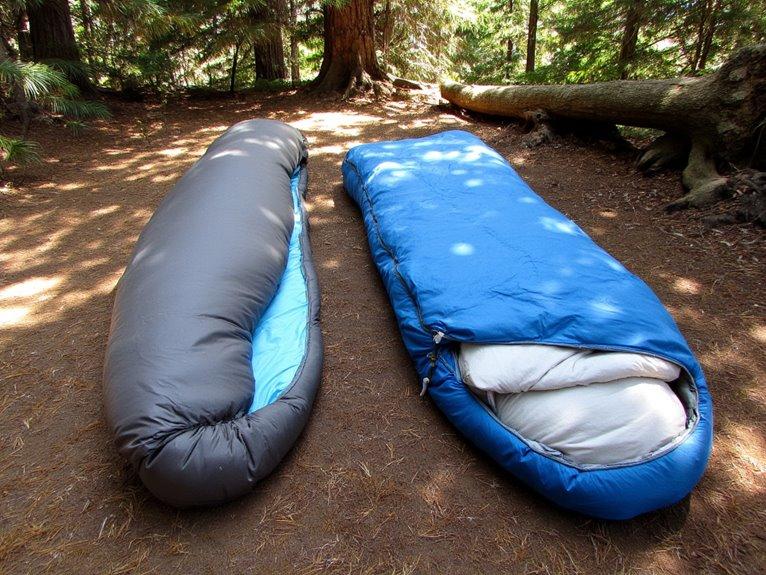
Sleeping bags come in several basic shapes.
The three most common are:
- Rectangular
- Semi-rectangular
- Mummy
Each shape has different advantages.
Rectangular Sleeping Bags
Rectangular bags provide plenty of room around your body.
They’re often comfortable for:
- Summer camping
- Car camping
- Campgrounds
- Warm-weather trips
The extra room makes it easier to move around while sleeping.
The downside is that the larger interior space can make them less efficient at retaining body heat.
They’re also usually bulkier than more fitted designs.
Semi-Rectangular Sleeping Bags
Semi-rectangular bags offer a compromise between space and warmth.
They provide more room than a traditional mummy bag while still being somewhat more efficient in cooler conditions.
This can be a good option if you want one sleeping bag for a variety of camping conditions.
Mummy Sleeping Bags
Mummy bags are narrower around the feet and legs and generally fit more closely around the body.
This design helps reduce the amount of empty space inside the bag.
They’re popular for:
- Cooler weather
- Backpacking
- Cold-weather camping
- Campers who prioritize warmth and lower weight
The tradeoff is that they can feel restrictive if you prefer lots of room while sleeping.
Think About How You Sleep
Your sleeping style matters more than many beginners realize.
If you move around a lot during the night, a narrow mummy bag may feel uncomfortable.
If you sleep mostly on your back and don’t mind a snug fit, a mummy-style bag may work well.
If you prefer to stretch your legs, turn from side to side, or sleep in different positions, a roomier sleeping bag may be a better choice.
Don’t choose a sleeping bag only because it looks technically impressive.
You have to be comfortable enough to actually sleep in it.
Get the Right Size
Sleeping bags aren’t one-size-fits-all.
Most manufacturers offer different lengths, and some also offer different widths.
A sleeping bag should give you enough room to move comfortably without creating a huge amount of empty space.
Too small:
- Your movement can be restricted
- The bag may feel uncomfortable
- It can be difficult to wear appropriate clothing inside
Too large:
- Extra empty space can make it harder to stay warm
- The bag may be heavier and bulkier
- You may lose some of the efficiency of the insulation
Check the manufacturer’s sizing chart before buying.
Don’t assume that your normal clothing size automatically tells you which sleeping bag size you need.
Choose Between Down and Synthetic Insulation
The insulation inside the sleeping bag is another major decision.
The two most common types are:
Down
and
Synthetic insulation
Both can work well, but they have different strengths.
Down Sleeping Bags
Down insulation is known for being lightweight and highly compressible.
A good down sleeping bag can provide a lot of warmth without taking up much space.
Advantages include:
- Low weight
- Excellent compressibility
- High warmth-to-weight ratio
- Comfortable loft
However, down insulation can lose much of its insulating ability when it becomes wet.
Down sleeping bags also tend to cost more.
Synthetic Sleeping Bags
Synthetic insulation is often more affordable and can continue providing useful insulation when damp.
Advantages include:
- Lower price
- Good performance in damp conditions
- Easier care for many campers
- Often a good choice for beginners
The tradeoff is that synthetic sleeping bags are generally bulkier and heavier than comparable down models.
For car camping, that extra size may not matter much.
For backpacking, weight and packability become more important.
We compare these two insulation types in more detail in our guide to Down vs Synthetic Sleeping Bags: Which Is Better?.
Car Camping or Backpacking?
This is one of the easiest ways to narrow down your choices.
For Car Camping
You have more freedom.
Because you don’t have to carry your sleeping bag for miles, you can choose a bag based more on comfort than weight.
You might prefer:
- A roomier shape
- A larger sleeping bag
- More insulation
- A less compressible design
- A more affordable synthetic model
If the sleeping bag fits comfortably in your vehicle, weight may not be a major concern.
For Backpacking
Weight and packed size become much more important.
A backpacking sleeping bag should ideally provide enough warmth without taking up too much room in your pack.
You may want:
- Lower weight
- Better compressibility
- A mummy shape
- High-quality down insulation
- A temperature rating suited to your planned trips
Don’t buy a backpacking sleeping bag simply because it is lighter if you primarily go car camping.
You’re paying for features you may not actually need.
Consider Your Sleeping Pad Too
A sleeping bag doesn’t work alone.
The sleeping pad underneath you plays an important role in keeping you warm because it helps reduce heat loss to the ground.
A warm sleeping bag combined with an inadequate sleeping pad can still leave you feeling cold.
That’s why it’s important to think about your sleeping system as a whole:
Sleeping bag + sleeping pad + clothing + shelter
For more information, check out our guide to Sleeping Pad vs Air Mattress: Which Is Better for Camping?.
Think About Your Camping Clothing
What you wear to bed can also affect how warm you feel.
Depending on the conditions, you may use:
- Base layers
- Warm socks
- A lightweight fleece
- A beanie
- Dry camping clothes
However, don’t rely on clothing alone to compensate for a sleeping bag that isn’t appropriate for the conditions.
Also avoid going to bed in wet clothing.
Keeping your sleep clothes dry can make a noticeable difference on cool camping nights.
Don’t Buy a Sleeping Bag Based Only on the Lowest Temperature
This is one of the most common beginner mistakes.
A sleeping bag advertised with an extremely low temperature rating might look like a great deal.
But if you mainly camp during summer, that bag could be unnecessarily heavy, bulky, and uncomfortable.
Instead, choose a bag based on your actual camping conditions.
Ask yourself:
What is the coldest weather I realistically expect to camp in?
Then choose a sleeping bag that gives you an appropriate margin of comfort.
Consider Pack Size
Pack size matters even when you’re car camping.
A huge sleeping bag may take up valuable space in your vehicle, especially if you already carry:
- Tent
- Cooler
- Cooking equipment
- Chairs
- Water
- Clothing
- Other camping gear
For car campers, this usually isn’t a reason to buy the smallest possible sleeping bag.
But it is still worth checking the packed dimensions before purchasing.
A sleeping bag that fits easily into your storage system will be much easier to live with.
Think About Cleaning and Storage
Your sleeping bag will last longer if you take care of it properly.
Always follow the manufacturer’s cleaning instructions.
In general, avoid unnecessary washing because repeated washing can affect insulation and materials.
After a trip, make sure the sleeping bag is completely dry before storing it.
For long-term storage, many sleeping bags should not remain compressed inside a small stuff sack.
Instead, follow the manufacturer’s recommended storage method.
Proper storage is especially important for insulated sleeping bags because compression over long periods can affect loft.
How Much Should You Spend?
You don’t need to spend hundreds of dollars on your first sleeping bag.
Your budget should depend on:
- How often you camp
- What temperatures you expect
- Whether you car camp or backpack
- How important weight is
- How long you expect to use it
For beginners who mostly car camp, a reasonably priced synthetic sleeping bag can be a very practical starting point.
If you later discover that you camp frequently or need better performance in colder conditions, you can upgrade.
This is similar to building the rest of your camping gear setup.
Start with what you actually need and improve your equipment over time.
See our guide to How to Build a Camping Gear Setup on a Budget for more ideas.
A Simple Sleeping Bag Buying Checklist
Before buying a sleeping bag, check these factors:
1. Temperature Rating
Choose a rating that matches the coldest conditions you realistically expect.
2. Shape
Decide whether you prefer maximum room or a closer-fitting design.
3. Size
Check the manufacturer’s length and width recommendations.
4. Insulation
Choose between down and synthetic based on your budget, camping environment, and priorities.
5. Camping Style
Car camping gives you more freedom with weight and packed size.
Backpacking makes weight and compression much more important.
6. Sleeping Style
Side sleepers and restless sleepers may prefer more room.
7. Pack Size
Make sure the sleeping bag fits your vehicle storage or backpack.
8. Budget
Don’t spend more on features you don’t actually need.
The Best Sleeping Bag Is the One That Matches Your Trips
There isn’t one sleeping bag that’s perfect for every camper.
The best sleeping bag for you depends on where you camp, when you camp, how you sleep, and how you transport your gear.
For a beginner who mostly goes car camping during mild weather, a comfortable synthetic sleeping bag with a suitable temperature rating may be all you need.
For backpackers or cold-weather campers, weight, insulation quality, and temperature performance become much more important.
Instead of asking:
“What is the best sleeping bag?”
Ask:
“What sleeping bag is best for the way I camp?”
That simple change in perspective can help you avoid spending money on features you don’t need.
Final Thoughts
Choosing a sleeping bag doesn’t have to be complicated.
Start with your camping conditions, determine the temperature range you need, choose a comfortable shape and size, and then decide between down and synthetic insulation.
Most importantly, think about your entire sleeping system rather than the sleeping bag alone.
A good sleeping bag, comfortable sleeping pad, suitable tent, and dry sleeping clothes can make a huge difference in your camping experience.
You don’t need the most expensive sleeping bag on the market.
You need one that fits your camping style, your budget, and the conditions you’ll actually encounter.
Once you understand those basics, choosing the right sleeping bag becomes much easier.
Want to learn more? Check out these related camping guides:
→ Sleeping Bag Temperature Ratings Explained for Beginners
→ Down vs Synthetic Sleeping Bags: Which Is Better?
→ How to Set Up a Comfortable Camping Sleep System