
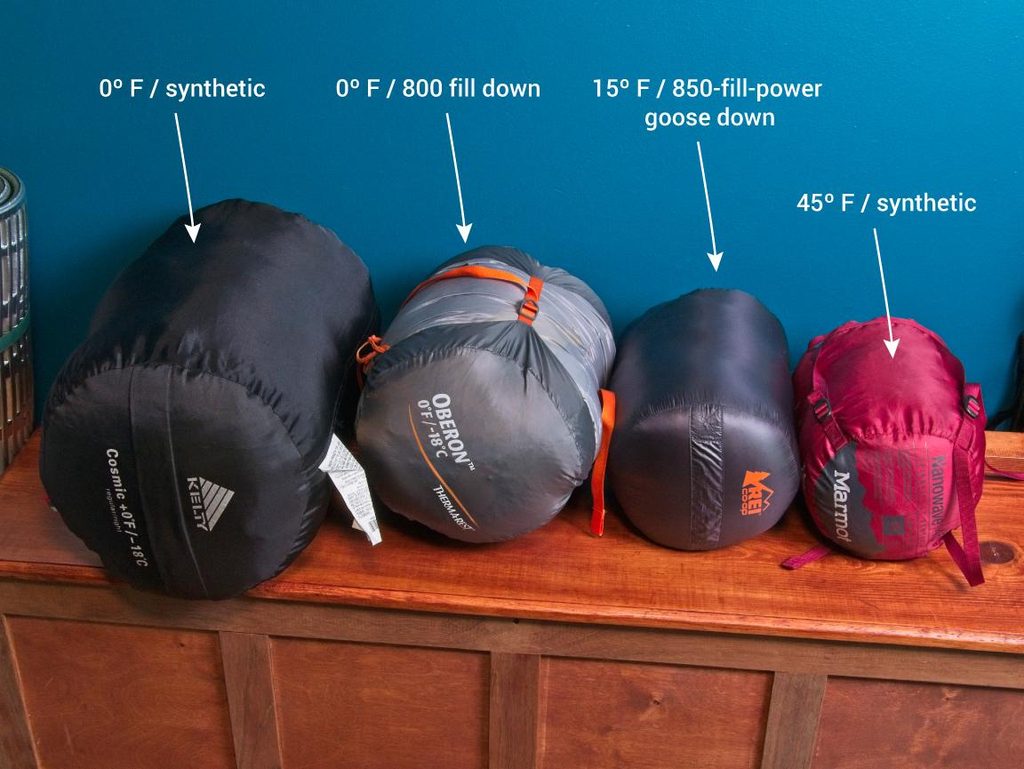
When you’re shopping for a sleeping bag, one of the biggest decisions you’ll make is choosing the right type of insulation.
Most sleeping bags use either down insulation or synthetic insulation.
Both can keep you warm, but they behave differently in cold, wet, and humid conditions. They also differ in weight, pack size, price, durability, and care.
So which one is better?
The answer depends on how and where you camp.
If you mostly go car camping at established campgrounds, synthetic insulation may offer everything you need at a lower price.
If you care about low weight, compact packing, and a high warmth-to-weight ratio, down may be worth the extra cost.
Let’s compare the two so you can choose the right sleeping bag for your camping style.
What Is Down Insulation?
Down insulation comes from the soft, fluffy layer found underneath the feathers of ducks or geese.
Instead of using flat feathers, down consists of lightweight clusters that trap air.
That trapped air helps provide insulation.
High-quality down is especially popular because it can provide a lot of warmth without adding much weight.
Down sleeping bags are commonly used for:
- Backpacking
- Lightweight camping
- Cold-weather trips
- Long-distance hiking
- Campers who prioritize pack size and weight
However, down also has some disadvantages.
Its performance can drop significantly when the insulation becomes wet, and high-quality down sleeping bags can be expensive.
What Is Synthetic Insulation?
Synthetic sleeping bags use man-made fibers to create insulation.
These fibers are designed to trap air and provide warmth while remaining relatively lightweight.
Synthetic insulation is widely used in camping because it is generally affordable, practical, and easier to handle in damp conditions.
Synthetic sleeping bags are especially popular for:
- Car camping
- Casual camping
- Family camping
- Humid environments
- Beginners
- Campers on a budget
Synthetic insulation is usually heavier and bulkier than comparable down insulation, but those disadvantages may not matter much if you’re driving to the campground.
Down vs Synthetic: Quick Comparison
| Feature | Down | Synthetic |
|---|---|---|
| Warmth-to-weight ratio | Excellent | Good |
| Weight | Usually lighter | Usually heavier |
| Pack size | Very compact | More bulky |
| Moisture resistance | Lower | Better |
| Drying after getting wet | More difficult | Generally easier |
| Price | Usually higher | Usually lower |
| Durability | Can last many years with proper care | Generally durable |
| Best for | Backpacking and lightweight camping | Car camping and budget camping |
Neither option is universally better.
The right choice depends on what matters most to you.
Warmth and Insulation Performance
Both down and synthetic sleeping bags can provide excellent warmth.
The difference is often more noticeable when you compare warmth relative to weight and packed size.
Down has a high warmth-to-weight ratio because the lofted clusters trap a lot of air without adding much weight.
This is one reason down is so popular among backpackers.
Synthetic insulation can also be very warm, but achieving similar warmth may require more insulation material.
That usually means a heavier and bulkier sleeping bag.
For car camping, this may not be a problem.
If your vehicle is carrying the gear, you may prefer the affordability and practicality of synthetic insulation over saving a few pounds.
What Happens When They Get Wet?
This is one of the biggest differences between down and synthetic insulation.
Down and Moisture
Down performs best when it stays dry.
When down becomes wet, the clusters can clump together and lose much of their loft.
That means the sleeping bag may provide less insulation than expected.
Drying wet down can also take considerably more time and effort.
Modern sleeping bags may use water-resistant treatments or other design features to improve moisture resistance, but down still generally requires more care around moisture.
Synthetic and Moisture
Synthetic insulation generally handles damp conditions better.
Even when synthetic insulation becomes somewhat wet, it can continue providing useful insulation.
It also tends to dry more easily.
This doesn’t mean you should intentionally get a synthetic sleeping bag wet.
You should still protect any sleeping bag from rain, condensation, spills, and other sources of moisture.
But if you’re camping somewhere humid or frequently dealing with damp conditions, synthetic insulation can provide extra peace of mind.
Which Is Better for Rainy or Humid Camping?
If you frequently camp in wet or humid environments, synthetic insulation has a major advantage.
This can be particularly useful for:
- Rainy climates
- Humid summer camping
- Coastal areas
- Damp campground conditions
- Camping where gear is more likely to get wet
If your sleeping bag stays dry inside your tent, however, down can perform extremely well.
Good shelter management and proper storage can make a significant difference.
If you’re interested in keeping your tent dry, see our guide to How to Keep Your Tent Dry in the Rain.
Weight and Packability
This is where down really stands out.
A quality down sleeping bag can provide excellent warmth while remaining relatively light and compact.
When packed into a compression sack, it can take up significantly less space than many comparable synthetic sleeping bags.
This matters a lot for backpackers.
If everything you carry has to fit inside a backpack, reducing the size and weight of your sleeping bag can make a noticeable difference.
For car camping, however, packability is less important.
If your sleeping bag goes from your house to your vehicle and then from your vehicle to the tent, a larger synthetic sleeping bag may be perfectly acceptable.
Price
Price is another major difference.
In general, synthetic sleeping bags are more affordable than comparable down sleeping bags.
This makes synthetic a particularly attractive option for beginners who are building a camping setup on a budget.
A down sleeping bag can cost considerably more because high-quality down insulation is expensive and requires specialized construction.
That doesn’t automatically make down the better purchase.
If you only camp a few times a year, a reasonably priced synthetic sleeping bag may provide everything you need.
If you camp frequently and value low weight and compact storage, investing in down may make more sense over time.
Which Is More Durable?
Both types can last for many years when properly cared for.
However, durability depends on much more than the insulation itself.
The outer fabric, stitching, zippers, storage conditions, cleaning, and frequency of use all matter.
Down sleeping bags can maintain their loft and performance for a very long time when properly maintained.
Synthetic insulation can gradually lose some loft after repeated compression and use.
That doesn’t mean a synthetic sleeping bag will wear out quickly.
A well-made synthetic bag can still provide years of reliable service.
The important thing is to follow the manufacturer’s care and storage instructions.
Which Is Easier to Care For?
Synthetic sleeping bags are generally more forgiving.
They’re often easier to clean and tend to handle occasional moisture better.
Down requires more careful management.
You should avoid unnecessary washing and make sure the sleeping bag is completely dry before storing it.
Long-term storage also matters.
Many insulated sleeping bags should not remain tightly compressed for long periods because prolonged compression can affect the insulation’s loft.
Always follow the manufacturer’s specific storage recommendations.
Down vs Synthetic for Car Camping
For most beginners who primarily car camp, synthetic insulation is an excellent starting point.
Why?
Because car camping removes many of the disadvantages of synthetic insulation.
You don’t have to carry the sleeping bag for miles.
You usually have plenty of room for a larger sleeping bag.
And you’re likely to appreciate the lower price and easier moisture management.
A synthetic sleeping bag can be a very practical choice for:
- Weekend camping
- State park campgrounds
- Family camping
- Summer camping
- Spring and fall car camping
- Beginners building their first gear setup
If you don’t care about saving weight, synthetic is often the simpler choice.
Down vs Synthetic for Backpacking
Backpacking changes the equation.
When you’re carrying everything on your back, weight and pack size become much more important.
A lighter and more compressible down sleeping bag can save valuable space and reduce the weight of your pack.
For backpackers who camp frequently, the higher initial price may be worth it.
However, your environment still matters.
If you’re regularly backpacking in wet conditions, you may prefer synthetic insulation or take extra precautions to keep your down sleeping bag dry.
Which Is Better for Cold Weather?
Both down and synthetic sleeping bags can be designed for very cold temperatures.
The important thing is not simply choosing down because it’s associated with premium cold-weather gear.
Instead, compare:
- Temperature rating
- Insulation amount
- Bag design
- Fit
- Sleeping pad
- Shelter
- Clothing
- Expected weather
A high-quality synthetic sleeping bag can be very warm.
A high-quality down sleeping bag can also provide excellent cold-weather performance while weighing less.
The right choice depends on your priorities and the conditions you’re expecting.
For more information, see our guide to How to Choose the Right Sleeping Bag for Your Camping Trip.
Which Is Better for Beginners?
For many beginners, synthetic is the easiest place to start.
It’s generally:
- More affordable
- Easier to maintain
- More forgiving around moisture
- Available in many different styles
- Well suited to car camping
If you’re just starting out and don’t know how often you’ll camp, spending a lot of money on premium down gear may not be necessary.
A good synthetic sleeping bag can give you plenty of time to learn what you actually want from your camping equipment.
On the other hand, if you’re already planning regular backpacking trips, a down sleeping bag may be worth considering from the beginning.
When Should You Choose Down?
Down may be the better choice if you:
- Backpack frequently
- Want to minimize weight
- Need a compact sleeping bag
- Camp in relatively dry conditions
- Want a high warmth-to-weight ratio
- Don’t mind paying more
- Are willing to take extra care of your gear
Down is especially attractive when every ounce and cubic inch matters.
When Should You Choose Synthetic?
Synthetic may be the better choice if you:
- Mostly car camp
- Are new to camping
- Want to spend less
- Camp in humid or damp environments
- Don’t mind carrying extra weight
- Want easier maintenance
- Need a practical all-around sleeping bag
For many casual campers, synthetic offers an excellent balance of performance and value.
Don’t Forget Your Sleeping Pad
Choosing the right insulation is only one part of staying warm at night.
Your sleeping pad is also extremely important.
The ground can pull heat away from your body, so a sleeping bag alone isn’t enough to create a comfortable sleeping system.
Think about your setup as:
Sleeping bag + sleeping pad + shelter + clothing
If one part of the system isn’t appropriate for the conditions, you may still feel cold.
For a comparison of common sleeping systems, read Sleeping Pad vs Air Mattress: Which Is Better for Camping?.
A Simple Decision Guide
If you’re still unsure, use this quick guide.
Choose Down If:
You prioritize:
- Low weight
- Small packed size
- High warmth-to-weight ratio
- Backpacking performance
And you’re comfortable with:
- Higher cost
- More careful moisture management
- More careful cleaning and storage
Choose Synthetic If:
You prioritize:
- Lower cost
- Easy maintenance
- Moisture resistance
- Car camping practicality
And you don’t mind:
- More weight
- Larger packed size
The Best Choice Depends on Your Camping Style
There is no universal winner in the down vs synthetic debate.
Down is hard to beat when weight and packability matter.
Synthetic is hard to beat when affordability, simplicity, and moisture resistance matter.
For a beginner who mostly camps from a vehicle, synthetic is often the most practical option.
For a backpacker who carries all their gear, down may be worth the additional cost.
The most important thing is to avoid paying for advantages you won’t actually use.
If your sleeping bag spends most of its life traveling from your house to your SUV, saving a pound or two may not be worth spending hundreds of extra dollars.
Final Thoughts
Choosing between down and synthetic insulation comes down to your camping style, budget, environment, and priorities.
Down: lighter, more compact, and excellent for weight-conscious campers.
Synthetic: more affordable, easier to manage around moisture, and especially practical for car camping.
Neither is automatically better.
Before buying, think about where you camp, how often you camp, how much gear you carry, and what conditions you’re likely to encounter.
Once you know those things, the decision becomes much easier.
And remember: the best sleeping bag isn’t necessarily the most expensive one. It’s the one that performs well for the trips you actually take.
Want to learn more? Check out these related camping guides:
→ How to Choose a Sleeping Bag for Camping
→ How to Choose the Right Sleeping Bag for Your Camping Trip
→ Sleeping Bag Temperature Ratings Explained for Beginners
→ How to Set Up a Comfortable Camping Sleep System