

Choosing a campsite can make a huge difference in how comfortable and enjoyable your camping trip feels.
A beautiful campground doesn’t automatically mean every campsite is a good one.
One site might be close to the bathroom but noisy. Another might have an amazing view but be exposed to strong wind. A site that looks perfectly flat during the day might collect water after a heavy rain.
For beginners, choosing a campsite can feel like a small decision.
It’s not.
Your campsite affects your sleep, cooking setup, privacy, safety, and overall experience.
Here’s what to look for before you choose a campsite.
What Makes a Good Campsite?
A good campsite should be:
- Safe
- Relatively level
- Well drained
- Appropriate for your tent
- Convenient for your vehicle
- Suitable for cooking
- Away from obvious hazards
- Compatible with campground rules
You also need to consider what kind of camping you’re doing.
A family with young children may want to be closer to bathrooms.
A couple looking for a quiet weekend may prefer a more secluded site.
A car camper may prioritize easy vehicle access and a large tent area.
There isn’t one perfect campsite for everyone.
1. Check the Location Before You Book
Don’t choose a campsite based only on a photograph.
Look at the campground map and check what is around the site.
Consider:
- Bathrooms
- Showers
- Roads
- Parking
- Water
- Hiking trails
- Campground entrances
- Neighboring campsites
- Lakes, rivers, or other natural features
Think about how far you’re willing to walk for the things you need.
Being close to the bathroom can be convenient, especially for families.
But high-traffic areas can also be louder and busier.
If you’re looking for a quiet night, a site farther away from bathrooms, playgrounds, entrances, and busy roads may be better.
2. Check the Campsite Size and Layout
Before booking, check whether the campsite is large enough for your equipment.
Think about everything that needs to fit:
- Tent
- Vehicle
- Picnic table
- Cooking area
- Chairs
- Cooler
- Camping gear
Don’t forget about the tent itself.
A campsite that technically fits your tent may feel cramped once you add your vehicle, table, chairs, and cooking equipment.
If you’re car camping with a large tent, look for a site with enough usable ground rather than simply looking at the total campsite size.
3. Check the Ground Before Setting Up Your Tent
This is one of the most important things to check when you arrive.
Walk around the campsite before unloading everything.
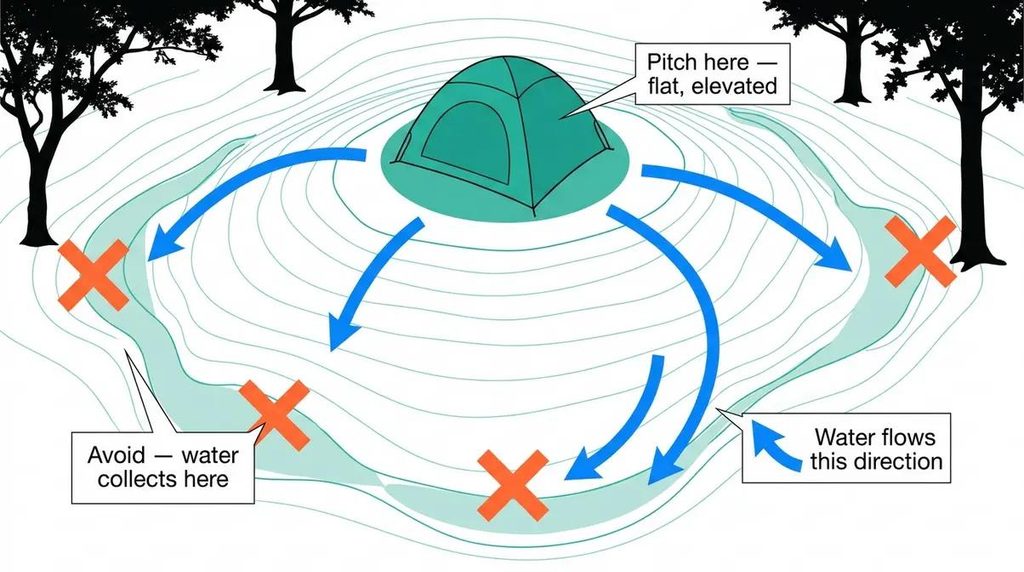
Look for a large, relatively flat area for your tent.
Remove obvious:
- Rocks
- Sticks
- Pinecones
- Sharp debris
Avoid low or sunken areas because they can collect water during rain.
Also look up.
Dead branches or damaged trees above your tent can become dangerous, especially during strong wind or storms.
The National Park Service recommends choosing level ground while avoiding low areas, dead branches, ravines that can flood, and other obvious hazards.
4. Check the Weather and Natural Hazards
Weather can completely change the best location for your tent.
Before setting up, consider:
Rain
Avoid obvious drainage channels, depressions, and low ground.
Water doesn’t need to be flowing when you arrive for an area to become wet later.
Wind
Strong wind can make exposed sites uncomfortable and can increase the risk from branches or unsecured equipment.
Lightning
During thunderstorms, exposed areas, high points, and isolated trees can present additional hazards.
Falling Branches
Look overhead before choosing where to sleep.
If you see dead branches above the tent area, choose another location if possible.
The National Park Service specifically advises campers to watch for flash flooding, lightning, wind, and dead trees or branches around campsites.
5. Check the Facilities You Actually Need
Different campgrounds offer very different facilities.
Before booking, check whether your campground provides:
- Restrooms
- Showers
- Drinking water
- Picnic tables
- Fire rings
- Trash facilities
- Electricity
- Dump stations
- Cell service
Don’t assume every campground has everything.
If this is your first camping trip, having basic facilities nearby can make the experience much easier.
More experienced campers may prefer a more primitive campsite.
Choose based on your comfort level rather than what looks adventurous online.
6. Check the Campground Rules
Every campground has its own rules.
Before arriving, check:
- Campfire restrictions
- Quiet hours
- Pet rules
- Generator hours
- Vehicle restrictions
- Maximum number of campers
- Maximum number of vehicles
- Food storage requirements
- Firewood rules
Rules can also change depending on weather, fire danger, wildlife activity, or local regulations.
Don’t assume the rules from one campground apply to another.
7. Think About Your Neighbors
Your neighbors can have a huge impact on your camping experience.
A campsite surrounded by large RVs, families, or group sites may feel very different from a quiet site surrounded by smaller tents.
Think about what you want.
If you’re looking for peace and quiet, avoid sites close to:
- Playground areas
- Restrooms
- Campground entrances
- Group campsites
- Busy roads
If you’re camping with children, however, being closer to facilities may be more convenient.
There’s no universally best location.
It depends on what kind of weekend you want.
8. Check Access for Your Vehicle
If you’re car camping, vehicle access matters.
Before booking, check:
- Parking location
- Road conditions
- Site access
- Vehicle length restrictions
- Clearance
- Distance between your vehicle and tent
Some campsites have parking directly next to the tent area.
Others may require you to park farther away.
If you’re bringing a large SUV, truck, trailer, or camper, make sure the site can accommodate it before you arrive.
9. Check Food Storage and Wildlife Rules
Food storage becomes especially important in areas with wildlife.
Never assume that leaving food in a cooler beside your tent is acceptable everywhere.
Some parks have specific food-storage requirements, particularly in bear country.
You may need to use:
- Bear-resistant food lockers
- Bear canisters
- Approved food storage containers
- Designated food storage areas
The National Park Service notes that food should be kept away from sleeping areas and that campers in bear country should follow the specific food-storage rules of the park.
Always check the local regulations before your trip.
10. Check Everything Again When You Arrive
Even if you carefully selected your campsite online, take a few minutes to inspect it when you arrive.
Before setting up your tent, check:
☐ Is the ground relatively level?
☐ Is the ground dry?
☐ Is there evidence of drainage or flooding?
☐ Are there dead branches overhead?
☐ Is the tent area far enough from the fire ring?
☐ Is the cooking area safely separated from the sleeping area?
☐ Is the vehicle parked safely?
☐ Are there wildlife or food-storage requirements?
☐ Are there nearby hazards?
☐ Do local fire restrictions affect your plans?
This simple inspection can prevent a lot of problems later.
How Should You Set Up a Beginner Campsite?
Once you’ve chosen the safest and most practical area, think about how the different parts of your campsite work together.
A simple setup might look like this:
Vehicle → Gear → Picnic Table/Cooking → Tent
Keep your sleeping area separate from cooking and food storage.
This makes the campsite more organized and can also reduce problems with food, wildlife, and cooking equipment.
The National Park Service recommends identifying separate locations for your tent, cooking station, and eating area and maintaining safe separation between them.
What About the Fire Ring?
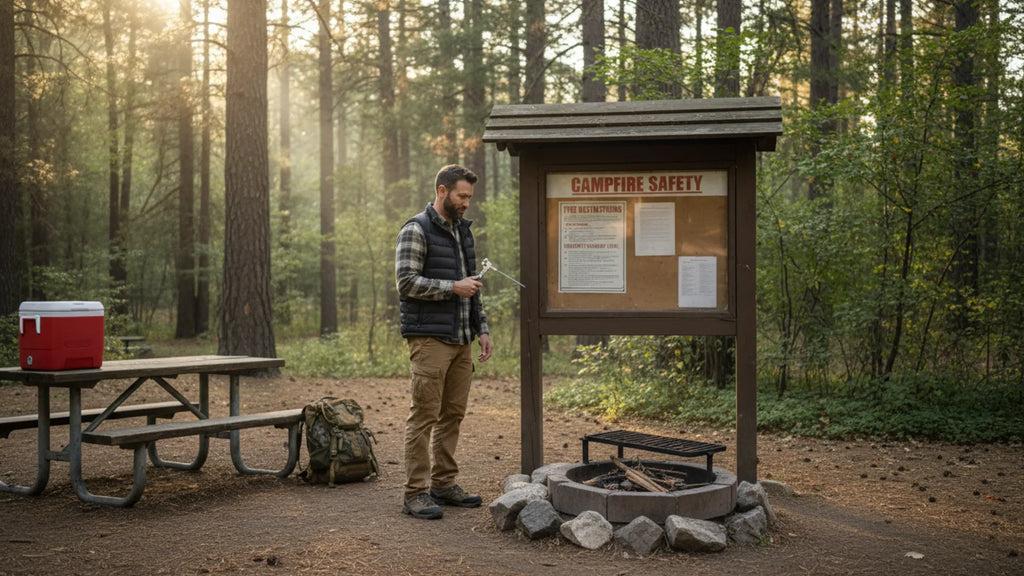
If your campsite has a designated fire ring, use it rather than creating a new fire location.
But first check whether campfires are currently allowed.
Fire restrictions can change depending on local conditions.
Keep fires manageable, never leave them unattended, and make sure they’re completely extinguished before leaving.
Your campground may have additional requirements, so always follow local rules.
Best Campsite Location for Different Campers
The “best” campsite depends on your situation.
For Families
Consider:
- Restroom access
- Flat ground
- Easy vehicle access
- Enough space for children
- Distance from steep terrain or water
For Couples
You may prefer:
- More privacy
- Less traffic
- Scenic surroundings
- A quieter location
For Car Campers
Look for:
- Easy parking
- Large tent area
- Convenient gear access
- Picnic table
- Fire ring
- Enough room for your cooking setup
For First-Time Campers
Don’t make your first trip harder than it needs to be.
A campground with:
- Restrooms
- Water
- Defined campsites
- Easy vehicle access
- Clear rules
can be a much better introduction to camping than an isolated primitive campsite.
Common Campsite Mistakes Beginners Make
Setting Up Without Checking the Ground
A campsite can look fine until you actually lie down.
Take a few minutes to inspect the tent area first.
Camping in a Low Spot
Low ground can become wet quickly during rain.
Choose a higher, well-drained area when possible.
Ignoring What’s Above You
Always look up before pitching your tent.
Dead branches are easy to overlook.
Putting the Tent Too Close to the Fire
Sparks can damage or ignite tent fabric.
Keep your sleeping area a safe distance from the fire ring and cooking area.
Ignoring Wildlife Rules
Food storage requirements vary by location.
Always check the rules before your trip.
Arriving After Dark
It’s much harder to identify hazards and choose a good tent location in complete darkness.
If possible, arrive with enough daylight to inspect and set up your campsite.
Campsite Checklist for Beginners
Before you settle in, check:
☐ Campsite is suitable for your vehicle
☐ Tent area is relatively level
☐ Ground is not a low or obvious drainage area
☐ No dead branches overhead
☐ Tent is safely separated from the fire ring
☐ Cooking area is separated from sleeping area
☐ Food storage rules are understood
☐ Campfire restrictions are checked
☐ Restroom and water locations are known
☐ Important campground rules are understood
Final Thoughts
Choosing a campsite isn’t about finding the most beautiful spot.
It’s about finding a location that is safe, comfortable, practical, and appropriate for the kind of camping you’re doing.
Take a few minutes to check the ground, weather, trees, facilities, vehicle access, neighbors, and local rules before setting up.
That small amount of preparation can make your entire camping trip easier.
And once you get used to checking these things, choosing a good campsite becomes second nature.