
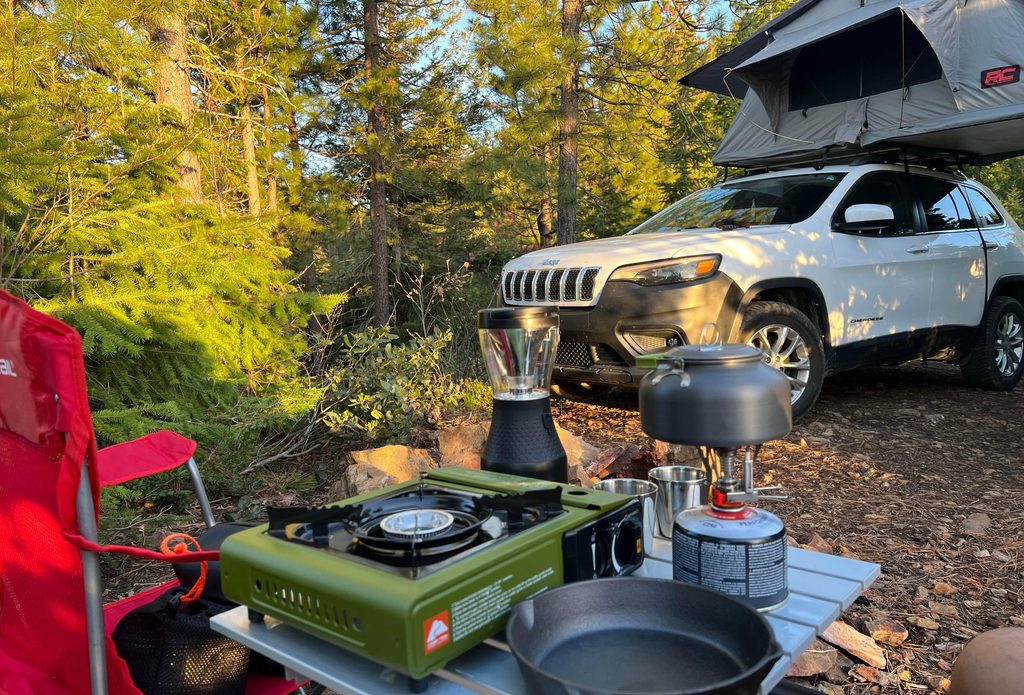
A camping stove can make cooking outdoors much easier.
But if you’ve never bought one before, the number of choices can be confusing.
Canister stove or propane? One burner or two? Small backpacking stove or full-size camp stove? And what about fuel?
The good news is that choosing a camping stove becomes much easier once you know what kind of camping and cooking you’ll actually be doing.
In this guide, we’ll break down the main types of camping stoves and show you what to look for before buying one.
What Should You Look for in a Camping Stove?
Start with your camping style.
A stove for one person making coffee and boiling water is very different from a stove used by a family cooking breakfast, lunch, and dinner.
The main things to consider are:
- Number of people
- Type of food you cook
- Fuel type
- Number of burners
- Weight and portability
- Wind resistance
- Flame control
- Stability
- Ignition system
- Ease of cleaning
For car camping, you generally have more freedom to choose a larger stove because you don’t have to carry it very far.
For backpacking, weight and packability become much more important.
Camping Stove Types Explained
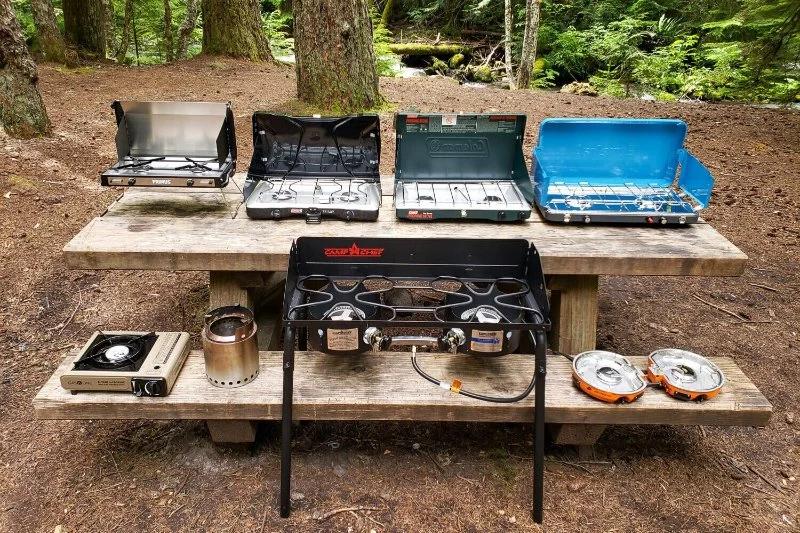
There are several common types of camping stoves.
Canister Stoves
Canister stoves use pressurized fuel canisters, commonly containing a blend such as isobutane and propane.
They’re compact, lightweight, and simple to set up.
They’re particularly popular with backpackers and campers who want a small cooking system.
For car camping, they can work well for simple meals, coffee, boiling water, and small cookware.
Propane Camping Stoves
Propane stoves are common for car camping and family camping.
Many larger models have two burners, allowing you to cook two things at the same time.
For example, you could cook eggs on one burner while heating coffee or water on the other.
They’re usually heavier and bulkier than backpacking stoves, but that isn’t a major disadvantage if you’re driving directly to your campsite.
Liquid Fuel Stoves
Liquid fuel stoves are designed to burn liquid fuel from a refillable bottle.
They can be useful in certain cold-weather or expedition-style situations, but they tend to require more setup and maintenance than simpler canister or propane systems.
For most beginners doing ordinary campground camping, they usually aren’t the first stove I’d recommend.
Wood-Burning Stoves
Wood-burning stoves use small pieces of wood instead of carrying a separate fuel canister.
They can reduce the amount of fuel you need to pack, but they depend on having suitable dry wood and may not be permitted in every area.
Always check local campground and fire regulations before using one.
Integrated Cooking Systems
Integrated systems combine a stove and specially designed pot to make boiling water fast and efficient.
They’re especially popular for backpacking and simple meals.
If your main goal is cooking elaborate meals for a family at a campground, however, a traditional two-burner stove may be more practical.
Canister vs. Propane Camping Stoves
For beginners, this is one of the most useful comparisons.
Canister Stoves
Best for:
- Solo campers
- Couples
- Backpacking
- Simple meals
- Boiling water
- Coffee
- Lightweight setups
Advantages:
- Compact
- Lightweight
- Easy to pack
- Simple setup
Disadvantages:
- Smaller cooking area
- Limited cookware size
- Less convenient for large meals
Propane Stoves
Best for:
- Families
- Car camping
- Group camping
- Multiple dishes
- Large cookware
Advantages:
- Larger cooking surface
- Two burners are common
- Good for larger meals
- Easy to control
Disadvantages:
- Heavier
- Bulkier
- Requires larger fuel bottles
If you’re building a basic car camping kitchen, a two-burner propane stove is often the most practical starting point.
How Many Burners Do You Need?
You don’t necessarily need two burners.
One-Burner Stoves
A single burner is usually enough if you mostly:
- Boil water
- Make coffee
- Heat soup
- Cook simple one-pot meals
They’re also useful for couples and minimalist campers.
Two-Burner Stoves
Two burners become much more useful when you’re cooking a full meal.
For example:
Burner 1 → scrambled eggs
Burner 2 → bacon
Or:
Burner 1 → pasta
Burner 2 → sauce
For family camping, a two-burner stove can save a surprising amount of time.
When Do You Need More Than Two Burners?
Most casual campers don’t.
If you’re cooking for a large group, you may need additional cooking equipment, but that doesn’t necessarily mean buying a huge camping stove.
A second stove or portable griddle may be more useful depending on what you’re cooking.
What Type of Camping Are You Doing?
Your camping style should determine your stove.
Backpacking
Choose:
- Lightweight stove
- Compact fuel system
- Small cookware
- Simple setup
Weight matters because you’ll be carrying everything.
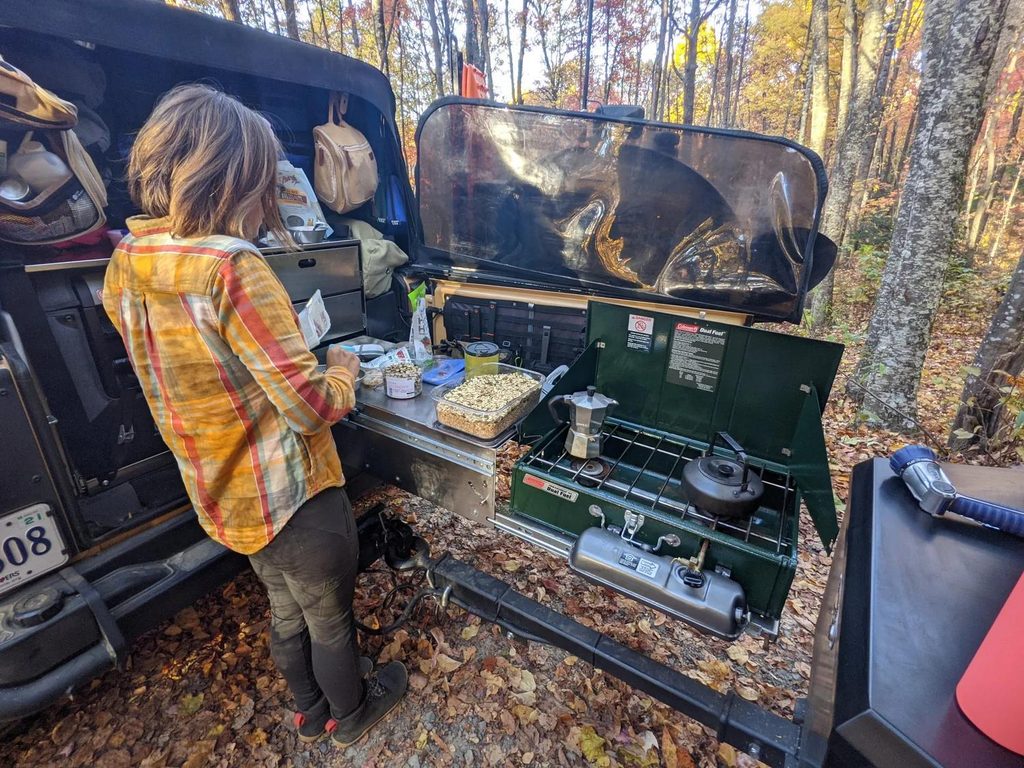
Car Camping
You can prioritize:
- Larger burners
- Better stability
- Bigger cookware
- Two burners
- Better simmer control
Since your vehicle carries the equipment, there’s less reason to choose the smallest possible stove.
Family Camping
Look for:
- Two burners
- Stable cooking surface
- Wind protection
- Easy controls
- Large cooking area
If you’re making meals for several people, a tiny backpacking stove can quickly become frustrating.
Group Camping
For larger groups, think about cooking capacity rather than simply buying the most powerful stove.
Multiple cooking surfaces can make meal preparation much easier.
What Fuel Should You Use for a Camping Stove?
Fuel compatibility is one of the first things you should check before buying a stove.
Common camping stove fuels include:
- Propane
- Isobutane/propane canisters
- Liquid fuels
- Wood
Don’t assume that every fuel canister works with every stove.
Always check the manufacturer’s instructions for the exact fuel type and connection system.
Availability can also vary depending on where you’re camping.
If you’re traveling to a remote campground, check whether the fuel you need is available nearby before leaving home.
Camping Stove Features That Actually Matter
You don’t need every feature available.
Focus on the features that will make your cooking easier.
Wind Protection
Wind can make outdoor cooking much harder.
A stove with built-in wind protection can help maintain a more consistent flame.
Flame Control
Good flame control is useful when cooking foods that need more than simple high heat.
You don’t want everything to be either “off” or “boiling.”
Stability
A stable stove is especially important when using larger pots and pans.
Look for a cooking surface and pot supports that feel solid.
Ignition
Some stoves have built-in ignition systems.
These can be convenient, but it’s still smart to bring a lighter or waterproof matches as a backup.
Cooking Area
Think about the cookware you already own.
A small stove may not comfortably support a large frying pan.
If you regularly cook full meals, check the dimensions before buying.
How Much Power Do You Need?
Camping stove power is often listed in BTUs.
A higher BTU number doesn’t automatically mean a better stove.
More power can help boil water and heat large cookware faster, but cooking performance also depends on burner design, wind protection, cookware, and flame control.
For most beginners, don’t choose a stove based on BTU alone.
Think about how you cook at home and choose a stove that can comfortably handle similar tasks outdoors.
Camping Stove Safety
Camping stoves should always be used outdoors in an appropriate, well-ventilated location.
Never use a portable gas camp stove inside a tent, vehicle, garage, camper, or other enclosed space.
Carbon monoxide is an odorless and potentially deadly gas produced by combustion. The CDC specifically warns against using portable gas camp stoves indoors or inside campers.
Also:
- Follow the stove manufacturer’s instructions.
- Keep flammable materials away from the flame.
- Check fuel connections before lighting.
- Never leave a lit stove unattended.
- Follow local fire restrictions.
- Keep children away from the cooking area.
- Allow cookware and the stove to cool before packing them away.
A camping stove is a useful piece of gear, but it should always be treated as a real flame and fuel-burning appliance.
Common Camping Stove Mistakes Beginners Make
Buying the Smallest Stove
Small isn’t always better.
If you’re cooking for four people, a tiny one-burner stove can make every meal take much longer.
Buying Too Much Stove
The opposite can also happen.
If you’re solo camping and only boiling water for coffee and oatmeal, a large two-burner stove may simply take up unnecessary space.
Ignoring Fuel Availability
Always check what fuel your stove uses and whether that fuel is easy to find where you’re going.
Forgetting Wind
A stove that works perfectly in calm weather can struggle in strong wind.
Bringing Only One Ignition Source
Bring a backup lighter or matches.
It’s a tiny item that can save a frustrating morning.
Camping Stove Buying Checklist
Before buying a stove, ask yourself:
☐ How many people am I cooking for?
☐ Am I car camping or backpacking?
☐ Do I need one burner or two?
☐ What type of fuel does it use?
☐ Is the fuel easy to find?
☐ Will my cookware fit?
☐ Does it have good wind protection?
☐ Is the stove stable?
☐ Does it have good flame control?
☐ Can I safely use it outdoors at my campsite?
If you can answer those questions, choosing a camping stove becomes much easier.
Final Thoughts
The best camping stove isn’t necessarily the most powerful or expensive model.
It’s the stove that matches the way you actually cook outdoors.
For backpackers, lightweight canister stoves make a lot of sense.
For families and car campers, a stable two-burner propane stove can be much more convenient.
Think about your meals, your group size, your camping style, and the fuel you’ll have access to.
Once you know those things, you’ll have a much better idea of what kind of camping stove belongs in your gear setup.