
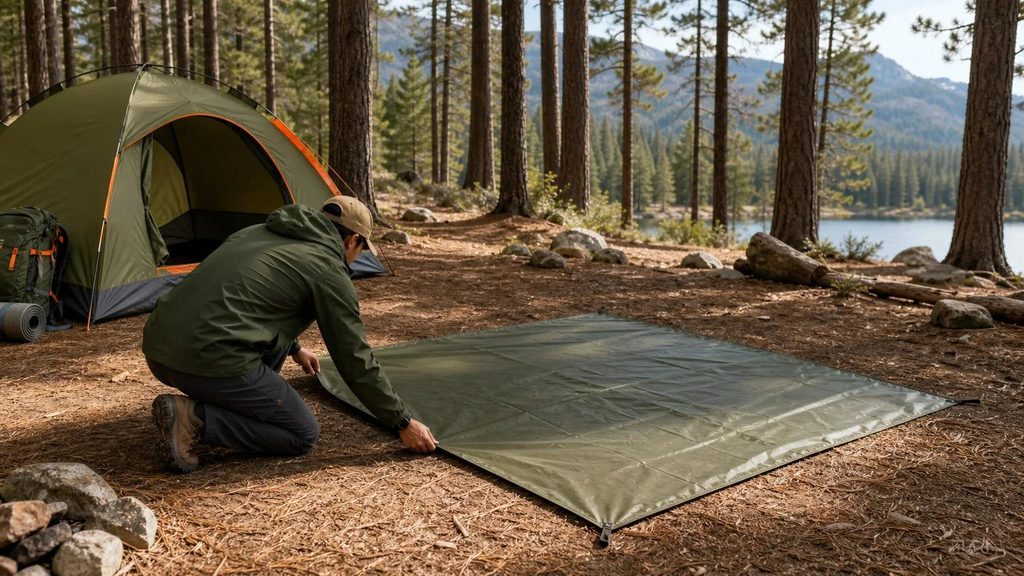
A tent footprint is a simple piece of camping gear, but many beginners are not sure what it actually does or whether they need one.
A footprint sits underneath your tent and creates a protective layer between the tent floor and the ground. It can help protect the bottom of your tent from rough surfaces, dirt, and moisture.
But not every camper needs a footprint, and using the wrong size can actually create problems in rainy weather.
So, how do you choose a camping tent footprint?
This beginner-friendly guide explains what a tent footprint is, why you might want one, how to choose the right size, what materials to look for, and when you can use a cheaper alternative.
What Is a Camping Tent Footprint?
A tent footprint is a groundsheet designed to sit underneath your tent.
Its main purpose is to create a protective layer between the tent floor and the ground.
A footprint can help:
- Protect the tent floor from rough ground
- Reduce dirt on the bottom of the tent
- Add another layer between the tent and wet ground
- Make cleaning your tent easier
- Potentially extend the useful life of the tent floor
Some tents are sold with a footprint included, while others require you to purchase one separately.
A footprint is not the same thing as a tarp used as an overhead shelter.
A tent footprint goes underneath the tent.
Do You Really Need a Tent Footprint?
Not necessarily.
A tent can usually be used without a footprint if you choose a suitable campsite and take care when setting it up.
However, a footprint can be useful if you:
- Camp frequently
- Use your tent on rough or rocky ground
- Want additional protection for the tent floor
- Camp in wet conditions
- Want to keep the bottom of your tent cleaner
- Have an expensive tent you want to protect
- Frequently camp in established campgrounds
For occasional camping on soft, clean ground, you may decide that a footprint is not necessary.
The decision depends on your camping conditions, tent, and how much you value the additional protection.
1. Choose the Correct Size
Size is one of the most important things to consider.
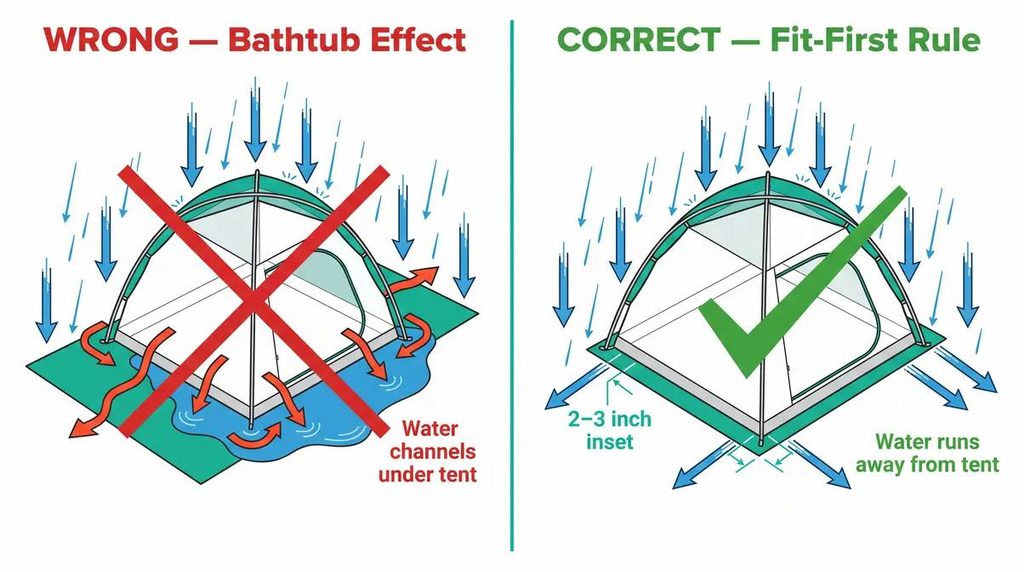
Your footprint should generally match the floor area of your tent rather than extending significantly beyond it.
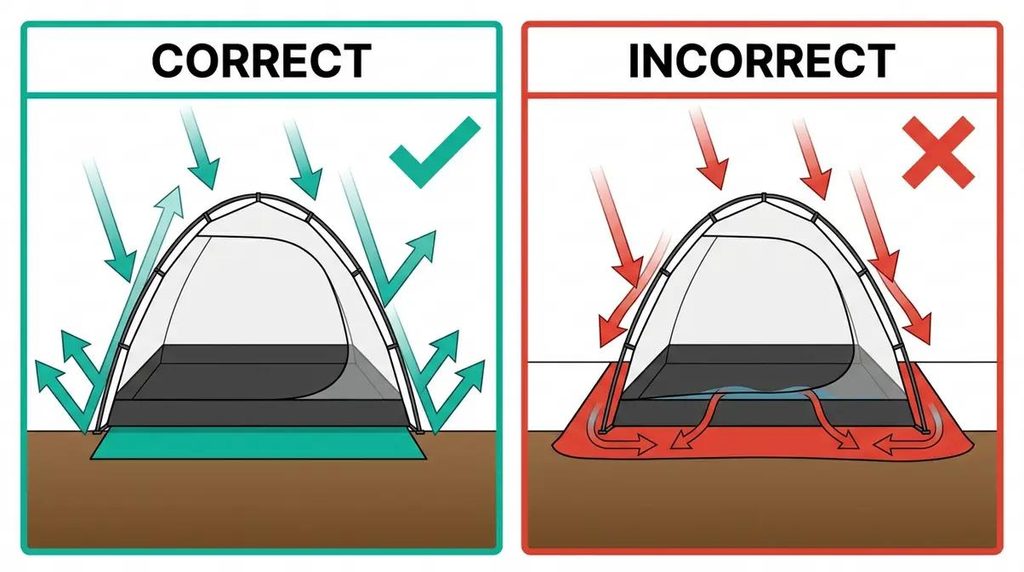
A footprint that is too large can create a problem in rainy weather.
If rain lands on the exposed part of the footprint, water can collect underneath the tent instead of draining away.
For this reason, a footprint should normally be slightly smaller than or closely matched to the tent floor.
Before buying one, check the manufacturer’s dimensions for your specific tent.
Do not assume that a footprint designed for a similar-looking tent will fit correctly.
2. Why Footprint Size Matters in the Rain
This is one of the most important things beginners should understand.
A footprint is supposed to protect the bottom of your tent.
It should not create a larger waterproof surface underneath the tent.
Imagine your tent floor is 90 inches long, but your footprint extends several inches beyond the tent on every side.
During rain, water can land on the exposed footprint.
Instead of flowing away naturally, the water can be directed underneath the tent.
That can increase the chance of moisture reaching the bottom of the tent.
So remember:
Bigger is not always better when it comes to a tent footprint.
3. Check the Tent Manufacturer’s Footprint
If your tent manufacturer offers a footprint specifically designed for your tent, it is usually the simplest option.
A dedicated footprint is designed around the dimensions and attachment points of the tent.
It may also have:
- Correct dimensions
- Attachment points
- Compatible clips or buckles
- Appropriate materials
- A convenient packed size
A manufacturer’s footprint can cost more than a generic groundsheet, but the fit may be worth the extra cost.
4. Choose the Right Material
Tent footprints can be made from different materials.
Common options include:
- Polyester
- Nylon
- Polyethylene
- Other coated synthetic fabrics
The material affects:
- Weight
- Durability
- Water resistance
- Packed size
- Price
For car camping, you can usually prioritize durability and price over extremely low weight.
If you are backpacking, weight and packed size become much more important.
5. Consider Waterproofing
A tent footprint will normally encounter wet ground, so water resistance is an important feature.
However, you do not necessarily need the most technical or expensive material.
For general camping, look for a groundsheet that:
- Resists moisture
- Does not absorb large amounts of water
- Is durable enough for repeated use
- Packs reasonably small
Remember that the footprint is only one part of your tent’s protection from rain.
Your tent’s rainfly, seams, zippers, and overall setup also matter.
6. Think About Weight
Weight matters differently depending on your camping style.
Car Camping
Weight is usually less important.
A heavier, more durable footprint can be perfectly reasonable when you are carrying your gear from your vehicle to the campsite.
Backpacking
Weight becomes much more important.
A lightweight footprint or groundsheet can reduce the overall weight of your shelter system.
If you are trying to keep your backpack light, avoid bringing a heavy groundsheet simply because it feels more durable.
Family Camping
Durability may be more important than minimum weight.
If children are frequently entering and leaving the tent, a sturdy footprint can be useful for repeated camping trips.
7. Check the Packed Size
A footprint may seem insignificant when you look at it spread out, but it can still take up space in your camping gear.
Look at the packed dimensions before buying.
This is especially important if you are building a compact camping setup.
A footprint should ideally fit easily inside your tent bag or another small gear pouch.
You do not want a simple groundsheet taking up more storage space than necessary.
8. Look for Attachment Points
Some tent footprints connect directly to the tent.
Depending on the design, attachment points may include:
- Clips
- Buckles
- Loops
- Grommets
These connections can make setup easier and help keep the footprint positioned correctly.
However, attachment points are not essential for every camping setup.
A simple groundsheet placed underneath the tent can work perfectly well if it is the correct size and positioned properly.
9. Tent Footprint vs Tarp
A tarp can sometimes be used as a tent groundsheet, but the two are not exactly the same.
Tent Footprint
- Designed specifically for use under a tent
- Usually fits the tent dimensions
- Often lightweight
- Easy to pack
- May include attachment points
Tarp
- More versatile
- Available in many sizes
- Can be used as a shelter
- Can be used as a groundsheet
- May be heavier or bulkier depending on the material
If you already own a lightweight tarp, you may be able to use it as a groundsheet.
Just make sure the tarp does not extend significantly beyond the tent floor.
10. Can You Use a Regular Tarp as a Tent Footprint?
Yes, in some situations.
A regular tarp can work as a groundsheet if it is:
- The appropriate size
- Durable enough
- Water resistant
- Folded or positioned so it does not extend beyond the tent floor
The key issue is size.
If your tarp is much larger than your tent, fold it so that the exposed edges do not stick out from underneath the tent.
You should also avoid creating large folds underneath the tent because they can make the floor uneven.
11. Can You Use a Cheap Plastic Groundsheet?
For basic car camping, a simple plastic groundsheet can work.
Many campers use inexpensive materials as an alternative to a dedicated footprint.
Possible options include:
- Polyethylene sheeting
- Basic plastic tarps
- Lightweight ground cloths
The advantage is cost.
The disadvantages can include:
- More weight
- More bulk
- Less convenient attachment
- Less precise fit
- Potentially lower durability
If you camp only a few times per year, a simple groundsheet may be enough.
If you camp frequently, a dedicated footprint may be more convenient.
12. Footprint vs Groundsheet
The terms “footprint” and “groundsheet” are sometimes used interchangeably, but there can be a small practical difference.
A footprint often refers to a groundsheet specifically designed for a particular tent.
A groundsheet is a broader term for material placed underneath a shelter or sleeping area.
For example, a generic tarp can be used as a groundsheet even though it is not specifically designed for your tent.
Both can serve a similar purpose.
13. Choose Based on Your Camping Style
Your camping style should influence your choice.
Weekend Car Camping
A basic, durable footprint is usually enough.
You can prioritize:
- Durability
- Easy setup
- Low cost
- Correct size
Family Camping
Consider a durable groundsheet that can handle frequent setup and breakdown.
Backpacking
Focus more on:
- Low weight
- Small packed size
- Adequate durability
Frequent Camping
A dedicated footprint may be worth the investment because you will use it repeatedly.
14. Consider the Ground Where You Camp
The type of ground you normally camp on can influence how useful a footprint is.
Grass
Grass is generally relatively forgiving, but a footprint can still help keep the tent floor cleaner.
Dirt
A footprint can help reduce dirt and protect the tent floor from rough areas.
Gravel
A footprint can be particularly useful because small rocks can put additional wear on the tent floor.
Rocky Ground
Extra protection can be valuable when camping on rough surfaces.
Wet Ground
A footprint can provide an additional protective layer, but proper tent setup is still important.
Avoid choosing low areas where water naturally collects.
15. How to Set Up a Tent Footprint
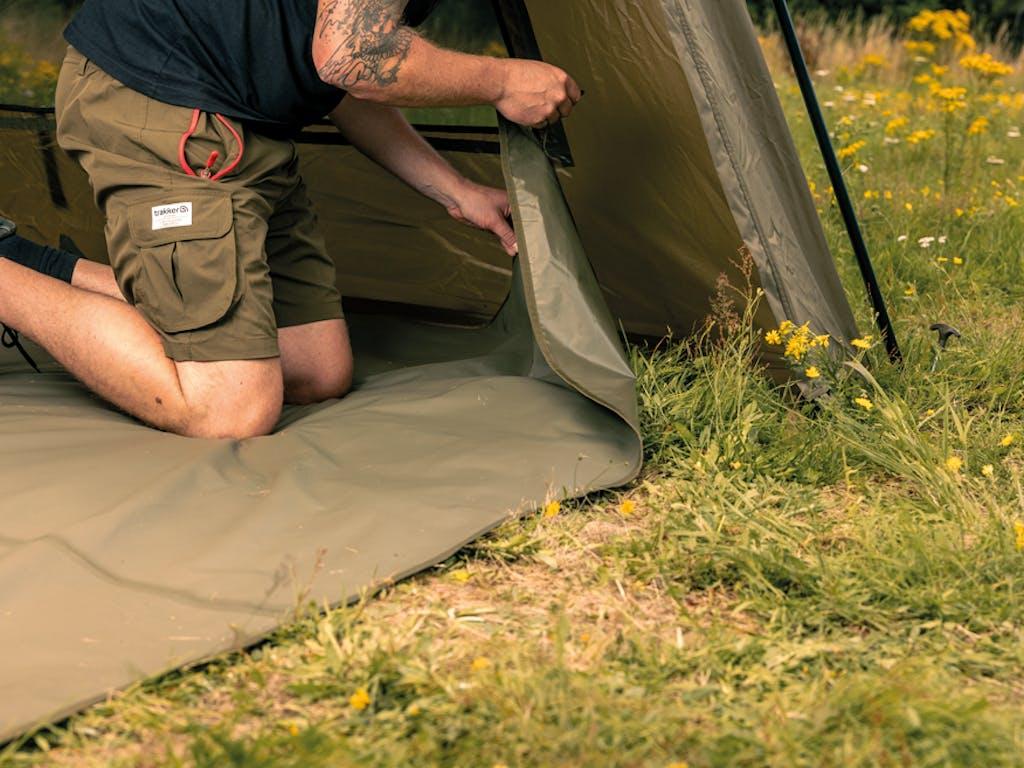
Setting up a footprint is simple.
Step 1: Choose Your Campsite
Look for reasonably level ground without sharp rocks, sticks, or other objects that could damage your tent.
Step 2: Clear the Area
Remove obvious rocks, branches, and other sharp objects.
Step 3: Place the Footprint
Lay the footprint flat on the ground.
Make sure it is positioned correctly under the tent area.
Step 4: Check the Edges
Make sure the footprint does not extend significantly beyond the tent floor.
This is especially important when rain is expected.
Step 5: Set Up the Tent
Place your tent directly over the footprint.
Attach the footprint to the tent if the design allows it.
Step 6: Check Before Rain
Walk around the tent and check that no large sections of the footprint are exposed.
This small step can help prevent water from collecting underneath your tent.
16. How to Clean a Tent Footprint
A footprint can become dirty quickly because it sits directly on the ground.
After your trip:
- Shake off loose dirt.
- Brush away remaining debris.
- Wipe it with water if necessary.
- Allow it to dry completely.
- Fold or roll it for storage.
Do not store a wet footprint in a sealed bag for an extended period.
Moisture can create unpleasant odors and contribute to mildew problems.
17. Common Tent Footprint Mistakes
Using a Footprint That Is Too Large
This is one of the biggest mistakes.
An oversized footprint can allow rainwater to collect underneath the tent.
Buying Without Checking Tent Dimensions
Always check your tent’s actual floor dimensions.
Using a Heavy Tarp for Backpacking
A cheap tarp may work, but it can add unnecessary weight.
Leaving the Footprint Wet
Dry it before long-term storage.
Ignoring Sharp Ground
A footprint is not a substitute for choosing a good campsite.
Remove sharp rocks and branches before setting up.
Assuming a Footprint Makes the Tent Waterproof
A footprint protects the bottom of the tent, but it does not replace the tent’s rainfly or waterproof construction.
18. Do You Need a Footprint for Every Camping Trip?
No.
A footprint is a useful piece of equipment, but it is not mandatory for every trip.
You may decide to use one when:
- The ground is rough
- You are camping frequently
- You want to keep your tent cleaner
- Your tent floor is expensive or delicate
- Rain is expected
- You want an additional protective layer
You may skip it when:
- You are trying to reduce weight
- You are camping on soft, clean ground
- Your tent is already designed for your expected conditions
- You are comfortable using a simple groundsheet instead
The decision ultimately depends on your tent and camping style.
19. How Much Should You Spend on a Tent Footprint?
You do not need to spend a lot of money on a footprint.
For beginners, focus on:
- Correct size
- Adequate durability
- Water resistance
- Appropriate weight
- Easy storage
If a manufacturer’s footprint is reasonably priced and fits your tent perfectly, it may be a convenient choice.
If it is expensive, you can consider a generic groundsheet or tarp as long as it works safely and fits appropriately.
The most important feature is not the brand.
It is getting the size and setup right.
20. Tent Footprint Buying Checklist
Before buying a footprint, check:
- Correct tent model
- Correct dimensions
- Does not extend significantly beyond the tent
- Durable material
- Water-resistant material
- Appropriate weight
- Small packed size
- Suitable attachment points, if needed
- Easy to clean
- Suitable for your camping style
- Fits your budget
Final Thoughts
A camping tent footprint is a simple piece of gear that can help protect the bottom of your tent from dirt, rough ground, and everyday campsite wear.
But you do not necessarily need an expensive, specialized footprint.
The most important things are correct size, suitable material, reasonable weight, and proper setup.
For car camping, a durable footprint or simple groundsheet can be an easy addition to your camping system.
For backpacking, keeping the footprint lightweight and compact is usually more important.
And if rain is expected, remember the most important rule:
Your footprint should not extend beyond the edges of your tent.
A properly sized footprint can be a simple way to protect your tent while keeping your camping setup practical and easy to manage.
Want to learn more? Check out these related camping guides:
→ How to Choose a Tent for Camping
→ How to Choose a Camping Tarp