
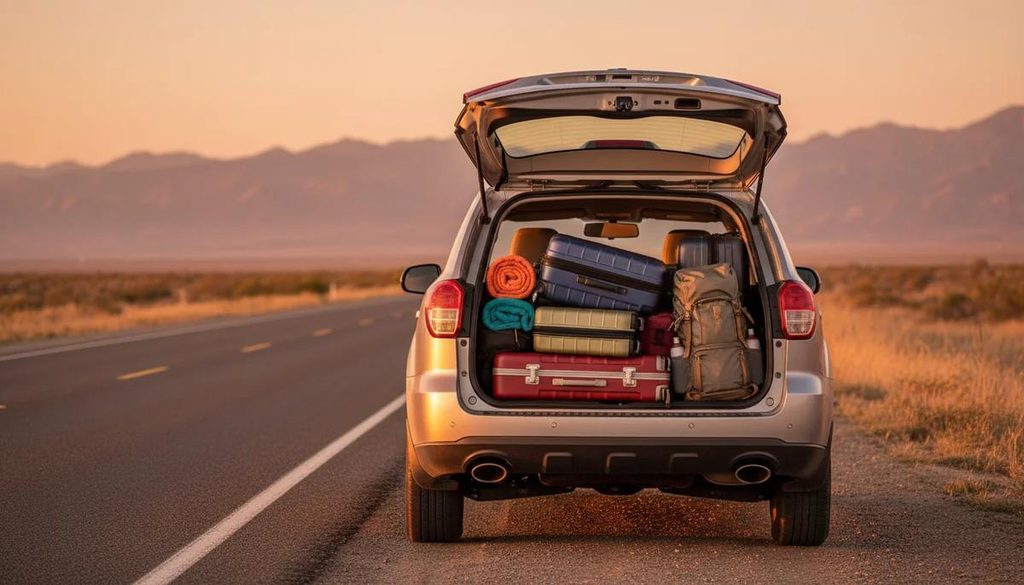
A long road trip can be an amazing way to explore new places, but your car needs to be ready for the miles ahead.
Before you load your luggage and start driving, take some time to check the tires, fluids, brakes, battery, lights, and other important parts of your vehicle.
A little preparation can help you avoid unexpected problems on the road and make your trip more comfortable.
This beginner-friendly guide explains how to prepare your car for a long road trip and what you should check before leaving.
Why Should You Prepare Your Car Before a Long Road Trip?
Your car may work perfectly during your normal daily commute but still have a problem that becomes noticeable during a long trip.
A road trip usually means more driving, higher mileage, longer periods at highway speeds, and fewer opportunities to deal with maintenance problems.
Before a long trip, it is worth checking the basic systems that affect reliability and safety.
The most important areas include:
- Tires
- Engine oil and fluids
- Brakes
- Battery
- Lights
- Windshield wipers
- Belts and hoses
- Emergency equipment
If you notice a problem during your inspection, fix it before leaving rather than hoping it will not become an issue later.
1. Check Your Tire Pressure
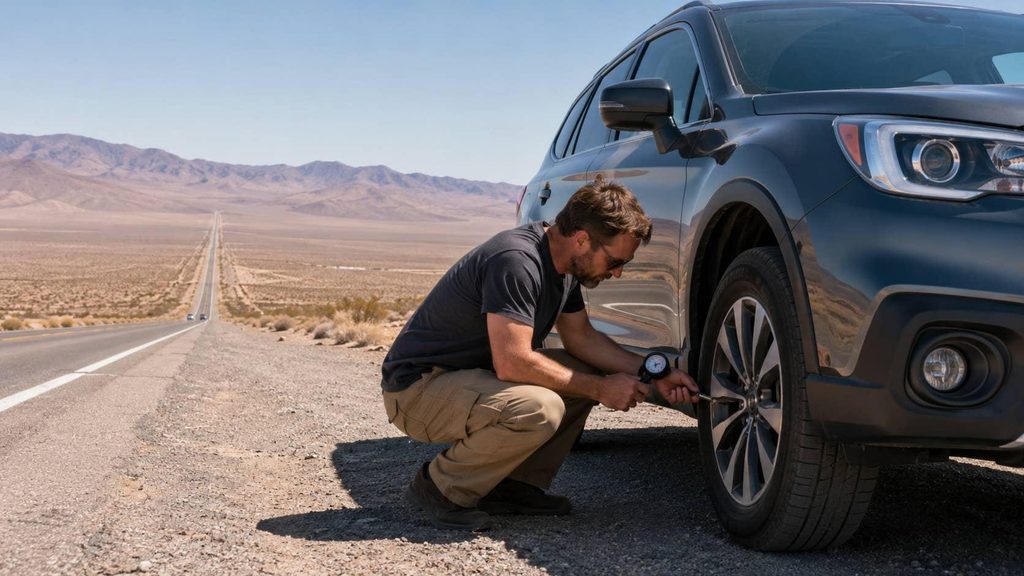
Tire pressure should be one of the first things you check before a long road trip.
Properly inflated tires can help maintain good handling and reduce unnecessary tire wear.
Check the pressure when the tires are cold, preferably before driving or after the vehicle has been parked for several hours.
Use the tire pressure recommended by your vehicle manufacturer. You can usually find it on the driver’s-side door jamb or in the owner’s manual.
Do not use the maximum pressure printed on the tire sidewall as your vehicle’s recommended pressure.
Also remember to check the spare tire if your vehicle has one.
The National Highway Traffic Safety Administration recommends checking tire pressure at least once a month and before long road trips.
2. Inspect Your Tires
Checking tire pressure is only part of tire preparation.
Take a few minutes to look at each tire for:
- Uneven tread wear
- Cracks
- Cuts
- Bulges
- Punctures
- Objects stuck in the tread
- Low tread depth
Pay attention to unusual wear patterns as well.
Uneven wear can sometimes indicate alignment, suspension, or tire-related problems.
If your tires are significantly worn or damaged, have them inspected by a qualified professional before taking a long trip.
Also check whether your vehicle has a spare tire, tire repair kit, or tire inflator and make sure you know how to use the equipment.
3. Check the Engine Oil
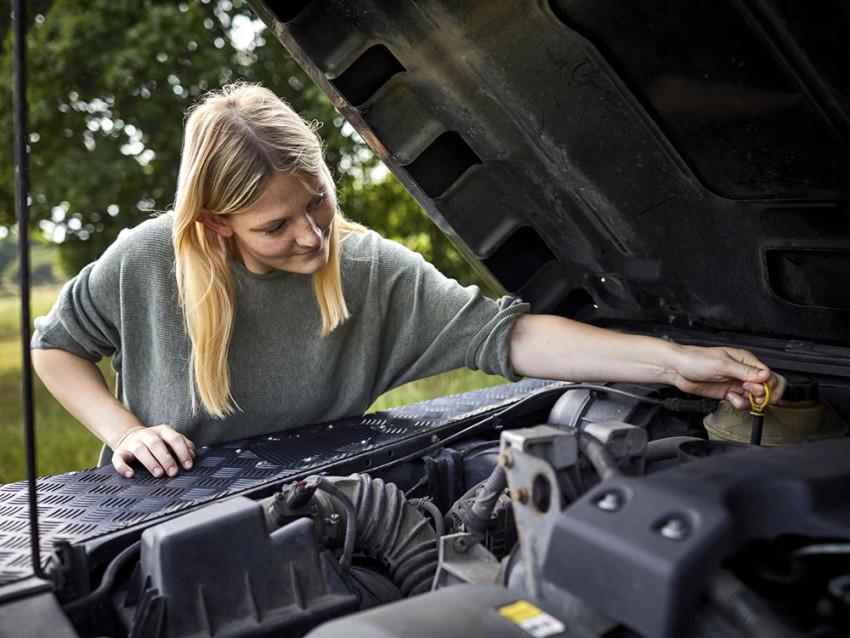
Engine oil is essential for vehicles with internal combustion engines.
Before a long trip, check the oil level according to the instructions in your owner’s manual.
If your vehicle is close to its scheduled oil change, consider having the oil changed before the trip rather than waiting until you return.
Use the oil grade recommended by your vehicle manufacturer.
The NHTSA recommends changing engine oil according to the owner’s manual and using the recommended grade.
If you notice an oil leak, unusually low oil levels, or warning lights, have the vehicle inspected before leaving.
4. Check Your Other Fluids
Your vehicle relies on several fluids to operate properly.
Depending on your vehicle, check:
- Coolant
- Brake fluid
- Transmission fluid
- Windshield washer fluid
- Power steering fluid, if applicable
Some newer vehicles have systems that do not require drivers to check certain fluids themselves. If you are unsure, check the owner’s manual.
Never open a hot cooling system. Allow the vehicle to cool down and follow the manufacturer’s instructions.
If you see fluid leaking underneath the vehicle, do not simply top it off and continue driving. A leak may indicate a problem that needs professional attention.
NHTSA and AAA both recommend checking applicable fluid levels before a long road trip.
5. Check the Brakes
Your brakes are one of the most important systems to inspect before a long trip.
Pay attention to warning signs such as:
- Grinding noises
- Squealing
- Vibrations when braking
- A soft or unusual brake pedal
- The vehicle pulling to one side while braking
- Brake warning lights
If you notice any of these problems, have your brakes inspected before your trip.
A professional inspection can identify worn brake pads, damaged rotors, fluid problems, or other issues that may not be obvious during a quick visual inspection.
6. Test the Battery
A weak battery can leave you stranded even if the rest of your vehicle is in good condition.
Check the battery terminals for visible corrosion and make sure the connections are secure.
You should also pay attention to warning signs such as:
- Slow engine cranking
- Difficulty starting the vehicle
- Dim lights
- Electrical problems
- Battery warning lights
If your battery is several years old or showing signs of weakness, consider having it professionally tested before a long road trip.
AAA recommends testing the battery, particularly when it is older or showing signs of trouble.
7. Check Your Lights
Make sure all important exterior lights are working.
Check:
- Headlights
- High beams
- Brake lights
- Turn signals
- Hazard lights
- Reverse lights
- Parking lights
Ask someone to stand outside the vehicle while you test the lights, or use a reflective surface such as a garage door to help check them.
Good lighting is especially important if you will be driving at night, during rain, or through unfamiliar areas.
8. Inspect Your Windshield Wipers
Your windshield wipers may not seem important on a sunny day, but they can become essential when heavy rain suddenly appears.
Look for:
- Cracked rubber
- Torn blades
- Streaking
- Skipping
- Poor windshield coverage
Replace worn wiper blades before your trip.
Also fill the windshield washer reservoir and make sure the windshield is clean.
The NHTSA recommends checking wipers, lights, and visibility-related equipment as part of vehicle preparation.
9. Check Belts and Hoses
If your vehicle uses conventional engine belts and hoses, inspect them for obvious signs of wear.
Look for:
- Cracks
- Cuts
- Bulges
- Fraying
- Leaks
- Loose connections
Some problems may not be easy to identify without professional inspection.
If your vehicle is older or has been experiencing unusual noises, overheating, or other problems, consider having a mechanic inspect it before your trip.
10. Check Your Air Conditioning
If you are traveling during hot weather, make sure your air conditioning system is working properly.
A long highway drive in extreme heat can become uncomfortable very quickly if your A/C stops working.
Turn it on before the trip and check whether it is producing cold air.
If the system is not working properly, have it checked before leaving.
The NHTSA specifically recommends checking A/C performance before summer travel.
11. Check for Recalls
Before a long trip, it is also worth checking whether your vehicle has any outstanding safety recalls.
A recall does not necessarily mean your vehicle is unsafe to drive immediately, but you should understand what the recall involves and follow the manufacturer’s instructions.
In the United States, the NHTSA provides a free VIN-based recall lookup tool.
If you have an unresolved safety recall, contact the manufacturer or an authorized dealer for information about the necessary repair.
12. Prepare a Roadside Emergency Kit
Even a well-maintained vehicle can experience an unexpected problem.
Consider keeping an emergency kit in your vehicle with items such as:
- Portable jump starter or jumper cables
- Tire inflator
- Tire pressure gauge
- Flashlight
- Extra batteries
- First-aid kit
- Drinking water
- Non-perishable snacks
- Phone charging cable
- Basic tools
- Reflective warning triangles
- Work gloves
Your exact kit can depend on your destination, weather, trip length, and vehicle.
AAA recommends carrying basic roadside equipment such as jumper cables, a tire inflator, flashlight, reflective triangles, water, and other emergency supplies.
13. Check Your Spare Tire and Jack
If your vehicle has a spare tire, make sure you know where it is located.
Check:
- Spare tire pressure
- Tire condition
- Jack
- Lug wrench
- Wheel-lock key, if applicable
Some modern vehicles do not come with a traditional spare tire.
Instead, they may have a tire repair kit or inflator.
Know what your vehicle has before you leave.
Finding out that your car does not have a spare after getting a flat tire is not something you want to discover on a remote highway.
14. Clean and Organize Your Car
A clean car can make a long road trip more comfortable.
Before leaving:
- Remove unnecessary items
- Vacuum the interior
- Clean the windshield
- Organize charging cables
- Keep important documents accessible
- Make space for luggage
- Keep emergency equipment easy to reach
Avoid placing heavy objects where they can move around during sudden braking.
If you are carrying luggage in the passenger compartment, secure it properly.
15. Pack Your Car Properly
How you load your vehicle matters.
Place heavier items low and as far forward as practical while keeping the vehicle within its load limits.
Do not block your rear visibility.
If you use a roof rack, cargo box, or trailer, make sure everything is properly secured and within the manufacturer’s weight limits.
Never assume that an item is secure simply because it feels heavy.
The NHTSA also advises drivers to properly secure loads because unsecured cargo can create hazards for vehicle occupants and other road users.
16. Check Your Owner’s Manual
Your owner’s manual is one of the most useful resources when preparing your car for a long trip.
It can tell you:
- Recommended tire pressure
- Oil specifications
- Fluid specifications
- Maintenance intervals
- Maximum load information
- Warning light meanings
- Spare tire information
- Jack locations
- Towing limits
- Recommended maintenance
Vehicle specifications can vary significantly between models.
When you are unsure about a maintenance requirement, check the owner’s manual rather than relying on a general recommendation from another vehicle.
17. Consider a Professional Inspection
You do not need to be a mechanic to prepare your car for a road trip.
If you are uncomfortable checking the vehicle yourself, schedule a pre-trip inspection with a qualified mechanic.
This can be particularly useful if:
- Your vehicle is older
- You are planning a very long trip
- You recently purchased the vehicle
- The car has been sitting unused
- You have noticed unusual noises
- Warning lights have appeared
- You are overdue for maintenance
A professional can inspect areas that may be difficult for a beginner to evaluate.
Long Road Trip Car Preparation Checklist
Use this simple checklist before you leave:
Tires
- Check tire pressure
- Inspect tread
- Look for damage
- Check spare tire or repair kit
Fluids
- Check engine oil
- Check coolant
- Check brake fluid
- Check transmission fluid if applicable
- Fill windshield washer fluid
Vehicle
- Check brakes
- Test battery
- Check headlights
- Check brake lights
- Check turn signals
- Inspect wiper blades
- Check belts and hoses
Emergency Equipment
- Jumper cables or jump starter
- Tire inflator
- Flashlight
- First-aid kit
- Water
- Phone charger
- Basic tools
- Reflective warning equipment
Before Leaving
- Check recalls
- Review the owner’s manual
- Secure luggage
- Download navigation maps if needed
- Make sure important documents are accessible
Final Thoughts
Preparing your car for a long road trip does not have to be complicated.
Start with the basics: tires, brakes, fluids, battery, lights, and emergency equipment.
If something looks worn, damaged, or unusual, deal with it before you leave rather than waiting for a problem to appear hundreds of miles from home.
A few minutes of preparation can give you more confidence and help you focus on enjoying the road trip.