

A camping cot can make a big difference in how comfortable you feel at the campsite.
Instead of sleeping directly on the ground, a cot raises your sleeping surface off the floor of the tent. This can make getting in and out of bed easier and can give you a more traditional bed-like setup.
But camping cots come in many different sizes, heights, materials, and designs. Some are large and comfortable for car camping, while others are lighter and easier to carry.
So how do you choose the right camping cot?
This beginner-friendly guide explains what to look for when choosing a camping cot, including size, weight capacity, height, portability, materials, comfort, and camping style.
What Is a Camping Cot?
A camping cot is a portable bed designed for outdoor use.
Most camping cots have a fabric sleeping surface stretched across a folding metal or aluminum frame. When assembled, the frame raises the sleeping surface above the ground.
Camping cots are commonly used for:
- Car camping
- Family camping
- Base camps
- Hunting camps
- Long camping trips
- Guests at outdoor shelters
- Camping in large tents
Because a cot can be heavier and bulkier than a sleeping pad, it is generally more practical for car camping than backpacking.
For car campers, weight and packed size are often less restrictive because the vehicle carries the gear, making it practical to bring larger and heavier comfort items that would be difficult to transport on foot.
Do You Need a Camping Cot?
Not every camper needs a cot.
A sleeping pad on the floor is usually simpler, lighter, and easier to pack.
A camping cot may be worth considering if you:
- Prefer sleeping off the ground
- Have difficulty getting up from the ground
- Want a more bed-like sleeping setup
- Camp frequently at established campgrounds
- Have enough vehicle storage space
- Prefer extra space under your sleeping area
- Want a comfortable setup for car camping
If you are backpacking, a traditional cot is usually not the first choice because of its weight and packed size.
For car camping, however, a cot can be a useful comfort upgrade.
1. Choose the Right Cot Size
Size is one of the first things to check.
Camping cots come in different lengths and widths, so make sure the sleeping surface is large enough for your body.
A basic cot may be relatively narrow, while wider models provide more room to move around.
Consider:
- Your height
- Your shoulder width
- Your preferred sleeping position
- Available tent space
- Whether you sleep alone or with a child or pet nearby
If you are tall, check the actual sleeping surface length rather than relying only on the overall product dimensions.
A cot that is too short can be uncomfortable, especially if your feet extend beyond the frame.
2. Check the Weight Capacity
Every camping cot should have a specified weight capacity.
This is an important specification because the capacity needs to account for the person using the cot and, depending on the design, anything else placed on it.
Before buying, check the manufacturer’s stated weight limit.
If you are close to the maximum capacity, consider choosing a model with a higher rating rather than operating near the limit.
For couples or shared sleeping arrangements, look specifically for a double camping cot designed for two people rather than assuming a standard cot can safely support two adults.
3. Consider the Cot Height
Camping cots come in different heights.
A low cot keeps you closer to the ground and may be easier to fit inside a smaller tent.
A higher cot can make getting into and out of bed easier and can provide useful storage space underneath.
Low Cots
Low-profile cots can be useful when:
- Your tent has limited vertical space
- You prefer a lower sleeping position
- You want a smaller overall setup
Higher Cots
Higher cots can be useful when:
- You prefer easier access
- You want storage underneath
- You want more separation from the ground
Think about your tent height before buying a tall cot.
A cot that fits comfortably in an open campsite may feel cramped inside a smaller tent.
4. Think About Comfort
A cot is not automatically comfortable just because it lifts you off the ground.
The fabric sleeping surface, frame design, width, tension, and overall construction all affect comfort.
Some people may prefer a firm sleeping surface, while others may want additional cushioning.
For more comfort, you can place a sleeping pad on top of the cot.
This can give you the benefits of both systems:
Cot + Sleeping Pad = Elevated Sleeping Surface + Cushioning
A sleeping pad also provides insulation between your body and the colder air below the cot.
A sleeping pad provides both cushioning and insulation, so a cot alone may not offer enough protection from the cold when camping in cooler temperatures.
5. Check the Frame Material
The frame is one of the most important parts of a camping cot.
Common materials include:
- Steel
- Aluminum
- Other lightweight metal constructions
Steel frames can provide strong support but may add more weight.
Aluminum frames are often chosen when reducing weight is more important.
For car camping, a heavier steel cot may be perfectly practical if you do not have to carry it far.
For trips where you frequently move your gear, a lighter construction can make setup and transportation easier.
6. Look at the Sleeping Surface Material
The fabric used on the sleeping surface affects durability, comfort, and cleaning.
Common outdoor cot materials are designed to handle regular use and campsite conditions.
Look for:
- Durable fabric
- Strong stitching
- Secure attachment points
- Easy-to-clean materials
- Fabric that stays properly tensioned
Remember that a camping cot will eventually encounter dirt, moisture, and dust.
A material that can be wiped down easily can save you time after a trip.
7. Check the Packed Size
A camping cot may look compact when it is folded, but always check its actual packed dimensions.
This matters particularly if you have limited space in your vehicle.
Before buying, measure:
- Trunk space
- SUV cargo area
- Storage closet
- Roof box, if applicable
If you are building a complete camping setup, remember that the cot is only one part of your sleeping system.
You may also need room for:
- Sleeping pad
- Sleeping bag
- Pillow
- Blanket
- Tent
- Other camping gear
A cot that is comfortable at camp is not useful if it takes up too much space in your vehicle.
8. Consider the Cot’s Weight
Weight matters differently depending on your camping style.
Car Camping
Weight is usually less important.
You may prefer a heavier cot if it offers:
- More stability
- More space
- Better comfort
- Higher weight capacity
Camping Near Your Vehicle
Weight becomes somewhat more important if you need to carry your gear from the parking area to your campsite.
Backpacking
Weight becomes extremely important.
Traditional camping cots are generally not the first choice for backpacking because they are larger and heavier than sleeping pads.
If you are primarily a backpacker, a lightweight sleeping pad may make more sense.
9. Look for Easy Setup

A complicated cot can become frustrating after a long drive.
Look for a design that can be assembled and folded without excessive effort.
Before buying, consider:
- Number of assembly steps
- Folding mechanism
- Frame connections
- Locking system
- Whether one person can set it up
- How difficult it is to pack again
If possible, practice setting up your cot at home before your first camping trip.
This is especially useful if you plan to arrive at camp near sunset.
Setting up your tent, sleeping bag, and sleeping pad soon after arriving at the campsite can make the evening easier and prevent you from having to arrange your sleeping area after dark.
The same basic idea applies to your cot.
10. Check Stability
A camping cot should feel stable when you sit down, turn over, or move around.
Pay attention to:
- Frame construction
- Leg design
- Locking mechanisms
- Foot design
- Overall width
- Weight distribution
A narrow cot may feel less stable for some sleepers.
Also pay attention to the ground underneath the cot.
Even a well-designed cot can become unstable if one or more legs are sitting on uneven or soft ground.
Choose a reasonably level campsite and check the ground before setting up your sleeping area.
11. Think About Storage Under the Cot
One useful benefit of a raised cot is the space underneath it.
Depending on the height, you may be able to store small camping items underneath.
This can include:
- Shoes
- Small bags
- Clothing
- Camping accessories
- Empty gear containers
Keeping gear underneath the cot can help keep the inside of your tent more organized.
However, avoid turning the area underneath your cot into a cluttered storage zone.
Keep important items easy to reach and make sure nothing interferes with the cot’s legs.
12. Camping Cot vs Sleeping Pad
A camping cot and sleeping pad serve different purposes.
A cot primarily provides an elevated sleeping surface.
A sleeping pad provides cushioning and insulation.
Camping Cot
Pros:
- Keeps you off the ground
- Easier to get in and out of
- Can provide under-bed storage
- More bed-like feeling
- Useful for car camping
Cons:
- Heavier
- Bulkier
- Takes more space
- More expensive than a basic sleeping pad
Sleeping Pad
Pros:
- Lightweight
- Compact
- Easy to transport
- Provides cushioning
- Provides insulation
Cons:
- Keeps you closer to the ground
- Some people find getting up difficult
- Comfort varies significantly between models
For many car campers, using both can create a comfortable sleeping system.
13. Camping Cot vs Air Mattress
An air mattress is another option for camping.
An air mattress provides a cushioned sleeping surface but remains close to the ground unless it is placed on a suitable elevated frame.
A cot provides a raised sleeping platform.
The choice depends on what matters most to you.
Choose a cot if you prefer:
- An elevated sleeping position
- Easier access
- A firm sleeping platform
- Under-bed storage
Choose an air mattress if you prefer:
- A softer sleeping surface
- A bed-like feel
- Extra cushioning
You can also combine a cot with a suitable sleeping pad for additional comfort.
14. Single vs Double Camping Cots
Single cots are designed for one person.
Double cots are wider and can be designed to accommodate two people.
A double cot may be useful for:
- Couples
- Parents and children
- Larger sleeping areas
- People who want more personal space
However, double cots are usually larger and heavier.
Before choosing one, check your tent dimensions and vehicle storage space.
Do not assume that a double cot will fit comfortably inside a standard camping tent.
15. Match Your Cot to Your Camping Style
Your camping style should determine what type of cot you buy.
Weekend Car Camping
A comfortable, full-size cot can be a great option.
You do not need to prioritize minimum weight.
Family Camping
A wider or more stable cot may be useful, especially when comfort is a priority.
Base Camping
If you stay in one location for several days, a larger and more comfortable cot can make sense.
Frequent Travel
If you move campsites often, consider a lighter and easier-to-pack model.
Backpacking
A traditional camping cot is usually not ideal.
A lightweight sleeping pad is generally more practical when every ounce matters.
16. Think About Tent Compatibility
Before buying a cot, check your tent.
Measure:
- Tent floor length
- Tent floor width
- Interior height
- Door location
- Available sleeping area
Also consider how many people will sleep inside the tent.
For example, two large cots can take up much more floor space than two sleeping pads.
If you are using a smaller tent, a low-profile or compact cot may be more practical.
17. Common Camping Cot Mistakes
Beginners often focus on comfort but forget about the practical details.
Here are some common mistakes to avoid.
Buying Without Checking Dimensions
A cot may look compact online but take up a lot of space when folded.
Always check the measurements.
Ignoring Weight Capacity
Do not assume every cot can support the same amount of weight.
Check the manufacturer’s specifications.
Choosing a Cot That Is Too Large
A huge cot may be comfortable but difficult to fit inside your tent.
Forgetting About the Sleeping Pad
A cot does not necessarily provide enough cushioning or insulation by itself.
Ignoring Vehicle Storage
Make sure the packed cot fits in your car.
Not Testing the Setup
Practice at home before taking it camping.
18. How Much Should You Spend on a Camping Cot?
You do not necessarily need the most expensive camping cot.
A beginner should focus on:
- Appropriate size
- Safe weight capacity
- Stable construction
- Comfortable sleeping surface
- Easy setup
- Reasonable packed size
If you only camp a few times a year, a basic model may be enough.
If you camp frequently, spending more on durability, comfort, and easier setup may make sense.
Think about how often you will actually use the cot.
A more expensive cot can be worthwhile if it becomes part of your regular camping setup.
19. A Simple Beginner Camping Sleep Setup
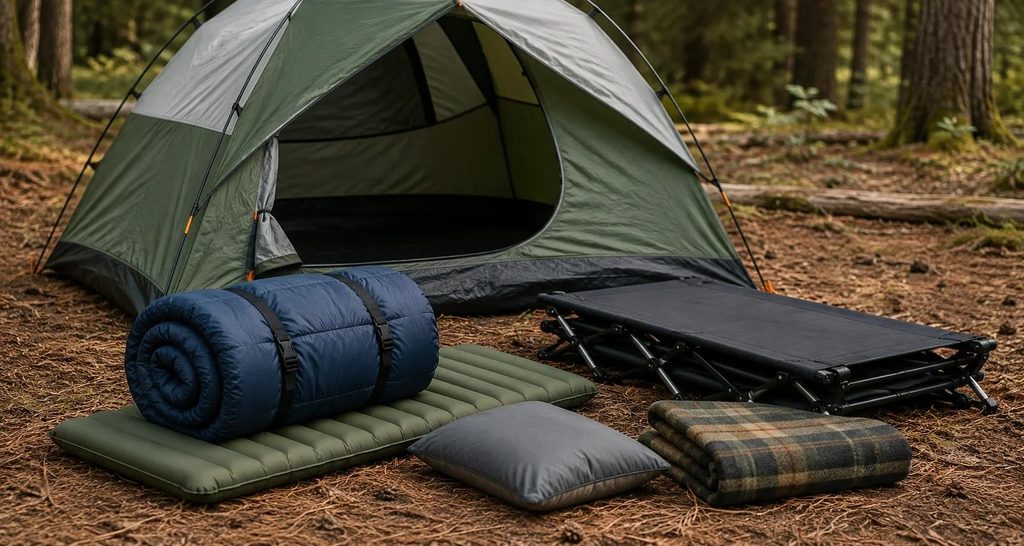
If you are building your first comfortable car-camping sleep system, you do not need complicated equipment.
A simple setup can include:
- Camping cot
- Sleeping pad
- Sleeping bag
- Camping pillow
- Extra blanket
- Tent
Add clothing appropriate for the expected weather.
For colder conditions, choose an appropriately insulated sleeping system rather than relying on a blanket alone.
Your sleeping system should be selected based on the conditions you expect to encounter.
20. Camping Cot Buying Checklist
Before buying a camping cot, check the following:
- Correct length
- Comfortable width
- Appropriate weight capacity
- Suitable height
- Durable frame
- Durable fabric
- Stable legs
- Easy setup
- Easy folding
- Reasonable packed size
- Acceptable weight
- Fits inside your tent
- Fits in your vehicle
- Works with your sleeping pad
- Suitable for your camping style
Final Thoughts
A camping cot can be a useful upgrade if you want a more comfortable and elevated sleeping setup.
The right cot depends less on having the most features and more on finding the right balance between comfort, size, weight, stability, portability, and price.
For car camping, you can usually prioritize comfort and space because you do not have to carry your entire setup on your back.
For more mobile camping, a lighter and more compact sleeping system may be more practical.
And remember that a cot does not have to replace your sleeping pad. For many campers, combining a cot with a sleeping pad, sleeping bag, and pillow creates a much more comfortable sleep system.
The best camping cot is simply the one that fits your body, your tent, your vehicle, and the way you actually camp.
Want to learn more? Check out these related camping guides:
→ Sleeping Pad vs Air Mattress
→ Best Sleeping Gear for Beginner Campers