
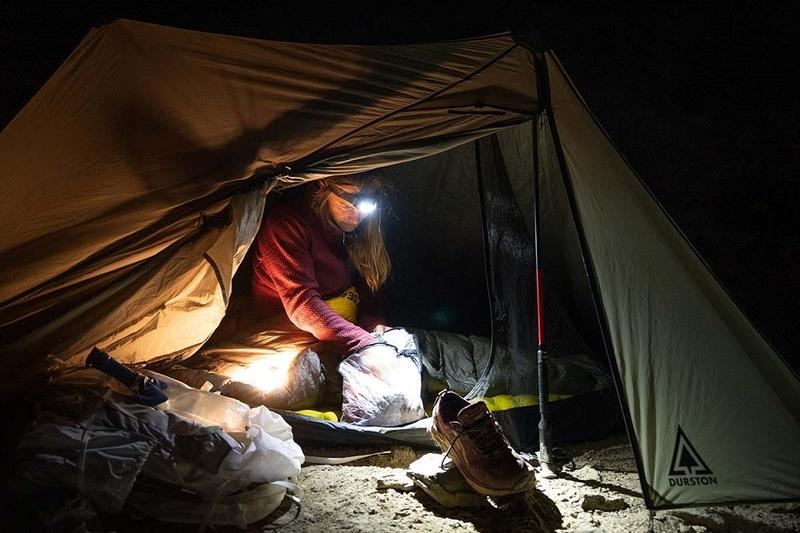
A headlamp is one of those small pieces of camping gear that can make a surprisingly big difference.
Whether you’re setting up your tent after dark, walking to the bathroom at a campground, cooking dinner, or looking for something inside your car, having both hands free while you see where you’re going is extremely useful.
But with so many headlamps available, choosing one can be confusing. Different models offer different brightness levels, battery types, beam patterns, sizes, and features.
The good news is that most beginners don’t need an expensive or complicated headlamp.
In this guide, you’ll learn what to look for in a camping headlamp and how to choose one that fits your camping style.
Why Do You Need a Camping Headlamp?
A flashlight can work for many camping situations, but it takes one hand to hold it.
A headlamp sits on your head and points in the direction you’re looking. This leaves both hands available for other tasks.
A headlamp can be useful when you’re:
- Setting up a tent at night
- Cooking after dark
- Walking around a campground
- Going to the bathroom at night
- Looking through your camping gear
- Checking your car or campsite
- Hiking before sunrise or after sunset
- Packing up camp in low light
For many campers, a headlamp is more useful than a second flashlight.
What Should You Look for in a Camping Headlamp?

The most important factors are:
- Brightness
- Battery life
- Beam pattern
- Battery type
- Weight
- Comfort
- Weather resistance
- Controls
- Red-light mode
- Adjustability
You don’t necessarily need the best specifications in every category.
Instead, think about how you actually plan to use the headlamp.
1. Check the Brightness
Brightness is usually measured in lumens.
A higher lumen rating generally means the headlamp can produce more light, but more brightness isn’t always better.
For basic campground use, you may not need an extremely powerful headlamp.
A simple guide:
Around 100–200 Lumens
Good for:
- Walking around a campground
- Finding things inside a tent
- Basic camp chores
- Going to the bathroom at night
Around 200–400 Lumens
A good range for many campers.
Useful for:
- General camping
- Walking on darker trails
- Cooking
- Setting up camp
- General outdoor use
400+ Lumens
More useful for:
- Night hiking
- Dark trails
- Technical outdoor activities
- Situations where you need a longer or brighter beam
Keep in mind that maximum brightness is often the highest setting. You may use a much lower setting most of the time.
2. Consider Battery Life
A very bright headlamp isn’t very useful if the battery runs out quickly.
Look at the manufacturer’s claimed runtime and consider how you’ll actually use the light.
You might use:
- Low brightness for several hours
- Medium brightness for normal campsite tasks
- High brightness for short periods
Runtime usually decreases as brightness increases.
If you regularly camp for several nights, battery life becomes more important.
It’s also a good idea to carry spare batteries or a way to recharge your headlamp.
3. Decide Between Rechargeable and Replaceable Batteries
Camping headlamps generally use either rechargeable batteries or replaceable batteries.
Rechargeable Headlamps
Advantages:
- Convenient
- Easy to recharge
- No need to keep buying disposable batteries
- Often convenient for regular use
Disadvantages:
- You need a way to recharge them
- A dead battery can be a problem if you can’t recharge it
- Long trips may require a power bank
Replaceable Batteries
Advantages:
- Easy to carry spare batteries
- Useful on longer trips
- You can replace the batteries instead of waiting for a recharge
Disadvantages:
- Requires spare batteries
- Batteries add a little extra weight
- You’ll eventually need to replace them
For car camping, either option can work well.
If you’re traveling far from power for several days, replaceable batteries or a rechargeable headlamp combined with a power bank can be useful.
4. Look at the Beam Pattern
Not all headlamps produce light in the same way.
Some provide a narrow beam that reaches farther. Others produce a wider beam that illuminates a larger area directly around you.
Wide Beam
Useful for:
- Cooking
- Setting up camp
- Working around your tent
- Looking through gear
Focused Beam
Useful for:
- Walking trails
- Looking farther ahead
- Navigating in darker areas
Some headlamps allow you to switch between different beam modes.
For general camping, having more than one lighting mode can be convenient.
5. Consider a Red-Light Mode
A red-light mode is a useful feature for camping.
Red light can be helpful inside a tent or around camp when you don’t want to use a bright white light.
It can also be more comfortable when you’re around other campers at night.
A red-light mode can be useful for:
- Checking your phone or gear
- Reading inside a tent
- Moving around camp
- Getting ready for bed
- Preserving your night vision
You don’t necessarily need red light, but it’s a useful feature if you camp frequently.
6. Pay Attention to Weight
A headlamp sits directly on your head, so weight matters more than you might expect.
A heavy headlamp can become uncomfortable after wearing it for a long time.
For basic camping, you usually don’t need a large headlamp with an oversized battery or extremely powerful output.
A lightweight model is often easier to wear and carry.
If you’re hiking with your camping gear, weight becomes even more important.
7. Make Sure It Fits Comfortably
Comfort is just as important as brightness.
Look for an adjustable headband that stays securely in place without feeling too tight.
A good headlamp should:
- Stay in place while walking
- Be easy to adjust
- Feel comfortable on your forehead
- Not bounce excessively
- Work with your hat or other headwear
If possible, try wearing the headlamp before buying it.
A technically impressive headlamp isn’t a good choice if you don’t want to wear it.
8. Check the Weather Resistance
Camping often means dealing with rain, humidity, dirt, and other outdoor conditions.
A headlamp with some level of water resistance can be useful.
Look for the manufacturer’s stated weather or water-resistance rating.
You don’t necessarily need a headlamp designed for extreme underwater use.
For normal camping, basic protection against rain and splashes may be enough.
9. Look for Easy Controls
You don’t want to fight with tiny buttons in the dark.
The controls should be easy to understand and operate.
Consider whether you can quickly:
- Turn the light on
- Turn it off
- Change brightness
- Change beam modes
- Activate red light
Some headlamps cycle through several modes every time you press the button.
Too many modes can sometimes make a headlamp more frustrating rather than more useful.
Simple controls are often better for beginners.
10. Check the Tilt Adjustment
Many headlamps allow you to tilt the light downward.
This is useful when you’re doing close-up tasks such as:
- Cooking
- Reading
- Setting up a tent
- Looking through a backpack
- Working on your car
Being able to point the light where you need it can make a big difference.
Headlamp vs. Flashlight
You don’t necessarily have to choose only one.
A headlamp and flashlight serve slightly different purposes.
| Feature | Headlamp | Flashlight |
|---|---|---|
| Hands-free use | Excellent | No |
| Camp setup | Excellent | Good |
| Walking | Excellent | Good |
| Working with both hands | Excellent | Poor |
| Long-distance beam | Depends on model | Often excellent |
| Emergency backup | Good | Excellent |
For camping, a headlamp is often the better primary personal light.
A small flashlight can then serve as a backup.
How Many Headlamps Do You Need?
Usually, one headlamp per person is a practical setup for group camping.
If you’re camping alone, one good headlamp may be enough.
For families, having a headlamp for each person can make nighttime activities much easier.
You don’t need everyone to have the most powerful model.
Children, for example, may only need a simple lightweight headlamp for basic nighttime use.
Where Should You Use a Headlamp?
A headlamp is especially useful in situations where you need both hands.
For example, imagine arriving at a campground after sunset.
You need to:
- Find your campsite
- Unload your gear
- Set up your tent
- Prepare dinner
- Organize your sleeping area
Trying to do all of this while holding a flashlight can be inconvenient.
With a headlamp, the light generally follows your line of sight while both hands remain free.
What Brightness Should a Beginner Choose?
For most beginner campers, there’s no need to chase the highest lumen number.
A headlamp in the 100–400 lumen range can cover many normal camping situations, depending on the specific model and how you use it.
If you mainly camp at established campgrounds, a moderate brightness level is often enough.
If you regularly hike at night or travel through very dark areas, you may want something brighter.
The key is to match the headlamp to your actual activities.
Do You Need an Expensive Headlamp?
Not necessarily.
A beginner doesn’t need to spend a lot of money on a headlamp.
Before paying more, ask whether you’re actually getting features you’ll use.
You may want to spend more if you need:
- Longer battery life
- Better weather resistance
- More comfortable construction
- More powerful lighting
- Better durability
- Multiple lighting modes
For simple weekend camping, a basic reliable headlamp can be enough.
Common Camping Headlamp Mistakes
Buying the Brightest Headlamp
More lumens don’t automatically mean a better camping experience.
Ignoring Battery Life
A bright headlamp with very short runtime may be inconvenient.
Choosing Based Only on Price
The cheapest option isn’t always the best value.
Comfort, reliability, and battery performance matter too.
Buying a Heavy Model
Extra weight on your head can become uncomfortable.
Forgetting Spare Power
Always think about what happens if the battery runs out.
Choosing a Complicated Model
More modes and features can sometimes make a headlamp harder to operate.
A Simple Beginner Headlamp Setup
If you’re buying your first camping headlamp, you can keep things simple.
Look for:
- Around 100–400 lumens
- Adjustable brightness
- Good battery life
- Comfortable headband
- Weather resistance
- Easy controls
- A tilting light
- Red-light mode if useful
- A reasonable weight
You don’t need every advanced feature.
A simple headlamp that you actually enjoy using is more valuable than an expensive model filled with features you never use.
Camping Headlamp Buying Checklist
Before buying a headlamp, check:
- Brightness
- Battery runtime
- Rechargeable or replaceable batteries
- Beam pattern
- Red-light mode
- Weight
- Headband comfort
- Weather resistance
- Easy controls
- Tilt adjustment
- Price
- Availability of replacement batteries or charging options
Final Thoughts
Choosing a camping headlamp doesn’t have to be complicated.
Start by thinking about how you camp.
If you mainly spend weekends at established campgrounds, you probably don’t need an extremely powerful headlamp.
If you hike at night or spend time in remote areas, brightness, battery life, beam performance, and weather resistance become more important.
For most beginners, a lightweight headlamp with comfortable straps, reliable battery life, adjustable brightness, and simple controls is a great place to start.
And remember: the best camping headlamp isn’t necessarily the brightest one.
It’s the one that is comfortable, reliable, easy to use, and ready when you need it.
Want to learn more? Check out these related camping guides:
→ Camping Lantern vs Headlamp: Which One Do You Need?
→ How to Choose a Camping Lantern: A Beginner’s Guide