
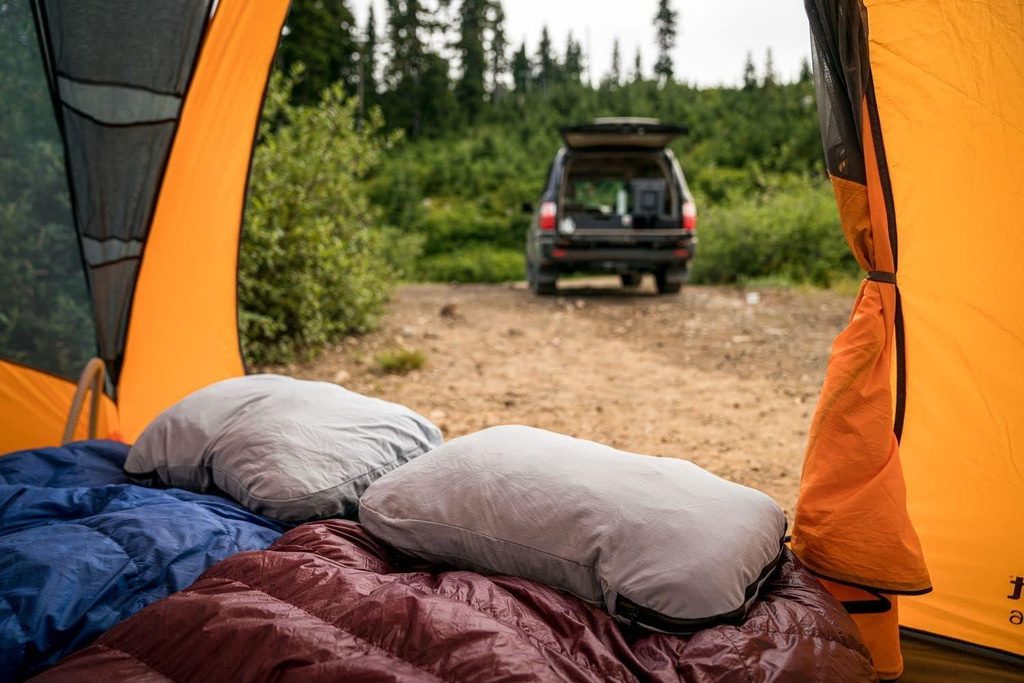
A good night’s sleep can make a huge difference when you’re camping.
You can have a comfortable sleeping bag and a high-quality sleeping pad, but if your head and neck aren’t properly supported, sleeping in a tent can still be uncomfortable.
That’s where a camping pillow comes in.
Camping pillows are designed to provide support while taking up less space than a regular pillow. They come in different shapes, sizes, materials, and designs, so choosing the right one depends on how you camp and how you sleep.
In this beginner-friendly guide, you’ll learn what to look for in a camping pillow and how to choose one that fits your camping setup.
Do You Really Need a Camping Pillow?
You don’t necessarily need a dedicated camping pillow.
Some campers simply use a regular pillow from home, while others put clothes inside a stuff sack to create a makeshift pillow.
These options can work, especially for car camping.
However, a dedicated camping pillow can offer several advantages.
It can be:
- More compact
- Easier to pack
- Lighter
- Easier to clean
- Designed specifically for outdoor use
- Easier to adjust for different sleeping positions
If you’re just starting out, you don’t have to buy one immediately.
But if you’re regularly camping and struggling to sleep comfortably, a camping pillow can be a worthwhile upgrade.
What Should You Look for in a Camping Pillow?
The most important factors are:
- Comfort
- Size
- Thickness
- Support
- Weight
- Packability
- Material
- Sleeping position
- Durability
- Ease of cleaning
The best camping pillow isn’t necessarily the largest or most expensive one.
It’s the one that gives you enough support while fitting your camping style.
1. Consider Your Sleeping Position
Your sleeping position is one of the most important things to consider.
Side Sleepers
Side sleepers usually need more support between the head and sleeping surface.
A pillow with enough height and firmness can help keep your head and neck in a comfortable position.
If a pillow is too thin, you may feel like your head is dropping toward the sleeping pad.
Back Sleepers
Back sleepers often prefer a pillow with moderate height and support.
A pillow that is too thick can push your head too far forward.
Look for a design that supports your head without creating an uncomfortable angle.
Stomach Sleepers
Stomach sleepers often prefer a lower-profile pillow.
A thick pillow can force your neck into an uncomfortable position.
A thinner or softer pillow may work better.
2. Choose the Right Size
Camping pillows are generally smaller than standard pillows.
That’s intentional.
A smaller pillow takes up less space in your tent and backpack.
However, smaller doesn’t always mean better.
If you mainly go car camping, you have more room to bring a larger and more comfortable pillow.
If you backpack, packability and weight become much more important.
Think about how much sleeping space you have and how much room you’re willing to dedicate to your pillow.
3. Check the Thickness
Pillow thickness affects comfort and support.
Some camping pillows are very thin, while others can be inflated or adjusted to a thicker profile.
A thicker pillow may work well for side sleepers, while a lower-profile pillow may be more comfortable for stomach sleepers.
Adjustable pillows can be especially useful because you can change the amount of air or filling to find a comfortable height.
4. Consider Inflatable Camping Pillows
Inflatable pillows are popular because they pack down very small.
When deflated, some can fit into a small stuff sack or storage pouch.
Advantages
- Very compact
- Lightweight
- Easy to carry
- Adjustable firmness
- Good for backpacking
Disadvantages
- Can feel different from a traditional pillow
- May move around while sleeping
- Can sometimes make noise
- Requires inflation
Inflatable pillows can be a great choice if packing space is important.
5. Consider Foam Camping Pillows
Foam pillows generally provide a more traditional pillow feel.
They can be comfortable and supportive, but they usually take up more space than inflatable models.
Advantages
- Comfortable
- Good support
- More traditional feel
- No inflation required
Disadvantages
- Bulkier
- Usually heavier
- Takes up more storage space
Foam pillows can be particularly appealing for car campers who don’t have to carry their gear very far.
6. Look at Hybrid Designs
Some camping pillows combine different materials.
For example, a pillow may use an inflatable core with a soft outer layer.
This type of design tries to combine the small packed size of an inflatable pillow with the comfort of a traditional pillow.
Hybrid pillows can be a good middle ground if you’re not sure which type you prefer.
7. Think About Weight
Weight matters more for backpacking than car camping.
If you’re carrying everything in a backpack, even small pieces of gear add up.
A lightweight inflatable pillow may make more sense for backpacking.
For car camping, weight is usually less important.
You can choose a larger pillow if comfort is your priority.
This is why you should always consider your camping style before buying gear.
8. Check the Packed Size
Packed size is another important factor.
A pillow may look small when you’re sleeping on it but take up significantly more space when packed.
Check the manufacturer’s listed packed dimensions before buying.
For backpacking, a small packed size can make a big difference.
For car camping, you have much more flexibility.
9. Pay Attention to the Pillow Material
Camping pillows can use materials such as:
- Foam
- Polyester
- Fleece
- Synthetic insulation
- Air chambers
- Combination materials
The material affects comfort, durability, weight, and how easy the pillow is to clean.
A soft outer fabric can make an inflatable pillow feel much more comfortable than a basic plastic-like surface.
10. Look for a Washable Cover
Camping gear gets dirty.
Your pillow can collect sweat, dirt, and oils during a trip.
A removable and washable cover can make keeping your pillow clean much easier.
If the pillow doesn’t have a removable cover, check how the manufacturer recommends cleaning it.
Avoid assuming that every camping pillow can simply be thrown into a washing machine.
Camping Pillow vs. Regular Pillow
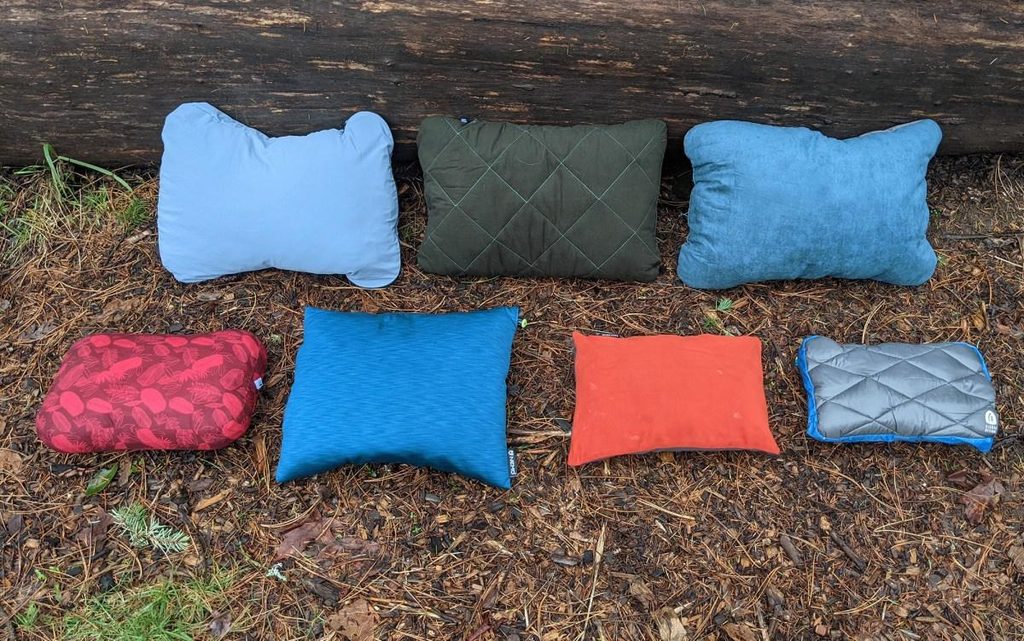
Should you bring your normal pillow from home?
For car camping, there’s nothing wrong with doing that if you have enough room.
A regular pillow may actually be more comfortable.
However, camping pillows are useful when:
- Storage space is limited
- You’re backpacking
- You want lighter gear
- You want a compact sleeping system
- You want gear specifically designed for outdoor use
If comfort is your top priority and you’re driving directly to your campsite, a regular pillow can be perfectly reasonable.
Camping Pillow vs. Stuff Sack With Clothes
A common budget option is to put clothes inside a stuff sack and use it as a pillow.
This can work surprisingly well.
However, it may not provide the same shape or support as a dedicated camping pillow.
It’s a good solution when you’re trying to minimize gear or save money.
You can always upgrade later if you decide you want more comfort.
How Firm Should a Camping Pillow Be?
There’s no single firmness level that’s right for everyone.
Your preferred firmness depends on:
- Sleeping position
- Personal preference
- Pillow thickness
- Sleeping pad firmness
- Neck support needs
Inflatable pillows can be particularly useful because you can adjust the air level.
Instead of filling the pillow completely, you can experiment with different amounts of air until you find a comfortable level.
Match Your Pillow to Your Sleeping Pad
Your pillow and sleeping pad work together.
If your sleeping pad is very soft or thick, your preferred pillow height may be different from what works on a thinner pad.
For example, a thick sleeping pad may raise your body higher off the ground.
That can affect how much pillow height you need.
When building your sleeping system, think about the pillow, sleeping pad, and sleeping bag as a complete setup.
Best Camping Pillow for Car Camping
Car campers generally have more freedom when choosing a pillow.
You don’t have to worry as much about weight or packed size.
You can consider:
- Larger pillows
- Foam pillows
- Hybrid pillows
- More supportive designs
- Even a regular pillow from home
For many beginners, comfort should be the priority when car camping.
Best Camping Pillow for Backpacking
Backpackers need to think more carefully about weight and packed size.
A compact inflatable pillow is often a practical choice because it takes up very little room.
However, comfort still matters.
Saving a few ounces isn’t worth it if you can’t sleep comfortably.
Try to find a balance between weight, packed size, and support.
Do You Need a Camping Pillow for Every Trip?
Not necessarily.
For a short car camping trip, you can easily use a pillow from home.
For backpacking, a dedicated compact pillow may be more useful.
It really comes down to your priorities.
If you sleep well without a camping pillow, there’s no reason to buy one simply because it’s on a camping checklist.
Common Camping Pillow Mistakes
Choosing the Smallest Pillow
The smallest option isn’t automatically the best.
If it doesn’t provide enough support, you may regret saving the extra space.
Ignoring Your Sleeping Position
A pillow that works well for a back sleeper may not work as well for a side sleeper.
Buying Based Only on Weight
Ultra-light gear can be useful, but comfort still matters.
Inflating the Pillow Too Much
A fully inflated pillow isn’t necessarily the most comfortable.
Experiment with different levels.
Forgetting About Cleaning
Camping pillows can get dirty quickly.
Consider how you’ll clean the pillow and its cover before buying.
Buying an Expensive Pillow Immediately
You don’t need premium sleeping gear to start camping.
Try a simple option first and upgrade if you discover that better comfort is worth the cost.
A Simple Beginner Camping Pillow Setup
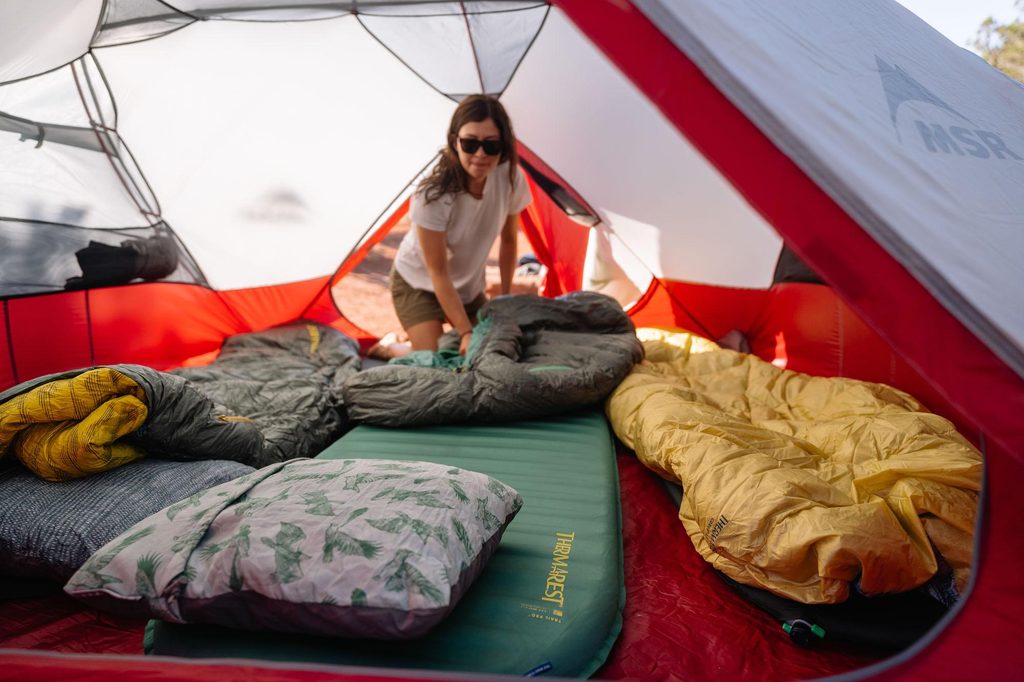
For most beginners, you don’t need anything complicated.
For Car Camping
Consider:
- A comfortable camping pillow or regular pillow
- Medium or larger size
- Good neck support
- Washable cover
- Comfortable material
For Backpacking
Consider:
- Lightweight design
- Small packed size
- Adjustable firmness
- Comfortable surface
- Durable construction
The right choice depends more on your camping style than on a specific brand or model.
Camping Pillow Buying Checklist
Before buying a camping pillow, check:
- Sleeping position
- Pillow size
- Thickness
- Firmness
- Weight
- Packed size
- Material
- Washable cover
- Durability
- Inflatable or foam design
- Camping style
- Price
Final Thoughts
Choosing a camping pillow is mostly about finding the right balance between comfort, size, weight, and support.
If you’re car camping, you have more freedom to prioritize comfort and bring a larger pillow.
If you’re backpacking, a lightweight and compact design may be more important.
You also don’t necessarily need to buy a camping-specific pillow. A regular pillow or a simple stuff sack with clothes can work while you’re figuring out what you prefer.
The most important thing is getting enough support to sleep comfortably.
After all, a good night’s sleep can make your entire camping trip more enjoyable.
Want to learn more? Check out these related camping guides:
→ Best Sleeping Gear for Beginner Campers
→ How to Set Up a Comfortable Camping Sleep System