

A camping blanket can be one of the most useful pieces of gear you bring outdoors.
You can use it around the campfire, inside your tent, on a picnic table, in the back of your vehicle, or as an extra layer on a chilly night.
But camping blankets come in many different sizes, materials, and designs. Some are lightweight and packable, while others are thick, warm, and designed mainly for car camping.
So how do you choose the right one?
The best camping blanket depends on how you plan to use it, the weather you’ll encounter, how much space you have, and how much weight you’re willing to carry.
This beginner’s guide explains what to look for when choosing a camping blanket and which features actually matter.
What Is a Camping Blanket?
A camping blanket is an outdoor blanket designed to provide warmth, comfort, or protection from the ground and weather.
Unlike a regular household blanket, camping blankets are usually designed to be more durable and easier to carry outdoors.
Depending on the design, a camping blanket may provide:
- Extra warmth
- Wind protection
- A clean sitting surface
- Ground insulation
- Protection from damp grass
- A comfortable place to relax
- An additional layer inside a sleeping bag
Camping blankets are particularly useful for car camping because you don’t have to worry as much about weight or packed size.
For backpacking, however, you’ll usually want a lighter and more compact option.
Do You Really Need a Camping Blanket?
Not every camper needs one.
If you already have a sleeping bag that keeps you warm and you mainly sleep inside a tent, a separate camping blanket may not be essential.
However, a blanket can be extremely useful outside your sleeping setup.
You can use one for:
- Sitting around the campfire
- Relaxing at the campsite
- Picnics
- Beach trips
- Outdoor concerts
- Cold mornings
- Extra warmth inside a tent
- Car camping
- Covering a camping chair
- Keeping gear off the ground
Think of a camping blanket as versatile outdoor gear rather than simply another sleeping product.
1. Decide How You’ll Use the Blanket
The first thing to consider is how you’ll actually use it.
This is more important than choosing a specific material or brand.
For Campfires
If you mainly want a blanket for sitting around the campfire, look for:
- Durable fabric
- Good warmth
- Wind resistance
- Easy cleaning
- Reasonable size
A water-resistant exterior can also be useful when you’re sitting on damp ground.
For Sleeping
If you want to use a blanket as part of your sleep system, warmth and insulation become more important.
You’ll want to consider:
- Temperature
- Blanket size
- Insulation type
- Weight
- Sleeping position
A camping blanket can be useful as an extra layer, but it shouldn’t automatically be considered a replacement for a sleeping bag in cold conditions.
For Picnics and Day Trips
For daytime use, prioritize:
- Large surface area
- Lightweight construction
- Easy cleaning
- Water resistance
- Easy folding
For Car Camping
Car camping gives you more flexibility.
You can choose a larger and heavier blanket because you don’t have to carry it very far.
Comfort can become more important than minimizing weight.
2. Choose the Right Size
Camping blankets come in different sizes.
A small blanket may be easy to carry, but it may not provide enough coverage.
A larger blanket provides more room but takes up more storage space.
Consider:
- Your height
- Number of people
- Intended use
- Storage space
- Whether you’ll use it on the ground
Single-Person Blanket
A single-person blanket is usually enough for one camper.
It’s easier to carry and works well for:
- Personal warmth
- Camping chairs
- Sleeping
- Backpacking
- Day trips
Large Camping Blanket
A larger blanket can be useful for:
- Couples
- Families
- Picnics
- Car camping
- Sharing around the campfire
If you’re mainly a car camper, choosing a larger blanket can make sense.
3. Consider the Blanket’s Warmth
Warmth is one of the most important factors if you plan to use the blanket at night.
However, don’t assume that the thickest blanket is always the warmest or best.
Warmth depends on several factors, including:
- Insulation
- Material
- Thickness
- Construction
- Wind resistance
- Moisture resistance
Think about the conditions where you’ll use the blanket.
A lightweight summer blanket may be perfect for warm-weather camping but completely inadequate for cold nights.
For colder camping trips, a sleeping bag or quilt designed for the expected conditions may be a better primary sleep system.
4. Choose the Right Material
Camping blankets are commonly made from synthetic fabrics, fleece, wool, down, or combinations of different materials.
Each option has advantages and disadvantages.
Fleece
Fleece is soft, comfortable, and generally affordable.
It’s a good option for:
- Car camping
- Campfires
- Cool evenings
- Casual outdoor use
However, fleece blankets can be bulky compared with some synthetic insulated options.
Synthetic Insulation
Synthetic insulated blankets are popular because they can provide warmth without requiring the care associated with some natural insulation.
They can also perform reasonably well when exposed to moisture.
They’re a practical choice for many beginners.
Down
Down provides an excellent warmth-to-weight ratio and packs down relatively small.
This makes it attractive for lightweight camping and backpacking.
The downside is that high-quality down products can be more expensive, and moisture management becomes especially important.
Wool
Wool is naturally warm and can provide good performance in damp conditions.
It’s also durable and comfortable for many outdoor applications.
The tradeoff is that wool can be heavier and bulkier than some synthetic alternatives.
5. Look for Water Resistance
Camping often means dealing with moisture.
Morning dew, wet grass, light rain, and damp campsite surfaces can all make a regular blanket uncomfortable.
A water-resistant outer fabric can help protect the blanket from light moisture.
However, water-resistant does not necessarily mean waterproof.
If you need serious protection from rain, use a properly designed waterproof tarp or groundsheet rather than relying on your blanket alone.
Water resistance is best viewed as an additional convenience feature.
6. Think About Wind Resistance
Wind can make a comfortable evening feel much colder.
A blanket with a wind-resistant outer material can help reduce the effect of wind.
This is especially useful when you’re sitting around a campsite or watching the sunset.
If you’re choosing a blanket primarily for campfire use, wind resistance may be more useful than extreme insulation.
7. Check the Weight
Weight matters much more when you’re backpacking.
For car camping, you can usually prioritize comfort and size.
For backpacking, every additional item adds to the weight of your pack.
Remember that the listed blanket weight isn’t the only thing you should consider.
Also check:
- Packed size
- Carrying bag
- Accessories
- Straps
- Stuff sack
A slightly heavier blanket that packs efficiently may be more useful than a lighter blanket that takes up a lot of space.
8. Consider Packed Size
Packed size is especially important if you’re traveling with limited storage.
A bulky blanket may be comfortable at camp but frustrating to fit into a full vehicle.
For car camping, this usually isn’t a major problem.
For backpacking, however, a compact blanket can make a noticeable difference.
Before buying, check the manufacturer’s packed dimensions rather than relying only on photos.
9. Check Durability
Camping blankets are going to encounter dirt, grass, rocks, branches, and other outdoor surfaces.
Look for construction that can handle regular outdoor use.
Pay attention to:
- Stitching
- Fabric quality
- Edge construction
- Zippers
- Snaps
- Attachment points
If you plan to use your blanket directly on the ground, durability becomes even more important.
You should also check the care instructions before buying.
10. Think About Cleaning
Outdoor gear gets dirty.
A blanket that is difficult to clean can become annoying after only a few trips.
Before buying, check:
- Machine washing instructions
- Drying requirements
- Whether the outer fabric is easy to wipe clean
- Whether the insulation requires special care
If you regularly camp with children, pets, or around campfires, easy cleaning can be a particularly valuable feature.
11. Look for Useful Features
Some camping blankets include additional features that can make them more convenient.
Depending on your needs, you might find:
- Built-in straps
- Carry handles
- Stuff sacks
- Snap buttons
- Foot pockets
- Hood sections
- Corner loops
- Water-resistant shells
- Wind-resistant materials
You don’t need every feature.
Choose features that solve a problem you actually have.
For example, a built-in carrying system can be useful if you frequently move between your car and campsite.
12. Camping Blanket vs Sleeping Bag

A common question is whether a camping blanket can replace a sleeping bag.
The answer depends on the conditions and the blanket.
A sleeping bag is specifically designed to wrap around your body and provide insulation for sleeping.
A blanket is more versatile and can be easier to use around camp.
Camping Blanket
Pros
- Versatile
- Easy to use
- Great around camp
- Can be shared
- Useful for picnics
- Comfortable for lounging
Cons
- Less enclosed
- Can allow warm air to escape
- May not be suitable for cold conditions
- Can move around while sleeping
Sleeping Bag
Pros
- Designed specifically for sleeping
- Provides better body coverage
- Available for different temperature conditions
- Easy to use at night
Cons
- Less versatile
- Usually designed for one person
- Can be less comfortable for lounging
For many campers, the best solution isn’t choosing one or the other.
You can use a sleeping bag for sleeping and a camping blanket for everything else.
13. Camping Blanket vs Regular Blanket
You might wonder why you can’t simply bring a blanket from home.
You can.
For casual car camping, a regular blanket may work perfectly well.
However, camping blankets are often designed with outdoor use in mind.
They may provide:
- Better durability
- Water resistance
- Easier packing
- Better portability
- Outdoor-friendly materials
- More versatile attachment options
If you’re only going camping occasionally, using a blanket you already own can be a perfectly reasonable way to start.
14. Choose Based on Your Camping Style
Your camping style should influence your decision.
Car Camping
Prioritize:
- Comfort
- Size
- Warmth
- Durability
- Easy cleaning
Weight isn’t usually a major concern.
Backpacking
Prioritize:
- Low weight
- Small packed size
- Warmth-to-weight ratio
- Durability
Every ounce matters more when you’re carrying your entire setup.
Family Camping
Look for:
- Larger size
- Easy cleaning
- Durable materials
- Good warmth
- Easy storage
A larger blanket can be useful for multiple people.
Day Camping
For short outdoor activities, a lightweight blanket with water resistance may be all you need.
15. Where Will You Use Your Camping Blanket?
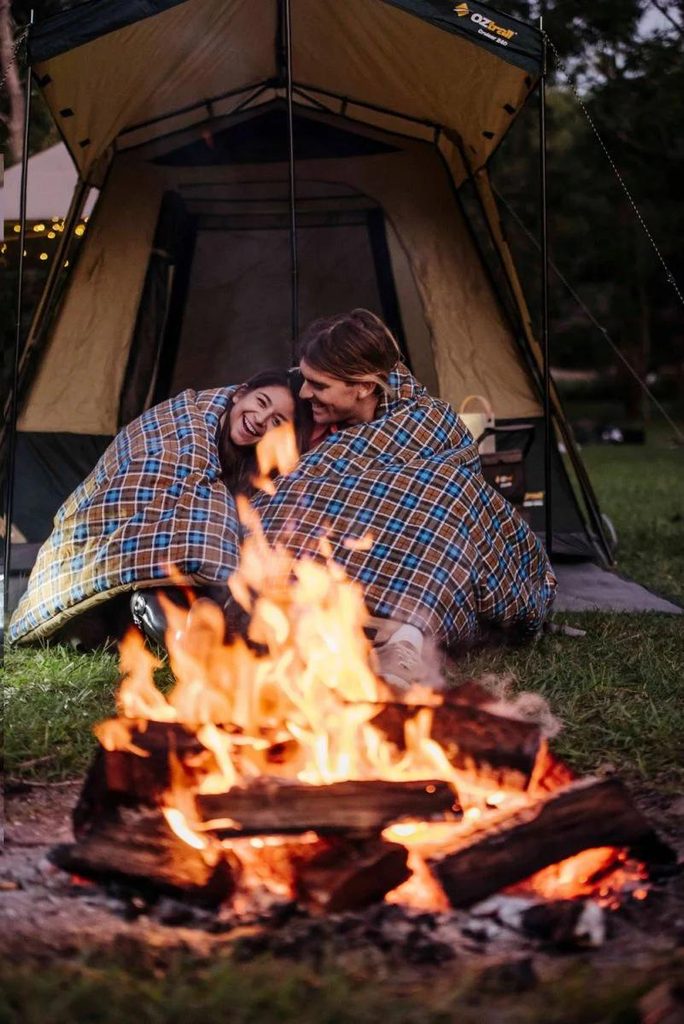
Think beyond the campsite.
A good outdoor blanket can be useful for many activities.
You might use it for:
- Camping
- Hiking breaks
- Picnics
- Beach trips
- Road trips
- Tailgating
- Outdoor concerts
- Sporting events
- Backyard gatherings
- Car camping
This versatility is one reason a camping blanket can be a worthwhile piece of outdoor gear.
16. Common Camping Blanket Mistakes
Beginners often focus too much on appearance or price.
Here are some common mistakes to avoid.
Buying the Thickest Blanket
Thicker doesn’t always mean better.
You may end up carrying a bulky blanket you rarely use.
Ignoring Packed Size
A large blanket can take up more space than expected.
Choosing Based Only on Price
A cheap blanket isn’t necessarily a good value if it wears out quickly.
Ignoring Cleaning Instructions
Outdoor blankets get dirty. Make sure you know how to clean yours.
Using a Blanket Instead of Proper Cold-Weather Gear
A casual camping blanket shouldn’t be treated as a substitute for a properly rated sleeping system in cold conditions.
Buying Too Many Features
Extra features are useful only when they solve a real problem.
A Simple Beginner Camping Blanket Setup
If you’re new to camping, you don’t need anything complicated.
A simple setup might include:
- One durable camping blanket
- A sleeping bag for overnight use
- A sleeping pad
- A waterproof groundsheet if needed
- A carrying bag
For car camping, you could choose a larger insulated blanket for relaxing around camp and keep your sleeping bag for nighttime.
This gives you flexibility without filling your vehicle with unnecessary gear.
How Much Should You Spend on a Camping Blanket?
Camping blankets are available at many different price points.
As a beginner, focus on the features that matter most:
- Appropriate size
- Suitable warmth
- Durable material
- Reasonable weight
- Easy cleaning
- Water resistance if needed
- Packability
- Good construction
You don’t necessarily need a premium blanket.
If you’re primarily a car camper, spending more for comfort and durability can make sense.
If you’re backpacking, paying more for a lighter and more compact design may be worthwhile.
Camping Blanket Buying Checklist
Before buying a camping blanket, check:
- Appropriate size
- Enough warmth for your conditions
- Suitable material
- Reasonable weight
- Packed size
- Water resistance if needed
- Wind resistance if needed
- Durable construction
- Easy cleaning
- Useful carrying system
- Suitable for your camping style
- Within your budget
Final Thoughts
Choosing a camping blanket is easier when you start with how you’ll actually use it.
For car camping and casual outdoor use, comfort, size, warmth, and durability may matter more than weight.
For backpacking, you’ll want to focus much more on weight, packed size, and warmth-to-weight ratio.
You should also consider the material, water resistance, cleaning requirements, and useful features before buying.
And remember that a camping blanket doesn’t necessarily have to replace your sleeping bag.
For many campers, the ideal setup is to use a sleeping bag for sleeping and a versatile camping blanket for relaxing, sitting, and staying warm around camp.
Choose the blanket that fits your camping style rather than simply choosing the biggest, thickest, or most expensive option.
Want to learn more? Check out these related camping guides:
→ How to Stay Warm While Camping at Night
→ Best Sleeping Gear for Beginner Campers