
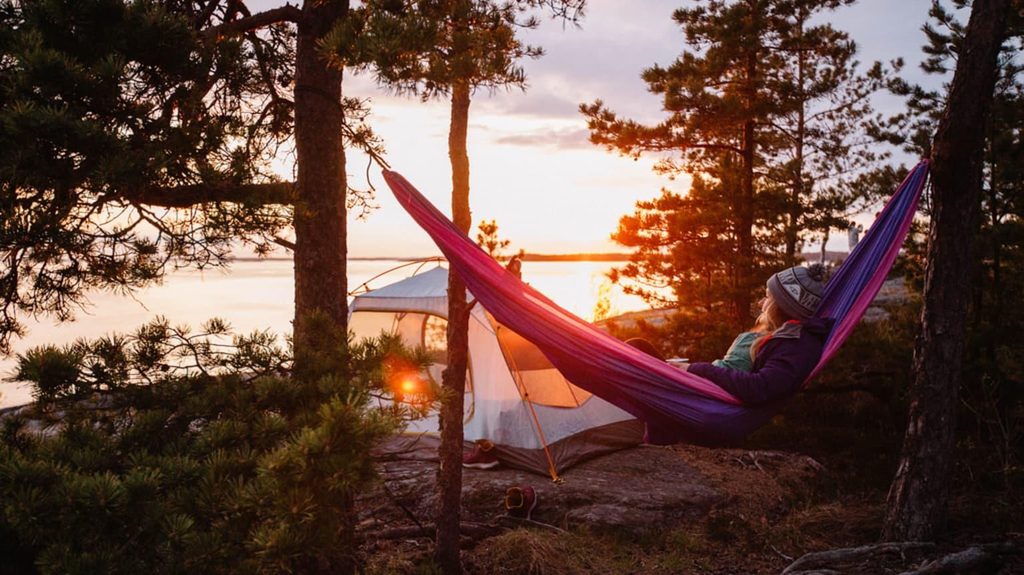
Camping hammocks can be a comfortable and relaxing alternative to a traditional tent, especially if you enjoy camping in wooded areas.
But choosing the right hammock isn’t as simple as picking the biggest or lightest one. You need to consider its size, weight capacity, material, suspension system, comfort, durability, and where you plan to use it.
Some hammocks are designed mainly for relaxing during the day, while others are built for overnight hammock camping.
This beginner’s guide explains what to look for when choosing a camping hammock and how to find one that fits your camping style.
What Is a Camping Hammock?
A camping hammock is a suspended fabric bed that hangs between two suitable anchor points, usually trees.
Unlike a traditional tent, a hammock keeps you off the ground. This can be useful when the ground is wet, uneven, rocky, or uncomfortable.
However, a hammock isn’t automatically a replacement for a tent.
You still need to consider weather protection, insulation, insects, and whether the campsite actually has suitable anchor points.
For overnight hammock camping, you may also need additional equipment such as:
- Suspension straps
- Bug net
- Rain tarp
- Underquilt or sleeping pad
- Carabiners or compatible hardware
A simple hammock may be enough for relaxing at camp, while an overnight setup requires more equipment.
Do You Really Need a Camping Hammock?
Before buying one, think about how you plan to use it.
A camping hammock can be a great choice if you want:
- A comfortable place to relax at camp
- A lightweight alternative to a camping chair
- A way to stay off the ground
- A compact piece of outdoor gear
- An overnight hammock camping setup
- A comfortable spot for reading or taking a nap
However, a hammock may not be ideal if you usually camp in areas without suitable trees.
It can also be less practical in exposed environments such as deserts, beaches, or high alpine areas where trees may be unavailable.
The best hammock is one that matches the environment where you actually camp.
1. Choose the Right Hammock Size
Size is one of the most important things to consider.
A hammock that’s too short can feel cramped, while an oversized hammock may be heavier and bulkier to carry.
For most campers, a single-person hammock is enough for one person.
A larger double hammock provides more width and can feel more spacious, but that doesn’t necessarily mean it’s better for sleeping.
When comparing hammocks, look at both:
- Length
- Width
Length is particularly important for sleeping comfortably.
If you’re tall, pay close attention to the hammock’s overall length rather than choosing based only on width.
Single vs Double Hammocks
Single hammock
- Lighter
- More compact
- Usually easier to carry
- Good for one person
- Great for backpacking or simple camping
Double hammock
- Wider
- More spacious
- Often heavier
- Useful for relaxing
- Can provide more room for larger campers
For most beginners, a single hammock is a good starting point if portability matters, while a double hammock can be attractive for car camping and casual use.
2. Check the Weight Capacity
Always check the manufacturer’s stated weight capacity before using a hammock.
The weight rating should account for the person using it and any additional load the hammock is designed to support.
Don’t assume that a hammock with a higher weight rating is automatically safer in every situation.
The suspension system, attachment points, hardware, and trees also need to be appropriate for the setup.
If two people plan to use the hammock, make sure the entire system is specifically designed and rated for that use.
Never exceed the manufacturer’s weight limit.
3. Consider the Hammock Material
Camping hammocks are commonly made from synthetic fabrics such as nylon or polyester.
The material affects:
- Weight
- Durability
- Stretch
- Comfort
- Drying time
- Packability
Nylon
Nylon is popular because it’s lightweight, strong, and packs down relatively small.
This makes it a common choice for backpacking and lightweight camping.
However, nylon can absorb some moisture and may stretch when wet.
Polyester
Polyester generally has lower moisture absorption and can maintain its dimensions well in changing conditions.
It can also be a good choice for campers who prioritize durability and everyday outdoor use.
Which Material Is Better?
There’s no single best material for everyone.
If you’re focused on lightweight backpacking, nylon may be attractive.
If you’re more interested in casual camping and durability, polyester may be worth considering.
The construction and quality of the specific hammock matter just as much as the fabric type.
4. Don’t Forget the Suspension System
A hammock is only as useful as its suspension system.
Many beginner hammocks come with suspension straps, while some are sold separately.
A good suspension system should be:
- Strong
- Easy to adjust
- Compatible with the hammock
- Simple to install
- Designed for the manufacturer’s recommended use
Look for wide tree straps rather than thin cords that can damage tree bark.
When camping, use appropriate trees and follow local rules regarding hammock use.
Never wrap thin rope or unsuitable cord tightly around trees.
5. Think About Comfort
A hammock can be surprisingly comfortable when positioned correctly.
But comfort depends heavily on how you lie in it.
Many beginners naturally lie directly along the centerline.
Instead, try lying at a slight diagonal.
This can help create a flatter sleeping position and reduce the feeling of being tightly folded in the middle.
Other factors that affect comfort include:
- Hammock width
- Hammock length
- Fabric stretch
- Suspension height
- Hanging angle
- Your sleeping position
Don’t hang the hammock extremely tight.
A slight curve is generally more comfortable than trying to create a perfectly flat surface.
6. Consider Your Sleeping Position
Your preferred sleeping position can affect which hammock works best.
Back Sleepers
If you usually sleep on your back, look for a longer and sufficiently wide hammock that allows you to lie comfortably at a slight diagonal.
Side Sleepers
Side sleeping can be more challenging in a traditional hammock.
A longer, wider design may provide more room, but you’ll still need to experiment with positioning.
Combination Sleepers
If you move around frequently while sleeping, choose a hammock with enough length and width to give you some freedom of movement.
For overnight use, comfort should be tested before relying on a hammock for a longer trip.
7. Decide Whether You Need a Bug Net
If you camp in an area with mosquitoes or other insects, a bug net can make a huge difference.
Some camping hammocks include an integrated bug net.
Others allow you to add one separately.
A bug net can help protect you from:
- Mosquitoes
- Flies
- Gnats
- Other biting insects
If you frequently camp during warm weather, a hammock with an integrated bug net can simplify your setup.
For occasional daytime use, however, you may not need one.
8. Do You Need a Rain Tarp?
If you’re planning to sleep overnight in a hammock, a rain tarp is often an important part of the setup.
A hammock itself doesn’t provide meaningful protection from rain.
A tarp positioned above the hammock can help protect you from:
- Rain
- Dripping water
- Wind
- Some sun exposure
When choosing a tarp, consider its:
- Size
- Shape
- Waterproofing
- Weight
- Packed size
- Attachment points
The tarp should provide enough coverage for the hammock and your sleeping area.
For more information, see our guide:
How to Choose a Camping Tarp: A Beginner’s Guide
9. Don’t Forget Insulation
One of the biggest surprises for new hammock campers is that the air underneath you can make you cold.
Your sleeping bag alone may not provide enough insulation underneath your body because insulation can become compressed.
A sleeping pad inside the hammock can help.
For colder conditions, many hammock campers use an underquilt, which hangs underneath the hammock and provides insulation from below.
Your sleep system may include:
- Hammock
- Sleeping bag or quilt
- Sleeping pad or underquilt
- Bug net
- Rain tarp
The right setup depends heavily on temperature and weather conditions.
10. Consider Weight and Packed Size
If you’re carrying your hammock on a backpacking trip, weight becomes much more important.
Compare:
- Hammock weight
- Suspension weight
- Bug net weight
- Tarp weight
- Insulation weight
- Packed size
A hammock that weighs very little by itself may not be lightweight once you add all the equipment required for overnight use.
This is why you should compare the complete system, not just the hammock.
For casual car camping, packed size and weight are usually less important.
11. Think About Your Camping Style
Your camping style should determine what kind of hammock you buy.
Car Camping
You can choose a larger and more comfortable hammock because you don’t have to carry everything on your back.
Look for:
- Comfortable fabric
- Larger size
- Easy setup
- Integrated bug net
- Good suspension straps
Backpacking
Weight and packed size become much more important.
Look for:
- Lightweight construction
- Compact suspension system
- Efficient bug protection
- Lightweight rain tarp
- Lightweight insulation
Backyard or Day Use
You may not need a full camping system at all.
A simple hammock can be perfect for:
- Relaxing
- Reading
- Napping
- Enjoying the outdoors
12. Check the Hammock’s Suspension Points
Pay attention to where the suspension system connects to the hammock.
The connection points should be securely constructed and designed for the intended load.
Inspect them before every trip.
Look for:
- Strong stitching
- Reinforced attachment points
- Quality webbing
- Secure hardware
- No visible damage
If you notice fraying, damaged stitching, cuts, or other signs of serious wear, don’t use the hammock until you’ve determined that it’s safe.
13. Choose the Right Hanging Distance
Your campsite also affects how easy your hammock is to use.
You need two suitable anchor points at an appropriate distance from each other.
The trees should be:
- Healthy
- Strong
- Appropriate for hammock use
- Free from obvious damage or instability
Avoid dead trees or branches that could fall.
You also need enough clearance underneath the hammock so you aren’t sitting directly on the ground.
Don’t try to solve a poor location by putting excessive tension on the hammock.
A suitable campsite is more important than forcing a hammock into an unsuitable space.
14. Learn How to Protect Trees
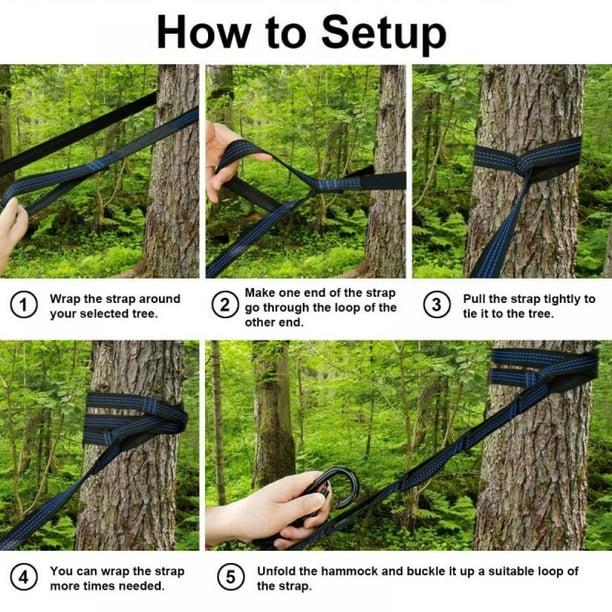
Hammock camping should be done responsibly.
Use wide tree straps designed for hammock use.
Avoid attaching a hammock directly with thin rope or narrow cord that can damage tree bark.
You should also follow campground regulations and local Leave No Trace practices.
Some parks and campgrounds may prohibit hammock use or have specific rules about where and how hammocks can be attached.
Always check the local rules before setting up.
15. Camping Hammock vs Camping Tent
A hammock and a tent solve similar problems, but they’re very different systems.
Camping Hammock
Pros
- Keeps you off the ground
- Comfortable on uneven ground
- Compact
- Can be lightweight
- Great for wooded areas
- Fun and relaxing
Cons
- Requires suitable trees
- Needs additional weather protection
- Can require more insulation
- Not ideal for every environment
- Setup may take some practice
Camping Tent
Pros
- Works in many environments
- Provides a larger enclosed space
- Easier for multiple people
- Provides ground-level storage space
- Familiar to most beginners
Cons
- Requires a suitable flat area
- Can be heavier depending on the tent
- You sleep directly above the ground
For many beginners, a tent remains the more versatile option.
A hammock becomes especially attractive when you regularly camp in wooded environments and enjoy the experience of sleeping above the ground.
16. Common Camping Hammock Mistakes
New hammock campers often make a few simple mistakes.
Hanging It Too Tight
A very tight hammock can feel uncomfortable and put unnecessary tension on the system.
Hanging It Too High
You don’t need to hang the hammock extremely high.
Keep the setup at a reasonable height and follow the manufacturer’s instructions.
Ignoring the Weather
A hammock without proper rain protection can become uncomfortable very quickly.
Forgetting Under-Insulation
Cold air underneath the hammock can make you surprisingly cold.
Using Poor Trees
Never attach your hammock to weak, dead, or unsuitable trees.
Ignoring Weight Ratings
Always respect the manufacturer’s limits for the hammock and suspension system.
Buying Only the Hammock
Remember that overnight hammock camping can require several additional pieces of equipment.
A Simple Beginner Camping Hammock Setup
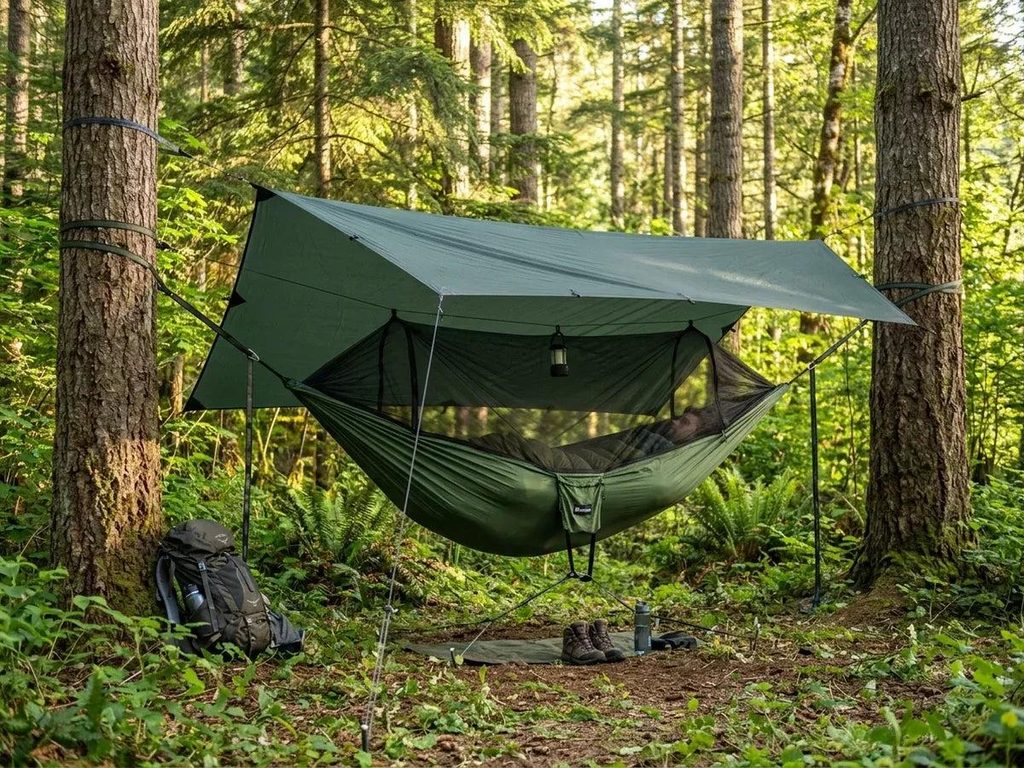
If you’re just getting started, you don’t need the most complicated setup.
A basic overnight hammock system could include:
- Camping hammock
- Wide tree straps
- Bug net
- Rain tarp
- Sleeping bag or quilt
- Sleeping pad or underquilt
- Small gear storage bag
Start with a simple setup and learn how everything works before heading out on a longer trip.
Practice setting it up at home first.
That way, you’re not trying to figure out your hammock system for the first time after arriving at a campsite.
How Much Should You Spend on a Camping Hammock?
You don’t necessarily need an expensive hammock to get started.
For beginners, prioritize:
- Safe construction
- Appropriate weight capacity
- Good suspension straps
- Suitable size
- Comfortable material
- Weather protection
- Durability
Avoid choosing a hammock based only on the lowest price.
At the same time, you don’t need every accessory available.
Start with the equipment you actually need for your camping style and add accessories later.
Camping Hammock Buying Checklist
Before buying a camping hammock, check:
- Appropriate length
- Comfortable width
- Suitable weight capacity
- Durable material
- Quality stitching
- Strong attachment points
- Compatible suspension straps
- Easy setup
- Appropriate packed size
- Bug net if needed
- Rain tarp if needed
- Adequate insulation for the conditions
- Suitable for your camping style
Final Thoughts
Choosing a camping hammock doesn’t have to be complicated.
Start by deciding how you plan to use it.
If you mainly want a comfortable place to relax at camp, a simple hammock may be all you need.
If you’re planning to sleep overnight in a hammock, you’ll need to think about suspension, bug protection, rain coverage, and insulation as part of a complete sleep system.
The most important things to consider are size, weight capacity, material, suspension, comfort, weather protection, and your camping environment.
Choose a hammock that fits the way you actually camp rather than buying the biggest or most expensive option.
With the right setup and a suitable campsite, hammock camping can be a comfortable and enjoyable way to experience the outdoors.
Want to learn more? Check out these related camping guides:
→ How to Choose a Tent for Camping