

Camping food does not need to be complicated.
For beginners, the best camping meals are usually simple, filling, easy to prepare, and easy to clean up afterward. A complicated recipe may sound exciting at home, but cooking outdoors involves limited space, changing weather, unfamiliar equipment, and extra cleanup.
A better approach is to plan meals around a few practical principles: choose manageable ingredients, prepare some food before leaving home, organize the cooking area, keep perishable food properly chilled, and clean up as soon as the meal is finished.
This guide explains how to plan simple camping meals, organize your cooking setup, prepare food efficiently, and avoid common problems during your trip.
Internal Link: If this is your first camping trip, start with our Camping Checklist for Beginners to make sure you have the essential equipment before planning your meals.
1. Keep Your First Camping Meals Simple
One of the biggest mistakes beginners make is trying to cook the same way they would at home.
A campsite usually has less counter space, fewer cooking tools, limited water, and less room for storing ingredients. Even a simple meal can take longer when you have to set up the cooking area first.
For your first few trips, choose meals that require:
- Few ingredients
- Minimal preparation
- One or two cooking tools
- Short cooking times
- Simple cleanup
- Ingredients that are easy to store
Good beginner-friendly meal ideas include:
- Eggs and toast
- Oatmeal with fruit
- Simple sandwiches
- Rice with prepared ingredients
- Pasta with a simple sauce
- Grilled vegetables
- Foil-wrapped vegetables and protein
- Soup or stew
- Instant noodles with added vegetables
- Simple pancakes
The goal is not to create a restaurant-style meal.
The goal is to enjoy good food without spending most of your camping trip preparing it.
2. Plan Your Meals Before You Pack
A simple meal plan can make camping much easier.
Before leaving home, decide what you will eat for each meal. You do not need to plan every snack in detail, but having a basic schedule helps you determine how much food and cooking equipment you actually need.
For example:
Day 1
Lunch
- Sandwiches
- Fruit
- Water
Dinner
- Rice
- Grilled vegetables
- Simple protein
Day 2
Breakfast
- Eggs
- Toast
- Fruit
Lunch
- Noodles or leftovers
- Simple side dishes
Snack
- Nuts
- Dried fruit
- Crackers
This type of plan reduces unnecessary ingredients and makes packing easier.
It also helps you decide which foods should be eaten first and which foods can safely remain stored for later.
3. Choose Foods Based on Your Camping Style
The best food plan depends on how you are camping.
A car camping trip gives you much more flexibility than a long backpacking trip.
Car Camping
You can usually bring:
- A larger cooler
- Fresh vegetables
- Eggs
- Meat or other perishable foods
- Larger cooking equipment
- More water
- Additional cooking utensils
This makes it possible to prepare more complete meals.
Short Overnight Camping
For a one-night trip, you can keep things even simpler.
You might only need:
- One easy dinner
- One breakfast
- A simple lunch
- A few snacks
Avoid bringing large quantities of ingredients that you are unlikely to finish.
Backpacking or Lightweight Camping
Weight becomes much more important.
Choose foods that are:
- Lightweight
- Compact
- Easy to prepare
- Shelf-stable when appropriate
- High in energy
- Easy to clean up
Examples include dried foods, noodles, dehydrated meals, nuts, dried fruit, crackers, and other compact foods.
The farther you have to carry your food, the more important simplicity becomes.
4. Prepare Ingredients at Home
One of the easiest ways to make campsite cooking faster is to do part of the work before leaving.
Depending on the food, you can:
- Wash vegetables
- Cut vegetables
- Portion ingredients
- Measure seasonings
- Prepare sauces
- Cook certain ingredients in advance
- Pack individual meal portions
For example, instead of bringing an entire bag of vegetables and cutting everything at the campsite, prepare the vegetables at home and place them into a sealed container.
At camp, you can simply open the container and start cooking.
This reduces preparation time and also means fewer tools need to be used at the campsite.
However, foods that require refrigeration should still be kept properly chilled throughout transportation and storage.
5. Organize Your Ingredients by Meal
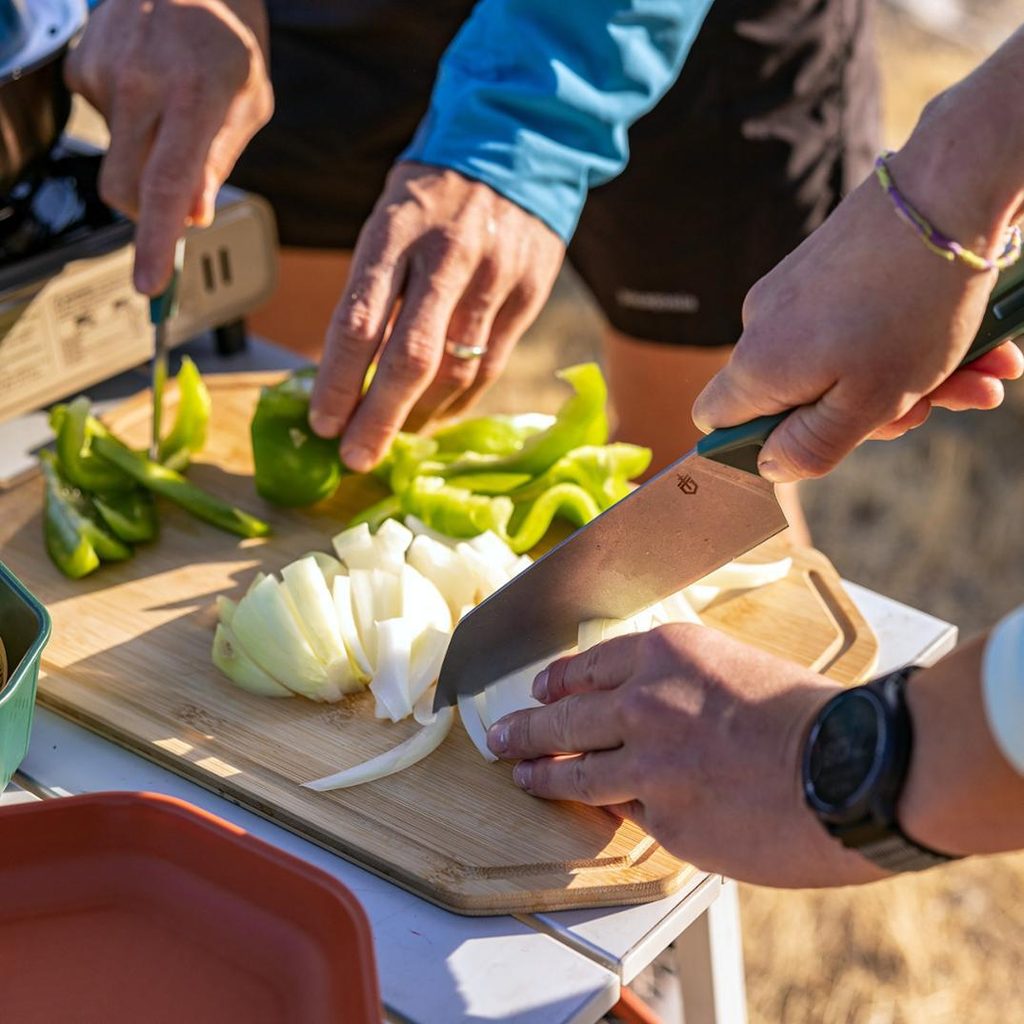
Randomly placing food into a cooler or storage box can create unnecessary work.
A better system is to organize food according to when you will use it.
For example:
Top or easy-access section
- First meal
- Drinks
- Snacks
Middle section
- Next day’s breakfast
- Vegetables
- Prepared ingredients
Bottom section
- Foods needed later
You can also place ingredients for each meal into separate sealed containers.
For example:
Dinner Box
- Vegetables
- Protein
- Sauce
- Seasoning
Breakfast Box
- Eggs
- Bread
- Fruit
This simple organization makes it much easier to find what you need without unpacking everything.
6. Keep Cold Food Properly Chilled
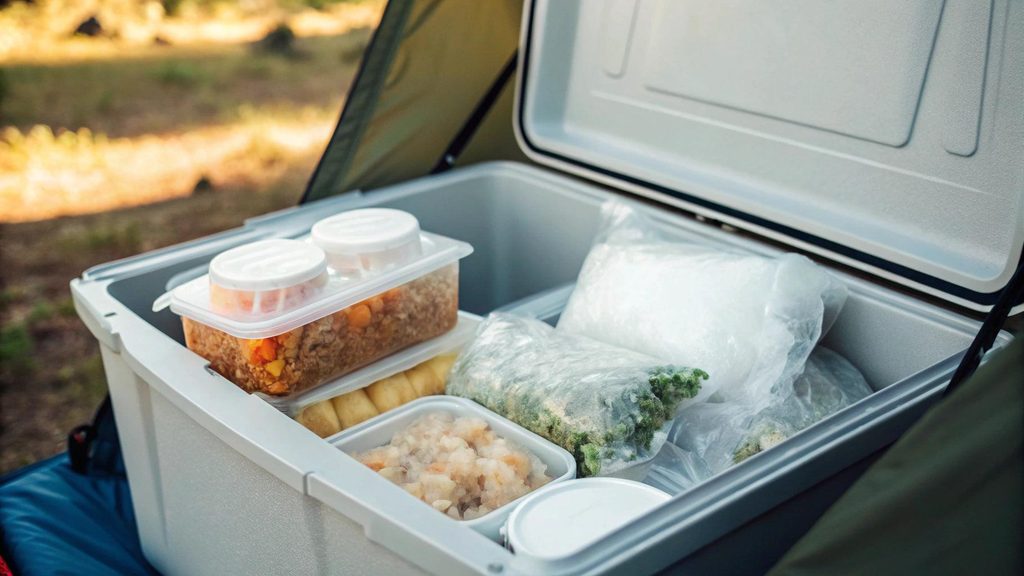
Food storage is one of the most important parts of camping cooking.
Perishable foods such as meat, poultry, fish, dairy products, and cooked leftovers need proper temperature control. Cold food should be kept at or below about 40°F (4.4°C), and a cooler with a reliable cold source is useful for car camping.
A few simple habits can help:
- Start with properly chilled food
- Use enough ice or cold packs
- Keep the cooler closed as much as possible
- Store raw foods separately
- Pack foods in sealed containers
- Avoid leaving perishable food sitting outside the cooler
- Use the most perishable ingredients earlier in the trip
A cooler is not just a convenient storage box. It is part of your food safety system.
If the cold source has melted and food has been sitting at unsafe temperatures, do not assume it is still safe simply because it looks or smells normal.
7. Separate Raw and Ready-to-Eat Foods
Cross-contamination can be a problem at any outdoor kitchen.
Raw meat, poultry, seafood, and their juices should be kept away from foods that are ready to eat.
A simple campsite system is to use separate containers and utensils whenever possible.
For example:
Raw food area
- Raw meat
- Raw poultry
- Raw seafood
Ready-to-eat area
- Bread
- Fruit
- Cooked food
- Prepared vegetables
Wash your hands and cooking surfaces after handling raw ingredients.
This is especially important when your cooking area is small and the same table is being used for preparation, eating, and storage.
8. Create a Simple Outdoor Cooking Area
Before you start cooking, organize your space.
A good cooking area should have enough room for:
- Ingredients
- Cooking equipment
- Utensils
- Hot cookware
- Finished food
- Cleanup supplies
Try to keep these areas separated.
For example:
Left: Ingredients
Center: Cooking equipment
Right: Finished food
Keep knives and other sharp tools in a controlled area, and make sure hot cookware cannot easily be knocked over.
Your cooking area should also be positioned safely away from your tent and sleeping area.
Cooking equipment should never be used inside a tent or another poorly ventilated enclosed space. Fuel-burning cooking equipment can create dangerous gases, while flames and heat can also create a fire hazard.
9. Choose Cooking Methods That Match Your Experience
Beginners do not need complicated cooking techniques.
Choose a method that you can control comfortably.
Pan Cooking
Useful for:
- Eggs
- Vegetables
- Sausages
- Simple stir-fry meals
- Pancakes
Pot Cooking
Useful for:
- Pasta
- Noodles
- Soup
- Rice
- Stews
Foil Packet Cooking
Useful for:
- Vegetables
- Potatoes
- Simple protein-and-vegetable meals
Grilling
Useful when you have a suitable and permitted cooking area.
The important thing is to understand how your cooking equipment behaves before relying on it for an important meal.
If you are using unfamiliar equipment, practice with it before your trip.
10. Do Not Put Too Many Ingredients in One Meal
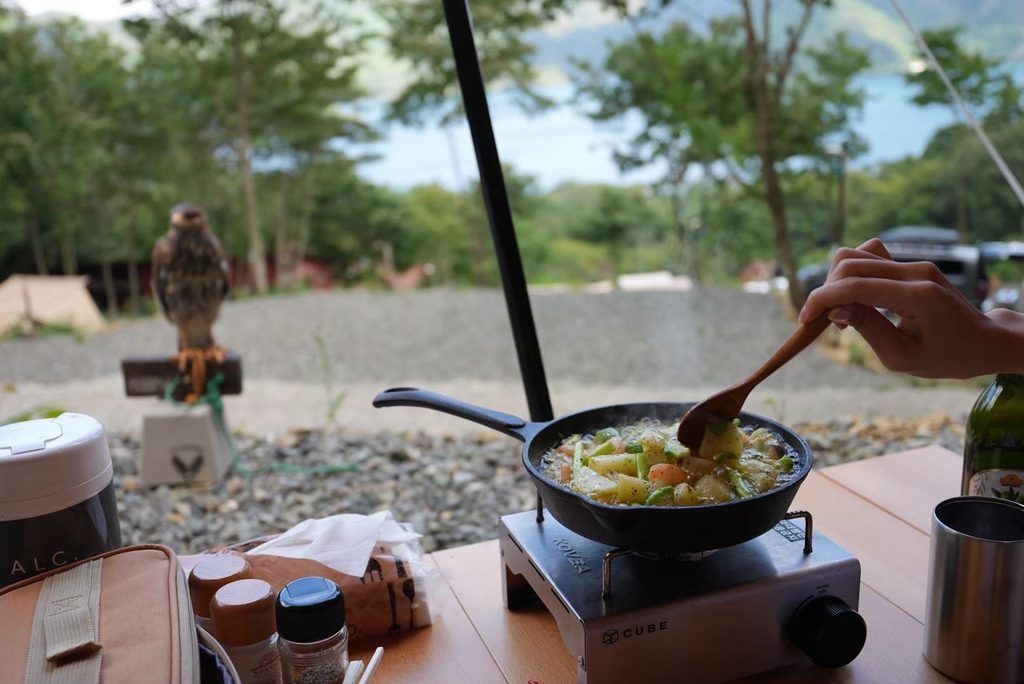
A camping meal with ten ingredients may look impressive, but it can quickly become difficult to manage.
Every additional ingredient can mean:
- Another container
- Another utensil
- More preparation
- More storage space
- More cleanup
Instead, think in terms of a simple meal structure:
Main + Vegetable + Simple Side
For example:
Rice + Grilled Vegetables + Protein
or
Pasta + Vegetables + Simple Sauce
This gives you a balanced-feeling meal without requiring a complicated cooking process.
11. Pack a Small Cooking Kit
You do not need every kitchen tool you own.
A practical camping cooking kit might include:
- One pot
- One pan
- Cooking spoon
- Tongs
- Knife
- Cutting board
- Plates or bowls
- Cups
- Eating utensils
- Food storage containers
- Cooler
- Dishwashing supplies
- Trash bags
- Hand-cleaning supplies
- Paper towels or reusable towels
- Heat-resistant gloves or similar protection
The exact list depends on your menu.
The more complicated your recipes become, the more equipment you will need.
Keeping the menu simple allows you to keep the cooking kit compact.
12. Bring Enough Water for Cooking and Cleaning
Water is easy to underestimate when planning a camping trip.
You need water not only for drinking but potentially for:
- Cooking
- Washing hands
- Cleaning dishes
- Rinsing food
- Cleaning cooking surfaces
Do not automatically assume that nearby lake or stream water is suitable for drinking, food preparation, or cleaning simply because it looks clean. Bring an appropriate safe water supply or use a suitable treatment method when required.
A simple rule is to plan your water needs before leaving rather than trying to solve the problem at camp.
13. Clean as Soon as You Finish Eating
Cleanup is much easier when you do it immediately.
If you leave dirty cookware and food scraps around the campsite, insects and wildlife may become attracted to the area.
After eating:
- Remove leftover food.
- Clean cooking utensils.
- Wash dishes.
- Clean the cooking surface.
- Collect food scraps.
- Seal trash properly.
- Store food and cooking supplies appropriately.
Do not leave food unattended around the campsite.
Keeping the cooking area clean is important for both hygiene and campsite safety.
14. Be Careful With Food Odors
Food odors can remain on cookware, containers, clothing, and other camping equipment.
Strong food smells can also attract insects and wildlife.
To reduce problems:
- Keep food sealed when you are not using it
- Clean dishes promptly
- Do not leave scraps around the campsite
- Store food according to local regulations
- Keep cooking equipment organized
- Dispose of food waste properly
Wildlife food-storage rules can vary significantly by location, so always check the regulations for the campground or area where you plan to stay.
15. Keep Cooking and Sleeping Areas Separate
Your tent should be a sleeping and shelter area, not a kitchen.
Keep cooking activities in an appropriate outdoor area and maintain a safe distance between cooking equipment, open flames, and your tent.
This helps reduce the risk of:
- Fire
- Burns
- Food odors inside the tent
- Wildlife encounters
- Accidental spills
- Equipment damage
A clean separation between cooking and sleeping areas also makes the campsite easier to organize.
16. Think About Breakfast the Night Before
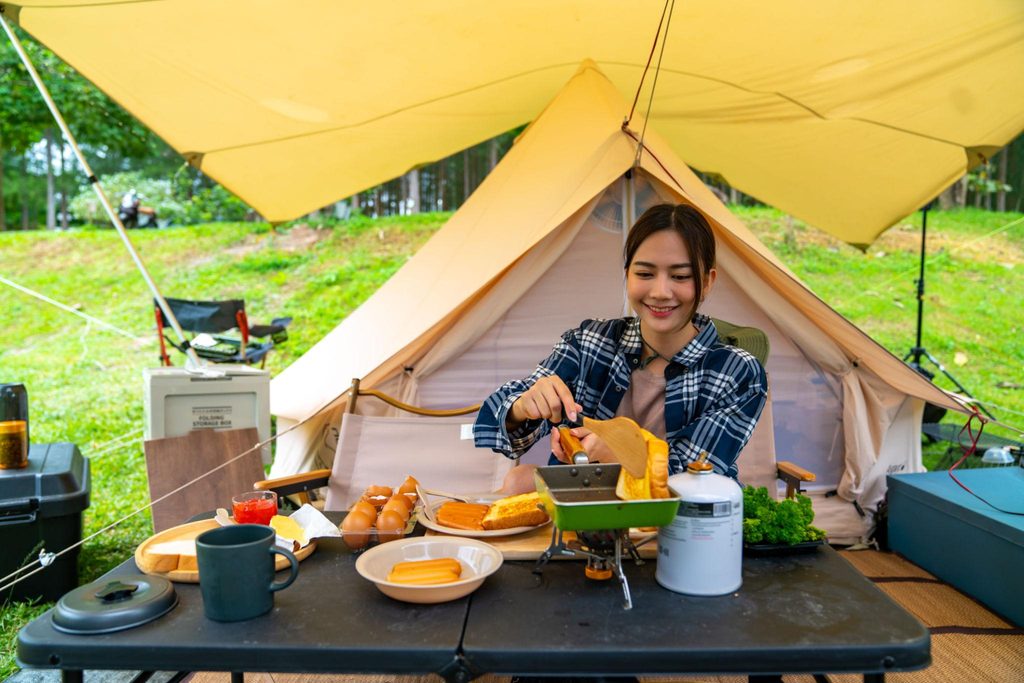
Morning cooking can be more difficult than expected.
You may be tired, cold, or trying to pack up camp quickly.
One simple strategy is to prepare part of breakfast the night before.
For example:
- Pre-portion oatmeal
- Prepare coffee supplies
- Pack breakfast ingredients together
- Place cookware where it is easy to reach
- Prepare bread or other dry ingredients
- Keep the breakfast container accessible
This can reduce the amount of work required in the morning.
A simple breakfast can also help you start your day faster if you have hiking, driving, or other activities planned.
17. Plan One Backup Meal
Outdoor plans can change quickly.
Rain, strong wind, unexpected delays, equipment problems, or a late arrival at camp can make your original cooking plan inconvenient.
Keep at least one backup meal that requires very little preparation.
Good backup options might include:
- Instant noodles
- Shelf-stable soup
- Prepared rice
- Sandwiches
- Crackers and other simple foods
- Dehydrated meals
- Other foods that match your camping style
The backup meal does not need to be exciting.
Its purpose is to prevent a difficult situation from turning into a stressful evening.
18. Camping Meals Should Match the Weather
Your food choices can also change with the conditions.
Warm Weather
Consider:
- Light meals
- Fresh fruit
- Simple sandwiches
- Cold drinks
- Foods that require less cooking
Pay particular attention to keeping perishable foods properly chilled.
Cold Weather
Warm meals can be especially useful.
Consider:
- Soup
- Stew
- Noodles
- Hot oatmeal
- Warm drinks
Rainy Weather
Choose meals that can be prepared efficiently while keeping ingredients and cookware protected from rain.
19. Common Camping Cooking Mistakes
Bringing Too Much Food
More food does not always mean a better trip.
Excess food takes up storage space and may create unnecessary waste.
Choosing Complicated Recipes
A recipe that takes 15 minutes at home may take much longer outdoors.
Forgetting Cleanup Supplies
Cooking is only half the process.
You also need to clean your cookware, dishes, and preparation area.
Poor Cooler Organization
Opening the cooler repeatedly can make it harder to maintain the desired temperature.
Mixing Raw and Ready-to-Eat Foods
Use separate containers and clean preparation surfaces to reduce cross-contamination.
Leaving Food Out
Food should not be left unattended around the campsite.
Cooking Too Close to the Tent
Cooking areas and sleeping areas should be separated for safety.
Forgetting a Backup Meal
Outdoor conditions can change, so having a simple alternative is useful.
20. Beginner Camping Cooking Checklist
Before leaving home, check:
Meal Planning
- Meals planned for the entire trip
- One backup meal prepared
- Snacks packed
- Ingredients portioned
- Perishable foods identified
Food Storage
- Cooler prepared
- Cold packs or ice ready
- Raw foods separated
- Food containers sealed
- Food storage plan prepared
Cooking Equipment
- Pot
- Pan
- Cooking utensils
- Knife
- Cutting board
- Plates or bowls
- Cups
- Eating utensils
Cleaning
- Water
- Soap or suitable cleaning supplies
- Towels
- Trash bags
- Food-waste storage
Campsite
- Cooking area planned
- Cooking area separated from tent
- Local fire rules checked
- Weather checked
- Food-storage rules checked
21. A Simple Camping Meal Formula
If you are unsure what to cook, use this simple formula:
Choose → Prepare → Store → Cook → Clean
Choose
Pick simple meals that match your camping style.
Prepare
Do as much preparation as practical before leaving home.
Store
Keep food organized and maintain proper temperatures for perishable items.
Cook
Use a simple cooking method that you are comfortable with.
Clean
Clean cookware, remove food scraps, and secure food and trash immediately.
This five-step system is enough to handle most beginner camping meals.
22. How to Make Camping Cooking More Enjoyable
Camping cooking does not have to become another chore.
A few small changes can make it more enjoyable:
- Prepare ingredients before the trip
- Give every cooking item a fixed place
- Keep the menu simple
- Cook meals that everyone in the group can enjoy
- Share cooking and cleanup responsibilities
- Avoid preparing too many dishes at once
- Leave enough time for cooking
- Enjoy the surroundings while the food is being prepared
The goal is to make food part of the camping experience rather than turning the entire evening into kitchen work.
Final Thoughts
Good camping food is not about complicated recipes or bringing a huge collection of cooking equipment.
For beginners, the most useful approach is to keep meals simple, prepare ingredients ahead of time, organize food carefully, maintain proper cold storage, separate raw and ready-to-eat foods, and clean the campsite immediately after eating.
Once these habits become familiar, you can gradually experiment with more interesting recipes and different cooking methods.
Start with meals that are easy to prepare and difficult to mess up.
Then, as your camping experience grows, your outdoor kitchen can grow with it.
Want to learn more? Check out these related camping guides:
→ Camping Checklist for Beginners: What to Pack for Your First Trip
→ Camping Safety for Beginners: Essential Rules for a Safer Trip