
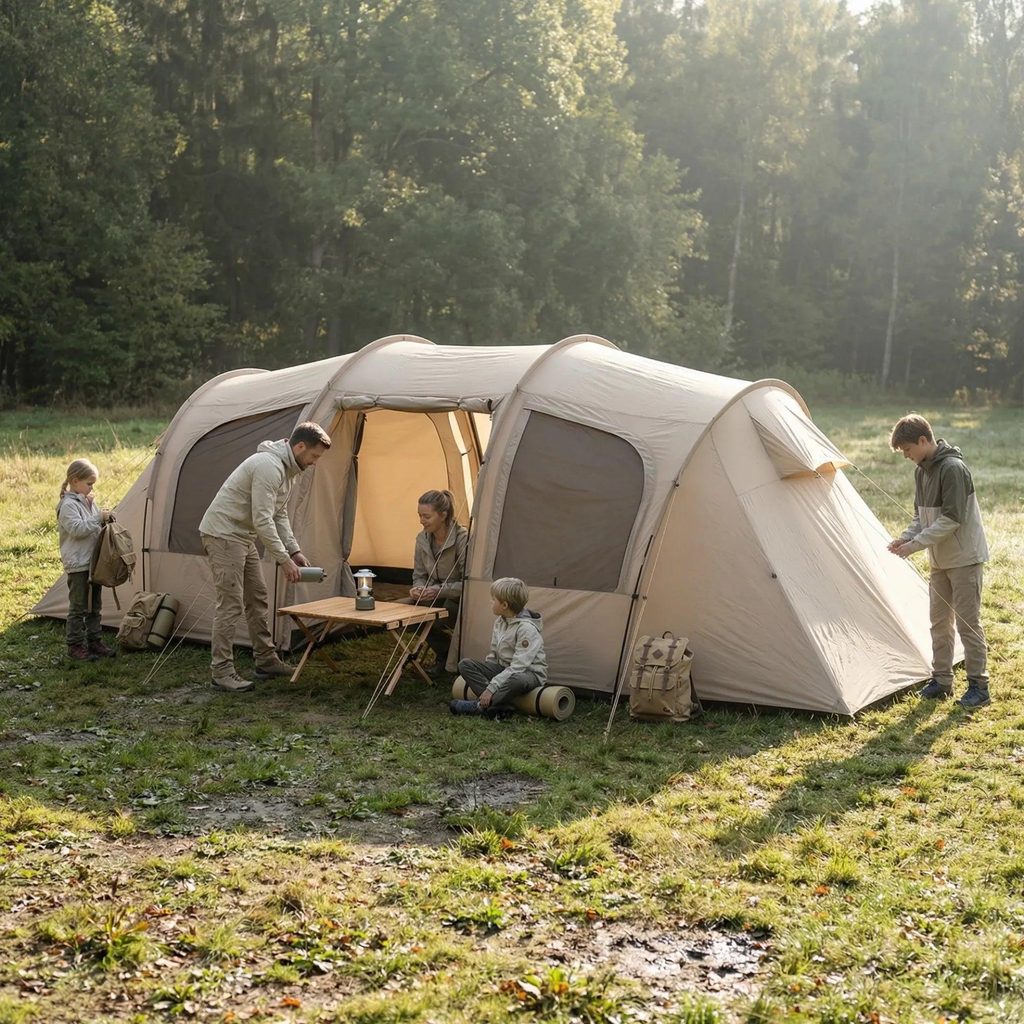
Camping can be a relaxing way to spend time outdoors, but being away from everyday conveniences also means you need to take responsibility for your own safety.
For beginners, camping safety does not have to be complicated. Most problems can be reduced with a few simple habits: checking the weather, choosing a suitable campsite, keeping fire and cooking equipment under control, storing food properly, protecting yourself from changing conditions, and knowing when it is time to change your plans.
This guide covers the essential camping safety rules every beginner should understand before spending a night outdoors.
Check the Weather Before You Leave
One of the easiest ways to improve camping safety is to check the weather before leaving home.
Do not look only at the temperature. Pay attention to rain, thunderstorms, strong winds, heat, cold, and other conditions that could affect your campsite.
Weather can also change during a trip, so continue checking conditions while you are camping.
Before leaving, consider:
- Daytime and nighttime temperatures
- Rain and thunderstorms
- Strong winds
- Heat or extreme cold
- Flooding risks
- Severe weather warnings
- Road conditions
- Local weather changes
If severe weather is expected, changing the camping plan may be the safest option.
A successful camping trip is not about following the original schedule at all costs. Being willing to postpone, shorten, or change a trip is part of responsible outdoor recreation.
Choose a Safe Campsite
A beautiful campsite is not necessarily a safe campsite.
Before setting up your tent, look around the area carefully.
Choose an established camping area whenever possible and pay attention to the ground, nearby water, trees, slopes, and drainage.
Avoid places where rainwater can collect or flow through the campsite.
Be particularly careful around:
- Rivers and streams
- Low-lying areas
- Steep slopes
- Unstable ground
- Areas beneath damaged trees
- Loose rocks
- Exposed locations during strong winds
Water levels can change quickly during heavy rain, so camping immediately beside a river or stream can create unnecessary risk.
Also look above your tent.
Dead or damaged branches can fall unexpectedly, particularly during strong wind or storms.
A few minutes of inspection before setting up can make your campsite much safer.
Set Up Your Tent Correctly
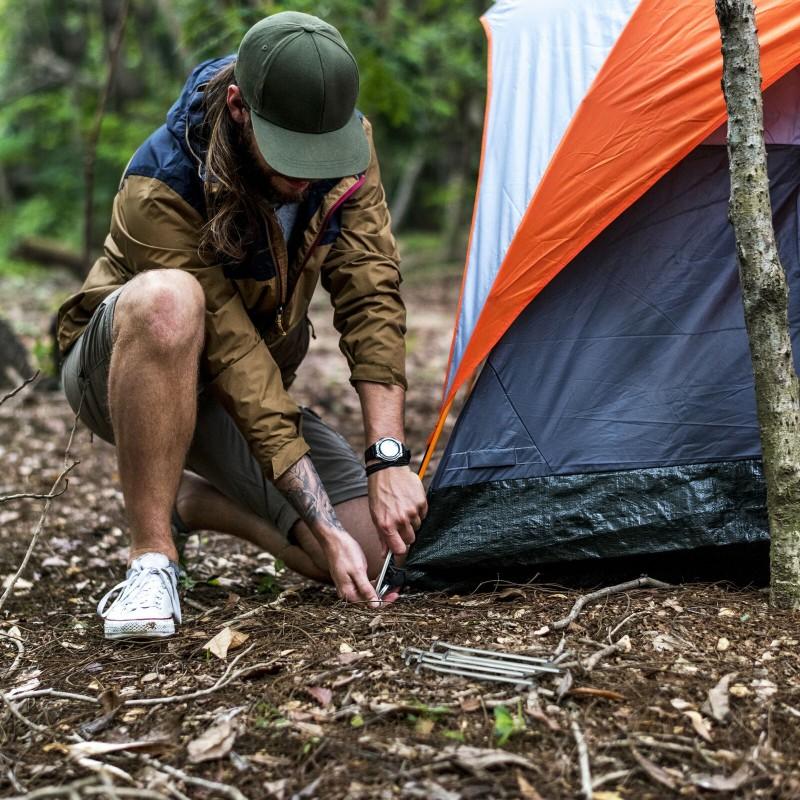
A tent is your main shelter, so take time to set it up properly.
Follow the instructions for your particular tent and make sure the structure is stable before settling into camp.
Check that:
- Stakes are firmly secured
- Guy lines are properly positioned
- The rainfly is correctly installed
- Doors and openings are functioning properly
- The tent is not placed in a drainage path
- There are no obvious hazards above the tent
Avoid placing heavy equipment where it could damage the tent or block important exits.
If strong weather is expected, inspect the setup again after the wind or rain begins.
A tent that looked secure in calm weather may need additional attention when conditions change.
Never Use Fire Inside a Tent
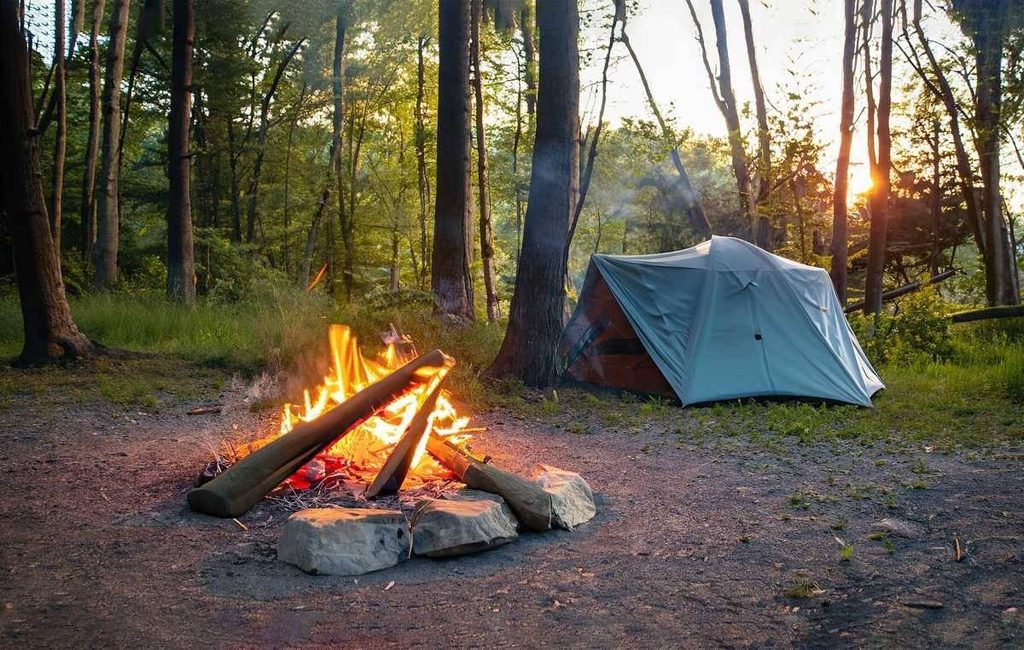
Fire and fuel-burning equipment should be treated with extreme caution around camping shelters.
Never use an open flame, charcoal, or other combustion equipment inside a tent.
A tent is made from lightweight materials that can catch fire quickly, and combustion can also create dangerous gases.
The safest approach is to keep cooking and fire activities outside the sleeping area and follow the rules of the campground or outdoor area.
Recent official camping safety guidance specifically warns against using braziers, burners, or heating equipment inside tents or enclosed spaces because of fire and carbon monoxide risks.
Understand Carbon Monoxide Risks
Carbon monoxide is particularly dangerous because it is difficult to detect without an appropriate detector.
Fuel-burning equipment can produce carbon monoxide when it operates.
Never use a fuel-burning stove, charcoal grill, lantern, heater, or similar equipment inside a tent or another enclosed space unless the equipment is specifically designed and approved for that environment.
Do not try to stay warm by bringing a cooking stove or charcoal equipment into your sleeping area.
Instead, use appropriate clothing, sleeping equipment, and shelter designed for the conditions.
If you use any approved fuel-burning equipment outdoors, make sure it is operated according to its instructions and in a properly ventilated area.
Keep Fire Away From Flammable Materials
If campfires are permitted, use only the designated fire area and follow local fire restrictions.
Keep tents, dry vegetation, clothing, equipment, and other flammable materials away from the fire.
Wind can carry sparks farther than expected, so conditions should always be considered before starting a fire.
Avoid having a fire during periods of strong wind or when fire restrictions prohibit it.
Never leave a fire unattended.
When you are finished, extinguish it completely and check the fire area carefully for remaining embers.
A fire is not fully finished simply because visible flames have disappeared.
Official camping guidance emphasizes checking local restrictions, keeping fires away from tents and flammable materials, and completely extinguishing them before leaving.
Keep a Fire Extinguisher Accessible
If your campsite or camping setup includes a fire extinguisher, keep it somewhere that can be reached quickly.
Do not bury it under bags or store it far away from the cooking area.
Everyone in the camping group should know where it is located.
It is also useful to know the emergency procedures at the campground before you need them.
When arriving at an organized campground, identify:
- Fire extinguisher locations
- Emergency exits
- Emergency contact information
- The nearest road
- The campsite’s evacuation route
- Nearby facilities
Knowing this information in advance can save valuable time during an emergency.
Cook Safely at Camp
Cooking is one of the most common activities at a campsite, which makes kitchen safety important.
Set up your cooking area on a stable surface away from the tent and other flammable materials.
Keep cooking equipment where it cannot easily be knocked over.
When cooking:
- Keep handles positioned safely
- Keep children away from hot equipment
- Avoid loose clothing near flames
- Keep fuel containers away from heat
- Do not leave cooking equipment unattended
- Follow the equipment’s instructions
- Clean up spills promptly
After cooking, make sure all flames and heat sources are properly shut down.
Never assume that a small flame is harmless.
Store Food Properly
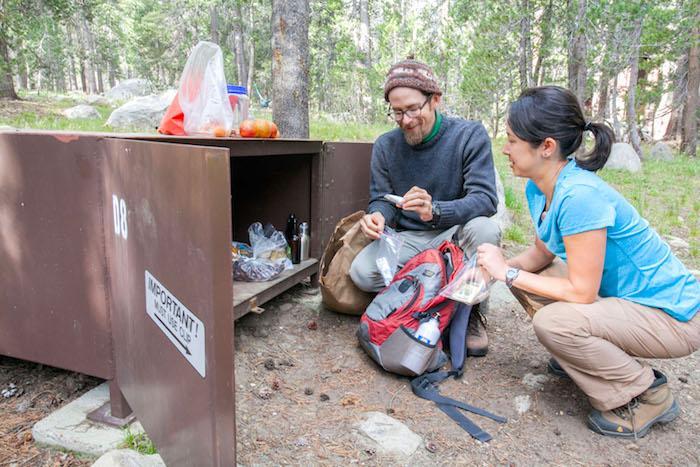
Food should be stored carefully to protect both people and wildlife.
Leaving food or strongly scented items around your campsite can attract animals.
Use the storage method required by the campground or local area.
Depending on the location, this may mean using secure containers, designated food lockers, or other approved storage methods.
Keep items such as:
- Food
- Cooking ingredients
- Drinks with strong odors
- Garbage
- Pet food
- Toiletries
- Other scented items
properly secured.
Do not leave food unattended on a picnic table overnight.
Good food storage protects your campsite and helps reduce wildlife encounters.
Keep Your Campsite Clean
A clean campsite is easier to manage and safer to move around.
Put equipment away when you are finished using it.
Do not leave sharp objects, hot cookware, food scraps, or loose cords where people can trip over them.
At night, keep frequently used items in predictable locations.
A simple campsite organization system can help prevent small accidents.
For example:
Sleeping area
- Sleeping bag
- Personal items
- Dry clothing
- Headlamp
Cooking area
- Cooking equipment
- Food preparation supplies
- Cleaning supplies
Storage area
- Food
- Garbage
- Extra equipment
Keeping these areas separate makes the campsite easier to manage.
Be Careful With Electricity
Electricity can create another set of safety problems at developed campgrounds.
Inspect power cords before use.
Do not use cables with damaged insulation, exposed wires, or broken connectors.
Avoid overloading electrical outlets or using unsafe combinations of adapters and extension cords.
Keep electrical connections protected from water.
If rain begins, inspect the area around electrical equipment and follow the campground’s electrical safety requirements.
Never assume that outdoor electricity is safe simply because it is being used at a campsite.
Protect Yourself From the Cold
Cold weather camping requires more than simply bringing a thicker jacket.
Temperature can feel very different after sunset, especially when wind or moisture is present.
Prepare clothing in layers so you can adjust your insulation as conditions change.
A basic system can include:
- A moisture-managing base layer
- A warm insulating layer
- A weather-resistant outer layer
- Warm socks
- Appropriate head protection
- Gloves when needed
Keep at least one dry set of clothing protected from rain.
Your sleeping system should also be appropriate for the expected nighttime temperature.
Do not wait until you are already very cold before adding another layer.
Protect Yourself From Heat
Hot-weather camping creates a different set of problems.
Drink water regularly and avoid waiting until you feel extremely thirsty.
Take breaks from direct sunlight and use appropriate sun protection.
Watch for signs that you are becoming overheated, particularly during physical activity.
Helpful habits include:
- Drinking enough water
- Resting in shade
- Wearing breathable clothing
- Limiting strenuous activity during the hottest part of the day
- Checking weather conditions
- Keeping your group together
Heat can affect people more quickly than expected, especially when hiking or carrying heavy equipment.
Stay Hydrated
Bring enough drinking water for the trip and understand where additional safe water can be obtained.
Do not assume that water from a stream, lake, or river is safe to drink simply because it looks clean.
If you need to use natural water, follow the appropriate local guidance and use a suitable treatment method.
Water needs can increase significantly during hot weather or physical activity.
Keep drinking water separate from water intended for washing whenever possible.
Be Careful Around Rivers and Lakes
Water can be one of the most enjoyable parts of a camping trip, but it can also create serious hazards.
Stay away from unstable banks and fast-moving water.
Be particularly cautious after heavy rain because water levels and currents can change quickly.
If children are present, supervise them closely around water.
Do not assume that shallow-looking water is harmless.
Slippery rocks, sudden drop-offs, strong currents, and cold water can create dangerous situations.
If you are participating in a water activity, use appropriate safety equipment and follow local rules.
Watch for Wildlife
Seeing wildlife can be one of the memorable parts of camping, but animals should always be treated as wild animals.
Never intentionally feed wildlife.
Do not approach animals for photographs.
Keep food and scented items secured according to local requirements.
Pay attention to signs and warnings in the area.
If you encounter wildlife:
- Give it plenty of space
- Do not chase it
- Do not attempt to touch it
- Keep children close
- Avoid blocking its escape route
- Follow local wildlife guidance
The goal is not to eliminate every wildlife encounter. It is to prevent unnecessary interaction.
Protect Yourself From Insects
Mosquitoes, ticks, bees, and other insects can make camping uncomfortable and may also create health concerns.
Wear appropriate clothing for the environment.
Depending on the conditions, long sleeves and long pants can provide useful protection.
Inspect your clothing and body after spending time in areas with ticks or dense vegetation.
Use insect protection according to its instructions.
Keep food and drinks covered when they are not being used.
A few simple habits can make outdoor time much more comfortable.
Carry a Basic First-Aid Kit
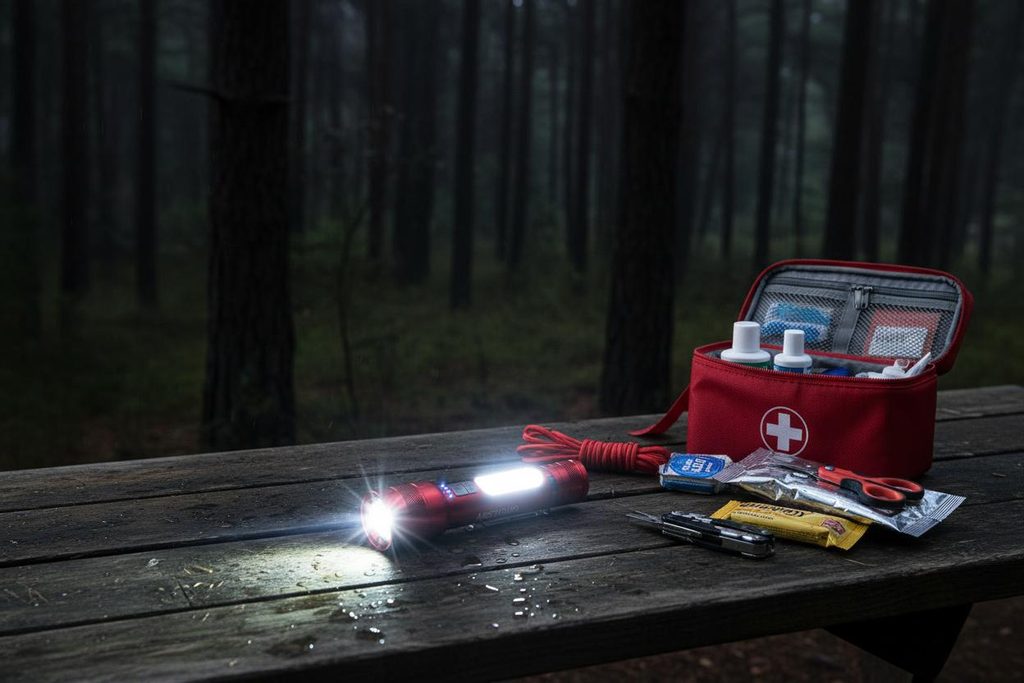
A basic first-aid kit should match the type and length of your trip.
For a typical camping trip, consider carrying supplies for common minor problems such as:
- Small cuts
- Scrapes
- Blisters
- Minor burns
- Insect bites
- Basic pain relief
- Personal medications
- Cleaning supplies
- Bandages
For more remote trips, your emergency supplies may need to be more comprehensive.
Know what is in your first-aid kit before leaving home.
There is little value in carrying emergency equipment if you do not know how to use it.
Carry a Headlamp or Reliable Light
A reliable light is an essential safety item even if you do not expect to move around at night.
Do not depend entirely on your phone’s flashlight.
Keep a headlamp or other suitable light somewhere that you can reach easily.
A light can help you:
- Walk safely around camp
- Find equipment
- Read maps
- Locate emergency supplies
- Move to a safer location
- Set up or pack equipment after dark
Keep spare batteries or another charging option when appropriate.
Tell Someone About Your Camping Plans
Before leaving for a camping trip, tell someone where you are going.
Share basic information such as:
- Destination
- Campsite or general area
- Expected arrival time
- Expected return time
- Who is traveling with you
- Planned activities
For remote trips, provide more detailed information when appropriate.
If your plans change significantly, update the person who is expecting you.
This is a simple habit that can become especially important if an emergency occurs.
Keep Your Phone Protected
Your phone can be useful for communication, navigation, weather information, and emergency assistance.
However, do not assume that you will always have cellular service.
Keep the phone protected from rain and physical damage.
Before leaving, consider downloading maps or other information that may be useful without an internet connection.
For longer or more remote trips, think about additional communication options appropriate for the area.
Your phone should be treated as one part of your safety plan rather than your entire safety plan.
Know Your Route
Even at a developed campground, know where you are.
If you plan to hike, explore, or travel away from the campsite, understand the route before leaving.
Bring appropriate navigation tools for the area.
Do not rely entirely on following another person.
If you become unsure of your location, stop and reassess rather than continuing deeper into unfamiliar terrain.
A small navigation mistake can become much more difficult to correct after dark.
Be Careful After Dark
Campsites change significantly after sunset.
Objects that were obvious during the day can become difficult to see.
Keep your light accessible and avoid unnecessary movement around unfamiliar areas.
Watch for:
- Uneven ground
- Tree roots
- Rocks
- Cords
- Tent stakes
- Slippery surfaces
- Water
- Drop-offs
Slow down when walking at night.
A few extra seconds can prevent a simple trip from becoming an injury.
Prepare for Changing Weather
A clear morning does not guarantee a clear afternoon.
Weather can change quickly, especially in mountainous, coastal, or exposed areas.
Keep rain protection and warm clothing accessible instead of burying them at the bottom of your pack.
If the weather begins to deteriorate, reconsider your plans early.
Do not wait until heavy rain, strong wind, lightning, or flooding makes movement difficult.
The earlier you respond to changing conditions, the more options you usually have.
Know When to Leave
One of the most important camping safety skills is knowing when a trip should end.
You do not have to complete the original plan if conditions become unsafe.
Consider leaving or moving to a safer location when you encounter:
- Severe weather
- Rising water
- Dangerous flooding
- Unstable trees
- Strong winds
- Lightning
- Unsafe road conditions
- Equipment failure that affects shelter or warmth
- A serious injury
- Any situation that exceeds your experience or available resources
Changing plans is not a failure.
Outdoor safety is about making sensible decisions with the conditions you actually have.
Camping Safety With Children
Children can enjoy camping enormously, but they need closer supervision than adults.
Set clear boundaries when you arrive.
Explain areas that children should avoid, such as:
- Fire areas
- Cooking equipment
- Roads
- Deep water
- Steep slopes
- Unstable rocks
- Certain wildlife areas
Teach children not to approach wild animals and not to touch unfamiliar plants or objects.
At night, make sure children have an appropriate light and know where they can safely walk.
The best safety rules are simple enough for children to understand and remember.
Leave Enough Space Around Your Equipment
Crowded campsites can become difficult to navigate.
Leave walking space between your tent, cooking area, fire area, vehicle, and other equipment.
Avoid placing bags, chairs, cords, and other objects where people regularly walk.
A well-organized campsite is easier to use during the day and much safer after dark.
Keep an Emergency Plan
Before your trip, know what you will do if something goes wrong.
Think about basic scenarios:
What if it rains heavily?
Know where you can stay dry or how you can leave.
What if someone gets injured?
Know how to contact emergency services and where the nearest medical facility is.
What if your vehicle cannot leave?
Keep enough supplies and communication options for an unexpected delay.
What if the weather becomes dangerous?
Know your evacuation route and the safest place to go.
You do not need a complicated emergency plan.
You simply need to think through the most realistic problems before they happen.
Common Camping Safety Mistakes
Setting Up in a Low Area
A campsite can become flooded after heavy rain.
Ignoring Weather Warnings
Conditions can change faster than expected.
Using Fire Inside a Tent
This creates serious fire and carbon monoxide hazards.
Leaving a Fire Unattended
Even a small fire can spread when conditions are dry or windy.
Leaving Food Outside
Food and scented items can attract wildlife.
Walking Around Without a Light
Small obstacles become difficult to see after dark.
Relying Entirely on a Phone
A dead battery or lack of service can leave you without an important resource.
Bringing Too Little Warm or Dry Clothing
Wet or cold conditions can become uncomfortable quickly.
Ignoring Small Problems
A loose tent stake, damaged cord, low battery, or missing food container may become a bigger problem later.
Staying Too Long in Dangerous Conditions
Changing your plans early is often easier than trying to solve a problem after conditions become severe.
Beginner Camping Safety Checklist
Before the Trip
- Check the weather forecast
- Check local camping rules
- Check fire restrictions
- Research the camping area
- Tell someone your plans
- Prepare navigation information
- Pack suitable clothing
- Pack enough food and water
- Prepare a first-aid kit
- Check your tent and equipment
- Prepare a reliable light
- Protect important electronics
At the Campsite
- Inspect the campsite
- Check for water and drainage problems
- Look for overhead hazards
- Set up the tent securely
- Keep cooking equipment away from the tent
- Store food properly
- Keep the campsite organized
- Identify emergency routes
- Keep lights accessible
- Monitor weather conditions
Before Sleeping
- Extinguish all fires completely
- Secure food and scented items
- Store important equipment safely
- Check weather conditions
- Keep a light within reach
- Keep warm clothing accessible
- Make sure everyone knows the emergency plan
A Simple Camping Safety Formula
For beginners, camping safety can be remembered with a simple formula:
Check → Choose → Secure → Monitor → Adapt
Check the weather, rules, equipment, and route.
Choose a campsite that avoids obvious hazards.
Secure your tent, food, fire, equipment, and personal belongings.
Monitor weather, water, fire, wildlife, and your group’s condition.
Adapt your plans when conditions change.
You do not need complicated equipment to follow this system.
Good decisions are often more important than having more gear.
Final Thoughts
Camping safety begins before you arrive at the campsite.
Check the weather, choose your campsite carefully, prepare your equipment, and understand the local rules. Once you arrive, keep fire and cooking equipment under control, store food properly, protect yourself from weather and wildlife, and keep your campsite organized.
Most importantly, pay attention to changing conditions.
Camping should be an enjoyable outdoor experience, not a test of how long you can tolerate unsafe conditions.
Knowing when to slow down, change your plans, or leave the campsite is just as important as knowing how to set up a tent.
With a few simple habits and a little preparation, beginners can build safer camping routines and enjoy more confident trips outdoors.