
Planning camping food doesn’t have to be complicated.
For your first few camping trips, the goal isn’t to recreate a restaurant-quality dinner in the middle of the woods.
The goal is to bring food that’s easy to transport, simple to cook, filling, and easy to clean up afterward.
A good camping meal plan can make the entire trip easier.

How Do You Plan Camping Food?
Start by planning meals around the number of people and nights you’ll be camping.
For a simple weekend camping trip, you might need:
- Breakfast
- Lunch
- Dinner
- Snacks
- Drinks
- Coffee or tea
- A few emergency meals
Think about what can be prepared at home before you leave.
The more preparation you do at home, the less work you’ll have at the campsite.
Easy Camping Breakfast Ideas
Breakfast should be simple, especially if you’re planning to hike or start driving early.
Some beginner-friendly options include:
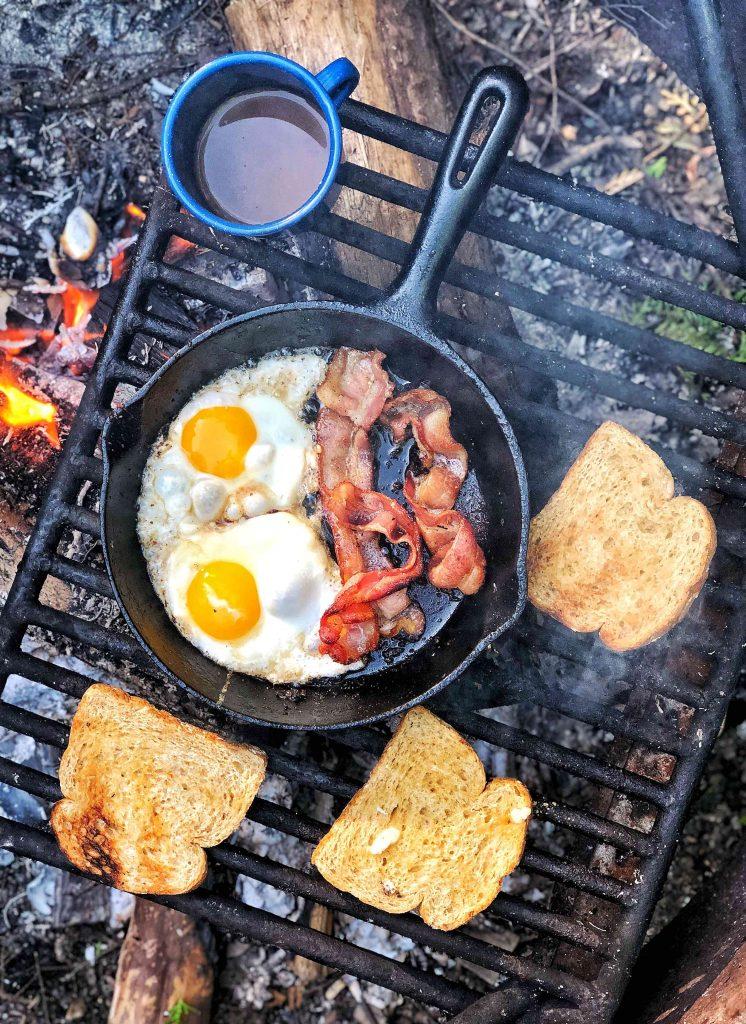
Eggs and Bacon
A classic camping breakfast.
Cook bacon first, then use the same skillet for eggs.
Breakfast Burritos
Prepare them at home and wrap them individually.
At camp, you can simply heat them in a skillet.
Oatmeal
Oatmeal requires very little cooking equipment.
All you need is hot water and a bowl.
Add:
- Fruit
- Nuts
- Brown sugar
- Cinnamon
- Peanut butter
Pancakes
Pancake mix can be convenient for car camping.
Bring the dry mix in a sealed container and add water when you’re ready to cook.
Easy Camping Lunch Ideas
Lunch doesn’t always need to involve cooking.
Some easy options include:
- Sandwiches
- Wraps
- Tuna packets
- Cheese and crackers
- Peanut butter and jelly
- Pre-made pasta salad
- Fruit
- Trail mix
If you’re going hiking during the day, sandwiches, wraps, and snacks are especially convenient.
Easy Camping Dinner Ideas
Dinner is where your camping stove becomes useful.
A two-burner camping stove can give you enough flexibility to cook multiple parts of a meal at the same time.
Some easy options include:
Tacos
Bring tortillas, cooked or pre-prepared meat, cheese, lettuce, salsa, and your favorite toppings.
You can prepare much of the meal at home.
One-Pot Pasta
One-pot meals are excellent for camping because they reduce cleanup.
Cook pasta, sauce, vegetables, and protein in one pot.
Chili
Prepare chili at home and simply heat it at the campsite.
This is one of the easiest options for a cold evening.
Burgers
Bring pre-formed patties and simple toppings.
They’re easy to cook on a camping stove or suitable outdoor grill.
Foil Packet Meals
Combine meat, vegetables, and seasoning in foil packets and cook them according to the appropriate food-safety and cooking instructions.
Don’t Forget Snacks
Camping can make you surprisingly hungry, especially if you’re hiking.
Bring easy snacks such as:
- Trail mix
- Granola bars
- Nuts
- Fruit
- Beef or turkey jerky
- Crackers
- Dried fruit
- Peanut butter
Keep snacks accessible during the day.
What Drinks Should You Bring?
Water should be your primary drink.
For morning and evening, you may also want:
- Coffee
- Tea
- Hot chocolate
- Electrolyte drinks
Remember that drinks also take up space in your cooler or vehicle.
Plan them as part of your total water and food supply.
What Food Should You Avoid Bringing?
For beginner camping trips, avoid foods that require complicated preparation.
You may want to skip:
- Meals with many ingredients
- Foods that require several pots
- Foods that spoil quickly
- Extremely messy recipes
- Recipes requiring specialized equipment
The campsite isn’t the best place to discover that your recipe requires three pans and 45 minutes of preparation.
Keep it simple.
Prepare Food at Home
One of the best camping food hacks is doing the work before you leave.
You can:
- Chop vegetables
- Marinate meat
- Pre-cook certain ingredients
- Portion snacks
- Mix sauces
- Prepare breakfast burritos
- Label meals by day
Then you can spend more time enjoying the campsite.
Keep Food Cold
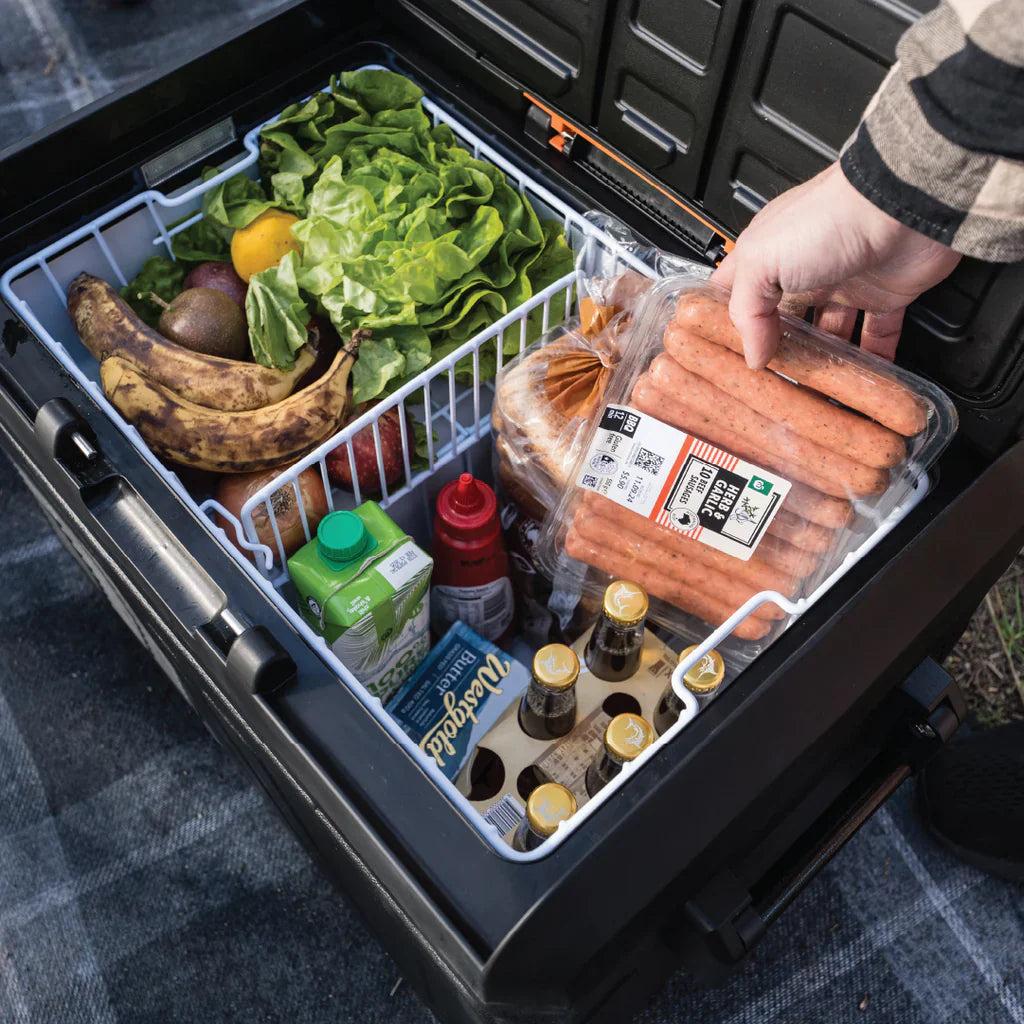
If you’re bringing meat, dairy products, eggs, or other perishable foods, you’ll need reliable cold storage.
That’s where your cooler becomes one of the most important pieces of camping equipment.
For more information, see our next guide:
How to Keep Food Cold While Camping Without a Fridge
How Much Food Should You Bring?
A simple rule is to plan slightly more than you think you’ll need.
Camping plans can change.
You might hike longer than expected or decide to stay at the campsite instead of going into town.
At the same time, don’t bring an enormous amount of food that will create unnecessary waste.
Plan meals first, then add a small amount of extra food for snacks or unexpected situations.
A Simple 2-Night Camping Meal Plan
Here’s an easy example for beginners.
Friday dinner:
Tacos + fruit
Saturday breakfast:
Eggs + bacon + coffee
Saturday lunch:
Sandwiches + snacks
Saturday dinner:
One-pot pasta
Sunday breakfast:
Oatmeal + fruit
Sunday lunch:
Sandwiches or wraps
This is simple, flexible, and doesn’t require a huge amount of cooking equipment.
Camping Food Checklist
Breakfast
- Eggs
- Bacon
- Oatmeal
- Pancake mix
- Fruit
- Coffee
- Tea
Lunch
- Bread
- Tortillas
- Sandwich fillings
- Cheese
- Fruit
- Snacks
Dinner
- Meat or protein
- Vegetables
- Pasta
- Rice
- Tortillas
- Sauce
- Seasonings
Snacks
- Trail mix
- Granola bars
- Nuts
- Jerky
- Crackers
- Dried fruit
Cooking supplies
- Camping stove
- Fuel
- Pot
- Pan
- Knife
- Cutting board
- Utensils
- Plates
- Cups
- Dishwashing supplies
Final Thoughts
The best camping food isn’t necessarily the most impressive.
It’s food that’s easy to transport, easy to cook, and enjoyable after a long day outdoors.
For your first camping trip, start with simple meals and prepare as much as possible at home.
Once you’re comfortable cooking at camp, you can experiment with more complicated recipes.