
Water is one of the easiest things to underestimate when planning a camping trip.
You might remember your tent, sleeping bag, stove, and food, but then realize you don’t have nearly enough water once you arrive at the campground.
So how much water should you actually bring camping?
A good starting point is to plan for drinking, cooking, and cleaning separately. Your total water needs will also depend on the weather, your activity level, the length of your trip, and whether the campground has a reliable source of safe drinking water.
For a simple starting point, the National Park Service suggests about 2 liters of water per person per day or more, especially in very hot conditions.
That doesn’t mean 2 liters is a universal limit. Hot weather, hiking, physical activity, and limited access to water can increase your needs.
How Much Drinking Water Do You Need?
For beginner camping trips, a practical starting point is:
About 2 liters per person per day for drinking, then adjust upward based on conditions and activity.
For example:
| Trip | Starting point |
|---|---|
| 1 person, 1 day | 2+ liters |
| 2 people, 1 day | 4+ liters |
| 2 people, 2 days | 8+ liters |
| 4 people, 2 days | 16+ liters |
These are planning numbers, not strict rules.
If you’re camping somewhere hot or spending most of the day hiking, you’ll likely need more.
Don’t Forget Water for Cooking
Drinking isn’t the only reason you need water at a campsite.
You’ll also need water for things such as:
- Making coffee or tea
- Cooking pasta or rice
- Preparing freeze-dried meals
- Washing fruits and vegetables
- Cleaning cookware
- Washing your hands
The amount depends heavily on what you’re cooking.
A simple one-pot meal may require relatively little water, while cooking pasta and cleaning multiple dishes can use considerably more.
This is one reason it’s helpful to plan your meals before leaving home.
Water for Cleaning
You don’t necessarily need to bring drinking-quality water for every cleaning task.
For example, you may use water for:
- Washing hands
- Cleaning cookware
- Wiping tables
- Rinsing equipment
However, always follow the rules at your campground and avoid contaminating natural water sources.
If you’re camping in the backcountry, water from lakes, rivers, or streams may need to be filtered or purified before drinking or cooking. The National Park Service specifically recommends filtering or purifying backcountry water.
What If Your Campground Has Water?
This can dramatically change how much water you need to carry.
Before leaving home, check whether your campground has:
- Drinking-water taps
- Potable water
- Water fountains
- A campground water station
- Seasonal water availability
Don’t assume that a campground with a bathroom automatically has drinking water.
Always check the campground’s current information before your trip.
If you’re still choosing your campsite, see:
How to Choose a Campsite: 10 Things Beginners Should Check
Hot Weather Means More Water
Hot weather can increase your water needs.
If you’re camping during summer, especially somewhere hot and dry, don’t rely on the minimum amount you would normally drink at home.
Hiking, sweating, cooking outdoors, and spending hours in direct sunlight can all increase your need for fluids.
Bring extra water when conditions are uncertain.
It’s much easier to have unused water at the end of a trip than to run out halfway through it.
How Should You Store Water While Camping?
For car camping, a large water container or camping water jug is usually the easiest option.
You can bring:
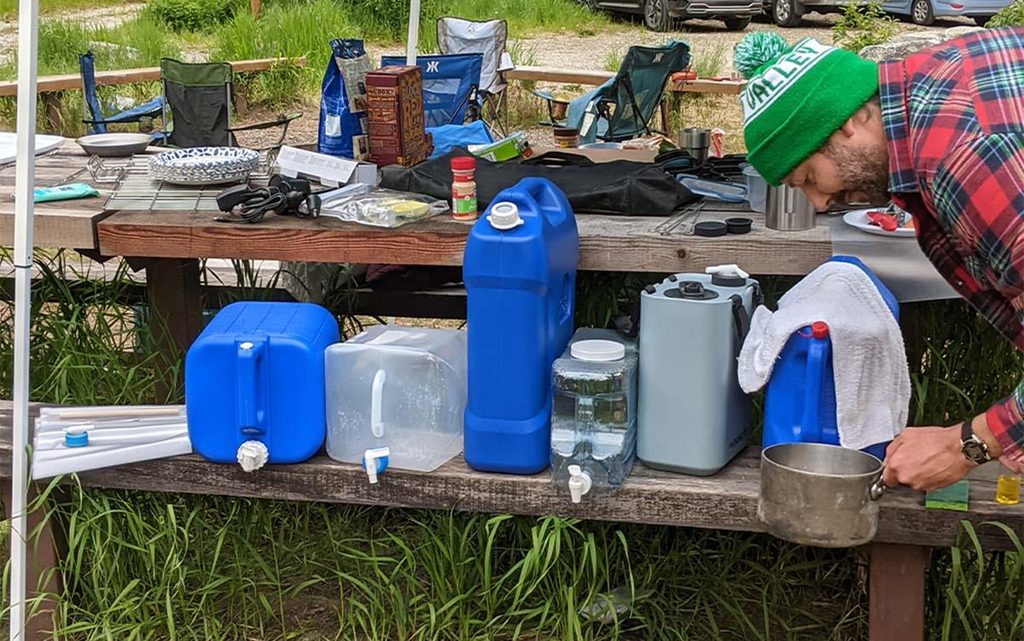
- Large camping water jug
- Reusable water bottles
- Collapsible water container
- Insulated water bottle
- Water reservoir
A large jug works well as your main supply, while smaller bottles make drinking throughout the day easier.
The National Park Service also recommends refillable personal water bottles and notes that collapsible water jugs save space but can sacrifice some durability.
How Much Water Should You Bring for a Weekend?
For a simple two-night car camping trip, start by calculating your water needs per person.
For example:
2 people × 2 days × 2 liters = 8 liters for drinking
Then add additional water for cooking and cleaning.
If the weather is hot or you’ll be hiking, add more.
If your campground has reliable potable water, you may be able to bring less and refill there.
Common Water Mistakes Beginners Make
Bringing only enough water to drink
Cooking and cleaning also require water.
Assuming campground water is always available
Some water systems are seasonal or may be unavailable.
Forgetting hot weather
Your normal water consumption may not be enough during hot-weather camping.
Bringing water in too many small bottles
A large water jug can be much easier for car camping.
Not planning how to transport water
Water is heavy. Make sure your vehicle and camping setup can handle the amount you’re bringing.
Simple Camping Water Checklist
Before leaving, check:
- Drinking water
- Cooking water
- Cleaning water
- Reusable water bottles
- Large water jug
- Extra water for hot weather
- Water filter or purifier if needed
- Campground water availability
Final Thoughts
There isn’t one perfect amount of water for every camping trip.
Start with your drinking needs, then add water for cooking and cleaning. Adjust your plan based on weather, physical activity, trip length, and access to safe drinking water.
For beginners, the safest approach is simple:
Know where your water is coming from, bring enough for the conditions, and always have a backup plan.