
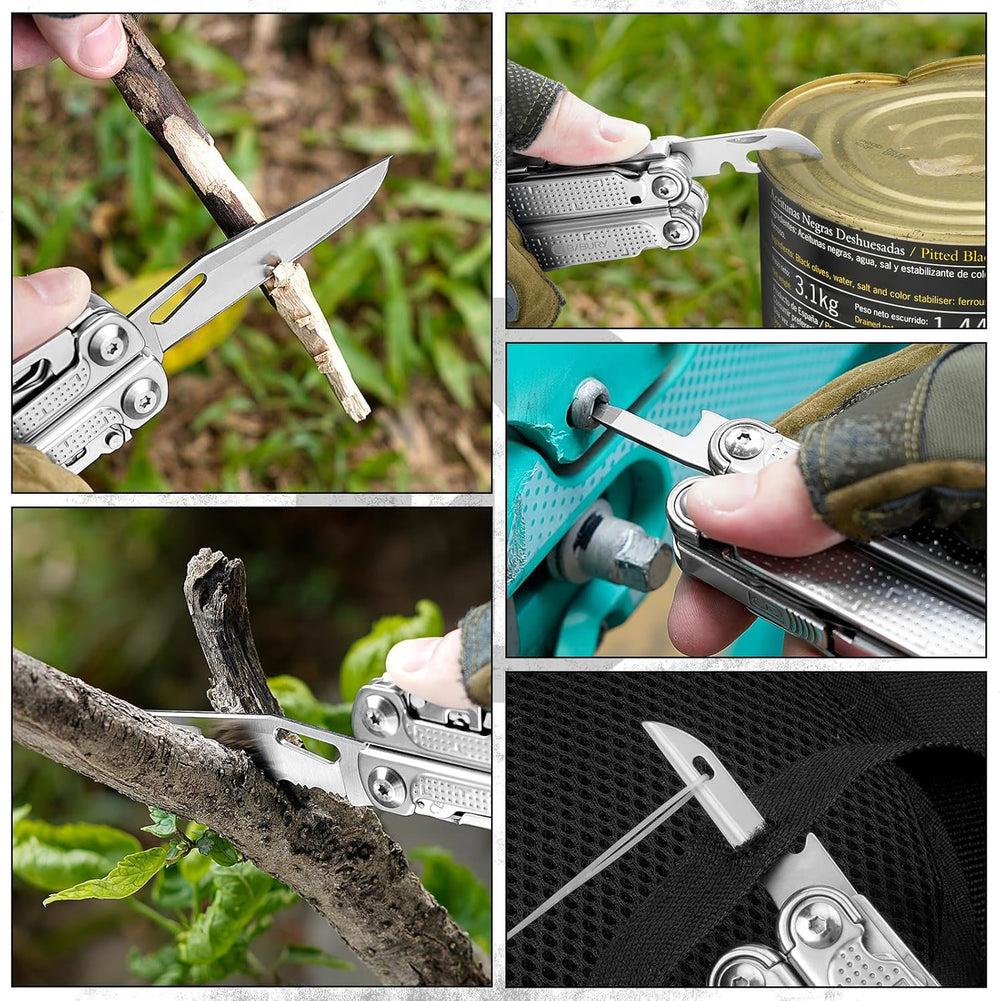
A camping multi-tool can be one of the most useful pieces of gear you bring outdoors.
Instead of carrying several separate tools, a multi-tool combines functions such as pliers, screwdrivers, scissors, and other small tools into one compact package.
But with so many designs and features available, choosing your first camping multi-tool can be confusing.
Do you need a large multi-tool with dozens of functions? Or is a small, lightweight model enough?
The answer depends on how you camp and what you actually expect to use.
In this beginner’s guide, we’ll explain what to look for when choosing a camping multi-tool, including size, weight, functions, materials, locking mechanisms, portability, and camping style.
What Is a Camping Multi-Tool?
A camping multi-tool is a compact tool that combines several useful functions into one device.
Depending on the design, a multi-tool may include:
- Pliers
- Screwdrivers
- Scissors
- Wire cutters
- Bottle opener
- Can opener
- File
- Saw
- Small drivers
- Other specialty tools
The exact combination varies between models.
For camping, the goal isn’t to find the multi-tool with the most functions.
The goal is to find one with the functions you are most likely to use.
Do You Really Need a Camping Multi-Tool?
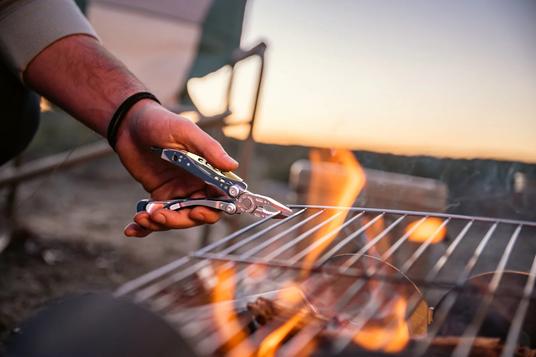
Not every camper needs a multi-tool.
If you mostly stay at developed campgrounds and bring all of your cooking and repair equipment separately, you may rarely use one.
However, a multi-tool can be useful for small tasks around camp.
For example, you might use it to:
- Tighten a loose screw
- Cut cord or small materials
- Make a minor gear adjustment
- Open a package
- Make a quick repair
- Adjust small hardware
- Handle simple campsite tasks
A multi-tool can also serve as a compact backup when you don’t want to bring a full toolbox.
What Should You Look for in a Camping Multi-Tool?
There are several important factors to consider.
1. Choose the Functions You Actually Need
The number of tools isn’t the most important specification.
A multi-tool with 20 functions isn’t necessarily more useful than one with 10.
Think about your normal camping trips.
If you mainly go car camping, useful functions might include:
- Pliers
- Screwdrivers
- Scissors
- Bottle opener
- Can opener
- File
- Wire cutters
If you do more remote or backcountry-style trips, you may value a different combination of tools.
Before buying, look at the tool list and ask yourself:
“How many of these functions will I realistically use?”
That question can prevent you from buying a tool that is unnecessarily large or complicated.
2. Consider the Size
Multi-tools come in many different sizes.
A larger multi-tool can provide more functions, but it can also take up more space and add weight.
A smaller model is easier to carry and store, but it may have fewer functions.
For most beginners, a compact design with the basic tools you actually need is a good starting point.
Think about where you’ll keep it:
- Backpack
- Camping kitchen
- Car
- Gear box
- Jacket pocket
- Emergency kit
Your storage location can help determine the size you need.
3. Pay Attention to Weight
Weight may not seem important when you’re car camping.
But if you carry your gear in a backpack, every additional item adds to your total load.
For car camping, a slightly heavier multi-tool may not matter much.
For hiking or backpacking, a compact and lightweight model may make more sense.
This is one reason you should choose gear based on your camping style rather than simply buying the largest or most feature-packed option.
4. Check the Handle and Grip
A multi-tool should be comfortable to hold.
This becomes especially important when you’re using pliers, screwdrivers, or other tools that require pressure.
Look for:
- A comfortable grip
- Easy access to tools
- A secure feel in your hand
- A design that doesn’t create uncomfortable pressure points
A compact tool can still be uncomfortable if the handles are poorly designed.
If possible, try holding a multi-tool before buying it.
5. Look at the Locking Mechanism
Some multi-tools use locking mechanisms to keep individual tools securely in place.
A lock can help prevent a tool from unexpectedly folding while you’re using it.
This can be particularly useful when applying force.
When comparing models, check how the individual tools open, lock, and release.
You should be able to operate the mechanism confidently without struggling.
6. Consider the Materials
The materials used in a multi-tool affect durability, corrosion resistance, weight, and overall feel.
Many quality multi-tools use stainless steel or other corrosion-resistant metals.
For camping, corrosion resistance can be especially useful because your gear may be exposed to:
- Rain
- Humidity
- Dirt
- Food
- Water
- Sweat
However, even corrosion-resistant tools should be cleaned and dried properly after exposure to moisture.
7. Think About Pliers
Pliers are one of the most useful features on many multi-tools.
They can help with small repair and adjustment tasks around camp.
For example, pliers can be useful for:
- Gripping small parts
- Bending wire
- Holding hardware
- Making minor repairs
If you expect to use your multi-tool for repairs, pay particular attention to the size and design of the pliers.
8. Check the Screwdrivers
Screwdrivers can be surprisingly useful while camping.
Camping equipment often includes small screws and hardware.
A multi-tool may include:
- Flathead screwdriver
- Phillips screwdriver
- Multiple driver sizes
- Interchangeable bits
Before buying, think about the types of screws you are likely to encounter.
There’s little benefit in having several screwdriver functions if none of them fit the equipment you use.
9. Do You Need Scissors?
Scissors are another practical feature.
They can be useful for small tasks such as:
- Cutting cord
- Opening packaging
- Cutting tape
- Trimming small materials
- Handling basic campsite tasks
Some multi-tools have surprisingly capable scissors, while others are designed mainly for very light work.
If scissors are important to you, look at their size and construction rather than simply checking whether “scissors” appears on the feature list.
10. Do You Need a Saw?
Some larger multi-tools include a small saw.
A saw can be useful for certain outdoor tasks, but it shouldn’t automatically be considered an essential feature.
If you’re primarily camping at developed campgrounds, you may rarely need it.
If you spend more time outdoors in remote areas, a saw may have more value.
However, always follow local regulations regarding cutting vegetation or collecting wood.
11. Consider a File
A small file can be useful for smoothing rough edges or handling minor repairs.
It’s not an essential feature for every camper, but it can be useful if you regularly work with small metal or hard-material components.
Again, consider how often you would actually use it.
12. Think About Portability
A good camping multi-tool should be easy to carry and easy to access.
Some models can be carried in:
- A pocket
- A backpack
- A gear pouch
- A tool box
- A vehicle storage compartment
Some also come with a belt pouch or storage case.
If you are going to keep the multi-tool in your camping gear box, portability may matter less.
If you want to carry it during hikes, portability becomes much more important.
13. Choose Based on Your Camping Style
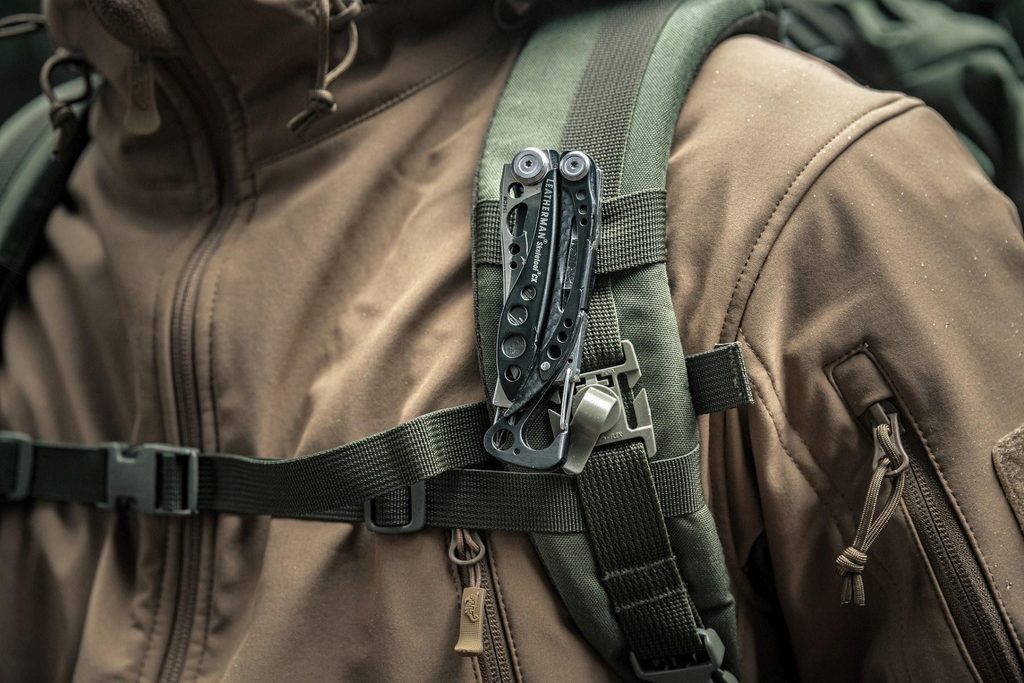
Your camping style should influence your choice.
Car Camping
Car campers can usually carry larger tools because weight and size are less restrictive.
You may prefer a multi-tool with:
- More functions
- Larger pliers
- More robust construction
- More repair options
Backpacking
Backpackers usually need to pay more attention to:
- Weight
- Size
- Essential functions
- Packability
A small multi-tool with only the functions you actually need may be enough.
Road Trips
For road trips, a multi-tool can be useful as part of a larger vehicle and emergency gear kit.
However, it should not replace proper automotive tools or emergency equipment when those are required.
Family Camping
For family camping, a simple and easy-to-use multi-tool can be useful for minor campsite tasks.
Keep it stored securely and away from children.
Multi-Tool vs. Separate Tools
One common question is whether you should buy a multi-tool or carry individual tools.
Both approaches have advantages.
Multi-Tool
Advantages:
- Compact
- Easy to carry
- Multiple functions
- Convenient
- Takes up little storage space
Disadvantages:
- Individual tools can be smaller
- Some functions may be limited
- More difficult to replace one function independently
Separate Tools
Advantages:
- Larger tools
- Better ergonomics
- Easier to choose exactly what you need
- Often better for specialized tasks
Disadvantages:
- Takes more space
- Adds weight
- Requires more organization
For basic camping needs, a multi-tool can provide a convenient middle ground.
How Many Functions Do You Need?
This is one of the biggest questions beginners have.
There is no universal number.
Instead of counting functions, divide them into three groups:
Essential
Functions you expect to use regularly.
Useful
Functions that could be helpful occasionally.
Unnecessary
Functions you probably won’t use.
For example:
Essential:
Pliers, screwdriver, scissors
Useful:
File, bottle opener, wire cutters
Unnecessary:
Specialized tools you have no practical use for
This approach makes it easier to choose a tool that fits your actual needs.
Don’t Buy a Multi-Tool Based Only on the Number of Functions
A common mistake is assuming:
More functions = better multi-tool
That’s not always true.
A multi-tool with a huge number of functions can be:
- Heavier
- Larger
- More expensive
- More complicated
- Less convenient to carry
A simpler tool that you actually use can be much more valuable.
How Much Should You Spend?
You don’t necessarily need the most expensive multi-tool for camping.
A beginner should first determine what functions are actually needed.
Then compare:
- Build quality
- Materials
- Tool selection
- Size
- Weight
- Warranty
- Ease of use
If you’re not sure whether you’ll use a multi-tool often, starting with a simpler model can make more sense than buying a highly specialized one.
How to Take Care of Your Camping Multi-Tool
Proper maintenance can help keep your multi-tool working smoothly.
After camping:
- Remove dirt and debris.
- Wipe off moisture.
- Dry the tool completely.
- Check the moving parts.
- Clean any residue.
- Store it in a dry location.
If the tool becomes wet or dirty during a trip, don’t simply put it away and forget about it.
Moisture and dirt can eventually affect moving parts and metal surfaces.
Common Camping Multi-Tool Mistakes
Mistake 1: Buying Too Many Functions
Don’t pay for functions you won’t use.
Mistake 2: Ignoring Weight
A heavy tool can become annoying to carry, especially when backpacking.
Mistake 3: Choosing the Biggest Model
Bigger doesn’t automatically mean better.
Mistake 4: Ignoring Ergonomics
A tool that is uncomfortable to hold may be frustrating to use.
Mistake 5: Forgetting Storage
Decide where you’ll keep it before buying.
Mistake 6: Treating It Like a Complete Toolbox
A multi-tool is designed for convenience and small tasks.
It isn’t necessarily a replacement for larger specialized tools.
Simple Camping Multi-Tool Checklist
Before buying, ask yourself:
- What functions do I actually need?
- How often will I use them?
- Am I car camping or backpacking?
- How much weight am I willing to carry?
- Is the tool comfortable to hold?
- Are the tools easy to access?
- Do important tools lock securely?
- Is the material suitable for outdoor use?
- Does it fit in my camping storage system?
- Am I paying for features I won’t use?
If you can answer these questions, choosing a camping multi-tool becomes much easier.
Final Thoughts
A camping multi-tool doesn’t need to have the most functions or the most impressive specifications.
The best choice is the one that fits your camping style and gives you the tools you are most likely to use.
For car camping, you can prioritize convenience and a broader selection of functions.
For backpacking, a lightweight and compact design may be more important.
Most importantly, don’t buy a multi-tool simply because it has a long list of features.
Choose the functions you need, consider the size and weight, check the build quality, and make sure the tool is comfortable and practical for your outdoor adventures.
A simple multi-tool that you actually carry can be much more useful than a complicated one that stays at home.
Want to learn more? Check out these related camping guides:
→ Camping Gear for Beginners: What Do You Actually Need?