
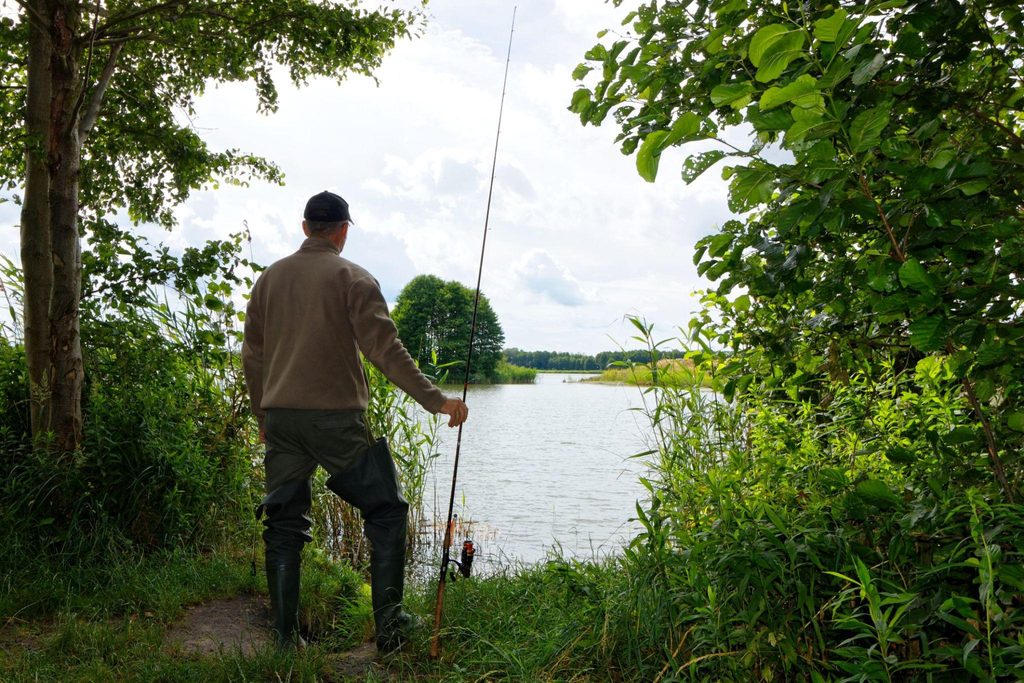
Finding a good fishing spot can feel difficult when you are just starting out.
Many beginners arrive at the water, look around, and simply cast wherever there is open space. While fish can sometimes be caught this way, learning how to observe the water can make your fishing trips much more productive and enjoyable.
Fish do not always spread evenly throughout a lake, river, or shoreline. They often gather around places that provide food, shelter, comfortable water conditions, or protection from strong current.
You do not need advanced equipment to begin learning how to read a fishing spot. By paying attention to the shoreline, water depth, structure, weather, and activity around the water, you can start making better decisions before your first cast.
Here is a simple guide to choosing a fishing spot as a beginner.
1. Start With a Safe and Accessible Location
The first priority should always be safety and legal access.
Choose a location where you can comfortably reach the water without climbing unstable rocks, walking through dangerous terrain, or standing close to steep drops.
Beginner-friendly places may include:
- Calm lake shorelines
- Managed fishing areas
- Accessible riverbanks
- Piers or docks where fishing is permitted
- Designated fishing areas
- Open shorelines with stable footing
Avoid choosing a difficult location simply because it looks adventurous.
A safe and comfortable fishing spot gives you more time to concentrate on learning.
Before fishing, check the local rules for the area. Fishing regulations, access restrictions, seasons, species limits, and licensing requirements can vary depending on where you fish.
2. Look for Changes in the Water
One of the easiest ways to begin reading water is to look for changes.
A completely uniform shoreline may offer fewer obvious clues, while areas where the environment changes can be worth investigating.
Look for places where:
- Shallow water becomes deeper
- Sand changes to gravel
- Rocks appear along the bottom
- Vegetation meets open water
- A shoreline curves inward or outward
- A stream enters a lake
- Fast-moving water meets slower water
- The bottom appears to drop away
These changes can create different conditions for fish and the organisms they feed on.
You do not need to understand every underwater feature immediately. Start by asking a simple question:
“What is different about this section of water?”
That question alone can help you become more observant.
3. Look for Cover and Structure
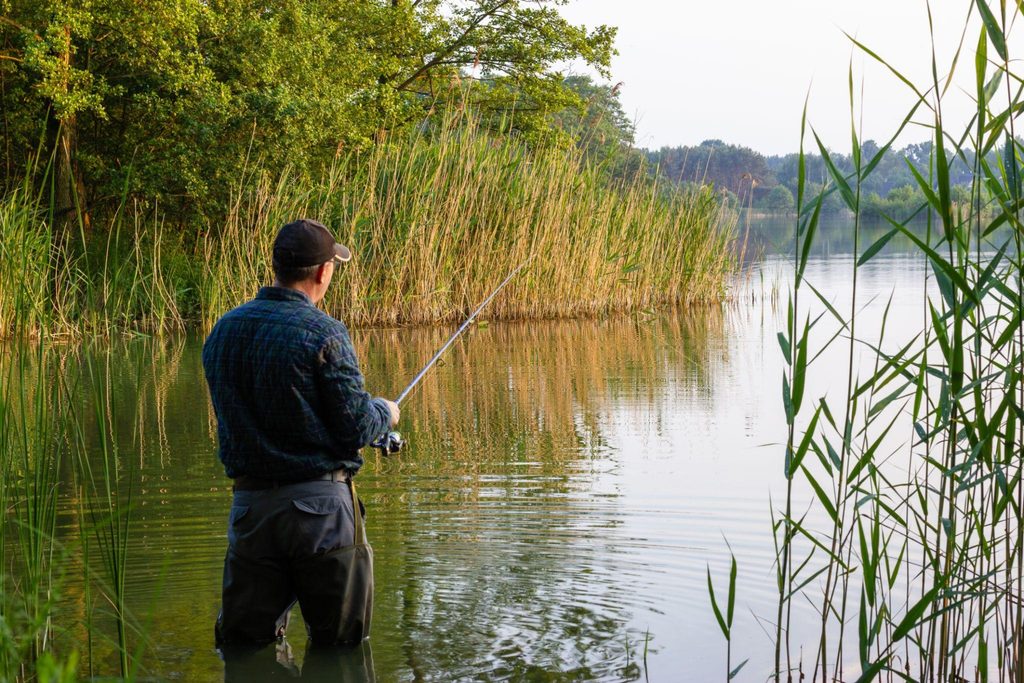
Fish often use underwater or shoreline structure for shelter and feeding opportunities.
Depending on the type of water, useful features can include:
- Rocks
- Fallen branches
- Submerged vegetation
- Docks
- Logs
- Shoreline edges
- Deeper holes
- Drop-offs
- Large underwater objects
These areas can provide places where fish can hide, rest, or find food.
When you see an interesting structure, do not automatically cast directly into it.
Instead, consider casting near the edge.
This can help reduce the chance of getting your hook or lure stuck while still allowing you to fish the area around the structure.
4. Pay Attention to Water Depth
Depth can make a major difference in where fish are found.
You do not need sophisticated equipment to start thinking about depth.
Look for visual clues along the shoreline.
For example, a darker section of water may indicate a deeper area, although water clarity and lighting can affect how the bottom appears.
You can also look for:
- Sudden changes in shoreline shape
- Steep banks
- Drop-offs
- Channels
- Deep sections beside shallow flats
- Areas where the bottom changes
Instead of fishing only the shallowest visible water, try exploring different depths.
If you are using a float or bobber, changing the depth of your bait can also help you learn which part of the water column is producing activity.
5. Watch the Shoreline
The shoreline can tell you a surprising amount about what is happening underwater.
Look closely at the shape of the bank.
A shoreline with rocks, vegetation, fallen trees, or irregular edges can create more varied habitat than a completely uniform bank.
Also pay attention to areas where insects or other small organisms may enter the water.
If you see birds repeatedly feeding in one area, small fish near the surface, insects around the water, or other signs of activity, take a closer look.
You do not have to understand exactly what every sign means.
The goal is to learn how to notice patterns.
6. Look for Moving Water
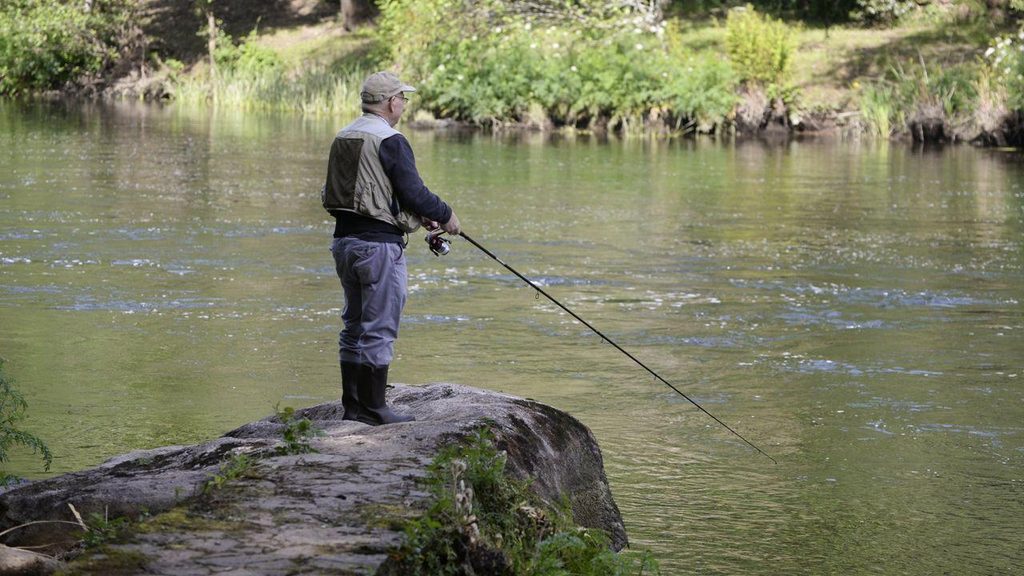
Moving water can create interesting fishing opportunities.
In rivers and streams, fish may not always position themselves directly in the strongest current.
Instead, they may hold in areas where the water moves more slowly while food is carried past them.
Look for places such as:
- The edge of a current
- Behind rocks
- Near bends
- Deeper pools
- Areas where fast and slow water meet
- Inlets and outlets
These areas can create natural transitions in the water.
For beginners, the key is not to chase the strongest current.
Look for places where you can safely fish while observing how the water moves.
7. Pay Attention to Weather and Light
Weather can change the conditions at a fishing spot.
Cloud cover, sunlight, wind, temperature, and recent weather can all influence how the water behaves and how fish use different areas.
On a bright day, shaded areas may be worth investigating.
After a change in weather, water conditions can also be different from what you experienced on your previous trip.
Do not assume that the same location will always fish the same way.
Instead, treat each trip as a chance to observe what has changed.
8. Watch the Surface
The surface of the water can provide useful clues.
Look for:
- Small disturbances
- Fish breaking the surface
- Insects around the water
- Birds actively feeding
- Baitfish moving
- Ripples that appear repeatedly in one area
Not every ripple means fish are feeding.
Wind, falling leaves, insects, and underwater movement can all disturb the surface.
Still, repeated activity in a specific area is worth investigating.
If you notice something unusual, slow down and watch for a moment before casting.
9. Consider Wind Direction
Wind can change the surface of a lake and influence where food and floating material collect.
A windy shoreline may sometimes contain more activity than a completely calm section.
Wind can also make casting more difficult.
As a beginner, avoid choosing a difficult casting position simply because the wind is strong there.
Instead, look for a location where you can safely and comfortably control your cast.
Learning to recognize how wind affects the water is more important than trying to fish in every condition.
10. Do Not Ignore Quiet Areas
A common beginner mistake is assuming that active-looking water is always the best choice.
Sometimes a quiet section can be worth exploring.
Fish may not always be visible on the surface, and underwater activity can be difficult to detect.
If a location has suitable depth, structure, cover, and safe access, it may still be worth trying even when the surface looks completely calm.
Fishing requires patience.
Give a promising location enough time before deciding that it does not contain fish.
11. Move When the Spot Is Not Working
Patience is important, but patience does not mean staying in one place all day.
If you have carefully tried an area without seeing signs of activity, consider moving a short distance.
You can test:
- A different depth
- The other side of a structure
- A nearby shoreline
- A different current edge
- A shaded area
- A deeper section
Moving does not have to mean traveling far.
Sometimes changing your position by a small amount can give you access to completely different water.
12. Start With Easy-to-Understand Water
Beginners can learn faster when the fishing environment is easy to read.
A small lake, calm pond, or accessible shoreline may be easier to understand than a large reservoir, fast river, or exposed coastline.
Look for water where you can clearly see:
- The shoreline
- Different types of cover
- Changes in depth
- Water movement
- Safe casting areas
Once you become comfortable identifying these features, you can gradually move into more complicated environments.
13. Think About Where Food Might Be
Fish need food, so areas with potential food sources can be interesting.
Depending on the location, food may be associated with:
- Aquatic vegetation
- Insects
- Small fish
- Crustaceans
- Other aquatic organisms
You do not need to identify every species.
Instead, observe what appears to be happening around the water.
If insects are active around one shoreline or small fish are repeatedly visible near a certain structure, that area may deserve more attention.
14. Make Your First Cast a Test
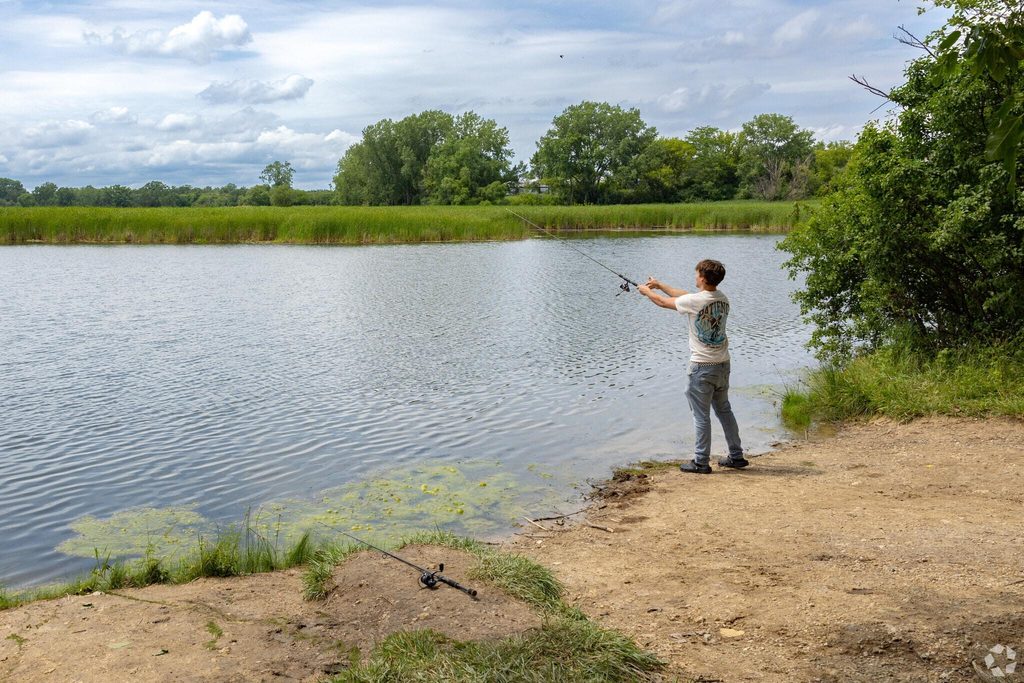
Your first cast does not have to be your longest cast.
Use the first few casts to understand the area.
Pay attention to:
- How deep the water appears to be
- How quickly your bait or lure sinks
- Whether there is vegetation below
- How strong the current is
- Whether the bottom feels rocky or soft
- How much room you have to retrieve safely
These observations can help you decide what to do next.
Fishing is partly a process of collecting information.
Every cast can teach you something about the water.
15. Fish the Area Before Changing Everything
When you find a promising location, avoid changing several things at once.
If you immediately change your bait, depth, casting distance, and location, it becomes difficult to understand what actually made a difference.
Instead, make one change at a time.
For example:
- Keep the same bait.
- Change the depth.
- Make a few casts.
- Observe the result.
- Change the casting position if necessary.
This simple approach helps you learn faster.
Common Beginner Mistakes When Choosing a Fishing Spot
Choosing a fishing location becomes easier when you know what mistakes to avoid.
Common problems include:
- Choosing a spot only because it looks beautiful
- Ignoring local fishing regulations
- Standing on unstable ground
- Fishing directly in strong current
- Casting without checking behind you
- Focusing only on distance
- Ignoring water depth
- Ignoring structure and cover
- Staying in one place for too long
- Changing too many things at once
- Assuming every visible ripple means fish
- Fishing conditions that are beyond your experience
A good fishing spot is not simply a place where fish might exist.
It should also be a place where you can fish safely, legally, and comfortably.
A Simple Fishing Spot Checklist
Before you start fishing, ask yourself:
- Is fishing allowed here?
- Is the access safe?
- Can I stand comfortably?
- What changes do I see in the water?
- Where are the shallow and deeper areas?
- Is there structure or cover?
- Is there moving water?
- Where does the wind push surface water?
- Are there signs of feeding activity?
- Can I cast safely?
- Is there enough space behind me?
- Can I move to another position if necessary?
You do not need to answer every question perfectly.
The purpose is to develop the habit of observing the environment before making your first cast.
A Simple Way to Read Water
When you arrive at a new fishing location, use this simple process:
Observe → Identify → Test → Adjust → Move
Observe
Spend a few minutes looking at the water before casting.
Identify
Find changes in depth, structure, cover, current, shade, and surface activity.
Test
Make controlled casts around promising areas.
Adjust
Change one variable such as depth, casting angle, bait, or position.
Move
If the area does not produce useful information or activity, try another nearby location.
This approach keeps fishing simple while helping you learn from every trip.
Final Thoughts
Choosing a fishing spot is a skill that develops with experience.
You do not need expensive equipment or advanced knowledge to begin learning how to read the water.
Start by looking for safe access, changes in depth, structure, cover, moving water, shoreline features, and signs of activity.
Then make a few careful casts and pay attention to what the water tells you.
Some days you will catch fish quickly. Other days you may spend hours learning without getting a bite.
Both experiences can help you become a better angler.
The more time you spend observing the water instead of simply casting at random, the easier it becomes to understand where and how you want to fish.