
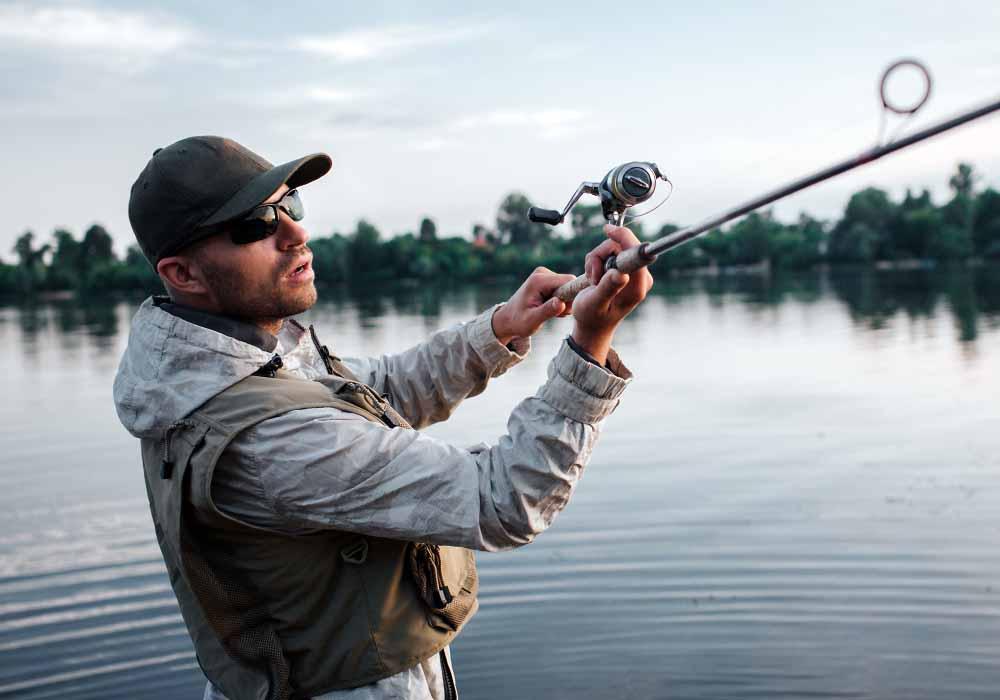
Learning how to cast a fishing rod is one of the first skills every beginner should practice.
A good cast does not require maximum strength. Instead, it comes from controlled movement, proper timing, a comfortable stance, and a smooth release. Once you understand these basics, casting becomes easier and more consistent.
For beginners, the goal should not be to cast as far as possible. It is more important to learn how to control the direction, distance, and landing point of the lure or bait.
This guide explains how to practice casting step by step and how to avoid some of the most common beginner mistakes.
1. Start With the Right Fishing Setup
Before practicing your cast, make sure your rod, reel, line, and lure or bait are appropriate for the type of fishing you plan to do.
A setup that is too heavy or difficult to control can make learning more frustrating. Beginners generally benefit from equipment that feels comfortable in their hands and is easy to operate.
You should also make sure the line is properly connected and that the lure or bait is securely attached.
A simple setup makes it easier to focus on technique.
2. Choose an Open Practice Area
Your surroundings are just as important as your equipment.
Before casting, look around you carefully. Make sure there are no people, trees, branches, power lines, or other obstacles near the casting path.
A clear area gives you more room to practice without worrying about accidentally catching something other than a fish.
When fishing from shore, choose a stable area with enough space behind and beside you for a controlled casting motion.
3. Check Behind You Before Every Cast
One of the most important casting habits is looking behind you before moving the rod.
Fishing hooks can travel quickly, and an uncontrolled cast can cause serious injuries.
Before each cast:
- Look behind you.
- Check both sides.
- Make sure nobody is within the casting area.
- Check for branches and overhead obstacles.
- Make sure your line is clear.
Developing this habit early can make casting much safer.
4. Hold the Rod Comfortably
Do not grip the fishing rod as tightly as possible.
Hold it firmly enough to maintain control while keeping your hand and wrist relatively relaxed.
A comfortable grip allows the rod to move naturally instead of forcing the entire movement with your arm.
Your goal is controlled movement rather than maximum power.
5. Stand With a Stable Stance
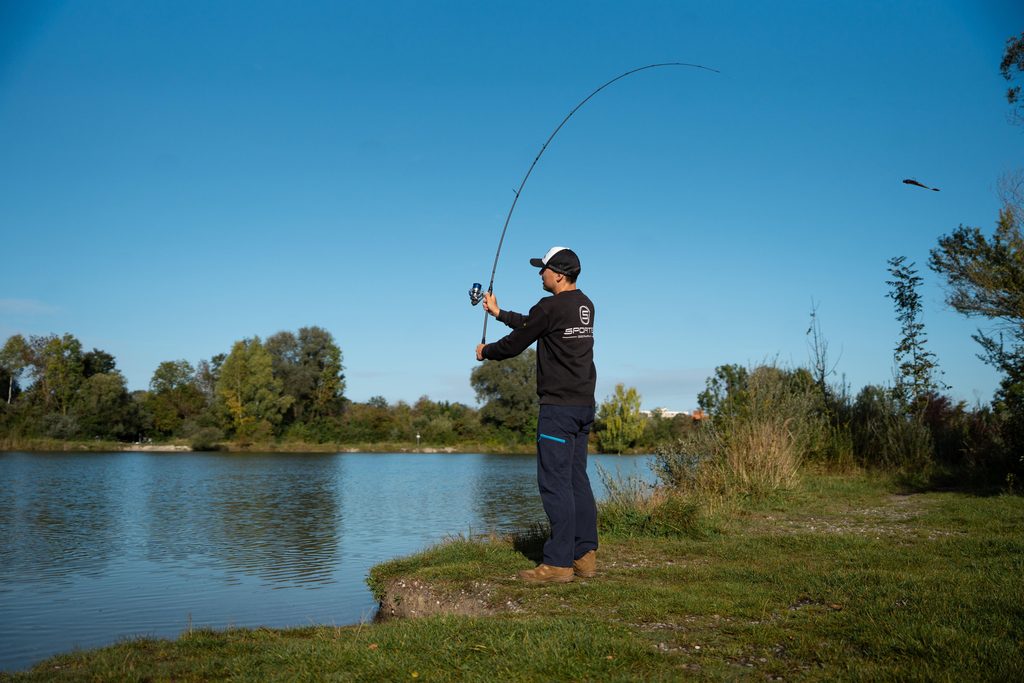
Your feet should give you a stable foundation.
Stand with your feet approximately shoulder-width apart and keep your knees slightly relaxed.
Avoid leaning too far backward or forward.
A balanced stance makes it easier to control the rod and maintain your position during the cast.
If you are fishing near water, pay particular attention to the ground beneath your feet. Wet rocks, mud, loose gravel, and uneven surfaces can make casting more difficult.
6. Learn the Basic Casting Motion
For many beginner fishing setups, casting involves bringing the rod into position, moving it smoothly through the casting motion, and releasing the line at the appropriate moment.
The exact technique depends on the type of reel and rod you are using.
Instead of trying to create a large movement, begin with a short and controlled motion.
Practice the sequence slowly:
Prepare → Move → Release → Follow Through
Once the movement becomes familiar, you can gradually increase the distance.
7. Focus on Timing Rather Than Strength
One of the most common beginner mistakes is trying to throw the lure as hard as possible.
More power does not automatically create a better cast.
Casting depends heavily on timing. If you release too early or too late, the lure may travel in an unexpected direction.
A smooth movement with good timing is usually easier to control than a powerful movement with poor timing.
8. Practice Short Casts First
You do not need to begin by trying to reach the opposite side of a lake.
Start with short casts.
A short casting distance allows you to focus on:
- Rod movement
- Line control
- Release timing
- Direction
- Accuracy
Once you can repeatedly place the lure where you want it, gradually increase the distance.
Accuracy should come before distance.
9. Learn to Control Direction
A useful cast is not necessarily the longest cast.
Being able to place your lure near a specific area can be more valuable than simply throwing it as far as possible.
Look toward your intended landing area before casting.
Choose a simple target such as:
- A point near the shoreline
- An open section of water
- A visible marker
- An area beside suitable cover
- A specific distance from the bank
Practice landing your lure near the same target repeatedly.
10. Use Your Whole Body Naturally
Casting does not need to come entirely from your arm.
Your stance, shoulders, arms, wrists, and the movement of the rod can work together.
However, beginners should avoid exaggerated body movements.
A smooth and controlled motion is easier to repeat and generally produces more consistent results.
As your technique improves, you will naturally become more efficient.
11. Avoid Snapping the Rod Aggressively
A sudden, aggressive movement can make the cast difficult to control.
It can also create unnecessary strain on your equipment.
Think about accelerating the rod smoothly rather than suddenly jerking it.
The rod should become part of the casting motion instead of being treated like something you need to force forward.
12. Learn What Happens When You Release Too Early
Release timing changes the direction of the cast.
If you release too early, the lure may travel higher than intended.
If you release too late, the lure may travel lower or closer to you.
Instead of becoming frustrated, use these mistakes as feedback.
Change your timing slightly and observe how the landing point changes.
This is one of the fastest ways to understand how your particular setup behaves.
13. Practice With a Consistent Target
Choose one target and repeat the same cast several times.
For example, you could choose a point approximately 10 to 20 feet away in a safe open area.
Try to place the lure near the target repeatedly.
Then gradually move the target farther away.
This type of practice helps you develop consistency instead of relying on random casts.
14. Learn to Control the Landing
A good cast does not end when the lure reaches the target.
You should also pay attention to how the lure lands.
A controlled landing can help prevent unnecessary splashing and reduce the chance of disturbing the area you want to fish.
As you gain experience, practice slowing or controlling the line near the end of the cast when your equipment and technique allow it.
15. Watch Your Line
Beginners often concentrate entirely on the lure.
However, the fishing line also provides useful information.
Watch how the line leaves the reel and how it travels through the air.
If the line repeatedly creates tangles or unexpected loops, check your technique and equipment rather than simply casting harder.
Small changes in movement can make a noticeable difference.
16. Learn From Your Missed Casts
A missed cast is useful information.
If the lure consistently lands too far to one side, your direction or release timing may need adjustment.
If it repeatedly lands too short, you may need a smoother acceleration or slightly different release.
Instead of changing several things at once, change one part of your technique and try again.
This makes it easier to understand what actually improved the cast.
17. Practice Without Fish as the Goal
You do not need to catch fish every time you practice casting.
The purpose of practice is to develop control.
Spend some time focusing only on:
- Distance
- Accuracy
- Smooth movement
- Release timing
- Line control
Once these skills become comfortable, you can concentrate more on fishing itself.
18. Adjust Your Cast to the Environment
Casting technique should change depending on where you are fishing.
A wide open shoreline gives you more room for movement.
A narrow riverbank may require a shorter or more controlled cast.
Trees, vegetation, rocks, docks, boats, and other anglers can also limit your casting space.
Always adapt your technique to the environment rather than forcing the same cast everywhere.
19. Be Careful When Fishing Near Other People
Fishing areas can become crowded, especially around popular shorelines, piers, and public access points.
Give other anglers enough space.
Before casting, check the entire path of the lure and line.
Never assume that someone behind you is paying attention.
A quick visual check should become part of your normal casting routine.
20. Practice Casting in Different Conditions
Once you are comfortable in calm conditions, you can gradually practice in more realistic environments.
Wind can affect both the line and the lure.
Strong wind may reduce casting accuracy and can make line control more difficult.
Water conditions, vegetation, and available space can also change how you approach a cast.
Learning to adapt is more useful than trying to memorize one perfect casting motion.
21. Avoid These Common Beginner Casting Mistakes
Several mistakes appear frequently when people first learn to cast.
Casting Too Hard
Trying to maximize distance often reduces control.
Ignoring the Area Behind You
Always check your surroundings before casting.
Starting With Long Casts
Long-distance casting can hide basic technique problems.
Holding the Rod Too Tightly
A tense grip can make smooth movement more difficult.
Changing Everything at Once
If you change your grip, stance, release, and power simultaneously, it becomes difficult to understand what caused an improvement.
Focusing Only on Distance
A shorter accurate cast can be more useful than a long inaccurate one.
Ignoring the Ground
Unstable footing near water can create a safety problem.
22. A Simple Beginner Casting Practice Routine
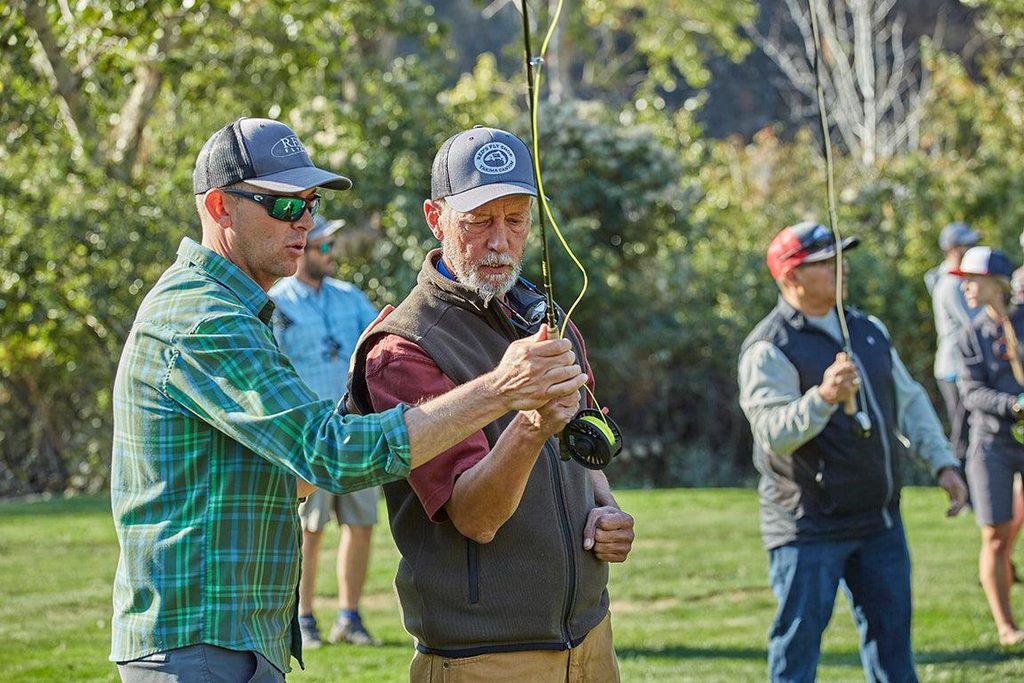
You can practice casting without spending an entire day fishing.
Try this simple routine in a safe open area.
Step 1: Warm Up
Make a few slow practice movements without focusing on distance.
Step 2: Short Casts
Make several short casts toward one target.
Step 3: Check Accuracy
Notice where the lure lands relative to your target.
Step 4: Adjust One Thing
Change only your release timing, direction, or power.
Step 5: Repeat
Make several more casts and compare the results.
Step 6: Increase Distance
Only move farther away from the target once your shorter casts become consistent.
This approach makes practice simple and measurable.
23. Beginner Casting Checklist
Before practicing or fishing, check the following:
- Fishing rod is comfortable to hold
- Reel is working correctly
- Line is properly connected
- Lure or bait is secure
- Casting area is clear
- Area behind you is clear
- Ground is stable
- Target area is identified
- Weather and water conditions are suitable
- You can control the rod comfortably
- You are starting with a manageable distance
- You are focusing on accuracy before distance
24. A Simple Casting Formula for Beginners
A useful way to remember the basic process is:
Safety → Stance → Smooth Motion → Timing → Accuracy → Distance
Start by creating a safe environment.
Then build a stable stance and comfortable grip. Practice a smooth casting motion and learn the correct release timing.
Once you can control the direction, gradually work on increasing distance.
This progression is much easier than trying to master everything at once.
Final Thoughts
Learning how to cast a fishing rod takes practice, but beginners do not need to master complicated techniques immediately.
Start with a simple setup, choose an open and safe practice area, and focus on smooth movement rather than maximum power.
Short and accurate casts are a strong foundation. As your timing, direction, and line control improve, longer casts will become easier and more natural.
The most important thing is to practice consistently and learn from each cast.
Start simple, cast smoothly, and let accuracy come before distance.