
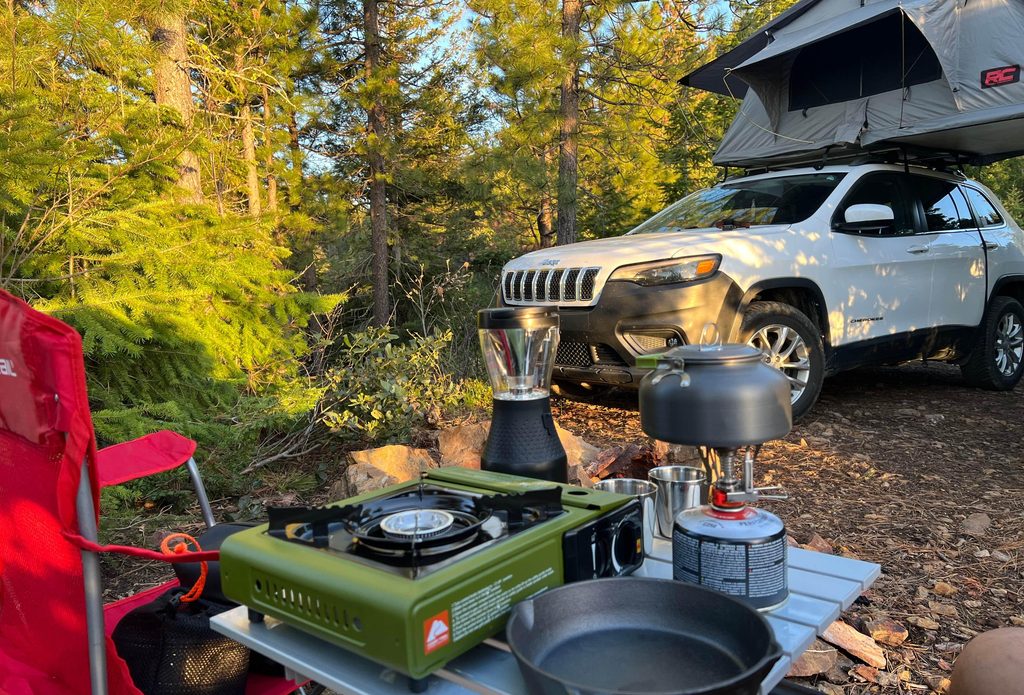
Choosing your first camping stove can be confusing. Walk into an outdoor store or browse online, and you’ll find small canister stoves, larger propane stoves, wood-burning stoves, and many variations in between.
The good news is that you don’t need the most expensive or complicated stove to cook good food at a campsite.
The right camping stove depends mainly on how you camp, how many people you cook for, the type of food you make, and what fuel is convenient for you.
In this guide, we’ll compare three common camping stove types:
- Canister camping stoves
- Propane camping stoves
- Wood-burning camping stoves
By the end, you’ll have a better idea of which type makes sense for your camping setup.
Canister Camping Stoves
Canister stoves use small pressurized fuel canisters, usually containing a fuel such as isobutane or a propane/isobutane mixture.
They are especially popular with backpackers because they are compact, lightweight, and easy to pack.
Many canister stoves screw directly onto the top of the fuel canister.
Pros of Canister Stoves
Lightweight and compact
Canister stoves take up very little space. This makes them a good option when weight and pack size matter.
Easy to set up
Most models require only a few simple steps. Attach the stove to the fuel canister, place your pot on the burner, and you’re ready to cook.
Good for simple meals
A canister stove works well for boiling water, heating soup, cooking pasta, making coffee, and preparing other simple campsite meals.
Easy flame control
Many models allow you to adjust the flame, giving you better control over cooking temperature.
Cons of Canister Stoves
Fuel canisters need to be purchased
Unlike wood-burning stoves, you need to carry the appropriate fuel canister.
Canisters take up space
If you’re going on a longer trip, you’ll need to plan how much fuel to bring.
Cold temperatures can affect performance
Some canister fuels perform less effectively in very cold conditions. The exact performance depends on the fuel mixture, stove design, and weather conditions.
Who Should Choose a Canister Stove?
A canister stove is a great choice if you:
- Go backpacking or lightweight camping
- Usually cook simple meals
- Want a compact cooking system
- Camp with one or two people
- Want a stove that’s quick to set up
For many beginners, a canister stove is one of the simplest ways to start cooking outdoors.
Propane Camping Stoves
Propane camping stoves are common in car camping and family camping setups.
Unlike compact canister stoves, traditional propane camp stoves are usually larger and designed to sit on a table or other stable surface.
Many models have one or two burners, making them feel more like a small outdoor kitchen.
Pros of Propane Stoves
Great for car camping
If you’re driving to your campsite, the additional size and weight are usually less important.
Multiple burners
Two-burner models allow you to cook different foods at the same time.
For example, you can cook eggs on one burner while heating coffee or water on the other.
Good for larger meals
Propane stoves are convenient when you’re cooking for a family or group.
Excellent temperature control
Many propane camp stoves offer adjustable burners, making it easier to simmer, boil, and cook different types of food.
Cons of Propane Stoves
Larger and heavier
Traditional propane stoves take up considerably more space than compact canister stoves.
You need to carry propane
You’ll need an appropriate propane cylinder or bottle and should plan your fuel supply before leaving home.
Less convenient for backpacking
Their size and weight make traditional propane camp stoves better suited to car camping than carrying long distances.
Who Should Choose a Propane Stove?
A propane stove is a strong choice if you:
- Mainly go car camping
- Cook for several people
- Want two burners
- Prepare full meals at camp
- Don’t care about carrying extra weight
- Want a more traditional outdoor cooking setup
For family camping and weekend car camping, a propane stove is often one of the most practical options.
Wood-Burning Camping Stoves
Wood-burning stoves use small pieces of natural wood or other permitted biomass as fuel instead of a traditional fuel canister or propane cylinder.
Some models are compact and designed for backpacking, while others are larger and intended for specific camping situations.
Pros of Wood-Burning Stoves
You don’t need to carry as much fuel
When conditions and local regulations allow you to collect suitable dead and downed wood, you may be able to reduce the amount of fuel you carry.
Unique camping experience
Cooking over wood can create a more traditional outdoor cooking experience.
No propane cylinder or fuel canister
You don’t have to rely on conventional camping fuel when suitable wood is available and fires are permitted.
Cons of Wood-Burning Stoves
Weather matters
Wet conditions can make finding dry fuel difficult.
Requires more attention
Wood-burning stoves generally require more active fuel management than gas stoves.
Smoke and soot
Wood fires can produce smoke and leave soot on cookware.
Fire restrictions
This is extremely important.
Many parks and camping areas restrict or prohibit wood fires during certain conditions. Always check local regulations before using a wood-burning stove.
Who Should Choose a Wood-Burning Stove?
A wood-burning stove may appeal to campers who:
- Enjoy traditional outdoor cooking
- Don’t mind managing a fire
- Camp where wood fires are permitted
- Understand local fire regulations
- Don’t mind a little extra cleanup
It’s generally not the easiest choice for a first-time camper who simply wants quick and convenient meals.
Canister vs Propane vs Wood: Quick Comparison
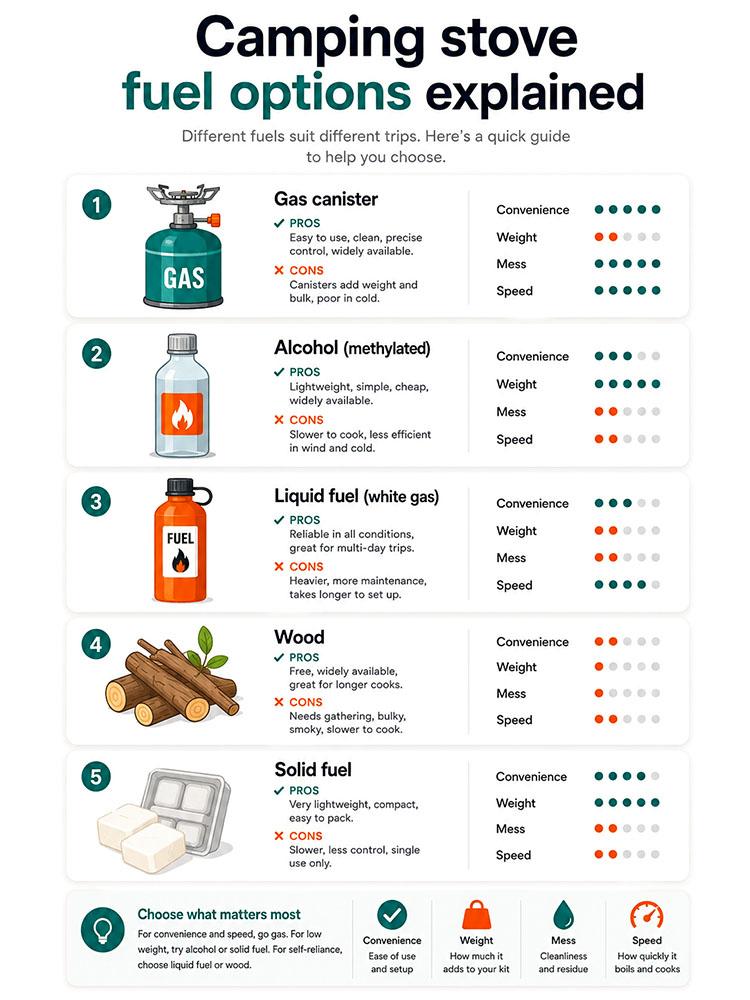
| Feature | Canister | Propane | Wood |
|---|---|---|---|
| Size | Small | Larger | Varies |
| Weight | Lightweight | Heavier | Varies |
| Setup | Very easy | Easy | Moderate |
| Best for | Backpacking & simple meals | Car & family camping | Traditional cooking |
| Multiple burners | Usually no | Often yes | Usually no |
| Fuel carried | Canister | Propane | Wood when available |
| Weather sensitivity | Cold can affect performance | Generally reliable | Wet wood can be difficult |
| Cooking style | Simple meals | Full meals | Fire-based cooking |
| Cleanup | Easy | Easy | More cleanup |
| Beginner friendly | Yes | Yes | Less convenient |
Which Camping Stove Is Best for Beginners?
For most beginners, the best choice comes down to how you plan to camp.
Choose a Canister Stove If You Want Simplicity
If you’re camping alone or with one other person and mostly want to boil water, make coffee, heat food, or prepare simple meals, a canister stove is an excellent starting point.
It’s compact, easy to pack, and doesn’t require a large cooking setup.
Choose a Propane Stove If You Car Camp
If you’re driving directly to the campsite and cooking meals for two or more people, a propane stove can make camping much easier.
The larger size isn’t a major problem when your vehicle is carrying your equipment.
A two-burner stove can also make meal preparation much more convenient.
Choose a Wood Stove If You Enjoy Traditional Camping
Wood-burning stoves are more specialized.
They can be fun if you enjoy cooking with wood and spending more time around a fire, but they’re not necessarily the easiest option for someone who simply wants convenient campsite cooking.
How Many Burners Do You Need?
The number of burners you need depends on your cooking style.
One Burner
One burner is usually enough for:
- One or two campers
- Coffee
- Instant meals
- Boiling water
- Simple soups
- Backpacking meals
Two Burners
Two burners become useful when you’re cooking more complicated meals.
For example:
Burner 1: Cook eggs or meat
Burner 2: Heat water or cook vegetables
This is one reason two-burner propane stoves are popular with car campers and families.
You don’t necessarily need two burners just because you camp regularly.
If your meals are simple, one burner may be enough.
What Fuel Should You Bring?
The amount of fuel you need depends on several factors:
- Number of people
- Number of meals
- Cooking time
- Stove efficiency
- Weather
- Type of food
- Whether you’re boiling water or cooking from scratch
For example, boiling water for coffee requires a very different amount of fuel than cooking a large dinner every night.
Don’t automatically assume that a larger fuel supply is always better.
Instead, think about your actual cooking schedule and bring enough fuel for the trip with some reasonable backup.
We’ll cover how to estimate your camping fuel needs in more detail in the next guide.
Where Should You Use Your Camping Stove?
Always use your camping stove in a safe, well-ventilated outdoor location and follow the manufacturer’s instructions.
Never use a fuel-burning camping stove inside a tent.
Even if the weather is cold or rainy, bringing a stove inside an enclosed tent creates serious risks, including fire and carbon monoxide exposure.
If weather becomes a problem, look for a safe cooking area specifically designed for outdoor use or follow the rules of the campground.
Don’t Forget About Your Cookware
Your stove is only one part of your camping kitchen.
You’ll also need cookware that matches the stove and the type of meals you plan to prepare.
A simple setup might include:
- One pot
- One frying pan
- Spatula or cooking utensil
- Plate or bowl
- Cup
- Knife
- Cutting board
- Fuel
- Lighter or ignition system
You don’t need a complete kitchen set for your first camping trip.
Start simple and add equipment as you discover what you actually use.
For more help, see our guide on How to Choose a Camping Stove: A Beginner’s Guide.
How to Choose the Right Camping Stove
Before buying a stove, ask yourself these five questions:
1. How Do You Usually Camp?
Backpacking and car camping require very different equipment.
If you’re carrying everything on your back, weight matters.
If you’re driving to the campsite, convenience may matter more.
2. How Many People Are You Cooking For?
One person has very different cooking needs from a family of five.
More people usually means more cookware, more food, and potentially more burners.
3. What Kind of Food Do You Cook?
If you mainly boil water, you don’t need a large two-burner stove.
If you enjoy cooking full meals, additional burner space can be useful.
4. How Long Are Your Trips?
A one-night trip requires less fuel than a week-long camping trip.
Think about fuel availability and storage before choosing your stove.
5. Where Will You Camp?
Weather, altitude, fire restrictions, and local regulations can all affect which stove makes sense.
A stove that’s perfect for one camping environment may not be ideal somewhere else.
A Simple Beginner Recommendation
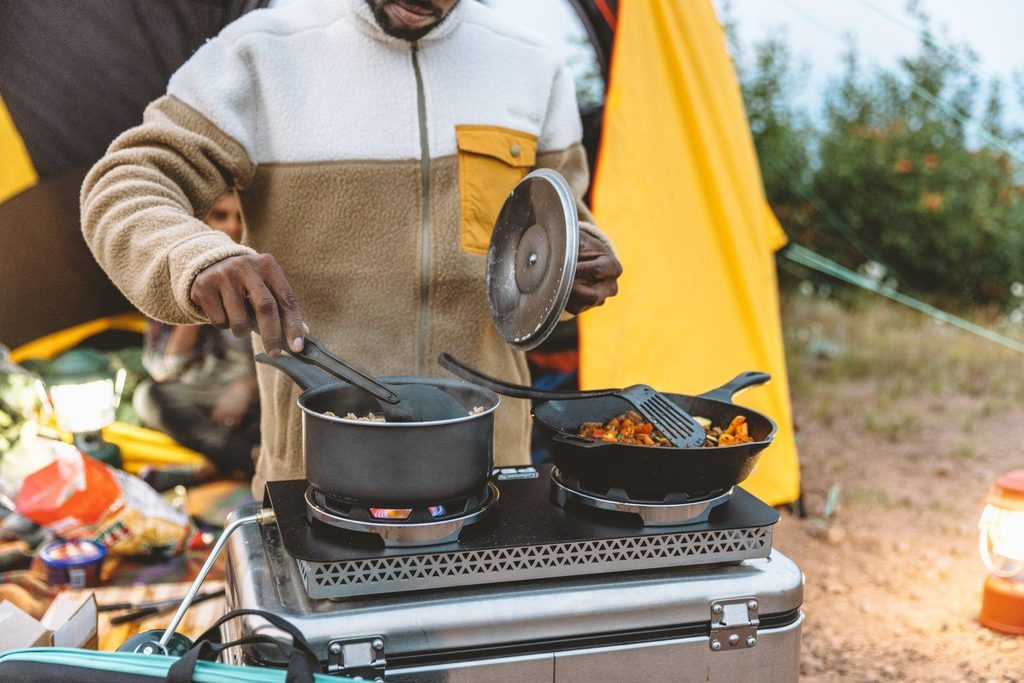
If you’re still not sure what to buy, keep it simple.
For backpacking: Start with a compact canister stove.
For car camping: Consider a one- or two-burner propane stove.
For traditional fire-based cooking: Consider a wood-burning stove where permitted.
You don’t need to buy the most powerful stove or the most expensive model.
Your first stove should match your actual camping style.
Final Thoughts
There isn’t one camping stove that’s perfect for everyone.
Canister stoves are compact and lightweight. Propane stoves are convenient for car camping and larger meals. Wood-burning stoves offer a more traditional experience but require more attention to fuel, weather, and fire regulations.
The best camping stove is the one that fits the way you actually camp.
Start with your camping style, cooking habits, group size, and typical weather conditions. Then choose the stove that makes outdoor cooking easier rather than adding unnecessary complexity.
And remember: simple camping gear is often enough to have a great trip.
Once you’ve chosen your stove, the next question is just as important: How much fuel do you actually need for a camping trip?
Want to learn more? Check out these related camping guides:
→ How Much Fuel Do You Need for a Camping Trip?
→ How to Choose a Camping Stove: A Beginner’s Guide