
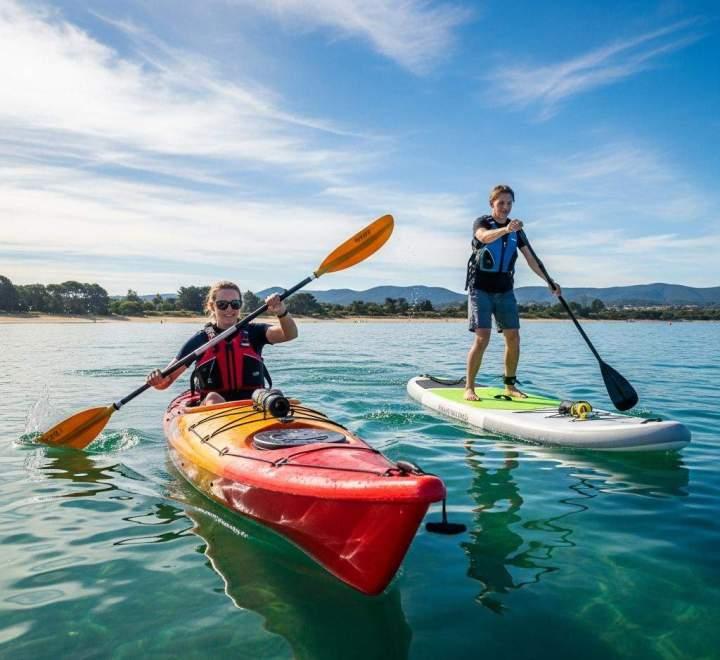
Trying a water sport for the first time can be exciting, but good preparation makes the experience much safer and more enjoyable.
You do not need to be an expert swimmer or have years of outdoor experience to enjoy activities such as kayaking, paddleboarding, canoeing, snorkeling, or other beginner-friendly water activities.
What matters most is choosing an activity that matches your current ability, understanding the environment, preparing the right safety equipment, and knowing when to stop.
This guide explains how beginners can prepare for their first water sports adventure without making the experience unnecessarily complicated.
1. Choose a Water Sport That Matches Your Experience
Start with the activity rather than the equipment.
Different water sports require different skills and levels of comfort around water.
For example:
- Kayaking can be a good choice for people who enjoy sitting and paddling.
- Paddleboarding requires more balance because you stand on the board.
- Canoeing involves paddling while seated or kneeling.
- Snorkeling requires comfort in the water and basic swimming ability.
- Swimming can be a simple way to become more comfortable in the water.
Do not choose an activity simply because it looks exciting.
Your first goal should be to become comfortable with the activity and environment.
You can always try something more challenging later.
2. Be Honest About Your Swimming Ability
Being able to swim does not automatically mean you are prepared for every water sport.
Open water can be very different from a swimming pool.
Waves, currents, wind, cold water, limited visibility, and distance from shore can make a familiar activity much more difficult.
Before your first trip, ask yourself:
- Can I swim comfortably?
- Can I stay calm if I fall into the water?
- Am I comfortable in deeper water?
- Can I get back onto my equipment if I fall?
- Would I know what to do if the weather changed?
If you are not confident in the water, choose an activity and location where you can remain close to shore and receive proper instruction.
3. Start in Calm Water
Your first water sports experience does not need dramatic scenery or difficult conditions.
Calm water is usually a better place to learn basic skills.
Look for an appropriate beginner area with:
- relatively calm water
- easy access to shore
- suitable launch and landing areas
- clear local rules
- available safety assistance
- conditions appropriate for your activity
Avoid starting in strong currents, large waves, offshore areas, or places where getting back to shore would be difficult.
The goal of your first session is learning, not proving how adventurous you are.
4. Check the Weather Before You Leave
Weather can change the difficulty of a water activity dramatically.
Wind can make paddling harder. Waves can become larger. Rain can reduce visibility. Cold temperatures can make an unexpected fall into the water much more serious.
Check the forecast before leaving and pay attention to:
- wind
- rain
- thunderstorms
- temperature
- water temperature
- wave conditions
- current conditions
If conditions are deteriorating, changing your plans is part of good preparation.
Do not wait until you are already on the water to decide that conditions are too difficult.
5. Wear the Right Safety Equipment
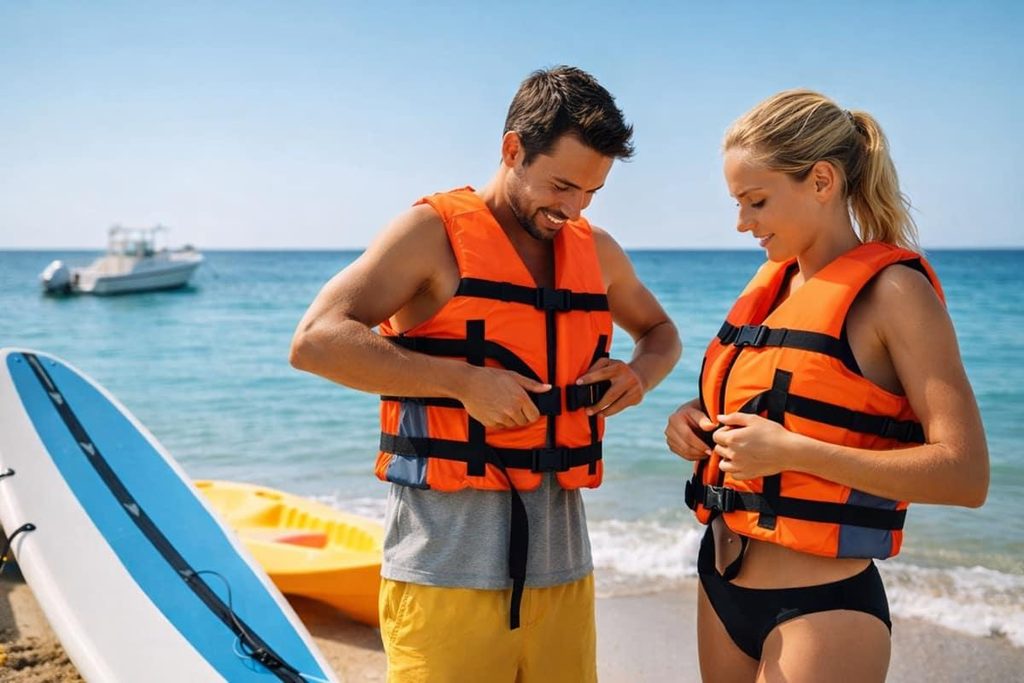
A properly fitted life jacket or other appropriate flotation equipment should be one of the first things you prepare.
Current Korean water-safety guidance emphasizes wearing an appropriate life jacket during water activities, and water leisure regulations also specify safety equipment requirements for different activities.
Before entering the water, make sure your equipment:
- fits correctly
- is secured properly
- is appropriate for the activity
- is in good condition
- does not interfere with movement
Depending on the activity and conditions, additional equipment may include a helmet, leash, protective clothing, footwear, communication device, or other safety equipment.
Do not treat safety equipment as optional simply because the water looks calm.
6. Dress for the Water, Not Just the Air
A warm day does not necessarily mean warm water.
Water temperature can be significantly different from air temperature, and unexpected immersion can become dangerous surprisingly quickly.
Cold-water safety guidance recommends considering water temperature when choosing clothing and equipment rather than looking only at the weather above the water.
Depending on the activity and conditions, you may need:
- quick-drying clothing
- thermal layers
- a wetsuit
- a waterproof layer
- water shoes
- sun protection
- extra dry clothing
Think about what happens if you fall into the water, not just how comfortable you will be while staying dry.
7. Learn How to Fall Safely
Beginners often worry about falling into the water.
For many activities, falling is simply part of learning.
The important thing is knowing how to respond.
If you lose balance:
- Stay calm.
- Avoid falling onto nearby equipment or people.
- Protect your head when appropriate.
- Keep your flotation equipment secured.
- Move away from the equipment if necessary.
- Regain control before attempting to continue.
For activities involving boards or boats, learn how to safely return to your equipment before going far from shore.
Practice in a controlled environment when possible.
8. Learn the Basic Equipment Before Entering the Water
Do not wait until you are floating offshore to figure out how everything works.
Before starting, understand:
- how the paddle is held
- how the equipment moves
- how to stop
- how to change direction
- how to return to shore
- how to use the safety equipment
- what to do if you fall
If an activity requires instruction, take the time to learn from someone qualified.
A few minutes of instruction can prevent a lot of confusion later.
9. Keep Your First Session Short
Your first water sports session does not need to last several hours.
Start with enough time to learn the basics without becoming exhausted.
A simple first session could look like this:
Prepare → Practice near shore → Learn basic movement → Take a break → Practice again → Finish before exhaustion
Fatigue can affect balance, coordination, decision-making, and swimming ability.
Ending the session while you still feel comfortable is often better than pushing yourself until you are completely exhausted.
10. Stay Close to Shore at First
Beginners should avoid creating unnecessary distance from shore.
Staying relatively close makes it easier to:
- return if you become tired
- get help
- handle unexpected problems
- take a break
- exit the water quickly when conditions change
As your skills improve, you can gradually increase the distance and difficulty.
There is no advantage to going far away simply to make your first experience more impressive.
11. Never Ignore Wind and Current
Water can look calm while still moving significantly.
Currents can affect how quickly you move away from your starting point.
Wind can also make returning much harder than going out.
Before entering the water, learn the basic direction of:
- wind
- current
- waves
- boat traffic
- other water users
If you are paddling, remember that the route back may require more effort than the route out.
Always think about how you will return.
12. Do Not Go Alone When You Are a Beginner
Learning with another person can make your first experience easier and safer.
A more experienced companion or qualified instructor can help you understand:
- how to use the equipment
- where to enter the water
- where to stay
- how to respond to problems
- when conditions are becoming unsafe
If you are going somewhere without reliable communication, tell someone where you are going and when you expect to return.
Sharing your plans is especially important for activities that take place away from crowded areas.
13. Protect Your Phone and Important Items
Water and electronics do not mix well.
If you bring a phone, keys, wallet, or other important items, protect them from water before starting.
Use appropriate waterproof storage and avoid carrying unnecessary valuables.
Your phone can also be useful in an emergency, but do not assume you will always have a reliable signal.
Preparation should not depend entirely on your phone.
14. Know When to Stop
One of the most important beginner skills is knowing when to finish.
Stop or return to shore if:
- weather conditions worsen
- wind becomes stronger
- waves become difficult to manage
- you become unusually tired
- you become cold
- you lose confidence
- equipment develops a problem
- visibility becomes poor
- you are no longer comfortable
Feeling uncomfortable is enough reason to stop.
You do not need to wait for a dangerous situation.
15. Never Mix Water Sports With Alcohol
Alcohol can affect balance, judgment, coordination, and reaction time.
Water safety guidance specifically advises against entering the water after drinking.
Save drinking for after the activity and after you are safely off the water.
Your ability to make a good decision is part of your safety equipment.
16. Respect Local Rules and Safety Areas
Every water environment can have different rules.
Before starting, check whether the area has restrictions regarding:
- where you can enter the water
- where you can launch equipment
- swimming zones
- boat traffic
- protected areas
- prohibited activities
- weather restrictions
- required safety equipment
Stay within designated areas and follow instructions from safety personnel.
Local rules are there because the conditions of each location are different.
17. Prepare a Simple Beginner Checklist
You do not need a huge collection of equipment for your first adventure.
Start with the essentials.
Before You Leave
- Check the weather
- Check water conditions
- Check local rules
- Choose a beginner-friendly location
- Check your equipment
- Prepare appropriate clothing
- Prepare flotation equipment
- Pack drinking water
- Protect your phone and valuables
- Tell someone your plans
Before Entering the Water
- Warm up
- Put on safety equipment
- Check the equipment again
- Understand the basic controls
- Identify the safest return route
- Check the surrounding area
- Confirm that conditions are still suitable
During the Activity
- Stay within your ability
- Stay aware of wind and current
- Take regular breaks
- Drink water
- Stay near your planned area
- Watch for changing weather
- Stop before becoming exhausted
18. Common Beginner Mistakes
Avoiding a few common mistakes can make your first experience much better.
Going Too Far From Shore
Beginners sometimes focus on exploring rather than making the return trip easy.
Start close to shore and increase distance gradually.
Choosing Difficult Conditions
Strong wind, waves, or current can turn a simple activity into a demanding one.
Choose calm conditions when learning.
Ignoring Water Temperature
Air temperature does not tell you everything about the water.
Prepare for the possibility of falling in.
Using Equipment Without Learning It
Knowing what equipment looks like is not the same as knowing how to use it.
Practice before going far from shore.
Staying Out Too Long
Fatigue can make simple movements much harder.
Short, comfortable sessions are better for beginners.
Trying to Continue After Conditions Change
If the wind or weather changes, adjust your plan.
Turning back early is a successful decision, not a failure.
19. A Simple First Water Sports Routine
If you are unsure how to structure your first session, keep it simple.
Step 1: Prepare
Check weather, water conditions, equipment, clothing, and safety gear.
Step 2: Start Near Shore
Spend the first few minutes getting comfortable with the water and equipment.
Step 3: Practice Basic Skills
Practice starting, stopping, turning, balancing, paddling, or other basic movements depending on the activity.
Step 4: Take a Break
Drink water and check how you feel.
Step 5: Continue Only If Comfortable
If you still feel good, continue practicing at an easy pace.
Step 6: Finish Before Exhaustion
Return to shore while you still have enough energy to do so comfortably.
This simple approach gives beginners a chance to learn without turning the first session into a test of endurance.
Beginner Water Sports Checklist
Activity
- I chose an activity suitable for my current ability.
- I understand the basic skills required.
Location
- The location is suitable for beginners.
- I know where I can safely enter and leave the water.
- I understand the local rules.
Conditions
- I checked the weather.
- I checked wind, waves, and current conditions.
- I considered the water temperature.
Safety
- I have properly fitted flotation equipment.
- I know how to use my equipment.
- I know what to do if I fall.
- Someone knows where I am going.
During the Activity
- I will stay within my ability.
- I will take breaks.
- I will stay aware of changing conditions.
- I will return to shore if conditions become unsafe.
A Simple Water Sports Formula
Choose → Check → Prepare → Practice → Stay Aware → Return Safely
This is a simple way to think about your first water sports adventure.
You do not need to master everything on your first day.
Choose an activity that matches your ability, prepare for the environment, learn the basic skills, stay aware of changing conditions, and finish while you still feel comfortable.
The goal of your first water adventure is not to go the farthest or move the fastest.
It is to finish the day feeling confident enough to come back and try again.
Final Thoughts
Water sports can be an exciting way to experience lakes, rivers, coastlines, and other outdoor environments.
But water changes quickly, and activities that look easy from the shore can become much more demanding once you are on the water.
For beginners, the best approach is simple: start small, choose suitable conditions, use proper safety equipment, learn the basics, and respect your limits.
Once you become comfortable with the fundamentals, you can gradually explore longer distances, different environments, and more challenging activities.
A safe first experience gives you something much more valuable than an exciting story—it gives you the confidence to enjoy many more water adventures in the future.