
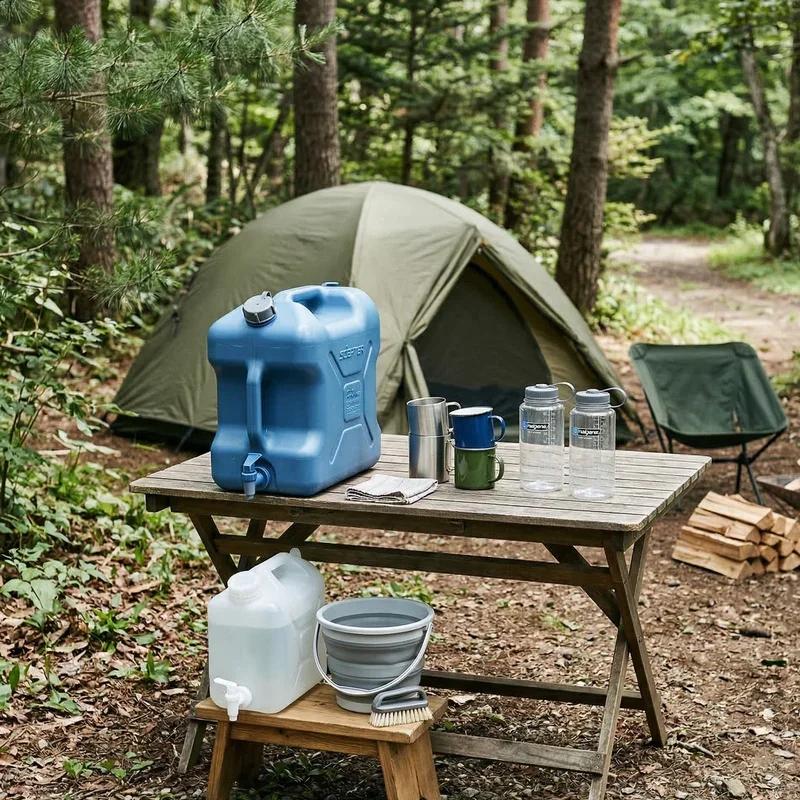
Water is one of the most important things to plan for when you’re camping.
You need water for more than just drinking. Depending on your trip, you may also need it for cooking, making coffee, washing dishes, cleaning your hands, and other basic camp tasks.
A few water bottles may be enough for a short day trip, but longer car camping trips often require a dedicated water container or jug.
The good news is that you don’t need anything complicated.
The right camping water container depends mainly on how much water you need, how you’re getting to the campsite, how far you need to carry it, and how much storage space you have.
In this guide, we’ll explain what to look for when choosing a camping water container and how to find the right size for your camping style.
Do You Need a Water Container for Camping?
Not every camping trip requires a large water container.
If you’re staying at a campground with reliable potable water nearby, you may only need a few reusable water bottles.
However, a dedicated water container becomes much more useful when:
- You’re camping far from a water source
- You’re going car camping
- You’re staying for several days
- You need water for cooking and cleaning
- Your campsite doesn’t have water at the individual site
- You want to avoid making repeated trips to a campground water spigot
- You’re camping with several people
For car camping, a larger water container can make camp life much easier.
Instead of carrying individual bottles around, you can keep one main supply at your campsite and refill smaller bottles as needed.
How Much Water Should You Bring Camping?
The amount of water you need depends on your group, weather, activities, campsite facilities, and how much water you’ll use for cooking and cleaning.
As a general planning guideline, about 1 gallon of water per person per day is a reasonable starting point for many camping trips.
That doesn’t mean everyone will drink exactly one gallon.
Hot weather, physical activity, pets, cooking, and cleaning can increase your total water needs.
For example:
| Camping Trip | Starting Point |
|---|---|
| 1 person, 1 day | About 1 gallon |
| 2 people, 2 days | About 4 gallons |
| 2 people, 3 days | About 6 gallons |
| 4 people, 2 days | About 8 gallons |
| 4 people, 3 days | About 12 gallons |
Think of these numbers as planning estimates, not strict rules.
If your campground provides potable water, you may not need to carry your entire supply from home.
If you’re camping somewhere without a reliable water source, however, it’s much more important to plan your water supply carefully.
Types of Camping Water Containers
There are several types of water containers designed for camping.
The best choice depends on your camping style.
1. Rigid Water Jugs
Rigid water jugs are one of the most common choices for car camping.
They’re made from durable plastic and usually have a large body with a handle, cap, or spigot.
Pros
- Durable
- Easy to transport by car
- Good for larger amounts of water
- Easy to use around camp
- Usually stable when placed on the ground
- Good for longer camping trips
Cons
- Take up space
- Can be heavy when full
- Less convenient for backpacking
A rigid water jug is an excellent choice for beginners who mainly go car camping.
2. Collapsible Water Containers
Collapsible containers are designed to become much smaller when they’re empty.
They can be especially useful if storage space is limited.
Some camping water storage bags can hold several liters while weighing very little when empty.
Pros
- Lightweight
- Easy to store when empty
- Saves space in your vehicle
- Good for car camping
- Convenient as a backup water supply
Cons
- Can be less stable than rigid containers
- Some are harder to clean
- May be less durable than heavy-duty rigid jugs
- Full containers can be awkward to carry
If you’re trying to maximize space in your vehicle, a collapsible container can be a smart option.
3. Water Storage Bags
Water storage bags are another lightweight option.
They’re particularly useful when you want to carry water without dedicating a lot of space to a rigid container.
Some models are designed specifically for camp kitchens and can include a tap or other dispensing system.
Best for:
- Space-conscious campers
- Car camping
- Minimalist camping
- Backup water storage
- Camp kitchens
They’re not necessarily the best choice for everyone, but they can be very convenient when packed correctly.
4. Small Water Containers
Smaller containers can be useful for short trips or smaller groups.
For example, a 2–4 gallon setup may be more practical for one or two people than carrying a very large container.
Smaller containers are also easier to lift and pour.
The downside is that you may need multiple containers if your trip requires more water.
What Size Camping Water Container Should You Get?
Size is one of the most important things to consider.
A container that’s too small means constant refilling.
A container that’s too large can become extremely heavy.
Remember that water weighs about 8.3 pounds per gallon.
That means:
| Water Capacity | Approx. Water Weight |
|---|---|
| 1 gallon | 8.3 lb |
| 2 gallons | 16.6 lb |
| 3 gallons | 24.9 lb |
| 5 gallons | 41.5 lb |
| 6 gallons | 49.8 lb |
| 7 gallons | 58.1 lb |
This is why a large water container may be easy to transport by car but difficult to carry any significant distance.
For example, a 5-gallon container holds a lot of water, but once full, it weighs more than 40 pounds.
That’s something to think about before buying one.
A Good Starting Size for Beginners
For many beginner car campers, something in the 2–5 gallon range can be a practical starting point.
A smaller container may be easier for:
- Solo campers
- Couples
- Overnight trips
- Campgrounds with nearby water
A larger container may make more sense for:
- Families
- Multi-day trips
- Remote campsites
- Camp cooking
- Campsites without nearby water
You don’t necessarily need one huge container.
Sometimes two smaller containers are more practical than one massive container.
For example, two 2.5-gallon containers can be easier to move than one 5-gallon container.
Look for a Food-Grade Container
If you’re storing drinking water, choose a container specifically designed for potable water or food use.
The CDC recommends using food-grade water storage containers and avoiding containers that previously held toxic chemicals such as pesticides or other hazardous substances.
This is especially important if you’re buying a generic plastic container.
Don’t simply reuse an old container because it happens to hold water.
Use a container intended for water storage.
Check the Opening and Cap
The opening of the container matters more than you might expect.
A very small opening can make cleaning difficult.
A wider opening is generally easier to clean and fill.
At the same time, you want the container to close securely.
Look for:
- A tight-fitting cap
- A durable opening
- Easy filling
- Easy cleaning
- Minimal leaking
- A design that keeps dirt out
For longer-term water storage, the CDC recommends containers that can be closed tightly and have an opening that helps prevent contamination.
Consider a Spigot or Water Tap

A built-in spigot can make a camping water container much more convenient.
Instead of lifting the entire container every time you need water, you can simply open the tap.
This is especially useful for:
- Washing hands
- Filling water bottles
- Cooking
- Making coffee
- Washing dishes
However, a spigot also adds another component that can potentially leak or break.
If you choose a container with a spigot, check that it’s sturdy and easy to operate.
Think About Portability
A container may look convenient when it’s empty but feel completely different when it’s full.
Before buying one, consider:
- Handle design
- Container shape
- Weight when full
- How far you’ll carry it
- Whether you can lift it comfortably
- Whether it fits inside your vehicle
A 5-gallon container may work perfectly if you’re driving directly to your campsite.
It may be a poor choice if you have to carry it several hundred yards from a parking area.
Don’t Forget Storage Space in Your Car
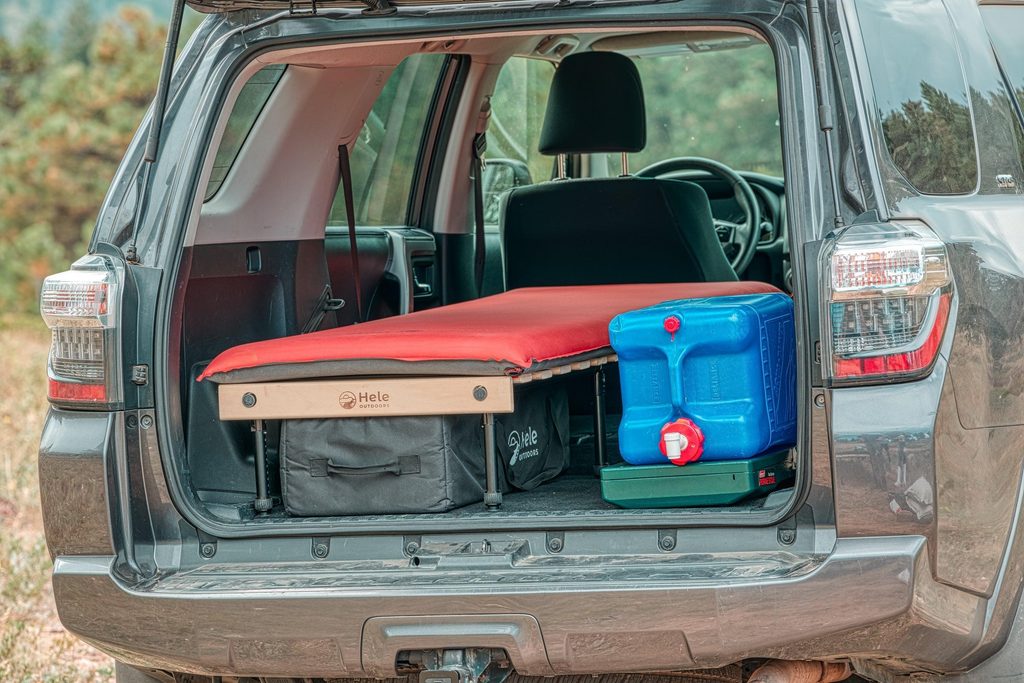
Camping water containers take up valuable vehicle space.
Rigid containers can be especially bulky even when they’re empty.
Before buying one, measure the area where you plan to store it.
Think about:
- Trunk space
- SUV cargo area
- Pickup truck bed
- Storage boxes
- Space underneath a camping table
- Whether the container can stand upright
If you’re already carrying a cooler, tent, chairs, cooking equipment, and other camping gear, a collapsible water container may save a surprising amount of space.
How Durable Should a Camping Water Container Be?
Durability matters because camping gear gets moved around a lot.
Your water container may be:
- Loaded into your vehicle
- Unloaded at camp
- Placed on dirt
- Moved around the campsite
- Stored in a garage
- Used repeatedly
For frequent car camping, a rugged rigid container can be worth paying more for.
For occasional trips, you may not need the most expensive option.
Think about how often you’ll use it before spending extra money.
How Easy Is It to Clean?
Water containers should be cleaned regularly.
A container with a complicated interior can be difficult to clean properly.
Look for a design that allows you to easily access the inside.
A wide opening can make washing and rinsing much easier.
The CDC recommends washing and sanitizing water storage containers before use and keeping stored water in a cool place away from direct sunlight.
Always follow the manufacturer’s cleaning instructions, especially if the container has a special lining, valve, or dispensing system.
Rigid vs Collapsible Camping Water Containers
Not sure which type to choose?
Here’s a simple comparison.
| Feature | Rigid Container | Collapsible Container |
|---|---|---|
| Durability | Excellent | Good |
| Storage when empty | Takes more space | Excellent |
| Stability | Excellent | Good |
| Portability | Good | Excellent |
| Large capacity | Excellent | Good |
| Car camping | Excellent | Excellent |
| Backpacking | Poor | Better |
| Easy to clean | Usually easier | Depends on design |
| Beginner friendly | Excellent | Good |
For most beginner car campers, either type can work well.
If vehicle storage is your biggest concern, consider collapsible storage.
If durability and easy handling are your priorities, a rigid jug may be better.
Do You Need a Water Filter Too?
A water container and a water filter serve different purposes.
A water container stores water.
A water filter or treatment system makes certain water sources safer to use, depending on the system and the contaminants involved.
Don’t assume that water from a lake, river, or stream is safe simply because it looks clean.
The CDC recommends treating water when you’re unsure whether it’s safe to drink; boiling is one option, while filtration followed by disinfection is another.
For beginners, the simplest approach is often to bring enough safe drinking water from home or use a reliable potable water source at the campground.
Common Camping Water Container Mistakes
Here are some mistakes beginners commonly make.
1. Buying a container that’s too large
A huge container may hold plenty of water, but you still have to lift it.
2. Forgetting how heavy water is
A 5-gallon container can weigh more than 40 pounds when full.
3. Choosing based only on price
The cheapest container isn’t always the most practical.
4. Ignoring vehicle storage
Make sure the container actually fits in your car.
5. Buying a container that’s difficult to clean
Water containers need regular cleaning.
6. Using an inappropriate container
Don’t use containers that previously held chemicals or other toxic substances.
7. Forgetting extra water
Unexpected hot weather, cooking, spills, or additional campers can increase your water needs.
What Is the Best Camping Water Container for Beginners?
There isn’t one perfect container for everyone.
Instead, choose based on your camping style.
For solo camping
A small 2–3 gallon container may be enough for a short trip, depending on water availability.
For couples
A 3–5 gallon container can be a practical starting point for many weekend car camping trips.
For families
A larger water supply or multiple containers may be more convenient.
For minimalist campers
A collapsible water container can save valuable storage space.
For frequent car campers
A durable rigid water jug with a convenient dispensing system can be worth considering.
For campsites with water nearby
You may only need a smaller container for backup and campsite use.
A Simple Beginner Camping Water Setup
If you’re just getting started with car camping, you don’t need a complicated water system.
A simple setup could include:
- 1 main camping water container
- Reusable water bottles
- A small backup water supply
- A separate container or bottle for cooking if needed
- A clean storage area away from fuel and chemicals
For a weekend trip, start by estimating how much water your group will need.
Then add a reasonable safety margin rather than trying to carry the maximum possible amount.
Camping Water Container Buying Checklist
Before buying a camping water container, ask yourself:
- How many people will use it?
- How many days will I be camping?
- Is potable water available at the campsite?
- How much water do I need?
- Can I comfortably lift it when full?
- Will it fit in my vehicle?
- Do I want a rigid or collapsible container?
- Is it designed for drinking water?
- Does it have a secure cap?
- Is the opening easy to clean?
- Does it have a spigot?
- Is the material durable enough for my camping style?
- Can I store it safely when not in use?
If you can answer these questions, choosing a water container becomes much easier.
Final Thoughts
A camping water container may not be the most exciting piece of camping gear, but it’s one of the items that can make a trip much easier.
The best choice isn’t necessarily the biggest or most expensive container.
Instead, look for a container that provides the right balance of capacity, portability, durability, storage space, and convenience for the way you camp.
For most beginner car campers, starting with a manageable container in the 2–5 gallon range is a practical approach. If you regularly camp with a larger group or stay at sites without nearby water, you may want more capacity or multiple containers.
And remember: water is heavy.
A container that’s easy to carry when empty can become surprisingly difficult to move when full.
Choose a size you can realistically handle, keep your water supply clean, and plan your total water needs before leaving home.
Once you find a setup that works for your camping style, you’ll probably wonder how you ever camped without it.