
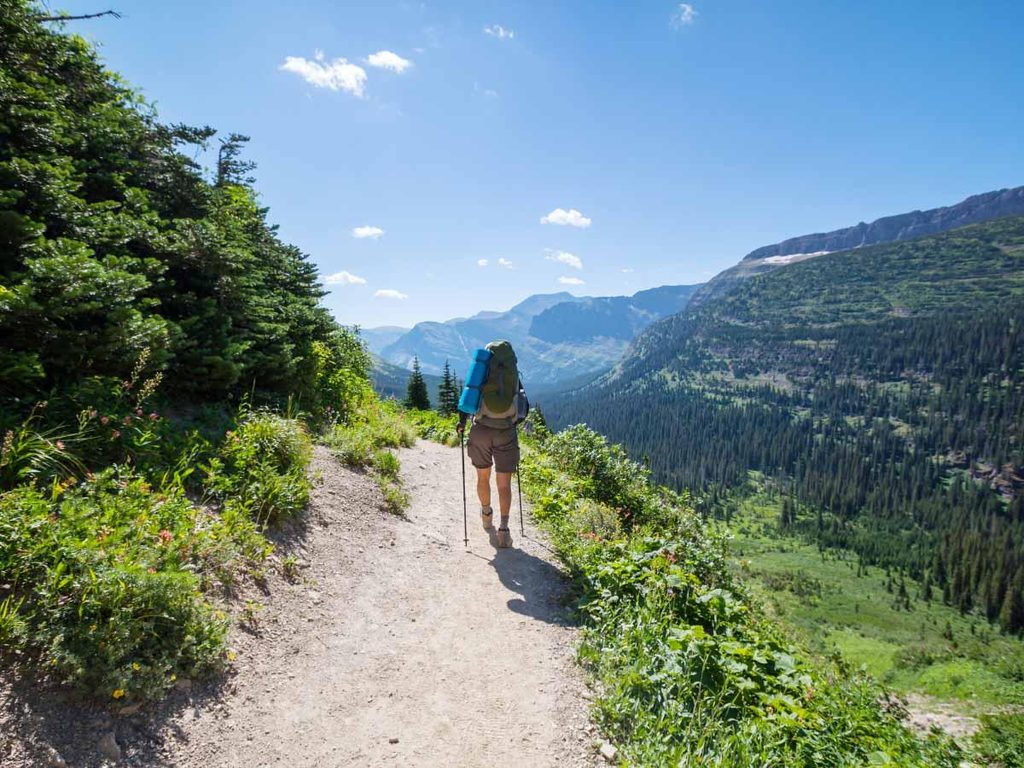
Hiking can seem simple when you first look at a trail.
Put on your shoes, put on a backpack, and start walking.
But once you spend several hours on uneven ground, climb a steep hill, or deal with changing weather, hiking becomes much more than ordinary walking.
For beginners, learning how to move efficiently and safely on the trail can make a major difference. You do not need advanced skills to enjoy hiking, but understanding how to manage your pace, footing, energy, and surroundings can make your experience much more comfortable.
Here are some simple trail skills every beginner should learn.
Start at a Comfortable Pace
One of the most common mistakes beginners make is starting too quickly.
A trail may feel easy during the first few minutes, but the effort can increase quickly once you encounter an incline.
Instead of trying to walk as fast as possible, start at a pace that feels comfortable and sustainable.
You should be able to maintain your breathing without feeling exhausted early in the hike.
A slower beginning also gives your body time to warm up and helps you understand the trail conditions.
Remember that the goal of most hikes is not to reach the destination as quickly as possible.
The goal is to complete the route safely while enjoying the experience.
Learn How to Walk Uphill
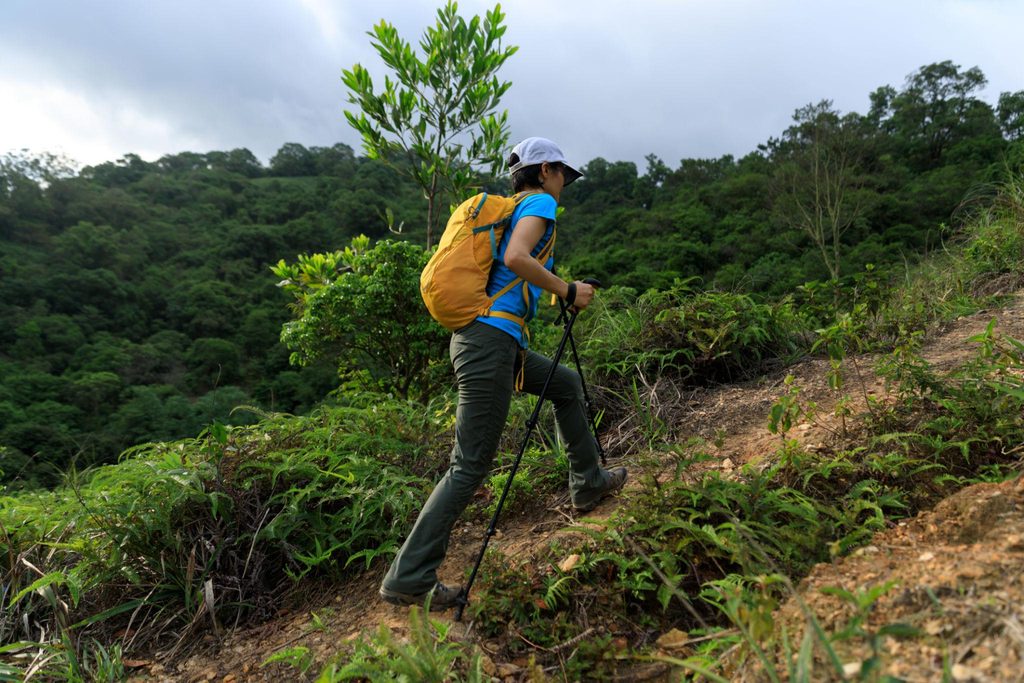
Uphill sections naturally require more effort.
When the trail becomes steeper, shorten your steps instead of trying to maintain the same stride you use on flat ground.
Keep your movement controlled and avoid rushing.
You can also slightly reduce your pace before reaching a steep section rather than waiting until you are already exhausted.
If the climb becomes difficult, take a short break.
There is no advantage to pushing yourself beyond a comfortable level simply because other hikers appear to be moving faster.
Your pace should match your experience, fitness, and the conditions of the trail.
Take Your Time on Downhill Sections
Going downhill can feel easier because you are no longer climbing, but descending trails can still place significant stress on your body.
Loose rocks, roots, mud, and uneven surfaces can also increase the chance of slipping.
Take shorter steps when the trail becomes steep.
Keep your attention on the ground ahead and avoid rushing downhill.
If trekking poles are part of your hiking equipment, they can provide additional support on certain terrain when used correctly.
Good downhill technique is less about speed and more about maintaining control.
Watch Your Footing
Trail surfaces can change constantly.
You may encounter:
- Loose rocks
- Tree roots
- Mud
- Wet leaves
- Sand
- Gravel
- Uneven steps
- Narrow sections
- Slippery surfaces
Look ahead rather than staring directly at your feet, but regularly scan the ground immediately in front of you.
Try to identify unstable surfaces before stepping on them.
When the trail becomes difficult, slow down.
A few extra seconds can be far more valuable than trying to maintain your normal walking speed.
Keep Your Backpack Comfortable
A poorly adjusted backpack can make a simple hike feel much harder.
Before starting, adjust the shoulder straps and other available straps so the backpack sits securely against your body.
Avoid carrying unnecessary items.
A heavy pack can increase fatigue, especially during long climbs.
For a simple day hike, focus on carrying what you actually need for the route, weather, duration, and conditions.
Your backpack should support your hike rather than become the main challenge.
Drink Water Regularly

Hiking can increase your need for fluids, particularly during warm or humid weather.
Instead of waiting until you feel completely exhausted, drink regularly according to your needs and the conditions.
The amount of water you need depends on factors such as:
- Temperature
- Humidity
- Hiking distance
- Elevation gain
- Walking pace
- Personal needs
- Availability of water along the route
Do not assume that every trail will have a reliable source of drinking water.
If you are hiking somewhere without dependable water access, plan your supply before leaving.
For longer or more remote hikes, consider carrying an appropriate water treatment method as part of your preparation.
Bring Enough Food for the Hike
Hiking uses energy, especially when climbing.
Pack food that is easy to carry and eat on the trail.
Simple options can include:
- Nuts
- Trail mix
- Fruit
- Energy bars
- Sandwiches
- Dried fruit
- Other easy-to-carry snacks
You do not need to eat continuously.
Instead, pay attention to your energy level and take a break when you need one.
It is also wise to carry some extra food for unexpected delays, particularly on longer hikes.
Take Breaks Before You Are Exhausted
A common beginner mistake is waiting until you are completely tired before taking a break.
Short breaks can help you manage your energy more effectively.
Use breaks to:
- Drink water
- Eat a snack
- Adjust your backpack
- Check your feet
- Add or remove a clothing layer
- Look at your route
- Assess the weather
You do not need to stop for a long time.
A few minutes can be enough to reset your pace and continue comfortably.
Pay Attention to the Weather
Weather can change quickly outdoors.
Before starting your hike, check the forecast for the area you will be visiting.
Also consider how conditions may change during the hours you will be on the trail.
Depending on the season and location, you may need to prepare for:
- Rain
- Strong wind
- Heat
- Cold temperatures
- Sudden temperature changes
- Thunderstorms
- Reduced visibility
If conditions become unsafe or significantly different from what you expected, changing your plans can be the right decision.
A successful hike does not always mean reaching the original destination.
Sometimes the safest choice is to turn around.
Stay on the Designated Trail
Staying on the established trail is one of the simplest ways to reduce unnecessary risk.
Leaving the trail can increase the chance of becoming lost or encountering unstable terrain.
It can also damage plants and other natural areas.
Pay attention at trail intersections and follow the route you planned.
If you are unsure where the trail continues, stop and confirm your location rather than continuing randomly.
Know Where You Are
Even on a short hike, it is useful to have a basic understanding of your route.
Before starting, look at:
- Trail distance
- Elevation changes
- Major intersections
- Estimated hiking time
- Starting point
- Turnaround options
- Possible hazards
Carry a map or another reliable navigation method appropriate for the area.
Do not rely entirely on a phone signal being available.
In remote areas, cellular coverage can be limited or unavailable.
Knowing your route before you start makes it much easier to recognize when something does not look right.
Pay Attention to Time
Time can pass quickly while hiking.
You may spend longer than expected taking photos, resting, navigating, or enjoying the scenery.
Keep track of your progress and the time of day.
If your hike is taking much longer than expected, reconsider your original plan.
Set a reasonable turnaround point for routes where daylight, weather, or distance could become a concern.
You should always leave enough time to return safely.
Learn Basic Trail Etiquette
Hiking trails are shared spaces.
Being considerate of other people makes the experience better for everyone.
Depending on the trail and local rules, basic trail etiquette may include:
- Stay on designated paths.
- Keep noise at a reasonable level.
- Give other trail users enough space.
- Follow posted signs.
- Keep groups together.
- Yield appropriately when trails become narrow.
- Do not leave trash behind.
- Respect wildlife.
- Avoid blocking the trail while resting.
If you stop for a break, move to a safe location where you are not blocking other hikers.
Small actions can make a busy trail much more pleasant.
Be Careful Around Water
Streams, waterfalls, lakes, and wet rocks can create serious hazards.
Wet surfaces can be extremely slippery, and fast-moving water can be difficult to judge.
Do not assume that shallow-looking water is safe to cross.
If a stream crossing looks dangerous or conditions have changed because of rain or flooding, reconsider the route.
Stay away from unstable edges and avoid climbing onto wet rocks near waterfalls.
Taking a longer route is usually preferable to taking an unnecessary risk.
Respect Wildlife
Seeing wildlife can be one of the most memorable parts of hiking.
However, wildlife should be observed from a safe distance.
Never approach, chase, feed, or attempt to touch wild animals.
Keep food and other scented items managed appropriately for the area you are visiting.
If you encounter wildlife on the trail, give it space and follow local guidance.
Remember that the trail is part of the animals’ natural environment.
You are a visitor.
Know What to Do If You Become Lost
Getting lost can happen even to experienced hikers.
If you realize that you are no longer sure where you are, do not simply continue walking in a random direction.
Stop and assess the situation.
Check your map, navigation tools, landmarks, and the route you have already traveled.
If you can safely retrace your route, do so carefully.
If you cannot determine your location, staying in a safe place can be better than continuing deeper into unfamiliar terrain.
Use your communication or emergency equipment if you need help.
This is another reason to tell someone your hiking plans before leaving.
Tell Someone About Your Hiking Plans
Before heading out, let someone know where you are going.
Share basic information such as:
- Trail or general location
- Planned route
- Expected start time
- Expected return time
- Who is hiking with you
For longer or more remote hikes, provide more detailed information.
If your plans change significantly, update the person who knows your itinerary when possible.
This simple habit can become extremely valuable if something unexpected happens.
Know When to Turn Around
Turning around is not a failure.
You may need to change your plans because of:
- Bad weather
- Unexpected trail conditions
- Lack of daylight
- Fatigue
- Injury
- Lack of water
- Navigation problems
- A group member struggling with the route
If continuing feels unsafe, stop and reconsider.
There will always be another opportunity to complete the trail.
The ability to recognize when conditions are no longer suitable is an important hiking skill.
Common Mistakes Beginners Should Avoid
Starting Too Fast
Beginning at a fast pace can leave you exhausted before the hardest part of the trail.
Carrying Too Much
Extra equipment adds weight and can increase fatigue.
Ignoring Small Discomforts
A small hotspot on your foot can develop into a painful blister.
Stop and address problems before they become serious.
Focusing Only on the Destination
Constantly thinking about reaching the summit can cause you to ignore your surroundings and physical condition.
Hiking Without Checking the Weather
Conditions can change significantly during a hike.
Always check before leaving.
Continuing When Conditions Become Unsafe
Do not feel obligated to finish a route simply because you started it.
Depending Entirely on Your Phone
A phone can be useful, but batteries can run out and cellular service may disappear.
Carry appropriate backup navigation and emergency equipment for the hike.
A Simple Trail-Safety Checklist
Before starting your next hike, check the following:
- I know the route and approximate distance.
- I checked the weather.
- I have appropriate footwear.
- I have enough water.
- I packed food or snacks.
- I have basic navigation equipment.
- I have a charged phone.
- I have basic first-aid supplies.
- I have an extra clothing layer if needed.
- Someone knows where I am going.
- I know when I should turn around.
- I understand the important conditions and rules for the trail.
You do not need an enormous backpack to be prepared.
The goal is to carry the right equipment for the specific hike you are taking.
Make Every Hike a Learning Experience
Every trail teaches you something.
You may learn that you need more water on warm days, that your backpack needs better adjustment, or that a slower pace makes steep climbs much easier.
Pay attention to these lessons.
After the hike, think about what worked well and what you would change next time.
Maybe the route was longer than expected.
Maybe you brought too much equipment.
Maybe you needed an extra layer.
These small observations help you become a more confident hiker without trying to learn everything at once.
Final Thoughts
Hiking does not require you to move quickly or carry expensive equipment.
The most important skills are simple: choose an appropriate route, manage your pace, watch your footing, stay aware of the weather, drink and eat when needed, follow the trail, and know when to turn around.
Good hiking is not about pushing yourself as far as possible.
It is about understanding your surroundings and making sensible decisions throughout the journey.
Start with trails that match your experience, build your skills gradually, and give yourself time to become comfortable outdoors.
With each hike, you will learn more about your pace, your equipment, and the environment around you.
That is what makes hiking a skill you can continue improving for years.